Concerto for Oboe and Violin (Adagio) Sheet Music Preview

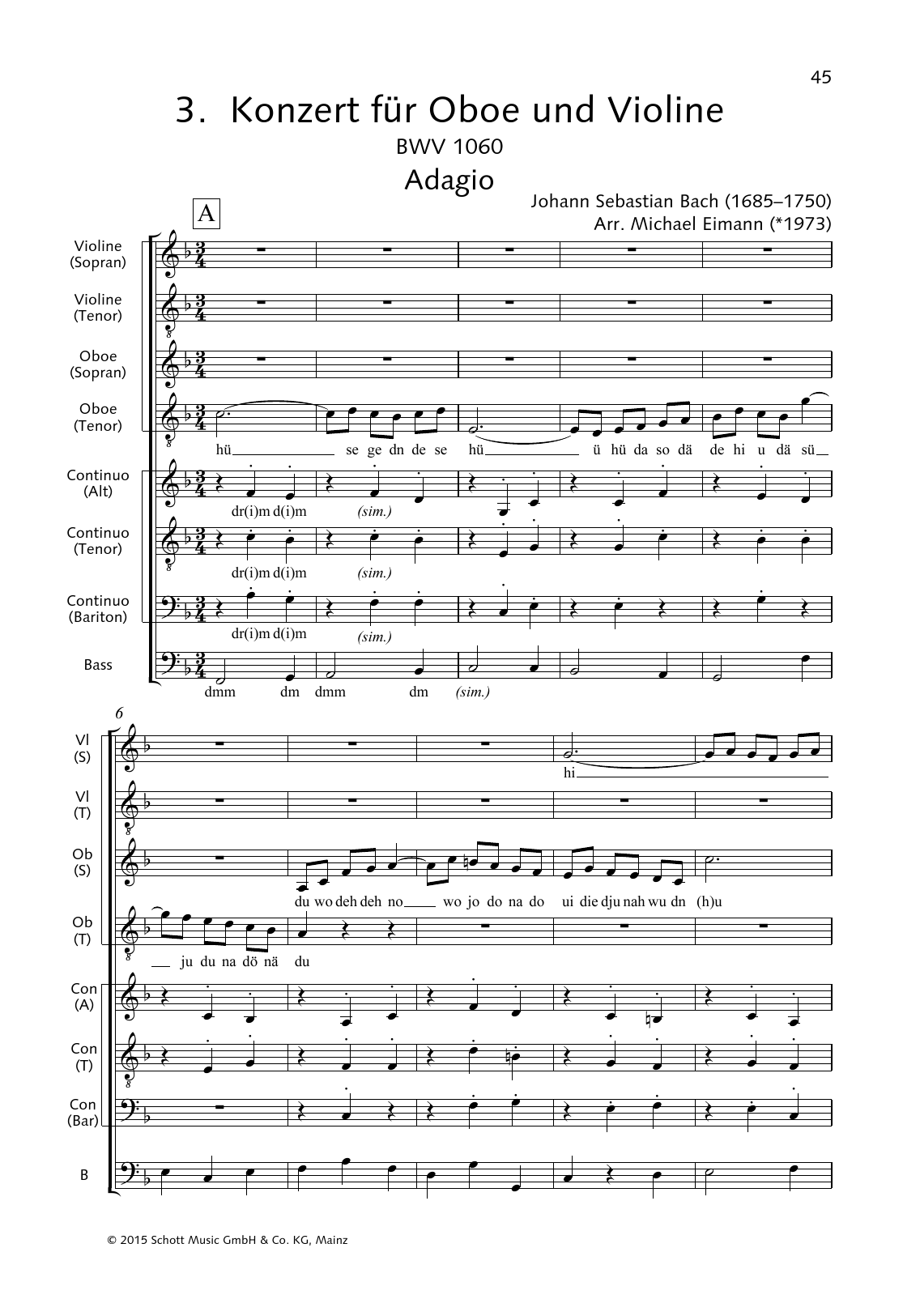
Concerto for Oboe and Violin (Adagio): Choral Octavo

By Johann Sebastian Bach / Edited by Michael Eimann

Item: 35-DS00370995

Digital Download
$3.99

One moment…

Description

Concerto for Oboe and Violin (Adagio): Choral Octavo isn't in MakeMusic Cloud just yet...but it could be. Let us know you'd like to see it, and you'll help shape what comes next. In the meantime, start a free trial and dive into thousands of interactive titles your students can play along with today.

Sample Audio
No sample audio found.
Sample Video
Additional Details
Publisher: Hal Leonard
Page Count: 14
SKU: 35-DS00370995

More about this title

About the Composer: Johann Sebastian Bach

Johann Sebastian Bach (1685–1750) shaped the foundation of Western music through his mastery of counterpoint, harmonic language, and structural logic. His output spans every major genre except opera, and his influence on subsequent composers remains unmatched. For educators, Bach's works offer unparalleled opportunities to teach voice leading, fugal thinking, and the relationship between melody and accompaniment.

Why we love this

This arrangement brings together two soloistic lines in a texture that rewards careful voice balance and allows your ensemble to experience Bach's gift for making two independent melodic strands feel inevitable together. The intimate scale and spiritual weight make it work equally well as a concert centerpiece or a rehearsal study in baroque style.

What to expect

The adagio unfolds with quiet inevitability, its counterpoint creating a sense of intimate conversation rather than grand statement. Harmonic movement feels unhurried; each chord settles into place before the next arrives, inviting listeners into Bach's meditative world.

Who it's for

Choirs comfortable with baroque style and independent voice leading will find this accessible at a moderate difficulty level. It suits intermediate to advanced ensembles seeking repertoire that develops musicianship alongside performance confidence.

How to get the most out of it

  • Shape each phrase from its harmonic anchor rather than treating the melodic line in isolation. Bach's logic lives in the counterpoint, not just the tune.
  • Resist vibrato in the upper voices; the clarity of the individual lines depends on a relatively straight tone that lets the harmony read cleanly.
  • Bring out inner voices where they carry harmonic rhythm or step-wise motion. They're not accompaniment; they're part of the argument.
  • Breathe at cadences and phrase endings, but never cut off the final note before its full value sounds. Let resolutions register.

How to use it

Pair this with other baroque works to anchor a historically informed concert, or feature it as a quiet interlude between more extroverted pieces. Its reflective character makes it ideal for programs exploring sacred or introspective themes, even in secular contexts.

Skills your students will build

  • Independent voice leading and awareness of contrapuntal texture
  • Baroque articulation and phrasing conventions
  • Reading and balancing multiple independent melodic lines
  • Harmonic listening and recognition of cadential function

You May Also Like