Concertino in Latin Styles: Solo with Piano Accompaniment - Piano Duo (2 Pianos, 4 Hands) Sheet Music Preview

Concertino in Latin Styles: Solo with Piano Accompaniment - Piano Duo (2 Pianos, 4 Hands): Piano Duets & Four Hands

Solo with Piano Accompaniment

By Wynn-Anne Rossi

Level: Late Elementary

Item: 00-PB-0000898

Digital Download
$5.99
Description
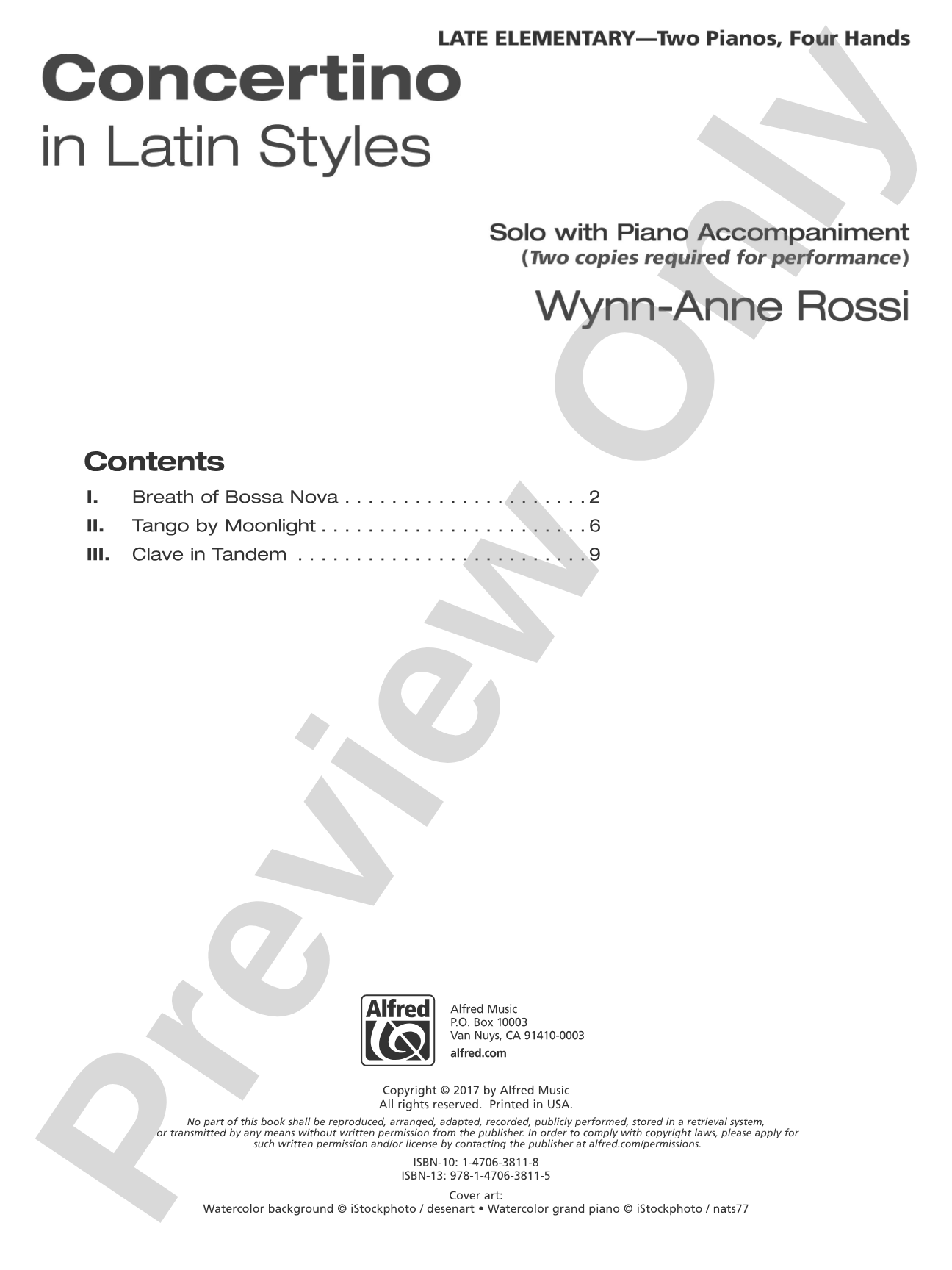
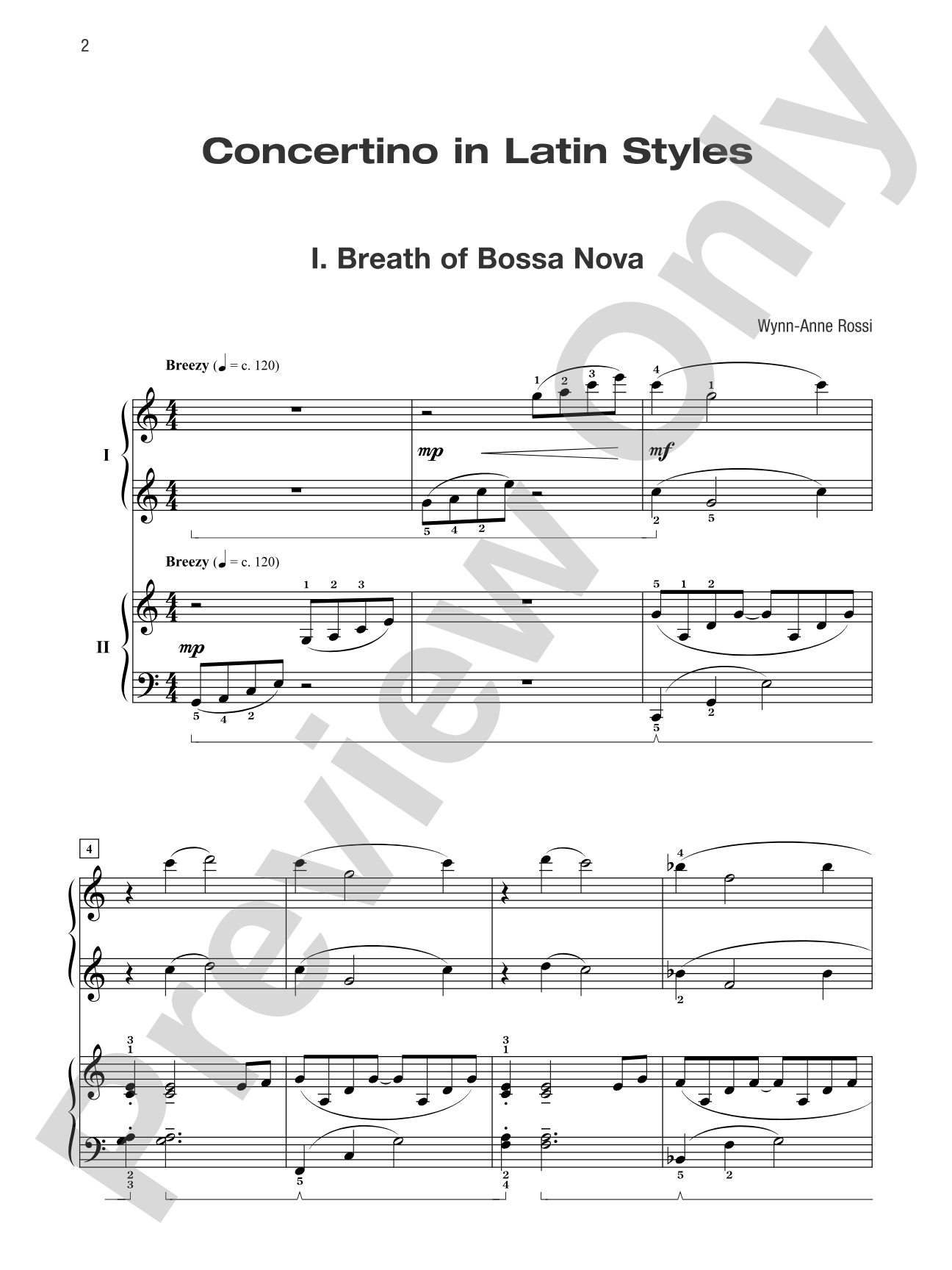
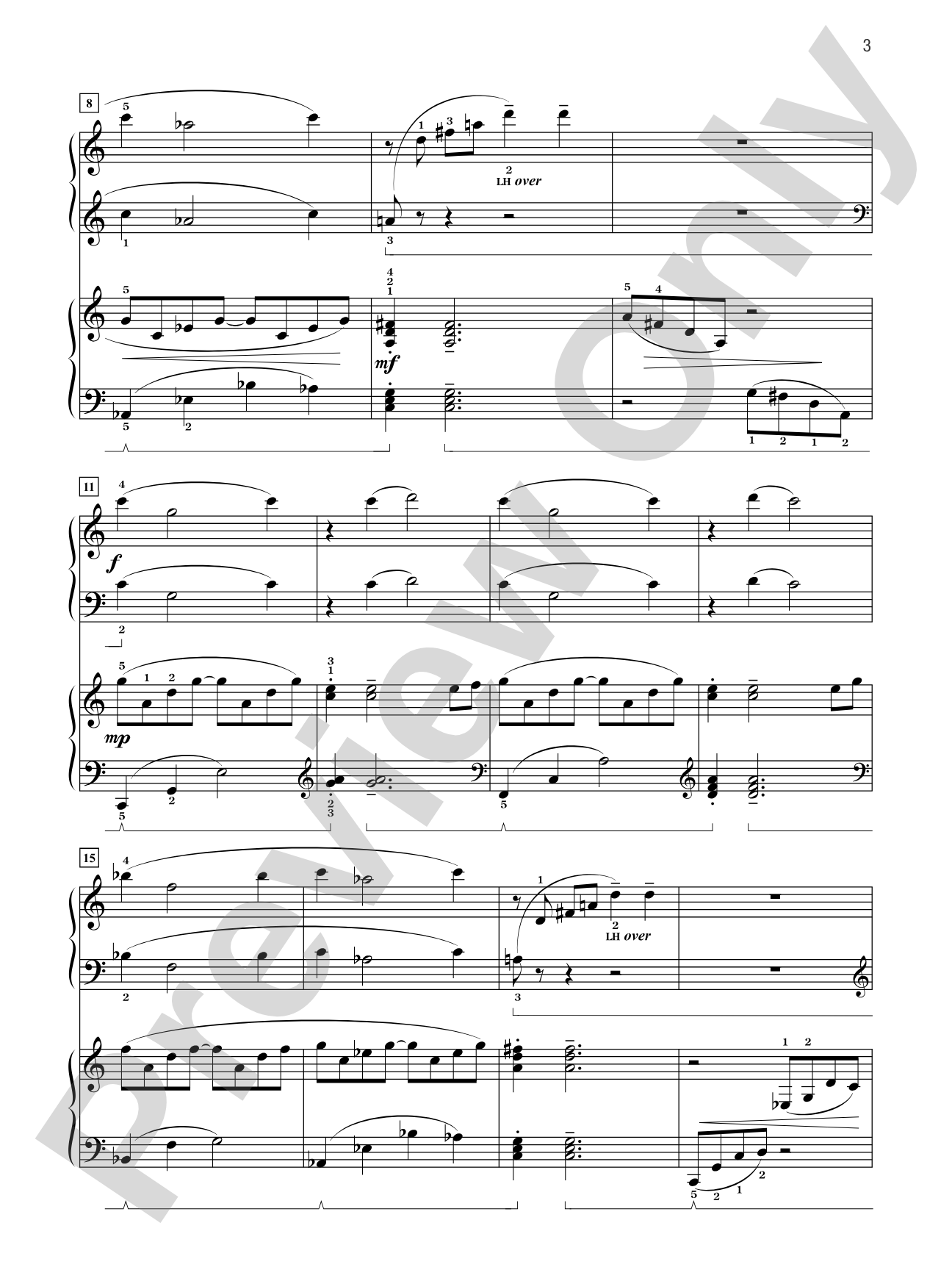
Pianists at the late elementary level will experience a variety of Latin styles and rhythms in Wynn-Anne Rossi's Concertino in Latin Styles. The first movement features a bossa nova style, and the second movement captures the rhythm of a tango. The third movement has changing meters, alternating between 6/8 and 2/4, combined with staccato articulation to imitate the sound of claves. For students who love Latin styles or those who will experience them for the first time, this concerto is a refreshing addition to this genre. Movements: Breath of Bossa Nova * Tango by Moonlight * Clave in Tandem. A Federation Festivals 2024-2028 selection.

Concertino in Latin Styles: Solo with Piano Accompaniment - Piano Duo (2 Pianos, 4 Hands): Piano Duets & Four Hands isn't in MakeMusic Cloud just yet...but it could be. Let us know you'd like to see it, and you'll help shape what comes next. In the meantime, start a free trial and dive into thousands of interactive titles your students can play along with today.

Sample Audio
No sample audio found.
Sample Video
Additional Details
Series: Student Concertos
Publisher: Alfred Music
Page Count: 12
SKU: 00-PB-0000898

More about this title

About the Composer: Wynn-Anne Rossi

Wynn-Anne Rossi is a composer and educator whose work emphasizes accessible, stylistically diverse repertoire for developing pianists. Her pieces balance technical growth with musical engagement, drawing on contemporary idioms and world music traditions to keep student performers invested in their learning.

Why we love this

Rossi writes with a keen ear for what late elementary duet pianists can actually handle musically and technically. The three movements each spotlight a distinct Latin style with enough rhythmic specificity to feel authentic without overwhelming the players, and the varied meters and articulation in the final movement add real substance to what could have been a surface-level genre exploration.

What to expect

Warm and rhythmically alive, with each movement inviting pianists into a different corner of the Latin music world. The writing sparkles with character: bossa nova's gentle swing, tango's dramatic flair, and the driving pulse of claves all come through clearly without requiring advanced technique.

Who it's for

Late elementary pianists ready to step beyond traditional classical pedagogy and explore rhythmic styles that feel contemporary and fun. Duet partners at similar levels will find these movements rewarding to prepare together, and students preparing for festival competitions will appreciate the program variety this piece offers.

How to get the most out of it

  • Establish the bossa nova groove in the first movement by locking the rhythmic foundation between both pianos early in rehearsal; clarity here makes the harmonic color sing.
  • Approach the tango with a clear lift at the end of phrases rather than letting them blur together; this gives the second movement its characteristic elegance.
  • Practice the alternating meters in the third movement separately at a slow tempo, counting aloud if needed, before layering in the staccato articulation that mimics the claves.
  • Record yourselves playing through all three movements to hear how the stylistic journey unfolds; this perspective often reveals where ensemble balance needs adjustment.

How to use it

Program this as a centerpiece in a recital devoted to world music styles, or pair it with other contemporary works to showcase students' versatility beyond the classical canon. Its festival credential and three-movement arc also make it ideal for competition preparation at the late elementary level.

Skills your students will build

  • Recognition and performance of bossa nova rhythm and phrasing
  • Tango rhythmic patterns and characteristic articulation
  • Reading and executing changing meters (6/8 and 2/4)
  • Staccato articulation and its role in imitating percussion instruments
  • Ensemble listening and rhythmic coordination in a duet setting
  • Stylistic awareness and interpretation across Latin genres

You May Also Like