

Concertino in Dance Styles: Solo with Piano Accompaniment - Piano Duo (2 Pianos, 4 Hands): Piano Duets & Four Hands
Solo with Piano Accompaniment
By Melody Bober
Level: Late Elementary
Item: 00-PB-0000897

$5.99
Pickup currently not available
Related Items
Concertino in Dance Styles: Piano Duo (2 Pianos, 4 Hands) Book (2 copies required) |
$5.99
|
View |
Description
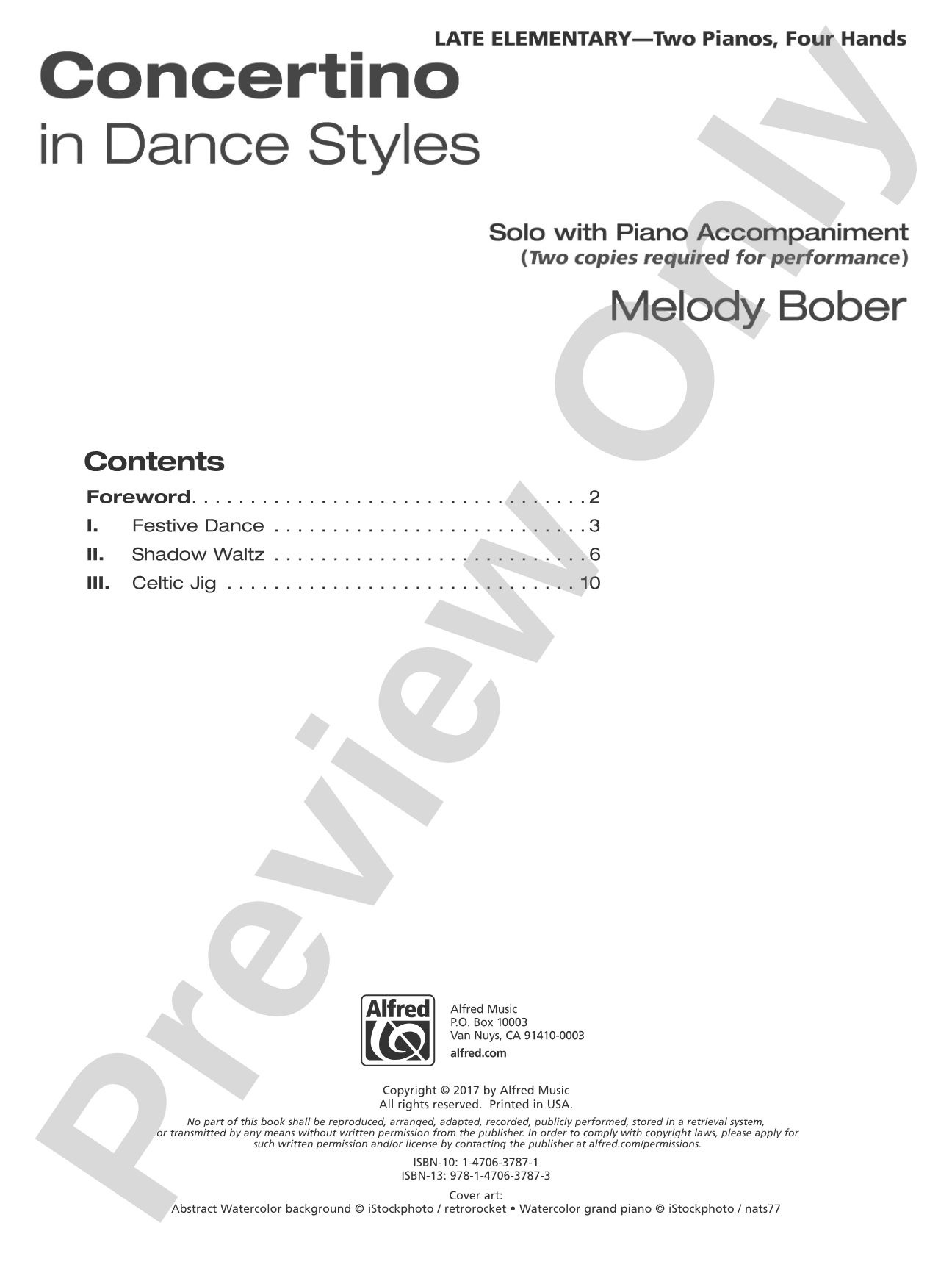
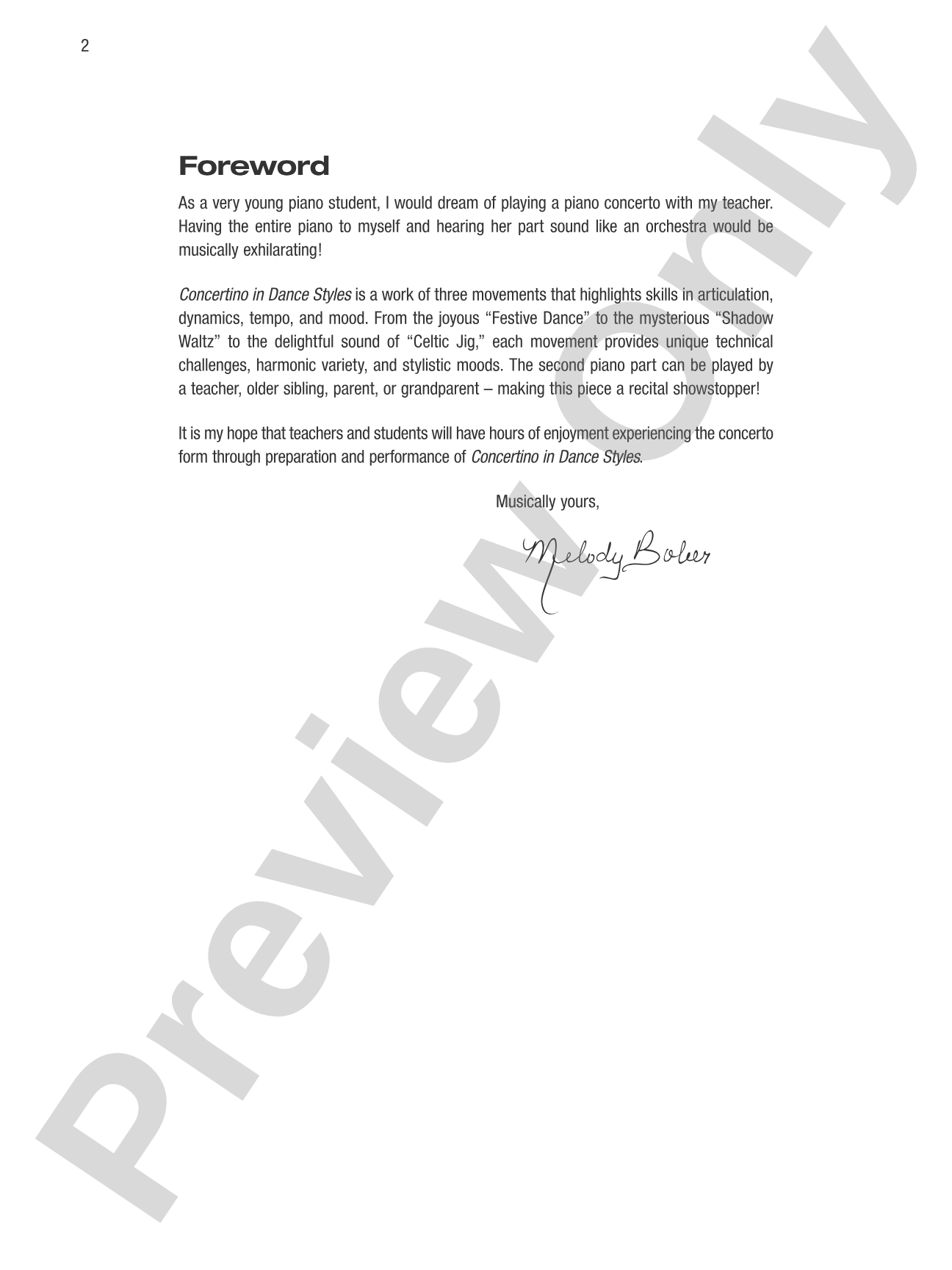
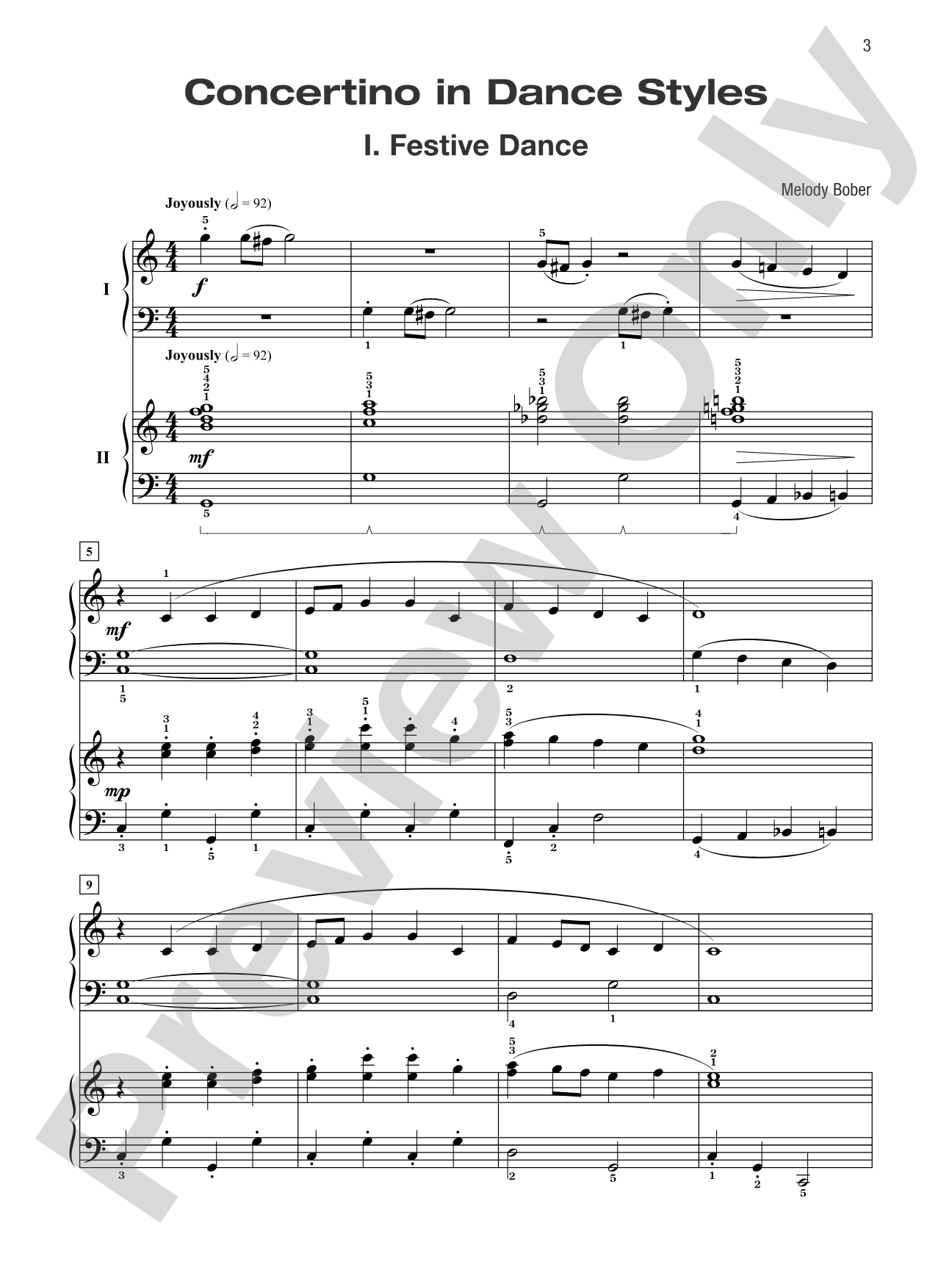
Concertino in Dance Styles is a work in three movements that highlights skills in articulations, dynamics, tempo, and mood. From the joyous first movement to the mysterious second movement, followed by a delightful jig for the third movement, this piece provides unique technical challenges, harmonic variety, and stylistic moods. The second piano part can be played by a teacher, older sibling, parent, or grandparent---making this piece a recital showstopper! Movements: Festive Dance * Shadow Waltz * Celtic Jig. A Federation Festivals 2024-2028 selection.


Don't just read it, hear it, play along with it, and watch your students grow with it. In MakeMusic Cloud, Concertino in Dance Styles: Solo with Piano Accompaniment - Piano Duo (2 Pianos, 4 Hands): Piano Duets & Four Hands comes alive with professional accompaniment, adjustable tempo, and built-in practice tools that turn solo practice into real progress.
Open in the Player
Jump straight in and assign it today.
Start Your Free Trial
Open this title and explore the full library in minutes.
Sample Audio
No sample audio found.
Sample Video
No sample videos found.
Additional Details
Series:
Student Concertos
Publisher:
Alfred Music
Page Count:
12
SKU:
00-PB-0000897
More about this title
About the Composer: Melody Bober

Melody Bober composes music specifically designed to deepen students' musical understanding while building their confidence and enjoyment. She holds a bachelor's degree in music education from the University of Illinois at Champaign-Urbana and a Master of Arts in piano performance from Minnesota State University, Moorhead. Her mentors included respected pianists Joel Shapiro and Andrew Froelich, along with music educator Mary Hoffman and jazz educator Tony Caramia.
Bober brings two decades of public school teaching experience, university-level instruction, and an active private piano studio to her compositional work. She remains a dedicated church pianist and has served as a church music director. Her reputation as both a clinician and innovator has made her a sought-after presenter at piano teacher conventions and workshops throughout North America.
Why we love this
This piece transforms the typical recital duet from a supporting role into something genuinely collaborative and engaging. The three movements offer distinct musical personalities that showcase control and expression, while the flexible accompaniment part makes it accessible to teachers, family members, or advanced students without requiring a professional accompanist.
What to expect
The opening movement radiates celebration, with crisp articulations and uplifting energy. The middle movement shifts into introspection, with waltz-like phrasing and a contemplative atmosphere that contrasts sharply with the joyful outer movements. The final movement bounces with the rhythmic vitality of a traditional Celtic jig, full of character and charm.
Who it's for
This work suits late elementary pianists who are developing articulation precision and expressive control. The accessible technical level combined with a substantial performance context makes it ideal for students preparing for festivals, recitals, or competitions who benefit from having a capable partner at the second piano.
How to get the most out of it
- Balance the articulation work across both pianos so the accompaniement's rhythmic foundation supports rather than obscures the soloist's articulate passages in the first movement.
- Use dynamic contrast strategically in the Shadow Waltz; the mysterious second movement demands restraint in the upper register before the energy returns.
- Lock the tempo in the Celtic Jig by having both pianists establish the rhythmic pulse together during rehearsal, then trust it during performance.
- Shape phrases across the three movements as a continuous arc; treat the transitions between movements as intentional breaths, not abrupt stops.
How to use it
This is an excellent choice for showcasing a student's growth across a festival season or as a standalone recital feature that doesn't require hiring an accompanist. The three distinct movements work well as part of a thematic program exploring dance forms or as a bridge piece between lighter and more substantial repertoire on a mixed-level recital.
Skills your students will build
- Articulation clarity in scalar and chordal passages
- Dynamic shaping and contrast across three distinct movements
- Tempo control and stylistic awareness in dance forms (waltz, jig, festive dance)
- Phrasing and musical dialogue with an accompanist
- Sustaining focus and energy across a multi-movement work