

Concertino for the Young - Piano Duo (2 Pianos, 4 Hands): Piano Duets & Four Hands
By Dennis Alexander
Level: Elementary
Item: 00-PB-0000905

$6.99
Pickup currently not available
Related Items
Concertino for the Young: Piano Duo (2 Pianos, 4 Hands) Book (2 copies required) |
$6.99
|
View |
Description
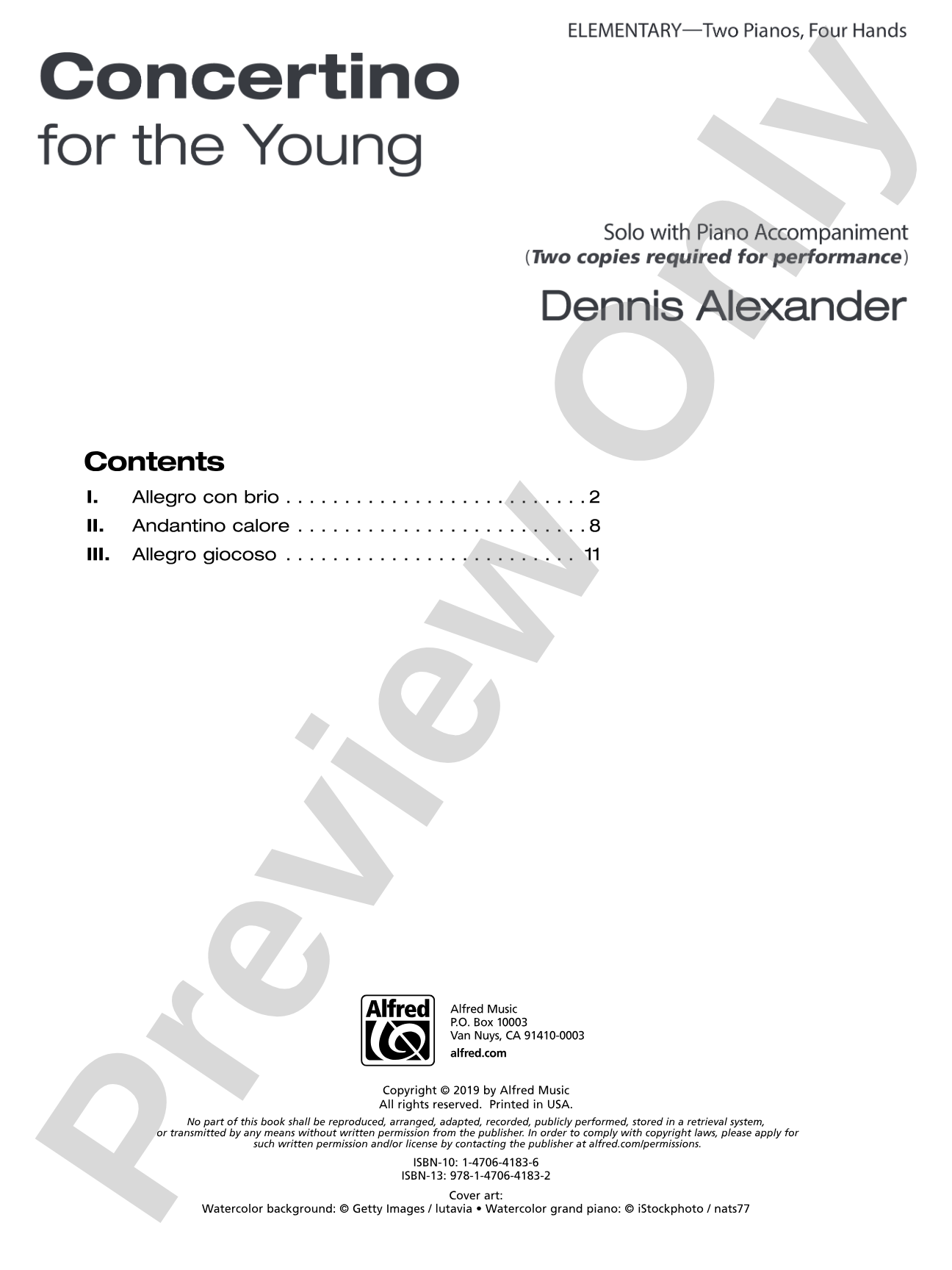
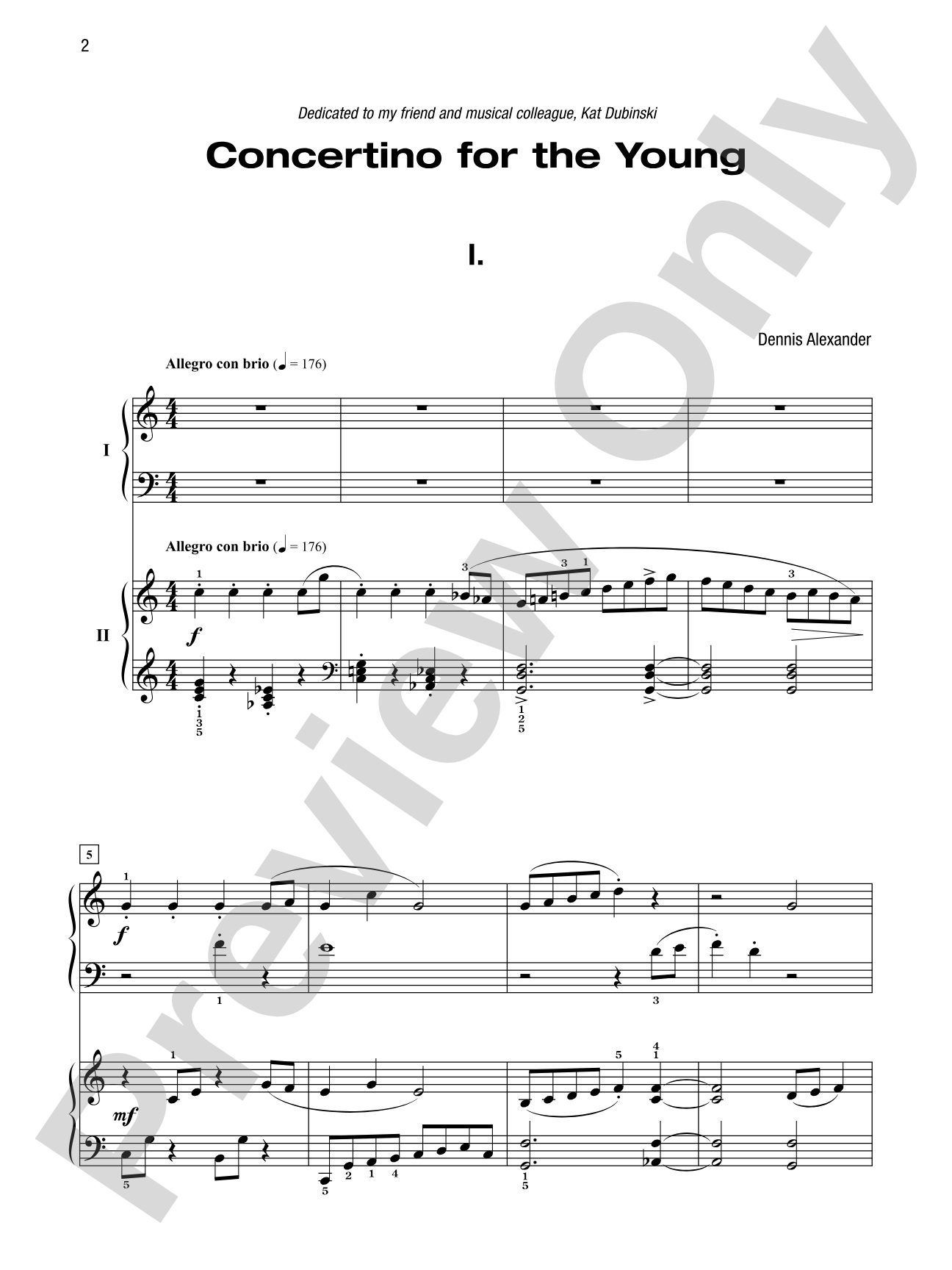
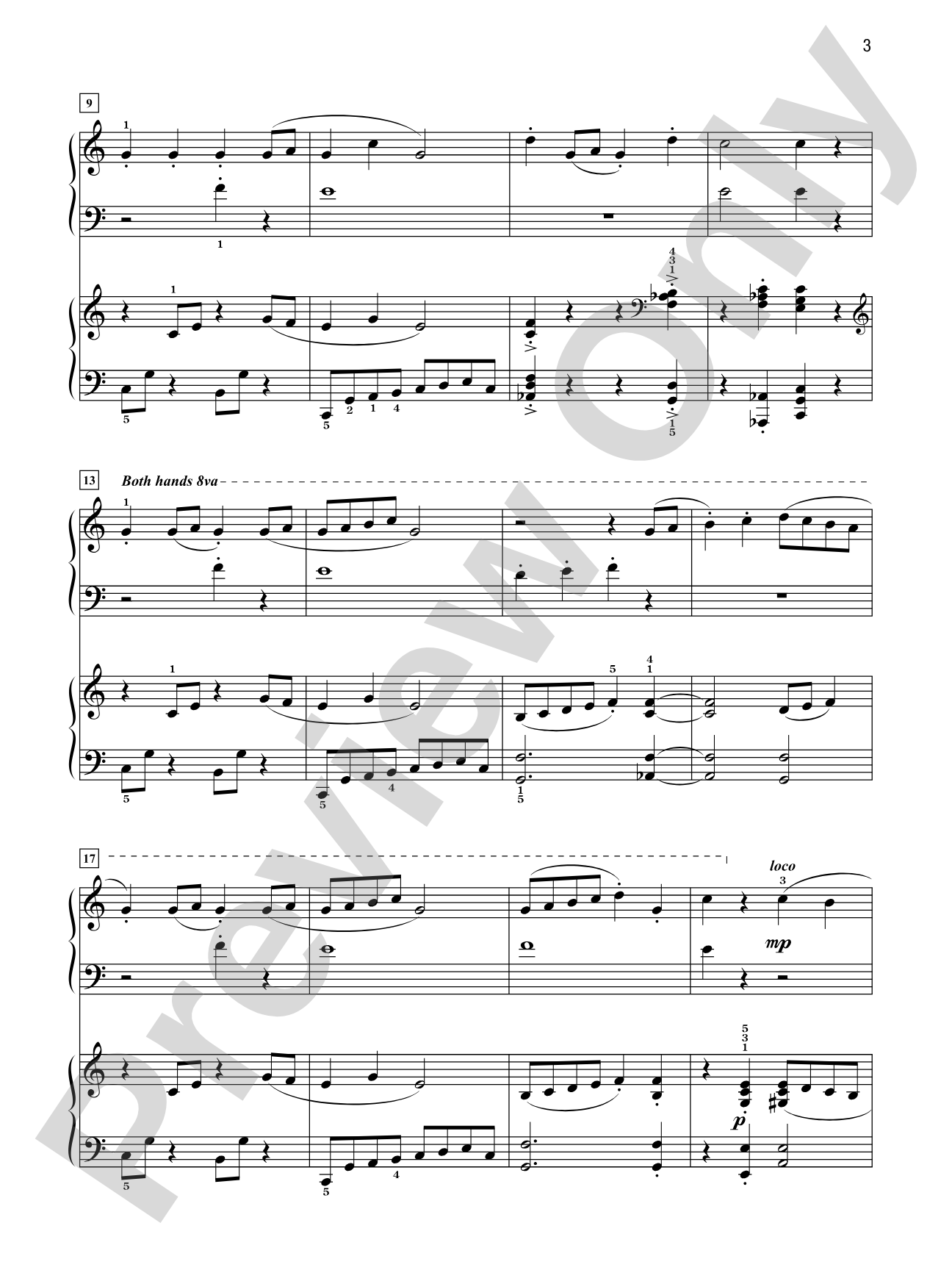
Concertino for the Young is a work in three movements that helps elementary students develop skills in balance, technique, and artistry. Beginning with an energetic first movement, followed by a lyrical second movement, and ending with a lively third movement, this piece provides unique technical and listening challenges related to the varied articulations and phrase shaping. Together with the second piano accompaniment to be played by a teacher, older student, or relative, students will experience the thrill and fun of performing a concerto. Movements: Allegro con brio * Andantino calore * Allegro giocoso. A Federation Festivals 2024-2028 selection.


Don't just read it, hear it, play along with it, and watch your students grow with it. In MakeMusic Cloud, Concertino for the Young - Piano Duo (2 Pianos, 4 Hands): Piano Duets & Four Hands comes alive with professional accompaniment, adjustable tempo, and built-in practice tools that turn solo practice into real progress.
Open in the Player
Jump straight in and assign it today.
Start Your Free Trial
Open this title and explore the full library in minutes.
Sample Audio
1
01 Allegro con brio
--:--
2
02 Andantino calore
--:--
3
03 Allegro giocoso
--:--
01 Allegro con brio
0:00
0:00
Sample Video
1 / 3
Additional Details
Series:
Student Concerto
Publisher:
Alfred Music
Page Count:
16
SKU:
00-PB-0000905
More about this title
About the Composer: Dennis Alexander

Dennis Alexander has been composing for Alfred Music Publishing since 1986, building an international presence through more than 400 published works and recordings that span all proficiency levels. His reputation rests on a deep understanding of what student pianists need at each stage of development. He earned his undergraduate degree from the University of Kansas and went on to teach piano pedagogy for 24 years at the University of Montana, where he also chaired the piano department. After relocating to California, he held faculty positions at Cal State Fullerton and Cal State Northridge while maintaining a private teaching studio.
Alexander's career extends well beyond the page. He made his New York recital debut at Carnegie Recital Hall in 1987 as a soloist and chamber musician, and continues to perform internationally as both a recitalist and collaborative artist. His work has been commissioned by numerous state and national music organizations, and he regularly conducts master classes and clinics at state and national music teachers conventions. He now resides in Albuquerque, New Mexico, where he balances an active touring and composing schedule with his ongoing commitment to music education.
Why we love this
Alexander knows exactly how to craft a three-movement work that sounds like a real concerto while staying within elementary reach. The contrasting movements give students a complete musical journey without overwhelming them, and the dialogue between the two pianos creates genuine ensemble experience rather than simple accompaniment. This piece delivers the confidence boost of performing a 'big work' while building real interpretive skills.
What to expect
The first movement launches with energetic brilliance, demanding control and clarity. The middle movement offers warmth and lyrical breathing room, inviting students to discover genuine phrase singing at the keyboard. The finale zips back into spirited, playful motion, leaving both pianists and audience with a sense of genuine accomplishment.
Who it's for
Elementary pianists who are ready for ensemble experience and the confidence that comes with performing a multi-movement work. This is equally valuable for a student advancing to early intermediate work, or for a younger student with stronger technique who benefits from the artistic depth the three-movement structure offers.
How to get the most out of it
- Balance the dialogue between the two parts consciously during rehearsal; the student soloist should shape phrases expressively while the accompanying pianist listens and responds rather than dominate.
- Mark articulation changes clearly in the score before performance; the varied articulations are central to the piece's character and deserve focused practice at half tempo.
- Establish a steady physical presence together at the keyboard; when two pianists share the stage, visual unity and synchronized breathing create confidence and musical cohesion.
- Record yourselves in rehearsal and listen back specifically to the transition points between movements, where momentum and tone color shift most dramatically.
How to use it
Program this as a featured duet on a student recital or festival performance; the three-movement form gives it concert-length weight without requiring a large ensemble. It also works beautifully as a centerpiece for a studio recital where multiple duet pairings are performing, or as a spring semester goal that gives an elementary student something substantial to work toward over several months.
Skills your students will build
- Balance and blend between two independent melodic lines
- Varied articulation control (staccato, legato, and mixed articulations within phrases)
- Phrase shaping and expressive interpretation across contrasting tempos and characters
- Ensemble listening and response to a collaborating pianist
- Stamina across three movements with distinct technical demands
- Reading and interpreting performance markings at multiple dynamic and tempo levels