Concertino for Cello And Orchestra Sheet Music Preview

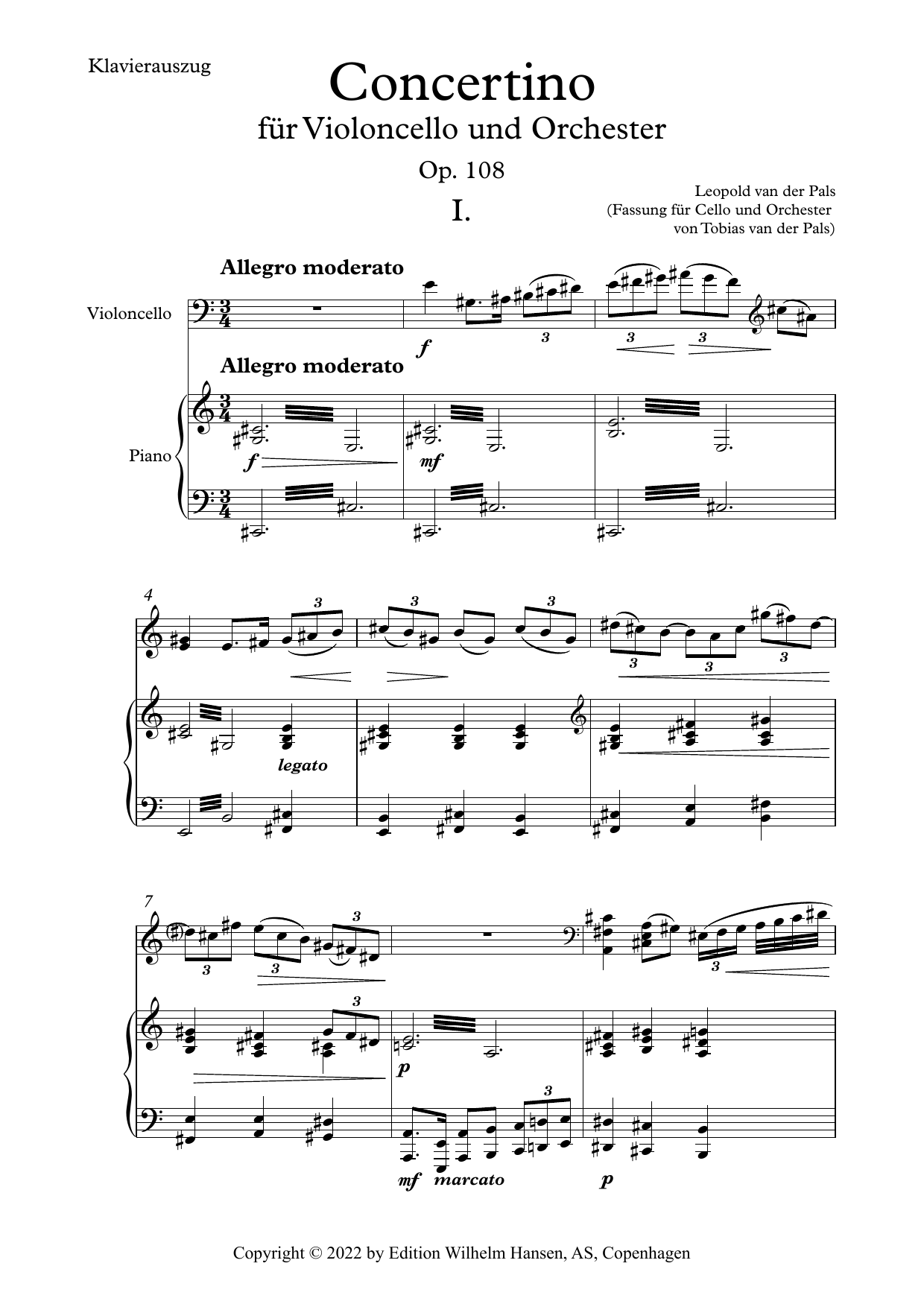
Concertino for Cello And Orchestra: String Orchestra Conductor Score & Parts

By Leopold van der Pals

Item: 35-PK01526739

Digital Download
$18.99

Buy Extra Parts (Digital PDF Download)

Parts Added to Cart!

Description
Concertino for Cello And Orchestra

Concertino for Cello And Orchestra: String Orchestra Conductor Score & Parts isn't in MakeMusic Cloud just yet...but it could be. Let us know you'd like to see it, and you'll help shape what comes next. In the meantime, start a free trial and dive into thousands of interactive titles your students can play along with today.

Sample Audio
No sample audio found.
Sample Video
Additional Details
Publisher: Hal Leonard
SKU: 35-PK01526739

More about this title

Why we love this

A concertino gives your soloist a genuine feature without requiring the full weight of a concerto. Van der Pals writes idiomatically for cello, creating material that sits well under the hand while remaining musically substantial. String orchestras benefit from the chamber-like texture of this piece, where every voice counts and clarity is paramount.

What to expect

Elegant and lyrical, with the cello singing over a supportive but active string texture. The piece has the courtly grace of early twentieth-century salon music, asking for refinement and musicality rather than virtuosic display.

Who it's for

String orchestras of intermediate to advanced ability looking for a vehicle that showcases a capable cellist. This works equally well for youth orchestras wanting to spotlight a senior soloist or for community ensembles seeking music that balances solo display with collaborative string writing.

How to get the most out of it

  • Balance the cello line so it floats above the accompaniment rather than cutting through it. String players tend to overpower soloists, so mark your parts accordingly.
  • Secure rhythmic unity between the soloist and first violins during thematic passages. Independent tempo pulls will fragment the line across the texture.
  • Shape the orchestra's background figures with attention to dynamic contour. These supporting lines should breathe and phrase even when they're not melodic.
  • Allow the cellist room for subtle rubato in lyrical passages without losing the orchestra's forward motion underneath.

How to use it

Feature this as a soloist spotlight in a concert mixing chamber and orchestral repertoire. It pairs naturally with other string-based works and provides a natural bridge between pure orchestral selections and smaller ensemble pieces.

Skills your students will build

  • Balancing a solo line within ensemble texture
  • Coordinating independent rhythmic patterns across instrumental sections
  • Sustaining lyrical phrasing across multiple measures
  • Responding to a featured soloist while maintaining ensemble cohesion
  • Executing classical period articulation and bowing conventions

You May Also Like