Concertino for Cello And Orchestra Sheet Music Preview

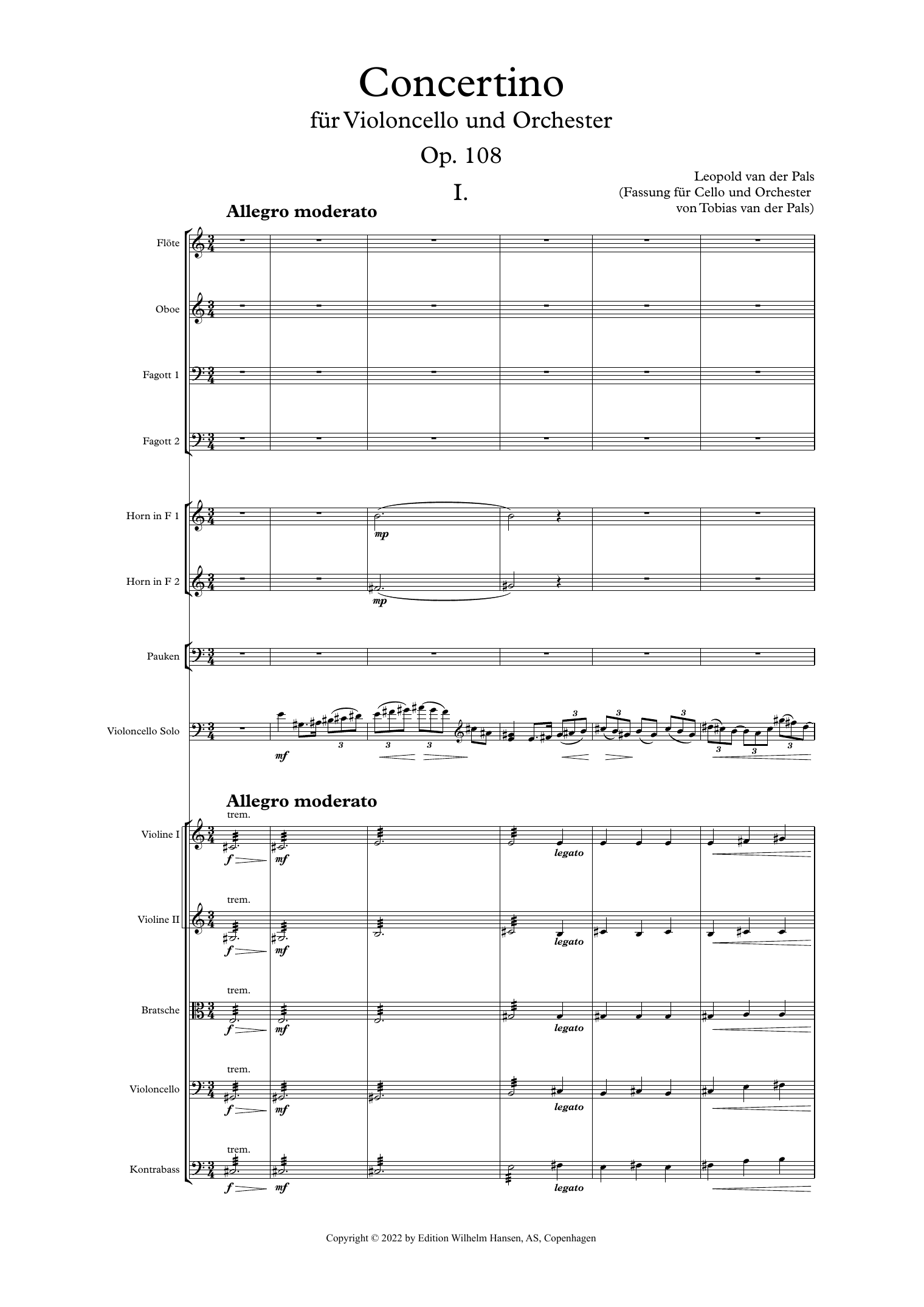
Concertino for Cello And Orchestra: String Orchestra Conductor Score & Parts

By Leopold van der Pals

Item: 35-PK01525353

Digital Download
$35.00

Buy Extra Parts (Digital PDF Download)

Parts Added to Cart!

Description
Concertino for Cello And Orchestra

Concertino for Cello And Orchestra: String Orchestra Conductor Score & Parts isn't in MakeMusic Cloud just yet...but it could be. Let us know you'd like to see it, and you'll help shape what comes next. In the meantime, start a free trial and dive into thousands of interactive titles your students can play along with today.

Sample Audio
No sample audio found.
Sample Video
Additional Details
Publisher: Hal Leonard
SKU: 35-PK01525353

More about this title

Why we love this

A concertino for cello gives your soloist real musical weight without the demands of a full concerto. Van der Pals writes idiomatically for the instrument, allowing string orchestras to showcase both ensemble precision and a featured performer in a single, satisfying work.

What to expect

Lyrical and spirited. The cello sings with warmth and expressivity, supported by the shimmering colors of the string section. A work built on melodic generosity rather than technical display.

Who it's for

String orchestras with an advanced cellist looking to feature a soloist in a work that sits comfortably between concerto and chamber repertoire. This suits ensembles ranging from advanced high school programs to community and university orchestras.

How to get the most out of it

  • Balance the solo cello line so it projects clearly above the strings without drowning the ensemble texture; this is especially important during tutti passages where the soloist must still sing through.
  • Establish a unified vibrato approach across your cello section to maintain coherence when doubling the solo part or supporting harmonically.
  • Shape phrase continuity between sections by attending to how the accompanimental figures transition; avoid abrupt tempo or dynamic shifts that fragment the form.

How to use it

Pair this with lighter orchestral fare to create an intimate concert segment that spotlights your standout cellist. It also works well on a program mixing concertante works, giving the soloist's performance time to breathe between larger ensemble numbers.

Skills your students will build

  • Accompanying a solo line with dynamic responsiveness
  • Sustaining unified string tone across multiple sections
  • Reading and executing rapid scalar and arpeggiatic passages
  • Balancing ensemble cohesion while featuring individual voices

You May Also Like