
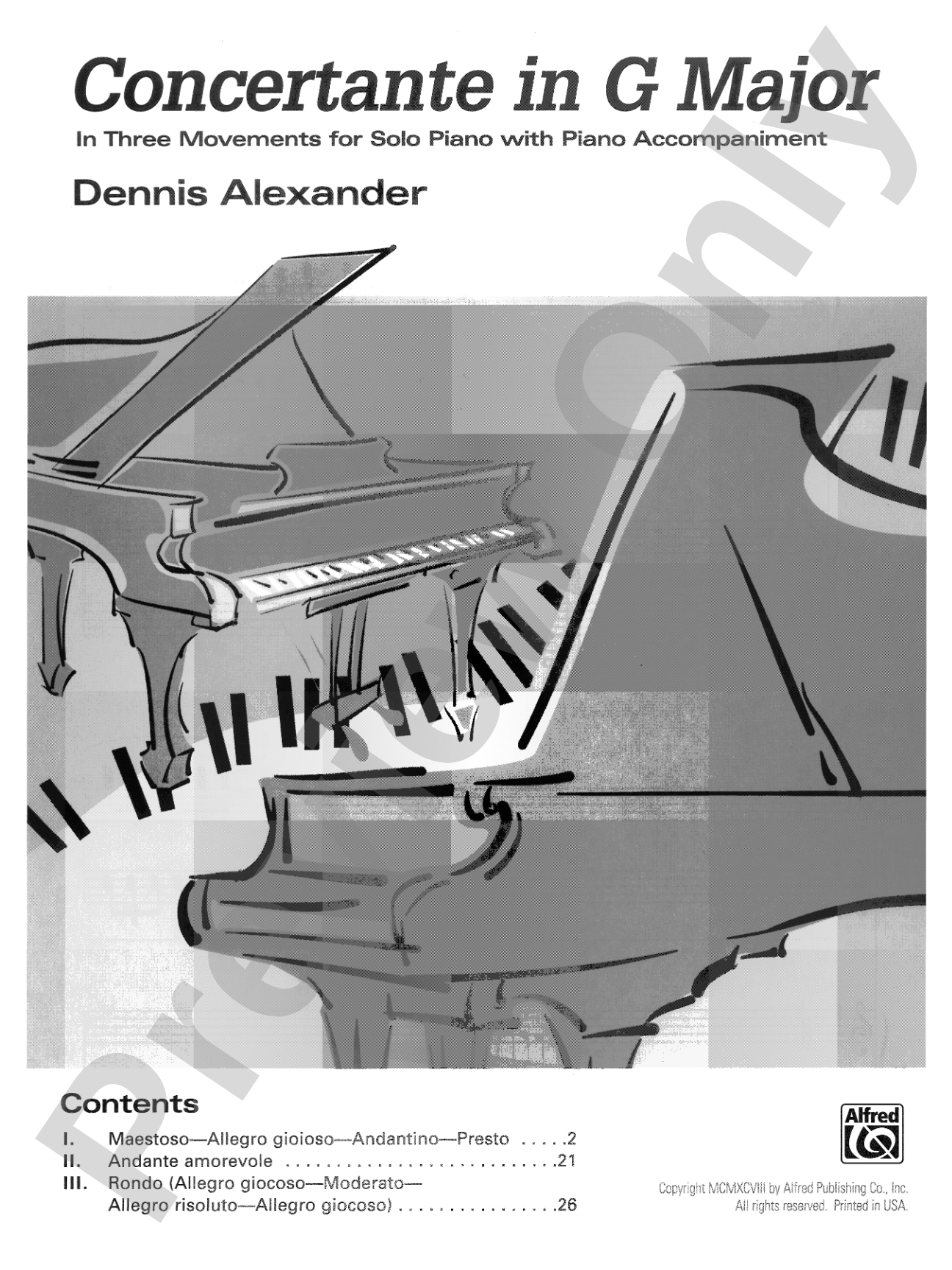
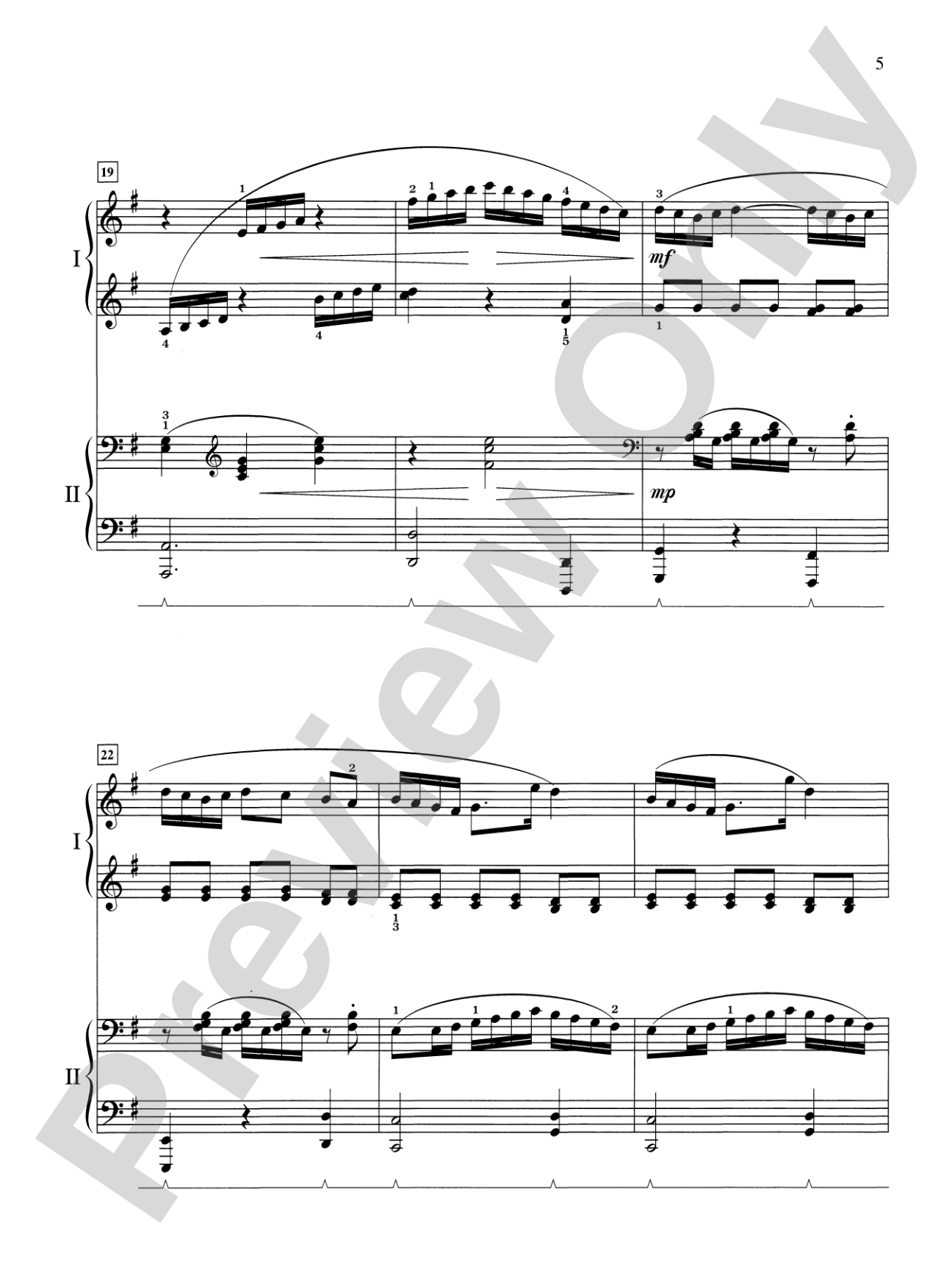
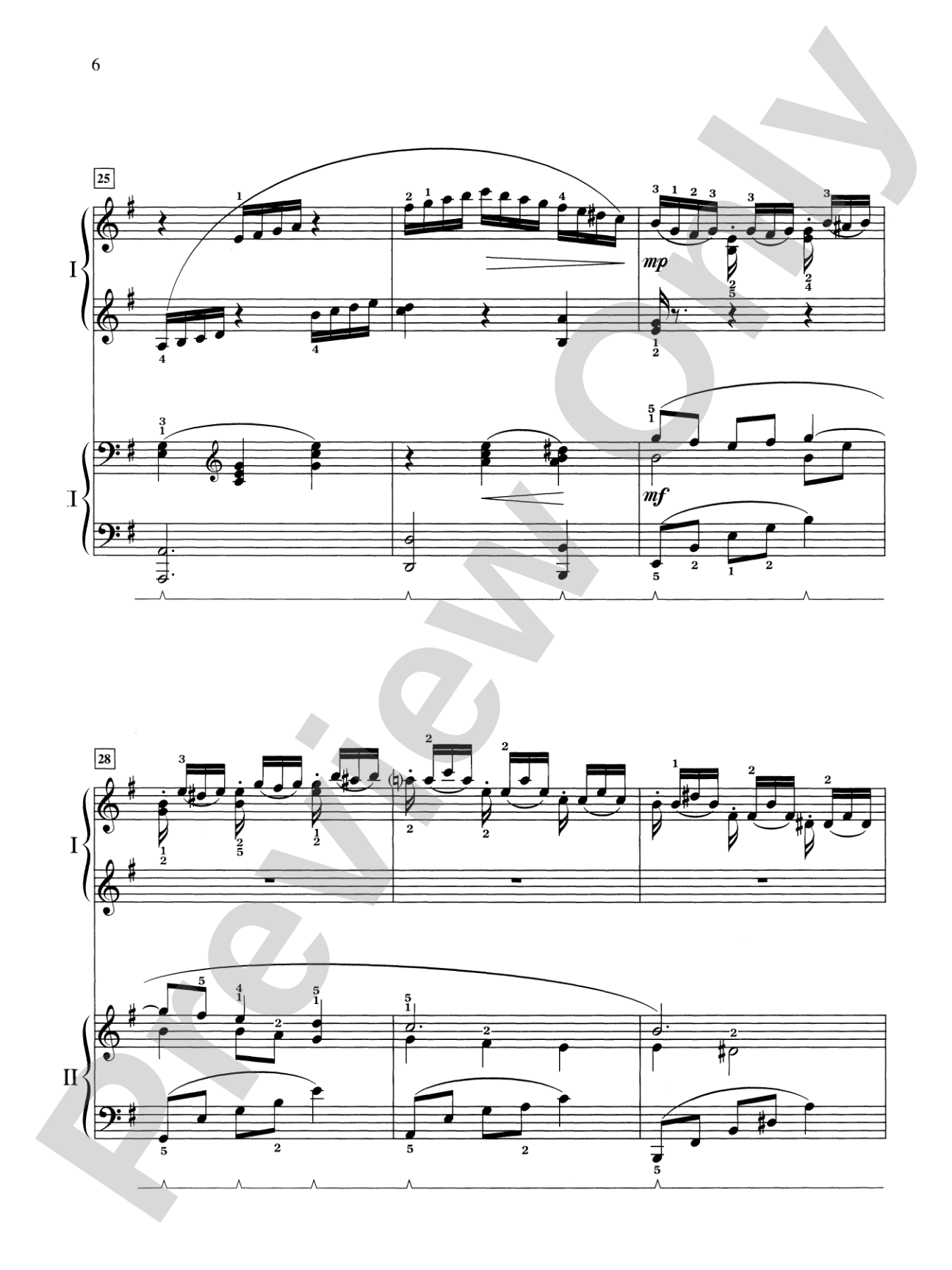
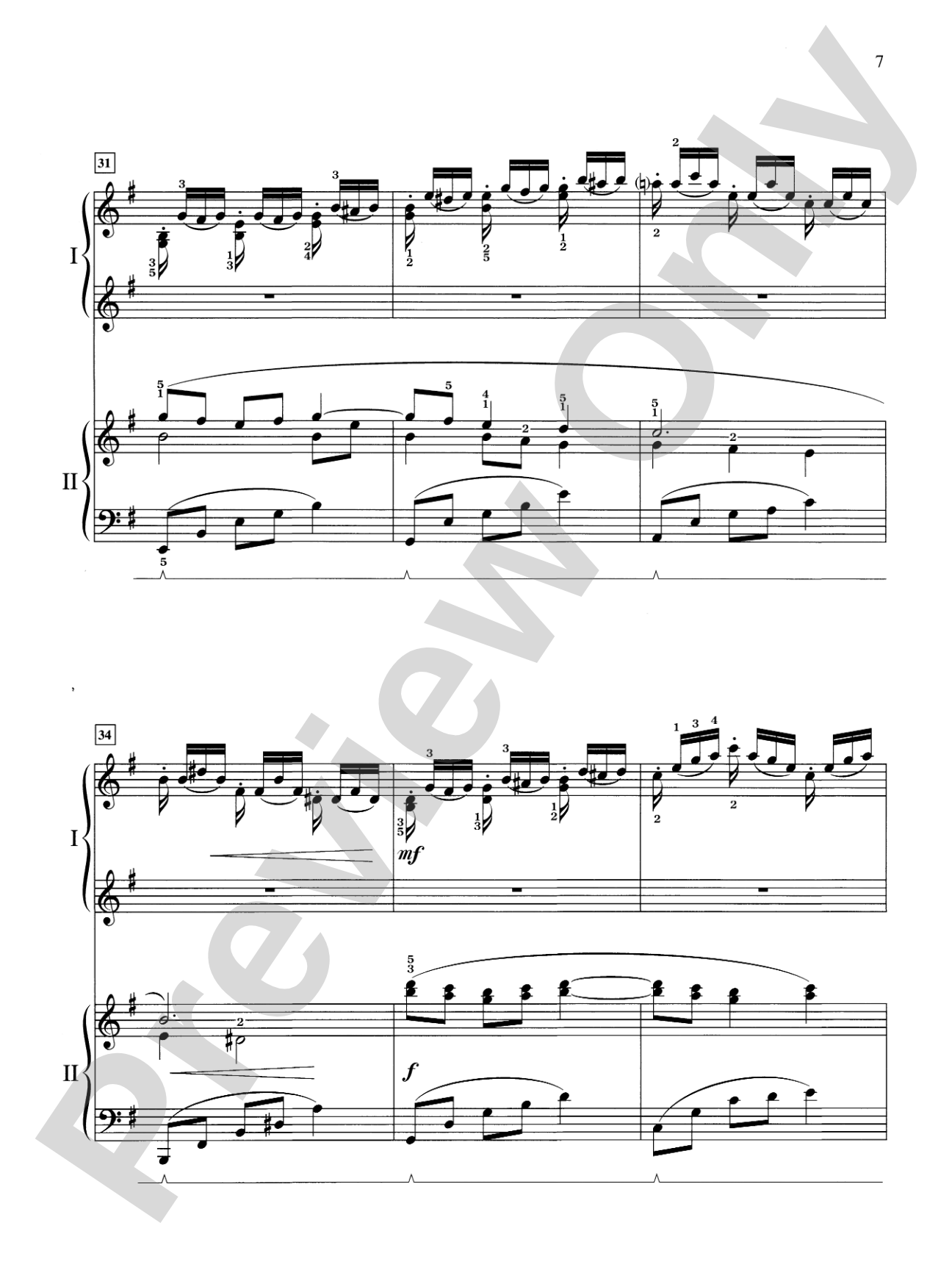
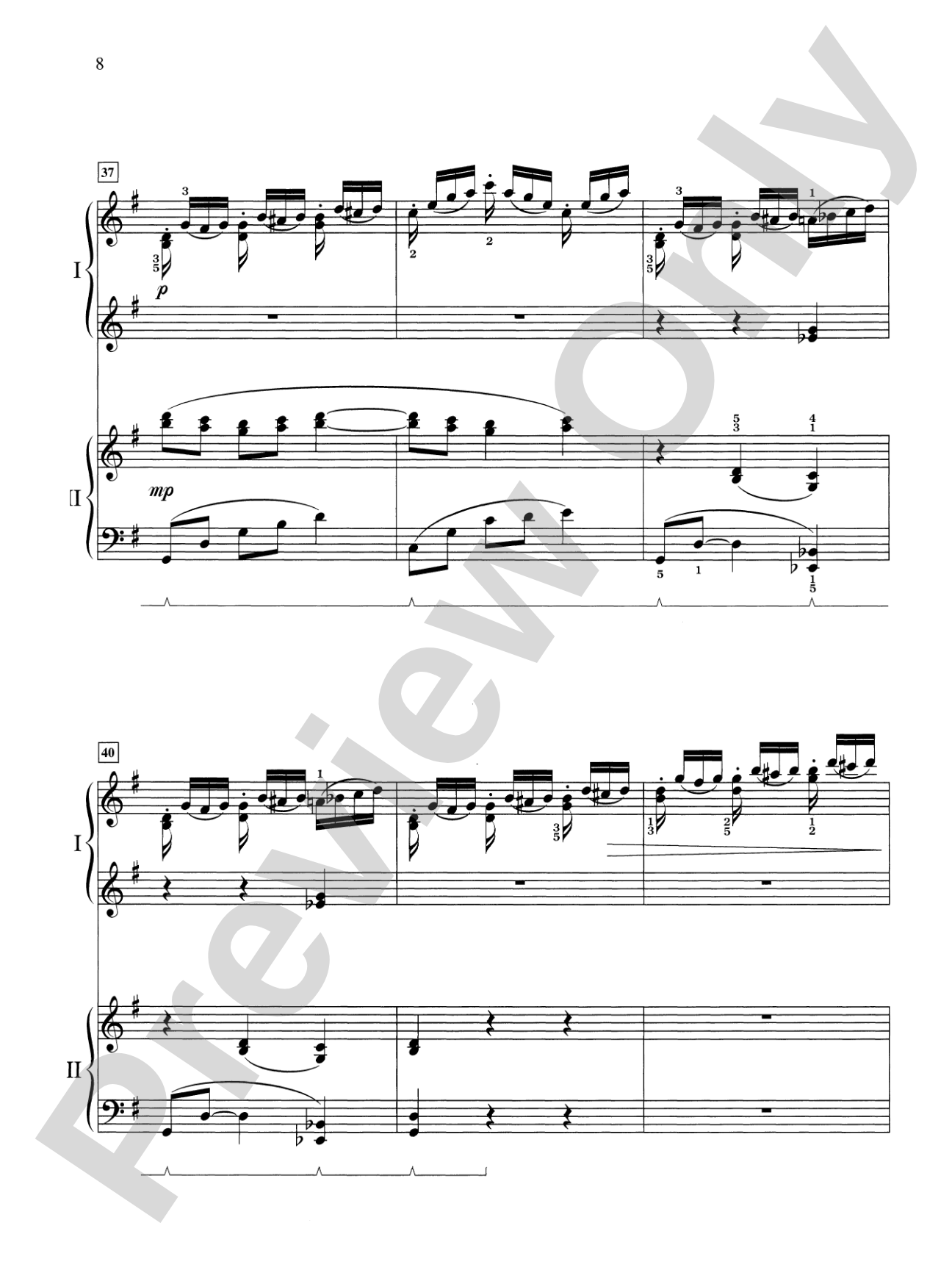

Concertante in G Major: In Three Movements for Solo Piano with Piano Accompaniment - Piano Duo (2 Pianos, 4 Hands): Piano Duets & Four Hands
In Three Movements for Solo Piano with Piano Accompaniment
By Dennis Alexander
Level: Early Advanced
Item: 00-PS-0016205

$8.99
Pickup currently not available
Related Items
Concertante in G Major: Piano Duo (2 Pianos, 4 Hands) Sheet (2 copies required) |
$8.99
|
View |
Description
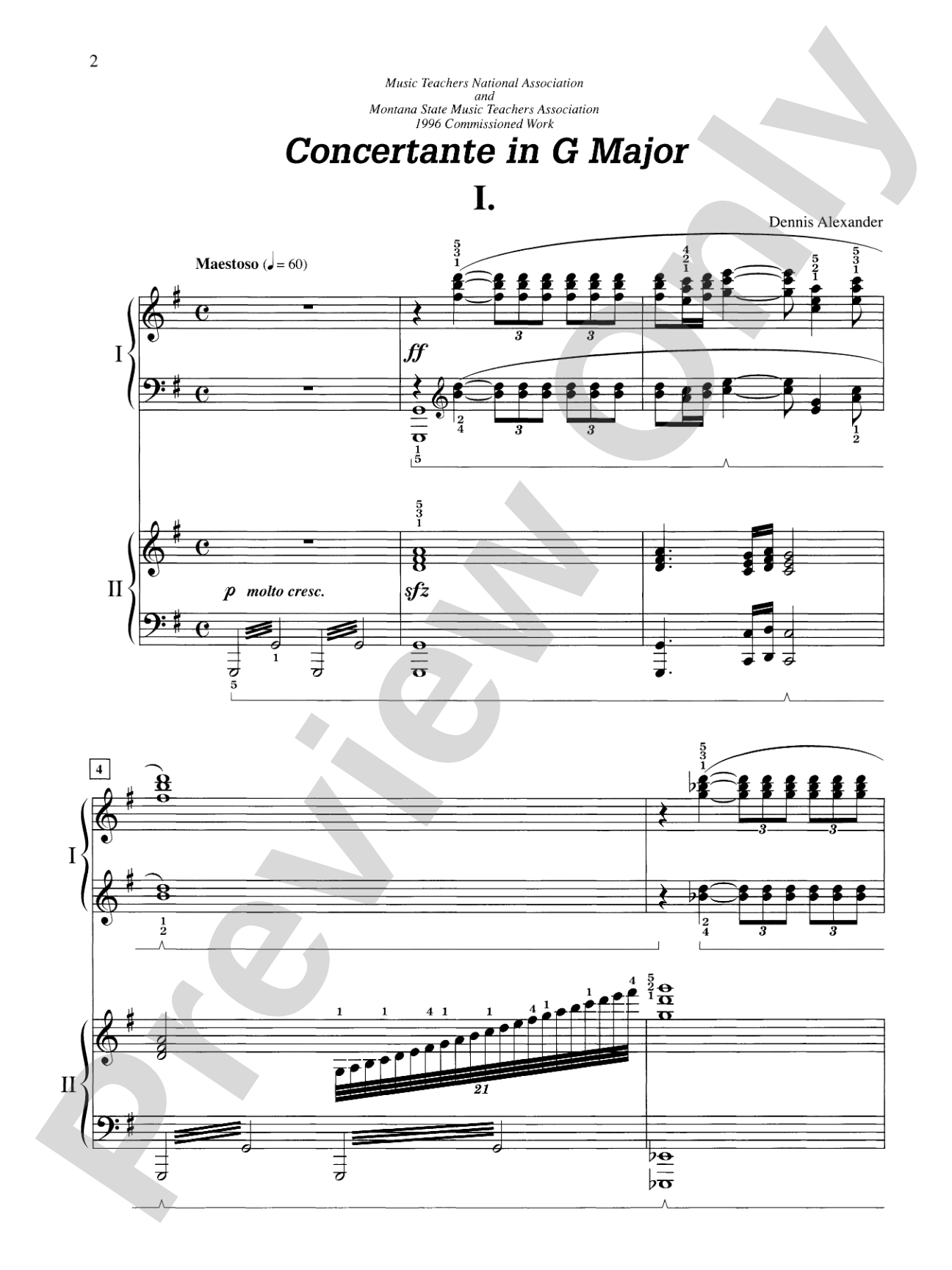
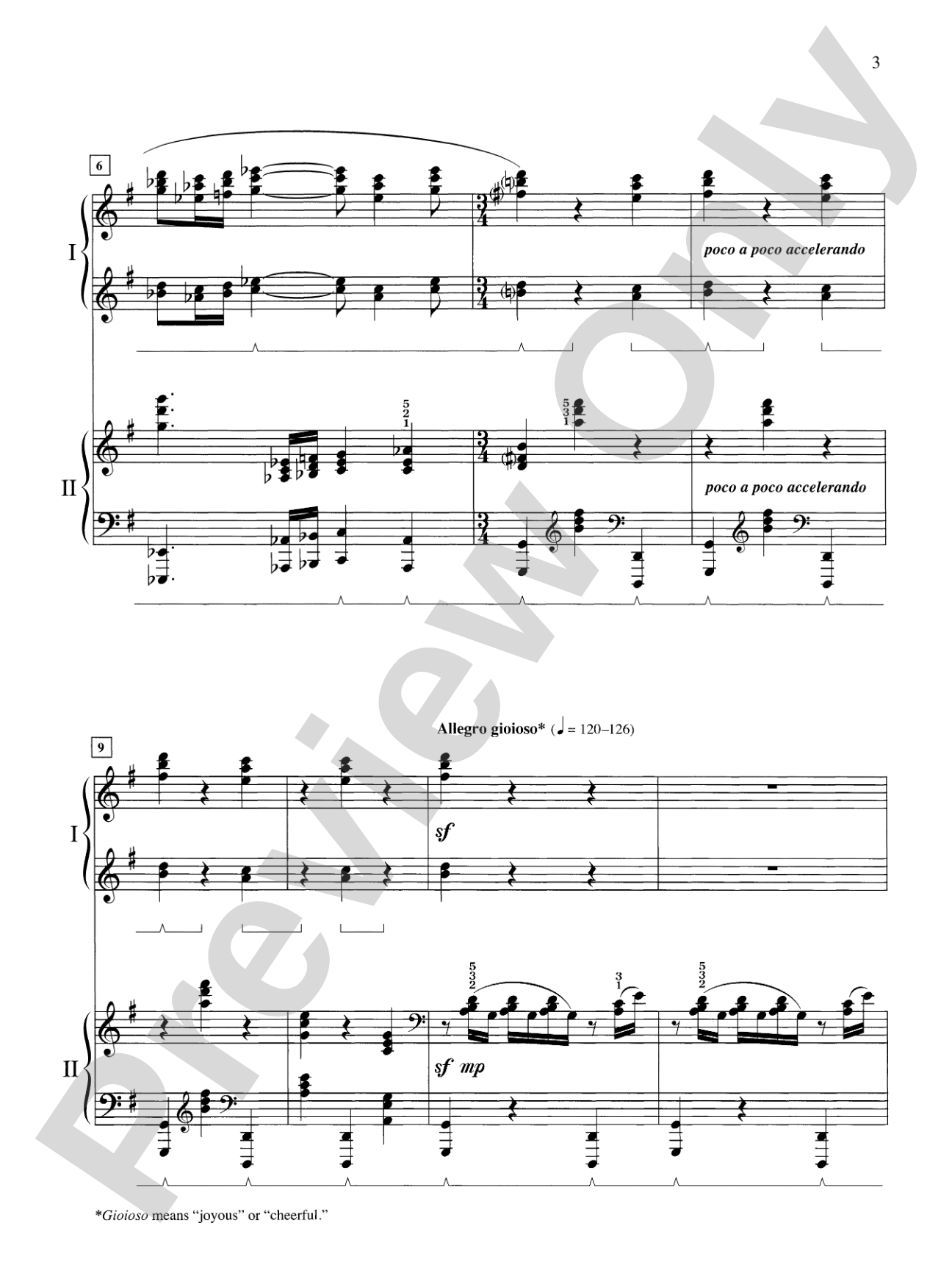
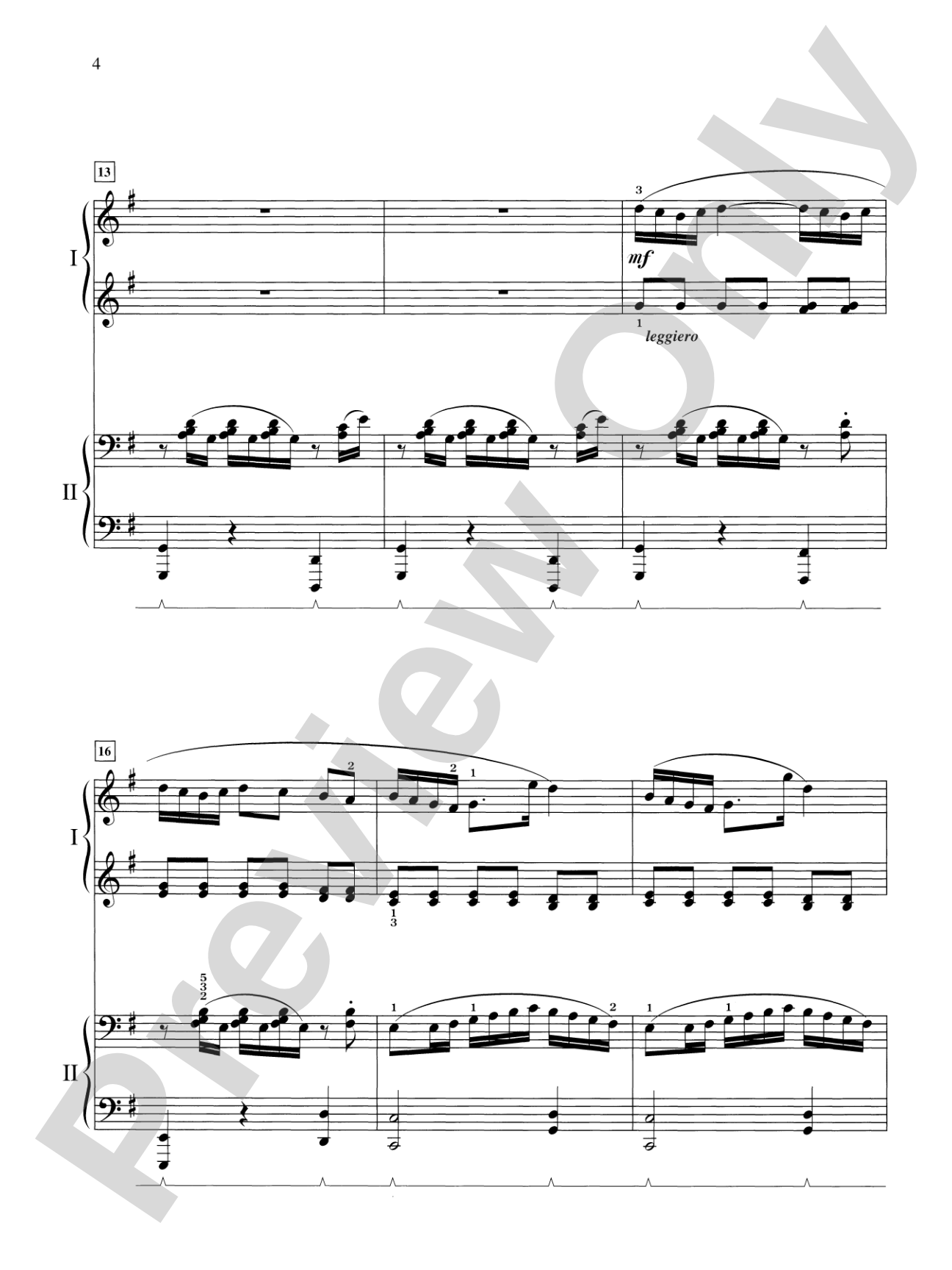
This electrifying 3-movement work contains brisk passage work designed to fit neatly in the hand, seamless harmonic shifts, thrilling meter changes and built-in technical fireworks throughout. 2 copies needed for performance. A Federation Festivals 2024-2028 selection.


Don't just read it, hear it, play along with it, and watch your students grow with it. In MakeMusic Cloud, Concertante in G Major: In Three Movements for Solo Piano with Piano Accompaniment - Piano Duo (2 Pianos, 4 Hands): Piano Duets & Four Hands comes alive with professional accompaniment, adjustable tempo, and built-in practice tools that turn solo practice into real progress.
Open in the Player
Jump straight in and assign it today.
Start Your Free Trial
Open this title and explore the full library in minutes.
Sample Audio
No sample audio found.
Sample Video
No sample videos found.
Additional Details
Series:
The Alfred Ensemble Series
Publisher:
Alfred Music
Page Count:
40
SKU:
00-PS-0016205
More about this title
About the Composer: Dennis Alexander

Dennis Alexander has shaped American educational piano music for decades through his prolific output with Alfred Music Publishing, beginning in 1986. His catalog of over 400 compositions and recordings has established him as one of the most performed composers of pedagogical piano literature worldwide. Alexander earned his undergraduate degree from the University of Kansas under Richard Reber's tutelage and spent 24 years as piano pedagogy faculty and department chair at the University of Montana before relocating to California, where he taught at Cal State Fullerton and Cal State Northridge.
Beyond the studio and classroom, Alexander maintains an active recital career as a soloist, accompanist, and chamber musician. He has collaborated with internationally recognized soloists and served as a clinician at state and national music teachers conventions, including conducting the intermediate master class at the 2009 MTNA national convention in Atlanta. His international engagement extends to performance tours and workshops throughout Southeast Asia, as well as judging roles in international competitions. Alexander currently resides in Albuquerque, New Mexico, where he continues his composing and touring schedule.
Why we love this
Alexander writes duo repertoire that avoids the trap of unequal parts; both pianists engage with genuine musical material and technical substance from start to finish. The harmonic language is sophisticated enough to hold adult players' attention while the hand positions and passage work remain ergonomically thoughtful, making this accessible at the early advanced level rather than technically punishing. As a Federation Festivals selection, it arrives ready for competition or recital programming with built-in appeal to students who want to showcase their facility.
What to expect
Energetic and propulsive, with virtuosic moments that feel earned rather than showy. The three-movement arc moves through contrasting moods while maintaining the brilliance and clarity of writing that invites both players to feel the thrill of ensemble precision.
Who it's for
Early advanced pianists ready to perform at a duo recital, chamber concert, or festival competition. This works equally well for two students at similar levels or an advanced student paired with a teacher who wants to demonstrate professional-level duo playing.
How to get the most out of it
- Balance the keyboard parts by adjusting your bench height and seat position relative to your partner before rehearsing; the primo piano (solo voice) should project naturally without either player compensating dynamically.
- Mark the meter changes visually in both scores and practice them separately first; snap through the transitions in slow tempo so both players lock the beat shift together.
- Listen through recordings or perform the accompaniment part solo to internalize its harmonic architecture; understanding the harmonic shifts underneath makes your rhythmic entries precise.
- Work the passage work in sections, isolating hand shapes and identifying where the figuration sits comfortably on the keyboard rather than running through it at tempo unprepared.
How to use it
Pair this with another duo to create a substantial four-hands showcase within a larger recital, or program it as the anchor to a chamber evening featuring other collaborative works. The brisk energy and technical display make it an excellent choice for festival competitions where judges expect solid writing and musical substance from ensemble entries.
Skills your students will build
- Rhythmic precision and vertical alignment in ensemble playing
- Technical facility in varied hand positions across the keyboard
- Listening and balance adjustment between primo and secondo voices
- Reading and executing meter changes (transitions between contrasting time signatures)
- Harmonic awareness through the accompaniment voice
- Stamina in executing sustained passage work without fatigue or unevenness