
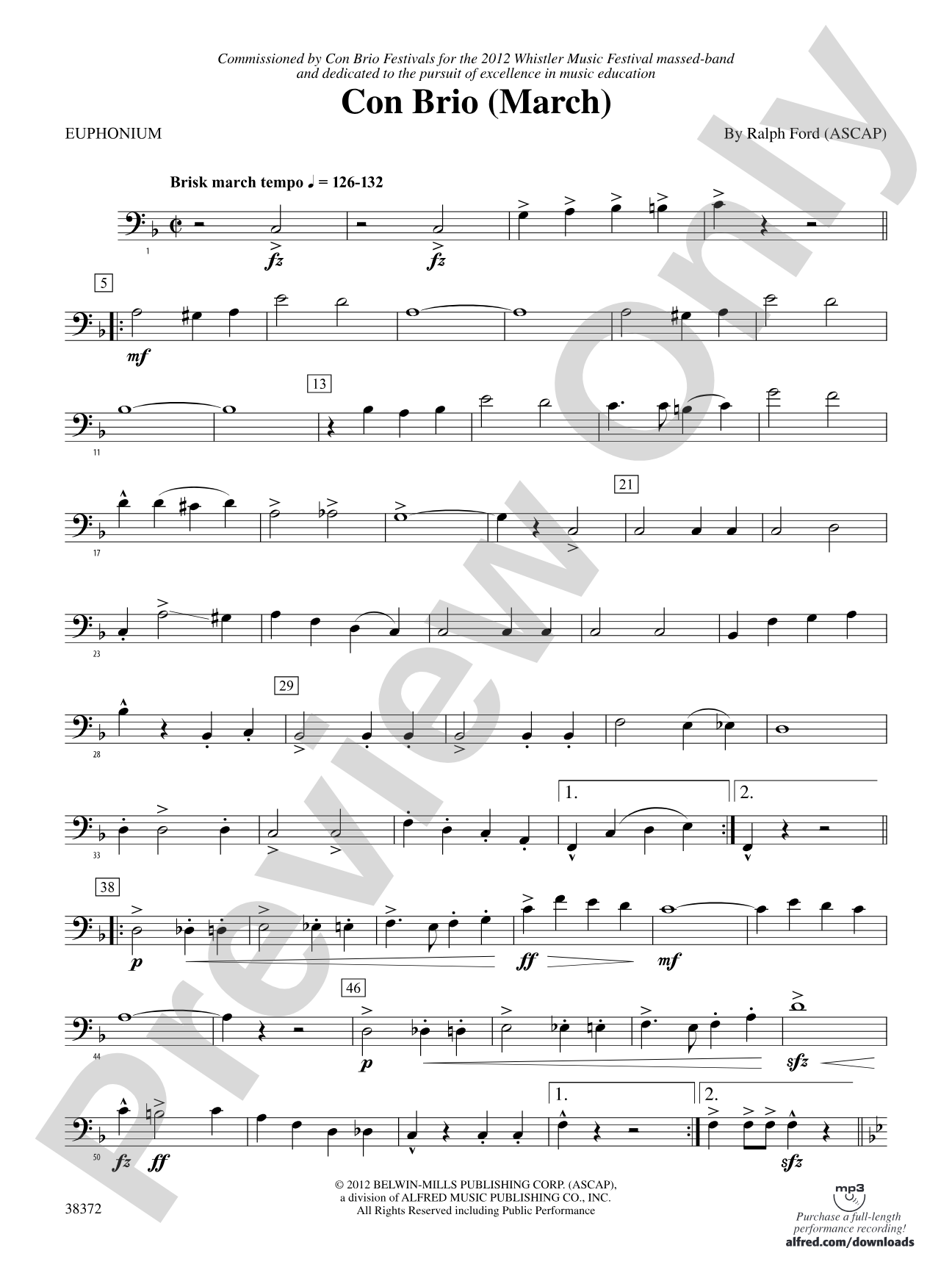

Con Brio: Baritone B.C.
March
By Ralph Ford
Grade: 3 (Medium Easy)
Item: 00-PC-0015454_BBC1
$3.00
Pickup currently not available
Description
Scored in traditional, or standard march form, this original work has all the opportunities for varied performance that are found in Sousa's revered marches. The trio section features a melody from "The Maple Leaf Forever" and is quite appropriate since the march was commissioned and premiered by the Con Brio Festivals in British Columbia. This is a sparkling new original march in the style that is at the very root of the concert band art form. A brisk energizing choice! (3:00) This title is available in MakeMusic Cloud.


Don't just read it, hear it, play along with it, and watch your students grow with it. In MakeMusic Cloud, Con Brio: Baritone B.C. comes alive with professional accompaniment, adjustable tempo, and built-in practice tools that turn solo practice into real progress.
Open in the Player
Jump straight in and assign it today.
Start Your Free Trial
Open this title and explore the full library in minutes.
Sample Audio
1
Audio File
--:--
0:00
0:00
Sample Video
No sample videos found.
Additional Details
Series:
Belwin Concert Band
Publisher:
Alfred Music
Page Count:
236
SKU:
00-PC-0015454_BBC1
More about this title
About the Composer: Ralph Ford

Ralph Ford is a prolific composer and arranger whose career spans university instruction, media production, and commercial composition. Since 1986, he has held faculty positions teaching orchestration, arranging, theory, and applied brass while maintaining an active compositional practice. He earned his Master of Science degree in 1988 and has spent nearly three decades balancing academic work with professional commissions for orchestras, concert bands, jazz ensembles, and marching groups across educational, military, and community settings.
As an exclusive composer and arranger for the Belwin division of Alfred Music, Ford has produced over 250 published works performed internationally by university, school, and professional ensembles. His experience extends beyond concert music into media and broadcast production, including work on national news packages, television and radio programming, and advertising composition. His background as a working arranger beginning in his teen years informs his accessible, performable approach to concert band writing.
Why we love this
Con Brio delivers the energy and structural satisfaction of a genuine march without requiring advanced technical demands from your ensemble. Ford's knowledge of what makes a march work in the concert band idiom shows in the balanced writing and the clever incorporation of "The Maple Leaf Forever" in the trio, which adds regional resonance while maintaining stylistic coherence. The three-minute duration and Grade 3 scoring make it an ideal opener or closer that audiences will recognize as quintessentially American band music.
What to expect
Bright and propulsive, with the snap and forward drive of a well-written march. The trio section shifts to a singing, almost nostalgic quality when the Canadian folk melody enters, creating a satisfying emotional arc. It's music designed to move audiences and musicians alike, energizing without exhaustion.
Who it's for
Grade 3 bands seeking a polished, energetic concert piece that sounds more substantial than its difficulty level suggests. This work suits ensembles building confidence in their ability to execute style-specific performance practices, particularly marching form conventions. Directors programming festivals, pops concerts, or community band events will find a crowd-pleasing selection that doesn't compromise musicality.
How to get the most out of it
- Shape the opening section with forward momentum; the brisk tempo is the piece's character, not something to rush past or drag down.
- Bring out the melody line in the trio without sacrificing the supportive harmonic texture underneath; balance allows the "Maple Leaf Forever" quotation to breathe naturally.
- Use the repeats strategically if your rehearsal time is limited, but plan full performance if possible; the form rewards the complete journey.
- Mark dynamic contrasts clearly in parts; the sparkling effect depends on clean transitions between sections.
How to use it
Open a concert with this piece to set an upbeat tone and grab immediate attention. Program it alongside other march-form works to explore the breadth of the genre, or pair it with slower, lyrical selections to create dynamic contrast. Its British Columbia premiere and commissioning history make it a natural fit for regional or themed concerts celebrating North American band repertoire.
Skills your students will build
- Executing march form and phrase architecture typical of the concert band tradition
- Balancing melody and accompaniment in ensemble settings
- Performing at brisk tempos with precision and control
- Recognizing and interpreting style-specific articulation and phrasing conventions
- Reading and performing from a full conductor score alongside individual parts