
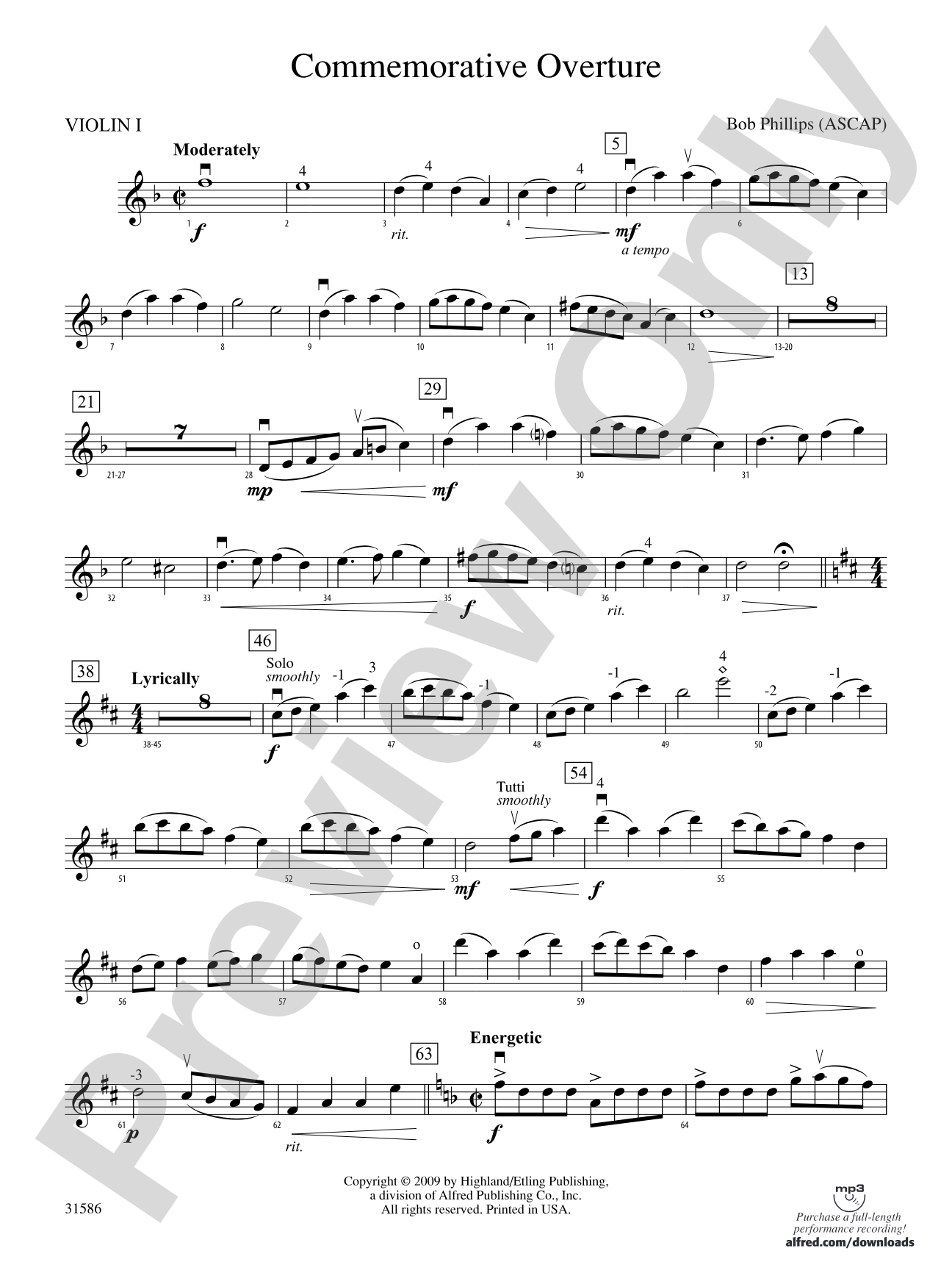

Commemorative Overture: 1st Violin
By Bob Phillips
Grade: 3
Item: 00-PC-0001753_VN1
$5.99
Pickup currently not available
Description
Opening with a flowing melody appearing in variations throughout the sections, then leading into lyric violin and cello solos and a duet, this piece has something for every player in your orchestra. The conclusion features a driving and energetic violin line while the low strings revisit the opening theme underneath the violin melody. Finishing with a glorious flourish, this overture is perfect whenever honor and remembrance is called for!


Don't just read it, hear it, play along with it, and watch your students grow with it. In MakeMusic Cloud, Commemorative Overture: 1st Violin comes alive with professional accompaniment, adjustable tempo, and built-in practice tools that turn solo practice into real progress.
Open in the Player
Jump straight in and assign it today.
Start Your Free Trial
Open this title and explore the full library in minutes.
Sample Audio
1
Audio File
--:--
0:00
0:00
Sample Video
No sample videos found.
Additional Details
Series:
Highland/Etling String Orchestra
Publisher:
Alfred Music
Page Count:
124
SKU:
00-PC-0001753_VN1
More about this title
About the Composer: Bob Phillips

Bob Phillips is a composer, educator, and conductor who has shaped string education through both innovative pedagogy and prolific musical output. Since the 1980s, he has authored over 25 instructional series and composed more than 200 works for orchestras and bands, earning recognition as an ASCAP award-winning composer whose pieces are performed regularly at the Midwest Clinic.
For 27 years, Phillips built the string program in Saline, Michigan into a nationally recognized model, developing ensembles that performed at state and national conferences, the White House, and international festivals. He has conducted numerous youth orchestras and all-state ensembles across the country, and his instructional DVDs and eclectic style publications (including the Philharmonic series and Sound Innovations) continue to serve thousands of teachers and students annually.
Why we love this
Phillips crafts this overture with genuine knowledge of what works in a string orchestra: he gives every section a moment to shine while maintaining clear harmonic and melodic direction. The architecture moves from introspective lyricism into driving energy, making it engaging for students while remaining sophisticated enough to feel substantial in a concert program.
What to expect
The music unfolds with dignity and warmth, beginning reflectively before building into purposeful motion. Lyric passages create moments of intimacy, while the energetic conclusion transforms that opening melody into something triumphant and forward-moving.
Who it's for
This overture suits Grade 3 string orchestras with solid intonation and rhythmic confidence. Directors preparing concerts centered on themes of tribute, remembrance, or formal occasion will find an accessible piece that allows students to deliver genuine musical communication without excessive technical demands.
How to get the most out of it
- Shape the opening flowing melody with a consistent bow flow across all string sections; the variations that follow will land more effectively if the initial statement has clear phrase direction.
- Balance the lyric violin and cello solos against the accompaniment by having the supporting players pull back dynamically rather than asking soloists to force their tone over the texture.
- Bring out the dialogue between high violin lines and low string restatement of the opening theme in the conclusion; mark these entrances in your score to ensure clarity when the energy builds.
- Drill the driving violin passage at the end separately before full orchestra rehearsal so the string section can lock the rhythmic precision needed for the final flourish.
How to use it
Open a concert program with this piece to establish a reflective tone and signal to your audience that the evening will include meaningful musical content. It also works well as a centerpiece in any program marking a dedication, memorial, or milestone where the music itself carries ceremonial weight without being overly solemn.
Skills your students will build
- Sustaining lyric phrasing across longer melodic lines
- Balancing soloistic writing against orchestral accompaniment
- Executing thematic development and variation
- Controlling dynamic contrast in driving, energetic passages
- Ensemble cohesion when multiple sections carry melodic material simultaneously