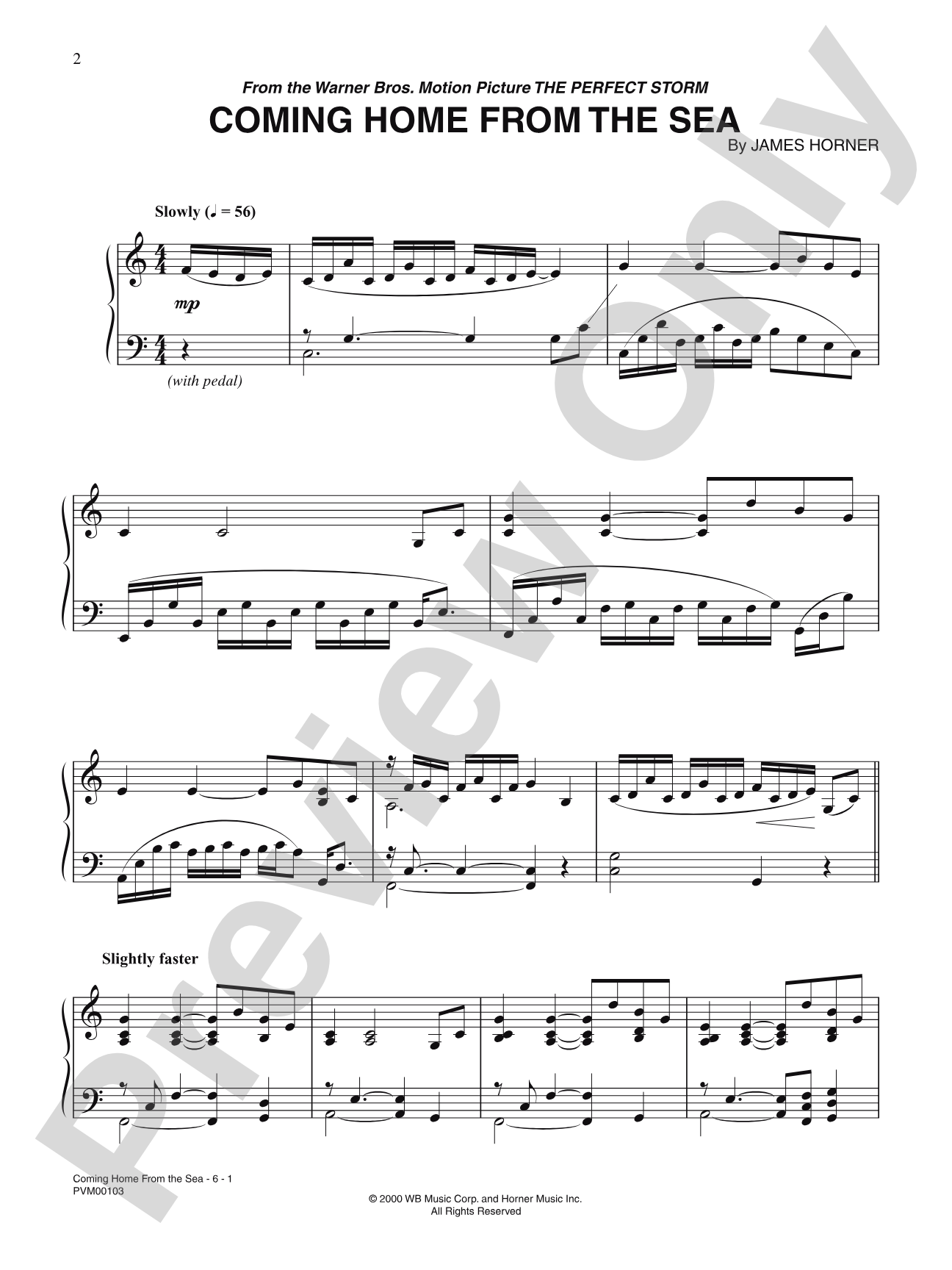
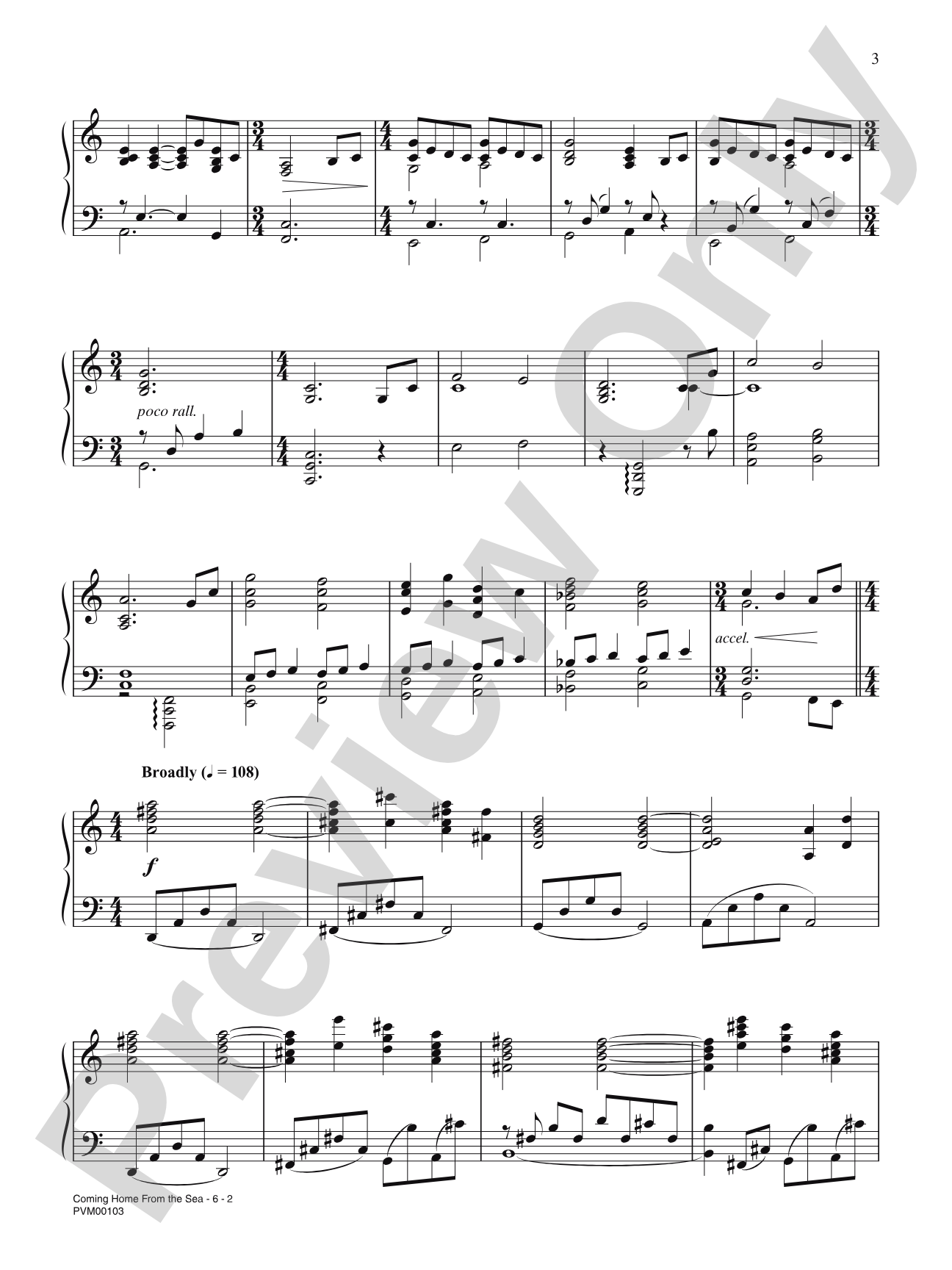
Coming Home from the Sea (from The Perfect Storm) Sheet Music Preview

Coming Home from the Sea (from The Perfect Storm): Piano

Composed by James Horner

Item: 00-PIP-000256

Digital Download
$3.99
Description

Coming Home from the Sea (from The Perfect Storm): Piano isn't in MakeMusic Cloud just yet...but it could be. Let us know you'd like to see it, and you'll help shape what comes next. In the meantime, start a free trial and dive into thousands of interactive titles your students can play along with today.

Sample Audio
No sample audio found.
Sample Video
Additional Details
Publisher: Alfred Music
Page Count: 8
SKU: 00-PIP-000256

More about this title

About the Composer: James Horner

James Horner (1953-2015) was a film composer whose orchestral sensibilities shaped blockbuster cinema for over three decades. His gift for sweeping melodic lines and emotional depth made him one of Hollywood's most prolific and honored composers, earning multiple Academy Award nominations and wins across genres ranging from fantasy to action to drama.

Why we love this

Horner's gift for writing memorable, singable melodies translates beautifully to the piano. This arrangement captures the reflective beauty of the original film score while remaining accessible enough for intermediate pianists who want to explore cinematic music with genuine substance.

What to expect

The piece carries a wistful, introspective quality that echoes the calm of arrival after a journey at sea. Horner's harmonies are warm and expansive, creating moments of emotional openness that feel both cinematic and deeply personal.

Who it's for

Pianists at the intermediate level and above will find this arrangement engaging, whether performing as a solo pianist or accompanying a vocalist. Singers exploring film score material will appreciate having a professional arrangement that honors both the piano and voice equally.

How to get the most out of it

  • Approach the piece as a narrative rather than a technical showpiece. The lyrical quality of Horner's writing rewards phrasing over precision.
  • Use the chord symbols to inform your harmonic awareness; they can guide your voice leading and help you shape the melodic contour naturally.
  • Balance the melody against the accompaniment so the vocal line (if performed with a singer) remains paramount, even in moments with fuller texture.
  • Take time to breathe at phrase endings, especially in longer melodic passages, to maintain the song-like quality inherent in the writing.

How to use it

Program this in a recital featuring film music, contemporary classical arrangements, or narrative-driven repertoire. It works particularly well as a standalone piece or paired with other movie score arrangements that emphasize orchestral melody and emotional storytelling.

Skills your students will build

  • Interpreting chord symbols and understanding harmonic function within a melody-driven context
  • Balancing melodic line against accompaniment texture
  • Sustaining lyrical phrasing across longer melodic arcs
  • Coordinating with a vocalist, if performing as accompanist

You May Also Like