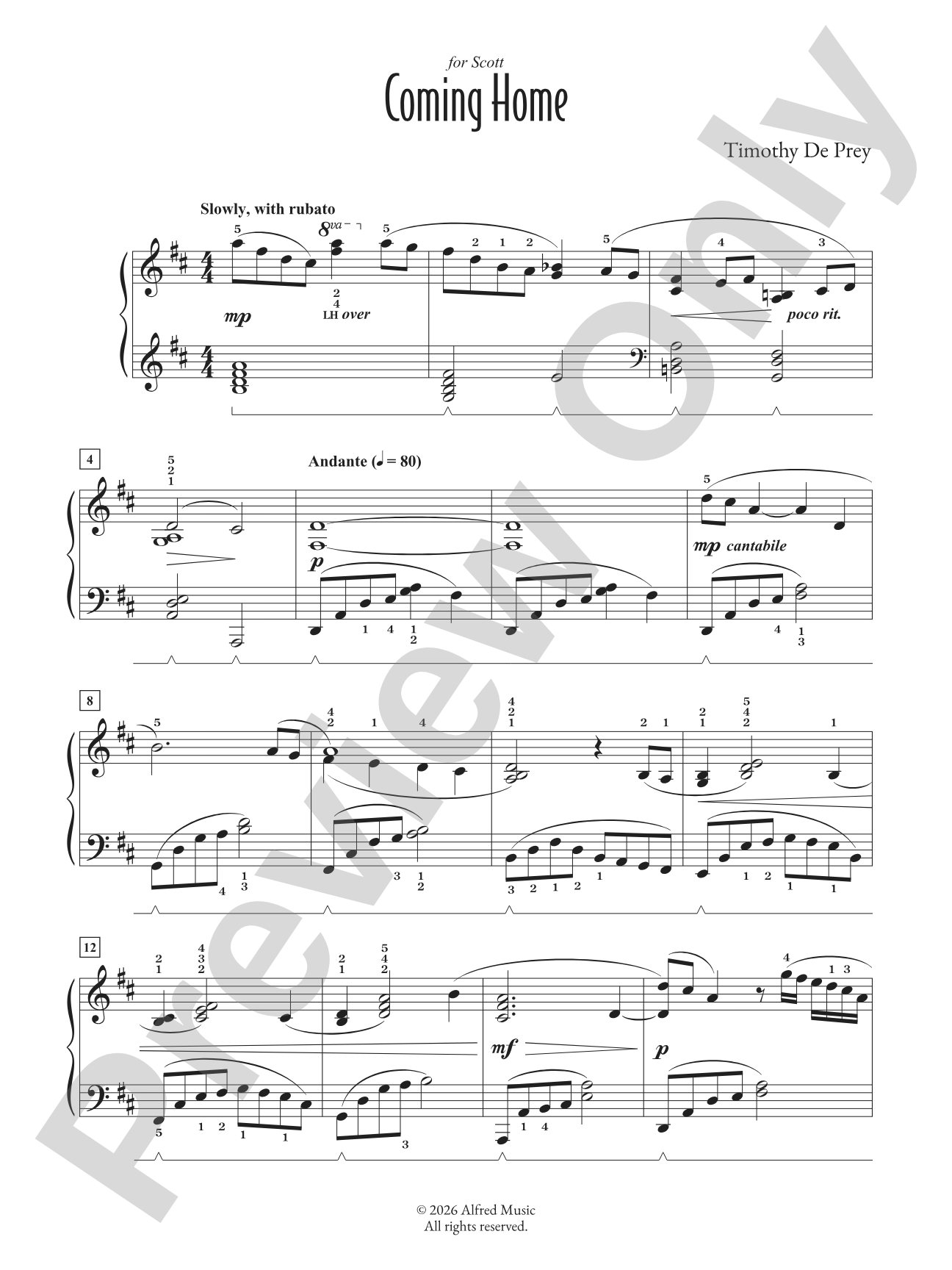
A warm and sentimental piece, Coming Home features a singing melody that captures the comfort of returning to loved ones. Sweeping left-hand arpeggios and graceful sixteenth-note scalar fills add gentle motion and expressive beauty.
Discover MakeMusic Cloud: thousands of interactive titles your students can play along with today.
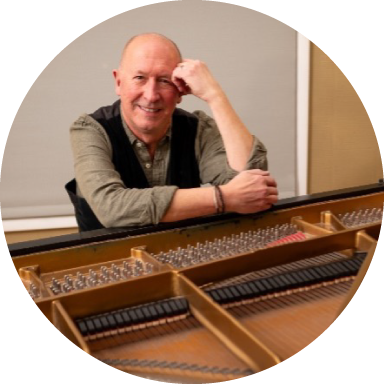
Timothy De Prey brings nearly three decades of teaching experience to his work at MacPhail Center for Music, where he has mentored pianists across all levels since 1997. His students consistently excel in regional competitions and scholarship competitions, including a 2025 recipient of a new $25,000-per-year music scholarship at Gustavus Adolphus University. Beyond the studio, De Prey has anchored the Twin Cities Gay Men's Chorus as principal accompanist since 1991 and has appeared in seven MacPhail Spotlight Series performances featuring everything from Gershwin to Sondheim to Broadway's greatest duets.
In 2025, De Prey received the James E. Erickson Professional Development Grant to create original solo piano works tailored to his students' individual learning needs and musical interests. Coming Home emerged from this initiative, representing his commitment to composing pieces that serve both pedagogical purpose and artistic expression. A graduate of the University of Wisconsin-Eau Claire and the University of Minnesota, De Prey holds degrees in music therapy and piano performance. The City of Minneapolis honored his contributions with Timothy De Prey Day in 2015.
Why we love this
This piece strikes a rare balance between emotional authenticity and technical clarity. The arpeggiated left hand provides consistent forward motion without overwhelming students, while the singing melody invites genuine musical expression from day one. Coming Home works beautifully as a recital closer or as a bridge between technical studies and more ambitious art song arrangement.
What to expect
Warm and reflective, like arriving at a familiar door after a long journey. The piece settles into its harmonic spaces with genuine comfort rather than saccharine sentiment, allowing the performer to inhabit the emotional arc without overstatement.
Who it's for
Late intermediate pianists ready to explore lyrical expression and flowing accompaniment patterns without grappling with hand-stretching or extreme technical demands. This works equally well for students preparing for their first solo recital and for guitarists or vocalists seeking a graceful solo arrangement.
How to get the most out of it
Shape the melody with a singing tone; imagine you're accompanying a vocalist even though you're playing alone. The sixteenth-note fills should support rather than outshine the primary line.
Allow the arpeggios to breathe. Resist the urge to rush through them; their gentle motion is what creates the warm, homecoming atmosphere.
Let the harmonic progression unfold naturally. Don't push the tempo in moments of emotional weight; the piece gains power through restraint.
How to use it
Reserve this for moments when you want to shift the emotional temperature in a concert without pulling focus. It pairs well alongside other contemporary American art songs or early Romantic character pieces, and it's substantial enough to stand alone as a featured solo work rather than feeling like filler.
Skills your students will build
Control of arpeggiated accompaniment patterns at a singing tempo
Legit pedaling choices in extended harmonic progressions
Balancing melody and accompaniment with independent voices
Expressive phrasing in a lyrical register
Reading and executing scalar sixteenth-note embellishments cleanly
You May Also Like
Scan to Complete Your Purchase
Use your phone's camera to scan the code below
You'll log in on your phone and the order will be added to your account