
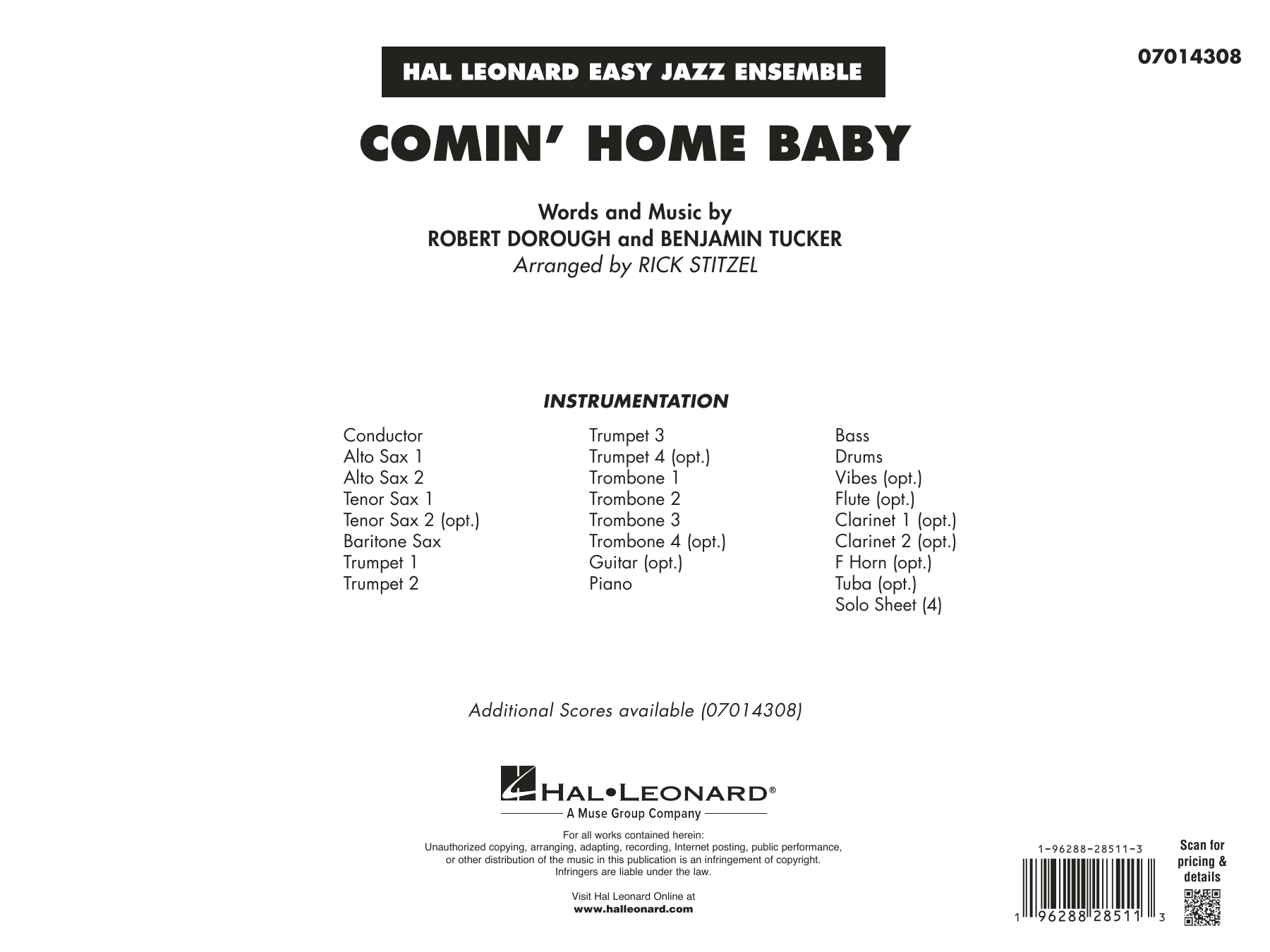

Comin' Home Baby (arr. Rick Stitzel): Jazz Ensemble Conductor Score & Parts
By Ben Tucker / By Bob Dorough / Arranged by Rick Stitzel
Grade: 2
Item: 35-PK01569487
$50.00
Pickup currently not available
Buy Extra Parts (Digital PDF Download)
Parts Added to Cart!
Description
Here is a great arrangement of this standard blues rock excellently scored for beginner jazz ensembles. Your rhythm section, especially guitar, won't be able to get enough of the infectious groove and all horn parts get plenty of time on the classic melody. Written solos for tenor sax and trumpet. Optional flute, clarinet, F horn, tuba, and vibraphone part.


Discover MakeMusic Cloud: thousands of interactive titles your students can play along with today.
Sample Audio
No sample audio found.
Sample Video
Additional Details
Publisher:
Hal Leonard
SKU:
35-PK01569487
More about this title
About the Composer: Ben Tucker
Ben Tucker was an American jazz and pop songwriter whose compositions became standards in both idioms. His ability to craft memorable melodies with accessible harmonic structures made his work particularly valuable for music educators introducing students to jazz vocabulary.
Why we love this
Rick Stitzel's arrangement captures the infectious groove of the original while keeping the voicings clean and readable for developing players. Every section gets meaningful material rather than sidelined background parts, which keeps energy high during rehearsals and performances.
What to expect
Laid-back and confident, with that blues-rock easiness that makes people want to move. The melody sits naturally in the horn range, and the straightforward harmonic progression creates room for the ensemble to feel the groove rather than fight the page.
Who it's for
Beginning jazz ensembles looking for accessible material that doesn't sacrifice musical authenticity. Directors who want a tune that grabs students immediately and builds foundational jazz vocabulary without technical overwhelm.
How to get the most out of it
- Lock the guitar and bass into the groove first. Once that foundation is solid, the horns can relax into the pocket instead of rushing.
- Let the tenor sax and trumpet solos breathe. These written parts are your chance to hear how each student handles the blues changes, so leave space for phrasing and dynamics rather than pushing tempo.
- Build the flute and clarinet parts gradually in rehearsal. These optional voices add color but work best once the core arrangement is secure.
- The vibraphone, if included, should sit slightly behind the beat. This keeps the shimmering texture from pulling the ensemble forward.
How to use it
This works beautifully as a second or third number in a jazz concert, especially when you're building toward heavier chart arrangements. It also slots easily into pop or pops-style programs where jazz repertoire adds contemporary flavor without requiring a specialized audience.
Skills your students will build
- Blues melody recognition and phrasing
- 12-bar blues harmonic progression
- Jazz articulation and swing feel
- Written improvisation reading (tenor sax and trumpet solos)
- Ensemble balance with optional voicings
- Rhythm section comping and interaction