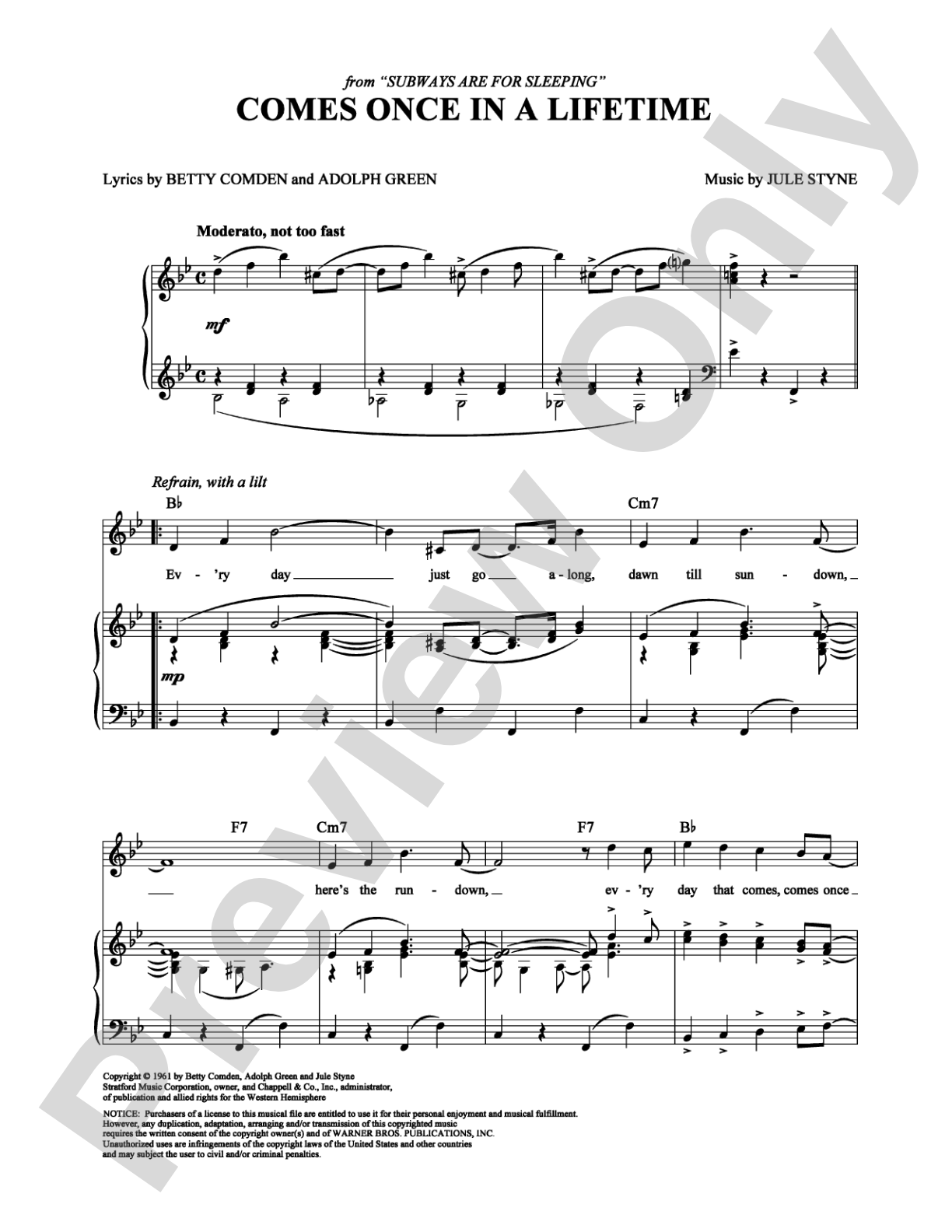
Comes Once In A Lifetime: Piano/Vocal/Chords Digital Sheet Music

Comes Once In A Lifetime: Piano/Vocal/Chords Digital Sheet Music

Jule Styne, Judy Garland

Item: 00-PS-0001083

Digital Download
$3.99
Description

Comes Once In A Lifetime: Piano/Vocal/Chords Digital Sheet Music isn't in MakeMusic Cloud just yet...but it could be. Let us know you'd like to see it, and you'll help shape what comes next. In the meantime, start a free trial and dive into thousands of interactive titles your students can play along with today.

Sample Audio
No sample audio found.
Sample Video
Additional Details
SKU: 00-PS-0001083

More about this title

About the Artist: Judy Garland

Judy Garland (1922-1969) shaped American popular song through her extraordinary vocal gifts and emotional directness. Her interpretations of standards set the benchmark for generations of singers, combining technical control with vulnerability that made every lyric feel personal and immediate.

Why we love this

Garland's interpretation of this standard offers singers a masterclass in phrasing and emotional storytelling. The piano/vocal/chords format makes it accessible for both solo performance and coaching, whether you're preparing a jazz vocalist, a music theater student, or an accompanist learning to comp from chord changes.

What to expect

Wistful and reflective, with a bittersweet acceptance of life's rare, fleeting moments. The harmonic language of this standard creates intimate space for the voice to shine, inviting singers to bring their own emotional depth to familiar chord progressions.

Who it's for

Jazz and pop singers preparing to perform standards, music theater students developing their interpretation skills, and accompanists building a repertoire of classic vocal charts. This resource works equally well for solo recital preparation or as a teaching tool in voice studios.

How to get the most out of it

  • Lean into rubato during the lyrical passages; Garland's approach favors vocal phrasing over metronomic precision, especially in the bridge.
  • Voice the chords in a way that supports the melody line rather than competing with it. Keep the left hand comping light and conversational.
  • Pay attention to dynamic shape across the form. Build intensity gradually rather than hitting full volume early, allowing the emotional arc to land in the final phrase.
  • Practice singing and playing simultaneously at a slow tempo first, then gradually bring the piece up to performance speed.

How to use it

Include this in a jazz standards or American songbook recital, or use it as a featured vocal selection in a musical theater cabaret or gala. It pairs naturally with other Garland-era standards and works as a bridge between classic pop and jazz vocal repertoire.

Skills your students will build

  • Interpreting a classic standard with historical awareness
  • Balancing vocal line with piano accompaniment
  • Reading and voicing chord changes from a lead sheet
  • Understanding rubato and flexible phrasing in American song

You May Also Like