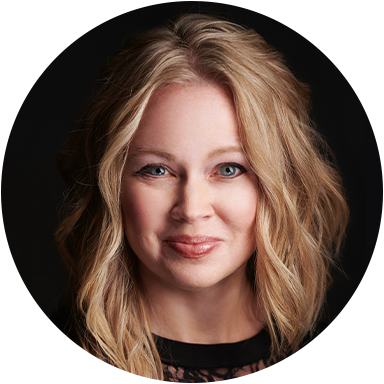
Heather Sorenson has built a reputation as a composer and arranger whose work spans both traditional and contemporary Christian music, often weaving the two together into a distinctive sound that feels both rooted and fresh. Based in Dallas, she has received commissions from major institutions including Texas A&M University, the Kennedy Foundation, and Carnegie Hall, with her music performed across churches, universities, and concert halls internationally. Her foundation as a skilled pianist informs her orchestral and choral writing, while her teaching experience at Grace Academy and Baylor University has kept her connected to the practical needs of music educators.
Sorenson's engagement with the music education community extends far beyond composition. She regularly conducts and speaks at churches, leads workshops at worship conferences and universities, and serves on master class panels. When not writing, she dedicates time to benefit concerts supporting nonprofits close to her heart. This combination of serious compositional craft and genuine investment in music education makes her work particularly valuable for directors seeking music that challenges singers while remaining genuinely singable.
Why we love this
Sorenson writes Advent music that feels neither overly sentimental nor austere. The text and melody work together with real warmth, inviting singers into the season's reflective space without asking them to force emotion. This is the kind of piece that sounds genuine when your choir sings it, not calculated.
What to expect
Reflective and hopeful in equal measure, this piece carries the contemplative weight of Advent while maintaining an openness that feels inviting rather than heavy. Sorenson's text setting allows singers and listeners alike to sit with the meaning of the words, and the harmonic language supports that stillness while still moving forward.
Who it's for
This octavo works well for choirs with intermediate to solid reading skills and the ability to balance four parts with independence and blend. It serves both community church choirs seeking substantial Advent repertoire and school ensembles looking for sacred music that develops musicianship without requiring advanced vocal technique.
How to get the most out of it
Balance the sustained lines in the lower voices; they anchor the piece but shouldn't overwhelm the text painting happening in the soprano and alto parts.
Shape phrases by listening across all four parts rather than within individual lines, which prevents the piece from sounding sectional.
Let the arrangement breathe during unison or reduced-voice moments; these aren't filler but architectural choices that make the fuller passages land harder.
How to use it
Consider this a substantial anchor for an Advent service or concert, substantial enough to stand on its own without needing companion pieces to fill time. It pairs well with shorter, more contemporary Advent songs if you want to build a varied program, or it can frame a longer liturgical sequence. Ten pages suggests a piece worth learning thoroughly rather than reading through, making it ideal for rehearsal planning that begins in September.
Skills your students will build
Sustaining long vocal lines while maintaining breath support
Independent part singing within a four-voice harmonic context
Phrase shaping across multiple voice parts
Text expression and emotional communication in sacred settings
Reading and balancing SATB voicing with varying degrees of rhythmic complexity
You May Also Like
Scan to Complete Your Purchase
Use your phone's camera to scan the code below
You'll log in on your phone and the order will be added to your account