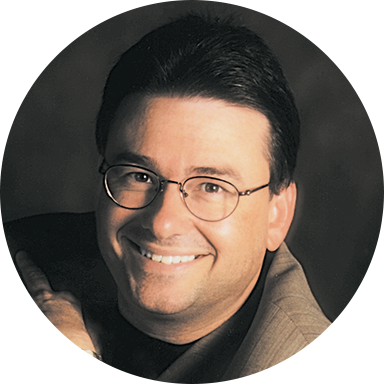
Joseph M. Martin is a pianist and composer whose training spans performance and pedagogy. He earned his bachelor's degree in piano performance from Furman University and completed a master's degree at the University of Texas at Austin, where he later taught in the Piano Pedagogy Department for five years. His concert career has taken him across North America and Mexico, including performances with major symphony orchestras and a nationally broadcast recital.
Martin's compositional output reflects his dual commitment to artistic excellence and practical service. His work appears in venues ranging from Carnegie Hall to church sanctuaries across the United States and Canada, and he has devoted considerable energy to composing and arranging music specifically for worship settings and church musician conferences. Based in Austin, Texas, he continues to balance concert performance with his prolific work as a composer and arranger.
Why we love this
Martin writes sacred choral music that sounds both approachable and genuine. His settings honor the text with clear musical intent while remaining accessible to working church choirs, and "Come To The Music" exemplifies his gift for creating moments that feel spiritually resonant without requiring virtuosic demands.
What to expect
"Come To The Music" invites singers and listeners into a space of quiet invitation and warmth. The harmonic language is rooted and unpretentious; it feels like a genuine conversation rather than proclamation.
Who it's for
Church choirs with mixed voices at intermediate to advanced levels will find this piece serves well as a service anthem or seasonal offering. Small ensemble programs and concert choirs seeking contemporary sacred music with direct emotional appeal also make use of this title.
How to get the most out of it
Pay close attention to Martin's harmonic language in the verse sections; the shifts in color often underscore the emotional arc of the text, so let the singers feel how the chords support the meaning.
Balance the full SATB textures in the refrain by bringing out inner voice independence rather than doubling everything, which allows the arrangement to breathe and prevents a muddy sonority.
Use rubato thoughtfully in moments where Martin marks expressive gestures; this piece responds well to slight flexibility that honors the lyrical quality without losing structural integrity.
How to use it
Position this as an anthem in Sunday worship when you want something that deepens the service mood without requiring elaborate staging or orchestration. It also works beautifully as a choir concert opener or closer, creating an intimate frame for larger works.
Skills your students will build
Singing sustained harmonic lines within a four-part texture
Responding to expressive markings and rubato within a choral setting
Balancing ensemble sound when inner voices carry thematic material
Interpreting sacred text with musical authenticity
You May Also Like
Scan to Complete Your Purchase
Use your phone's camera to scan the code below
You'll log in on your phone and the order will be added to your account