Come Sail Away Sheet Music Preview

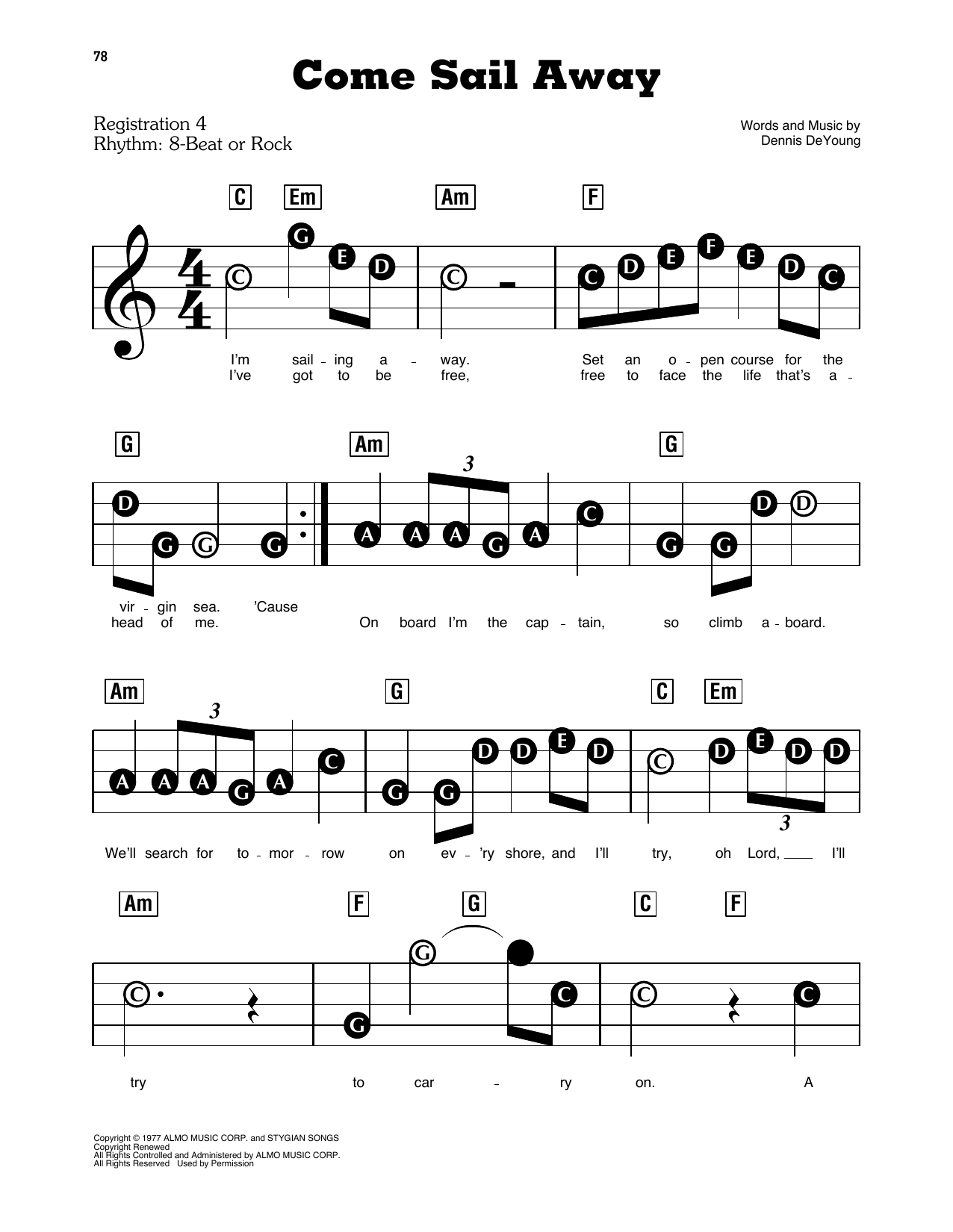
Come Sail Away: E-Z Play Today

As performed by Styx

Item: 35-DS00490707

Digital Download
$4.99
Description

Come Sail Away: E-Z Play Today isn't in MakeMusic Cloud just yet...but it could be. Let us know you'd like to see it, and you'll help shape what comes next. In the meantime, start a free trial and dive into thousands of interactive titles your students can play along with today.

Sample Audio
No sample audio found.
Sample Video
Additional Details
Publisher: Hal Leonard
Page Count: 2
SKU: 35-DS00490707

More about this title

About the Artist: Styx

Styx emerged from Chicago in the 1970s as one of rock's most ambitious bands, blending progressive rock's complexity with pop accessibility. Their theatrical approach to songwriting and studio craft made them architects of the arena rock sound, influencing generations of musicians who followed.

Why we love this

This arrangement captures the soaring melodic gift that made Styx radio staples while remaining playable for intermediate pianists. The song's emotional arc, built on layered synth textures in the original, translates beautifully to piano without losing its grandeur or the distinctive harmonic movement that defines the piece.

What to expect

Wistful and expansive, with the tender vulnerability of a ballad that builds into something larger and more hopeful. The piano arrangement preserves that signature Styx quality: introspective verses that open into moments of genuine emotional uplift.

Who it's for

Pianists exploring rock repertoire beyond classical standards will find this accessible and rewarding. Solo performers, students preparing audition repertoire from popular music, and teachers building diverse recital programs all benefit from material that meets intermediate skills.

How to get the most out of it

  • Lean into the rubato during the opening section; Styx thrived on expressive phrasing, so resist strict tempo until the song settles into its groove.
  • Balance the left hand accompaniment carefully so it supports rather than competes with the vocal line or melody.
  • Shape the dynamics across the verse-to-chorus transition to mirror the building intensity of the original recording.

How to use it

Feature this in a recital that celebrates 1970s rock songwriting or as a contrast piece between classical selections. It works particularly well in programs designed around themes of journey or transformation, given the song's narrative arc.

Skills your students will build

  • Managing dynamic range across extended phrases
  • Translating synth and arrangement textures to piano voicing
  • Maintaining even eighth-note accompaniment patterns while executing expressive melody
  • Interpreting rubato in a contemporary music context

You May Also Like