Come, Rejoice!: 1st Trombone Sheet Music Preview

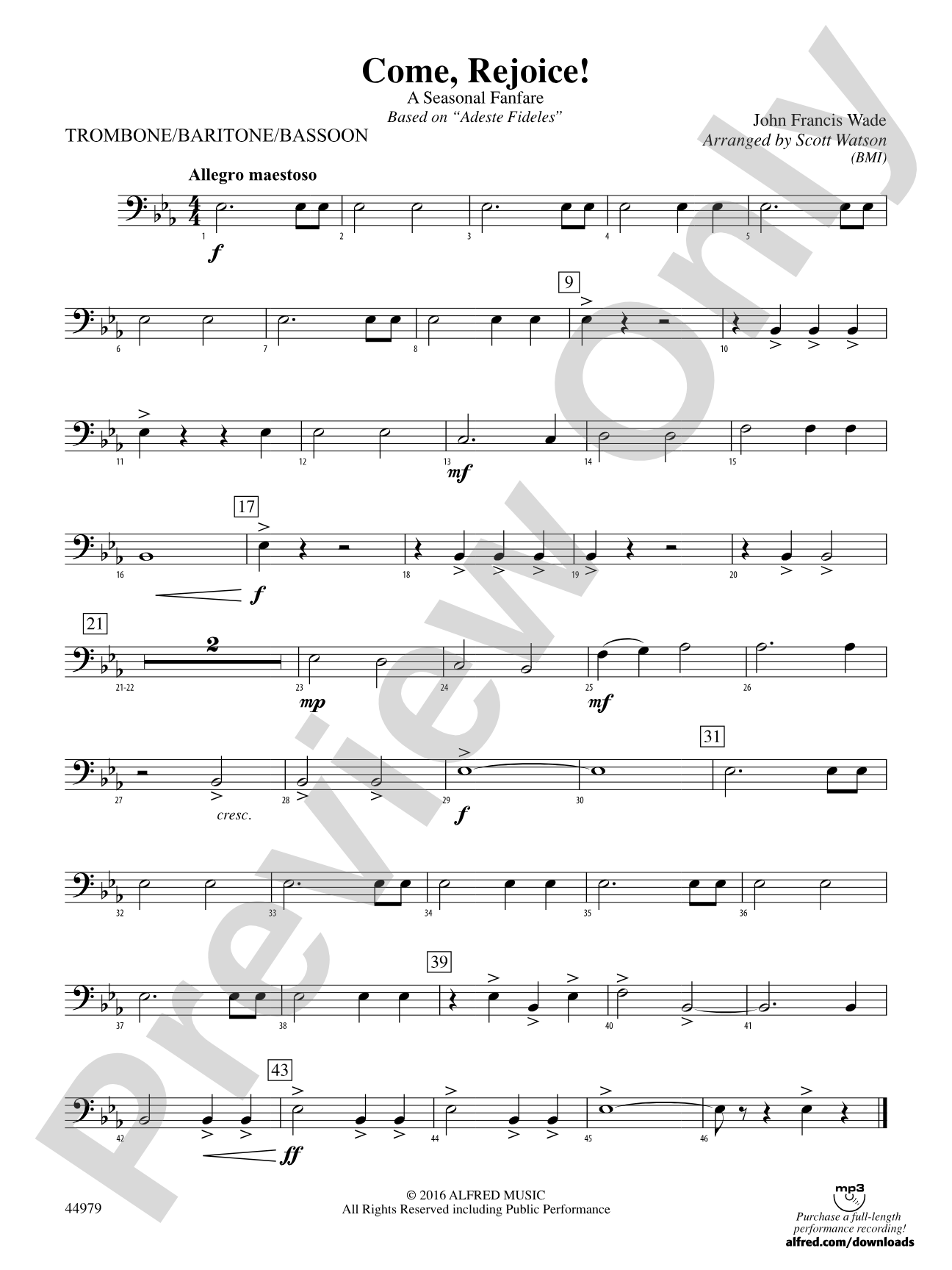
Come, Rejoice!: 1st Trombone

A Seasonal Fanfare Based on "Adeste Fideles"

By John Francis Wade / arr. Scott Watson

Grade: 1 (Very Easy)

Item: 00-PC-0017444_TN1

Digital Download
$3.00
Description
From its bright, spirited opening to its majestic conclusion, this piece invites listeners to celebrate the joy of the season. This festive fanfare is based on the traditional carol, "Adeste Fideles," and is the perfect opener or closer for your young band's winter concert. (1:40)

Don't just read it, hear it, play along with it, and watch your students grow with it. In MakeMusic Cloud, Come, Rejoice!: 1st Trombone comes alive with professional accompaniment, adjustable tempo, and built-in practice tools that turn solo practice into real progress.

Sample Audio
0:00
0:00
Sample Video
Additional Details
Series: Alfred Debut Series
Publisher: Alfred Music
Page Count: 124
SKU: 00-PC-0017444_TN1

More about this title

About the Composer: John Francis Wade

John Francis Wade (1711-1786) was an English hymnist and composer whose most enduring contribution to sacred music is the Latin hymn "Adeste Fideles" (O Come, All Ye Faithful). Wade compiled and composed music during a period when Catholic worship faced restrictions in England, and his work preserved and strengthened devotional practice through memorable melodic settings. His carol remains one of the most recognizable and beloved Christmas hymns in the Western tradition, translated into dozens of languages and performed across centuries of musical styles.

Why we love this

Scott Watson's arrangement captures everything young bands love about Grade 1 repertoire while honoring the dignity of a tune that has earned its place in four centuries of Christmas traditions. The bright, confident opening and majestic close give every student a moment to feel like they're playing something genuinely celebratory, not just "easy music." It's the kind of piece that builds ensemble confidence while sounding polished enough to open or close a winter concert with real presence.

What to expect

From the first bright fanfare, this piece radiates celebration and invitation. The familiar melody of "Adeste Fideles" emerges with a sense of arrival and warmth, building momentum toward a majestic closing that feels triumphant without pretension. There's a genuine festive spirit here, earned through straightforward harmony and clear orchestration.

Who it's for

This arrangement is built for young concert bands discovering how to bring joy and polish to a winter program. Directors of Grade 1 ensembles will find a piece substantial enough to honor the source material while remaining genuinely accessible for students still developing fundamental skills.

How to get the most out of it

  • Balance the melody across your woodwind and brass sections during the opening fanfare; this piece thrives when every voice sings with equal enthusiasm rather than one section dominating.
  • Shape the dynamic arc from the spirited beginning through the middle sections, then build deliberately toward the majestic conclusion so the ending feels earned rather than simply loud.
  • Lock the rhythmic pulse in the lower voices and percussion from the start; a steady foundation lets younger players feel confident enough to focus on tone quality and phrasing.
  • Attend to the articulation clarity, especially in the faster passages. Crisp tonguing and clean releases keep this piece sounding bright and festival-ready.

How to use it

This works equally well as a concert opener (where it establishes an immediate festive mood) or closer (where it sends audiences home on a note of joy). It pairs naturally with other Grade 1 holiday selections or sits confidently on a winter concert that mixes sacred and secular repertoire.

Skills your students will build

  • Consistent articulation in fanfare-style passages
  • Melodic independence and tone quality within a homophonic texture
  • Dynamic shaping and phrase direction
  • Rhythmic precision in ensemble contexts
  • Fundamental brass and woodwind balance

You May Also Like