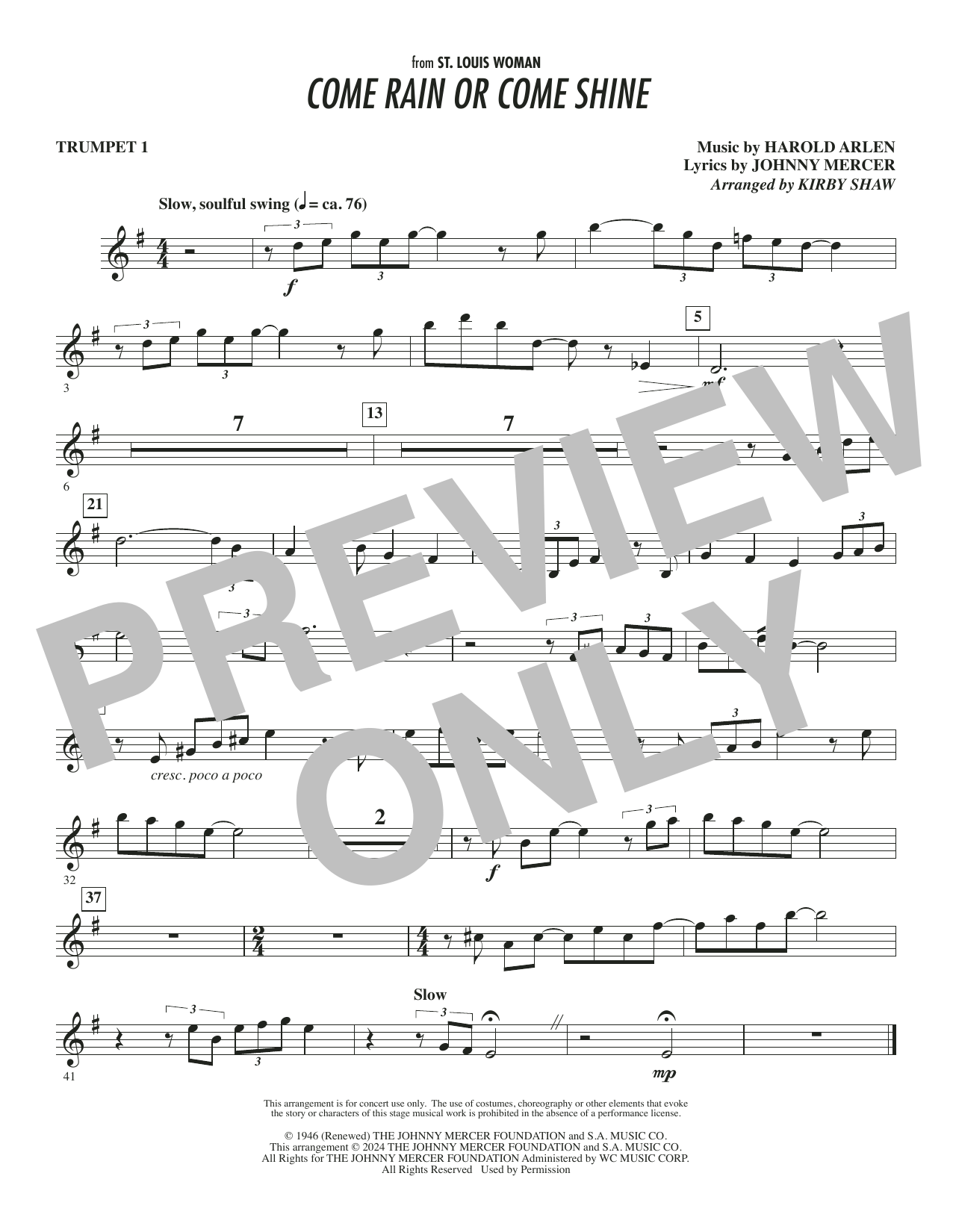
Come Rain Or Come Shine (arr. Kirby Shaw) Sheet Music Preview

Come Rain Or Come Shine (arr. Kirby Shaw): Choral Instrumental Pak

Arranged by Kirby Shaw

Item: 35-PK01636492

Digital Download
$49.00

One moment…

Description
Come Rain Or Come Shine (arr. Kirby Shaw)

Come Rain Or Come Shine (arr. Kirby Shaw): Choral Instrumental Pak isn't in MakeMusic Cloud just yet...but it could be. Let us know you'd like to see it, and you'll help shape what comes next. In the meantime, start a free trial and dive into thousands of interactive titles your students can play along with today.

Sample Audio
No sample audio found.
Sample Video
Additional Details
Publisher: Hal Leonard
SKU: 35-PK01636492

More about this title

About the Arranger: Kirby Shaw

Kirby Shaw

Kirby Shaw's influence spans continents and decades. With formal training in music education, choral composition, and conducting from San Jose State University and the University of Washington, Shaw has worked with ensembles across North America, Europe, and beyond. His career includes founding and directing acclaimed vocal jazz programs at the College of the Siskiyous, Colorado State University, and the University of Missouri at Kansas City, and he currently directs the Jefferson State Choral Coalition at Southern Oregon University.

Shaw's prolific output speaks for itself: over 2500 published choral arrangements and compositions that have sold nearly 20 million copies worldwide. His artistry extends to personal study with legends like Bobby McFerrin, Al Jarreau, and Jon Hendricks. Beyond his arrangement work, Shaw is an active performer with the a cappella ensemble Just 4 Kicks and a composer of theatrical works. His contributions to choral music have earned him multiple ASCAP awards and a recent commission from the Mormon Tabernacle Choir.

Why we love this

Shaw's jazz sensibility shines through in this arrangement, bringing sophisticated harmonic color and natural swing feel to a standard that choirs know and audiences love. The Choral Instrumental Pak format gives you everything needed for a polished performance without the complexity of sourcing parts separately. This is the kind of arrangement that sounds effortless in performance but reveals clever voice leading and smart instrumental doubling that supports rather than overshadows the vocal line.

What to expect

Warm, optimistic, and effortlessly cool. This arrangement captures the emotional comfort of a beloved standard while infusing it with the sophisticated harmonies and rhythmic freedom that define Shaw's jazz-educated voice. The piece invites singers to lean into the lyricism and allows instrumental colors to enhance rather than compete with the melody.

Who it's for

Jazz-influenced choirs and select show choirs seeking a sophisticated treatment of a classic American standard. Directors who want to program recognizable repertoire with fresh arranging and students ready to navigate jazz harmony and swing rhythms.

How to get the most out of it

  • Establish the swing feel early in rehearsal by listening to a recorded jazz version together. The rhythmic pocket matters as much as the notes.
  • Let your rhythm section (piano, bass, drums if available) lock in independently during sectionals. Their confidence directly impacts how the singers breathe and phrase.
  • Pay attention to where the arrangement opens up or thins out texturally. These moments often need special attention to ensemble balance so nothing gets lost.
  • Shape the dynamics around the text and melodic contour rather than relying on uniform volume throughout. Jazz standards thrive on subtle inflection.

How to use it

Pair this with other Broadway or standards repertoire for a concert celebrating American songbook traditions. It also works beautifully as a standalone feature for an informal performance or as a bridge between your classical and jazz programming. Consider staging it mid-season when your ensemble has the rhythmic security to handle the style with confidence.

Skills your students will build

  • Swing rhythm and jazz phrasing (resisting straight eighth notes)
  • Harmonic complexity including jazz extensions and reharmonization
  • Balancing vocal melody with instrumental accompaniment
  • Stylistic sensitivity to jazz standards and Broadway conventions
  • Ensemble breathing and ensemble articulation within a jazz context

You May Also Like