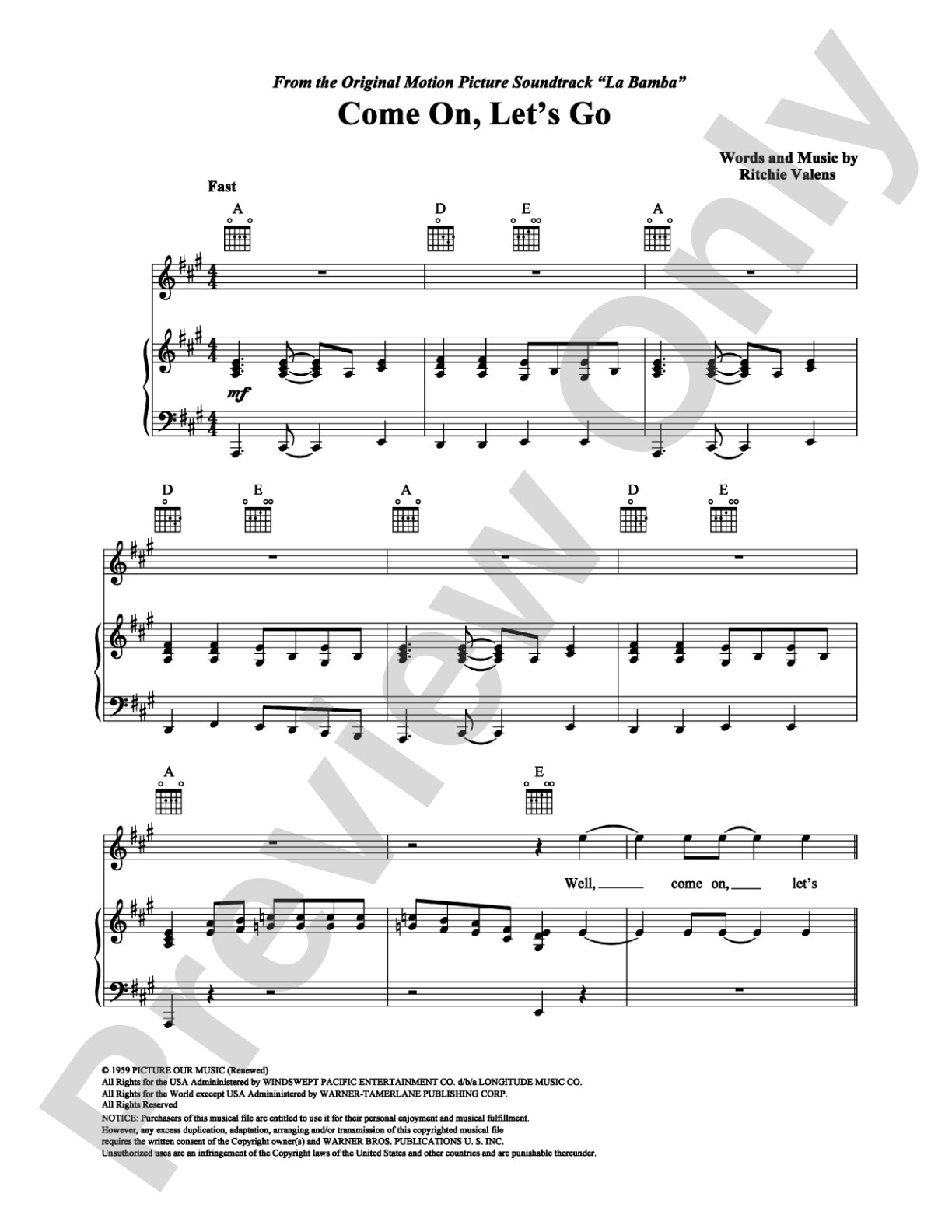
Come On, Let's Go: Piano/Vocal/Chords Digital Sheet Music

Come On, Let's Go: Piano/Vocal/Chords Digital Sheet Music

Ritchie Valens, The McCoys

Item: 00-PS-0005730

Digital Download
$2.95
Description

Come On, Let's Go: Piano/Vocal/Chords Digital Sheet Music isn't in MakeMusic Cloud just yet...but it could be. Let us know you'd like to see it, and you'll help shape what comes next. In the meantime, start a free trial and dive into thousands of interactive titles your students can play along with today.

Sample Audio
No sample audio found.
Sample Video
Additional Details
SKU: 00-PS-0005730

More about this title

About the Artist: Ritchie Valens

Ritchie Valens (1941, 1959) was a pioneering Chicano rock and roll musician who brought infectious energy and crossover appeal to early rock music. His brief but influential career produced "La Bamba," one of the first major rock hits sung in Spanish, alongside English-language rock standards that captured the spirit of 1950s youth culture.

Valens' guitar-driven rock and roll style influenced generations of musicians and remains a touchstone for understanding how rock music evolved in its earliest years. Though his life was cut tragically short, his recordings continue to energize performers and audiences alike.

Why we love this

This chart captures the infectious energy that made the song an instant classic while remaining playable for pianists and singers at intermediate levels. The arrangement respects the rock and roll spirit of the original while giving students a genuine early rock repertoire piece that audiences recognize and enjoy hearing.

What to expect

Bright, propulsive, and youthful. The song has a natural bounce that invites movement and engagement, with straightforward chord changes that feel rock solid beneath an energetic vocal melody. It captures that specific moment in the late 1950s when rock and roll was still new, exciting, and genuinely fun.

Who it's for

Intermediate pianists and singers looking to add accessible rock and roll material to their repertoire. This works equally well for solo recital contexts, duet performances, or as part of a broader program exploring early rock music.

How to get the most out of it

  • Keep the tempo driving and consistent; this song lives on momentum rather than rubato
  • Balance the vocal line clearly over the rhythm without drowning the accompaniment
  • Lean into the rhythmic feel of the chords; the syncopation is part of what makes the groove work
  • Maintain energy through repeated sections rather than letting familiarity breed lethargy

How to use it

Include this in a concert focused on rock and roll history or early American popular music. It pairs well alongside other foundational rock repertoire from the 1950s and works as an engaging bridge between classical and contemporary material.

Skills your students will build

  • Playing rhythmic accompaniment patterns in rock and roll style
  • Balancing vocal melody with instrumental support
  • Reading and performing from chord symbols in a popular music context
  • Maintaining steady groove and tempo in uptempo material

You May Also Like