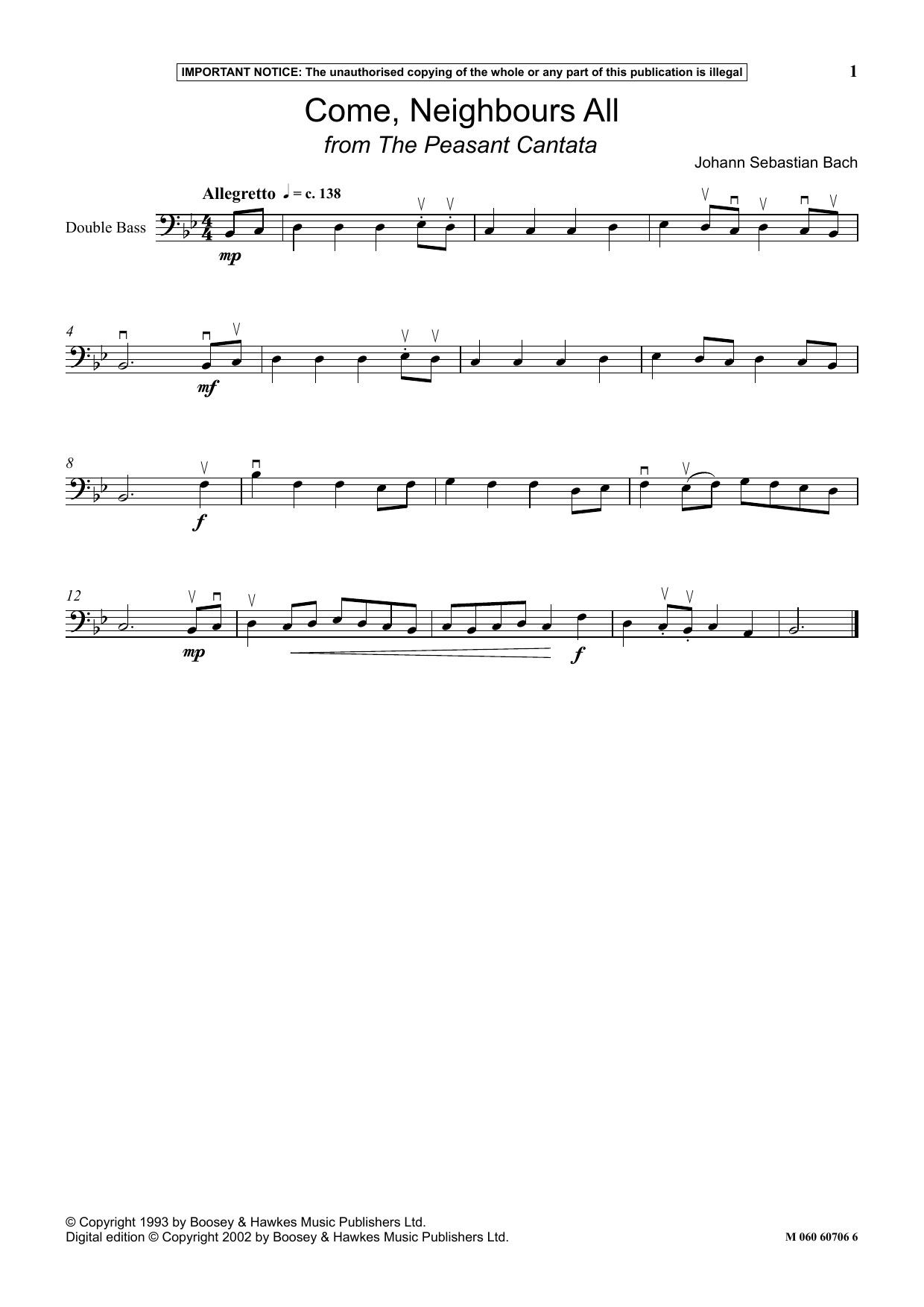
Come, Neighbours All (from The Peasant Cantata) Sheet Music Preview

Come, Neighbours All (from The Peasant Cantata): Instrumental Solo

As performed by Johann Sebastian Bach

Item: 35-DS00239095

Digital Download
$3.99
One moment…
Description

Discover MakeMusic Cloud: thousands of interactive titles your students can play along with today.

Sample Audio
No sample audio found.
Sample Video
Additional Details
Publisher: Hal Leonard
Page Count: 2
SKU: 35-DS00239095

More about this title

About the Artist: Johann Sebastian Bach

Johann Sebastian Bach (1685-1750) stands as one of history's most prolific and intellectually rigorous composers, whose mastery of counterpoint and harmonic language shaped centuries of musical practice. His output spans sacred cantatas, instrumental works, and secular pieces that reveal a composer constantly experimenting with form and orchestration. For music educators, Bach's catalog offers an unmatched resource for teaching voice leading, fugal thinking, and the architecture of Baroque compositional technique.

Why we love this

This aria captures Bach at his most approachable without sacrificing craft. The folk-like tunefulness and direct harmonic language make it rewarding for singers who are building confidence with Baroque style, while the accompaniment sits comfortably for piano or small ensemble. It's the kind of piece that reminds students why Bach matters beyond the textbook examples.

What to expect

Straightforward and inviting, with the warmth of a character piece rather than the imposing grandeur of Bach's larger sacred works. The melody sits in a conversational register, making it feel intimate despite its theatrical origins from The Peasant Cantata.

Who it's for

Solo singers preparing Baroque repertoire, whether for recital, competitions, or auditions. Directors building a repertoire of accessible Bach for advanced vocalists who want authentic material without extreme technical demands.

How to get the most out of it

  • Shape the melody with natural speech rhythms rather than mechanical evenness; Bach's theatrical origins shine through in the phrasing.
  • Balance clarity of articulation with legato line in the vocal part. The text setting rewards careful attention to word placement.
  • Let the accompaniment breathe in its support role. Restraint here gives the soloist room to engage the audience.

How to use it

Pair this with other secular Bach excerpts to frame a concert theme around Bach the dramatist. It also works as a bridge piece for singers transitioning from Romantic to Baroque repertoire, since the singability and narrative clarity feel familiar even in unfamiliar harmonic territory.

Skills your students will build

  • Baroque phrasing and articulation conventions
  • Text expression in sung German
  • Maintaining melodic integrity within the harmonic language of the early 18th century
  • Collaborative balance between soloist and accompaniment

You May Also Like