
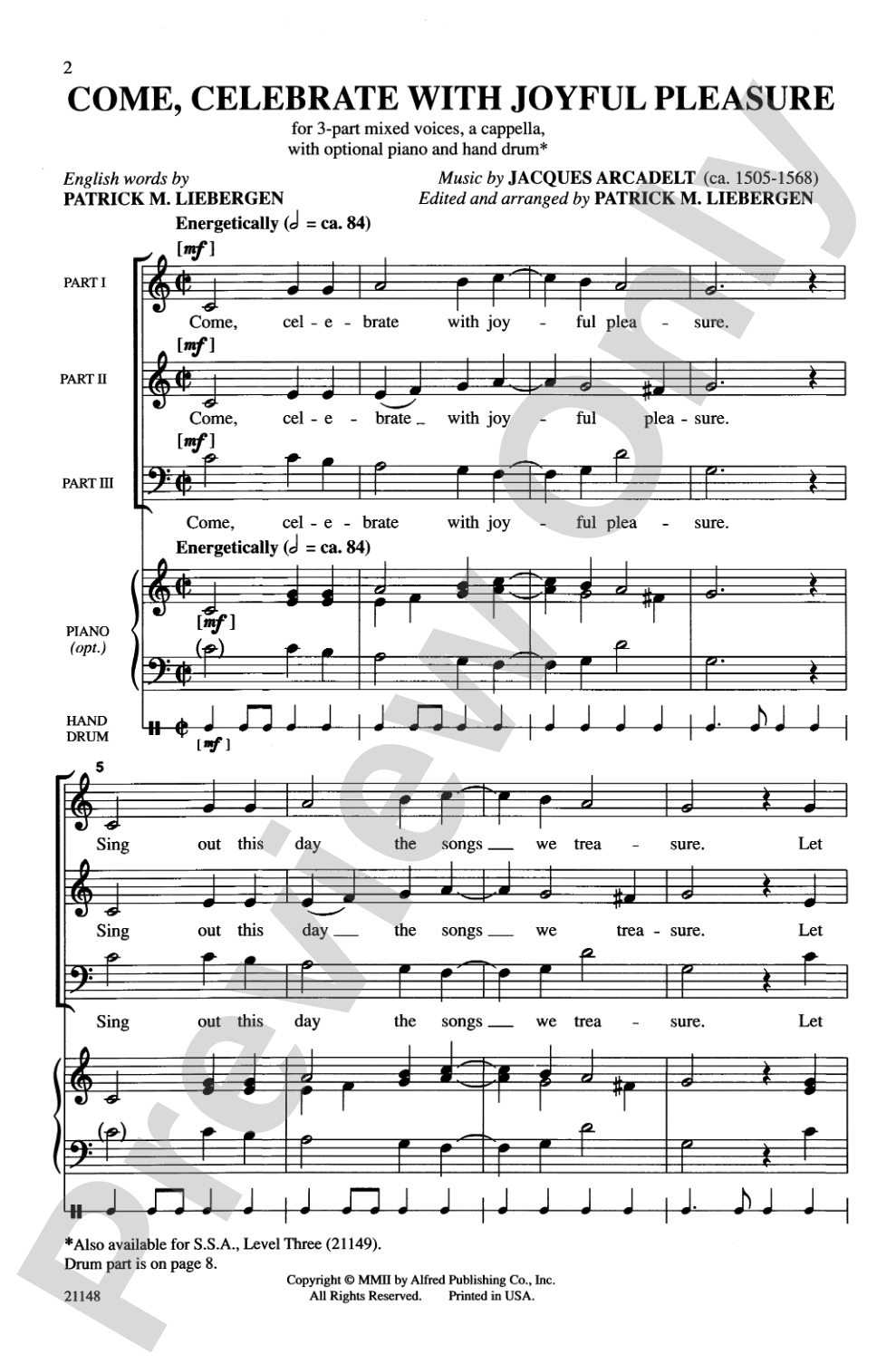
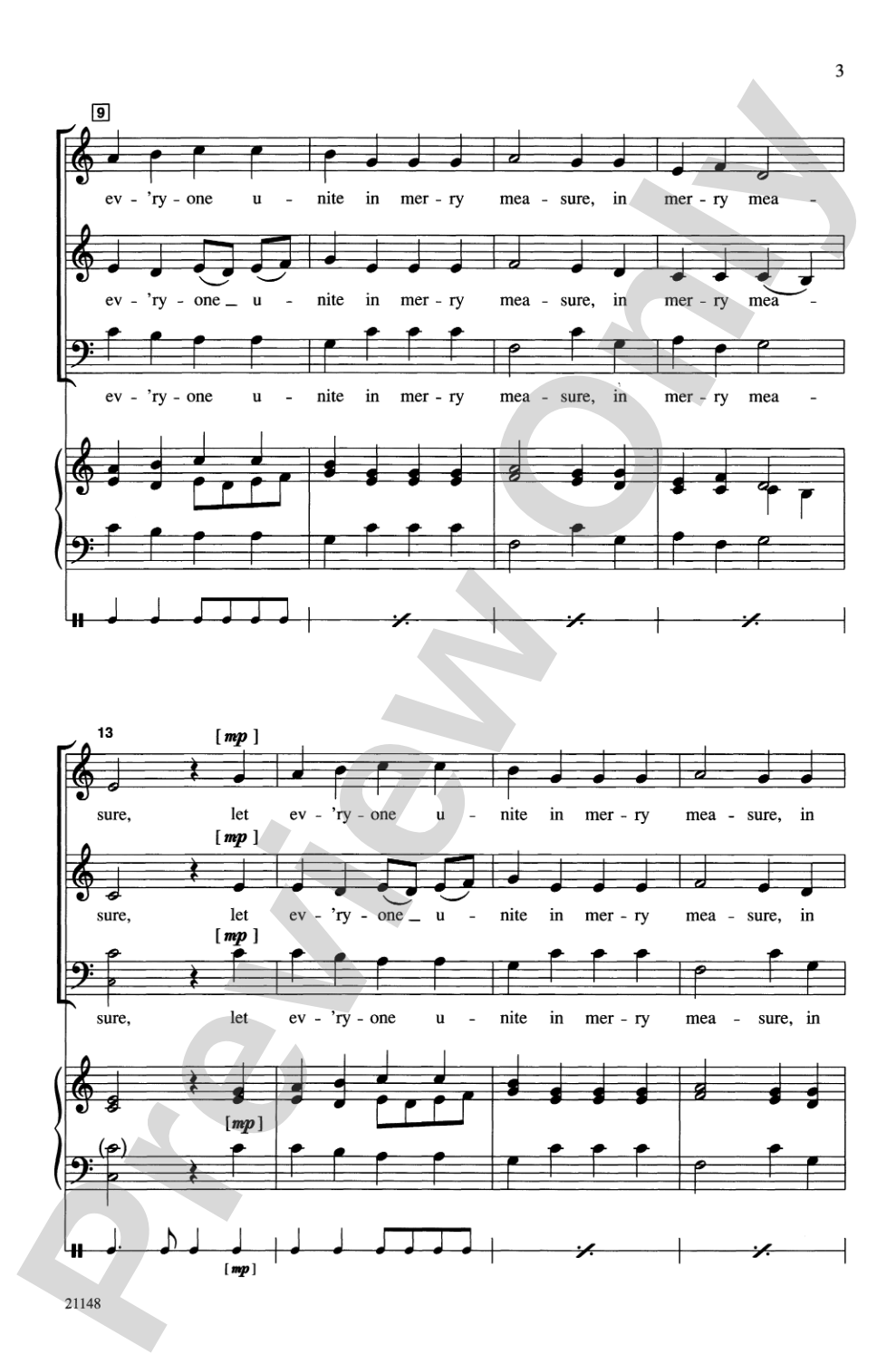

Come, Celebrate with Joyful Pleasure: 3-Part Mixed, a cappella Choral Octavo
Arr. Patrick M. Liebergen
Item: 00-PO-0004256

$2.25
Minimum order quantity: 20 copies
Pickup currently not available
Description
Patrick Liebergen has taken a delightful chanson by Jacques Arcadelt and adapted it for contemporary singers while retaining the essential Renaissance feel of the work. Moderate ranges. An optional piano part which doubles the vocal lines, and an optional hand drum provide a lively accompaniment. Editor's note, including historical information and performance notes, is included. English text. This title is available in MakeMusic Cloud.


Don't just read it, hear it, play along with it, and watch your students grow with it. In MakeMusic Cloud, Come, Celebrate with Joyful Pleasure: 3-Part Mixed, a cappella Choral Octavo comes alive with professional accompaniment, adjustable tempo, and built-in practice tools that turn solo practice into real progress.
Open in the Player
Jump straight in and assign it today.
Start Your Free Trial
Open this title and explore the full library in minutes.
Sample Audio
1
Audio File
--:--
0:00
0:00
Sample Video
No sample videos found.
Additional Details
Series:
Alfred Archive Edition: Alfred Choral Designs
Publisher:
Alfred Music
Page Count:
8
SKU:
00-PO-0004256
Instrumentation:
Opt. Hand Drum & Piano
More about this title
About the Arranger: Patrick M. Liebergen
Patrick M. Liebergen is a composer and arranger with deep roots in choral music education. His work centers on making significant repertoire accessible to singers across ability levels while preserving the musical integrity of the original.
Why we love this
Liebergen's arrangement respects Arcadelt's Renaissance sensibility without asking singers to navigate the complexities of period vocal writing. The optional hand drum and doubling piano parts give you flexible accompaniment choices depending on your rehearsal space and ensemble confidence, while the moderate ranges keep focus on blend and expression rather than vocal strain.
What to expect
The piece brings festive warmth without resorting to modern sentimentality. There's a courtly lightness to the madrigal tradition that feels both celebratory and graceful, like a Renaissance feast where joy comes from community singing rather than spectacle.
Who it's for
This arrangement suits choral programs looking for Renaissance-era repertoire that doesn't demand advanced sight-reading or unusual vocal technique. It works well for holiday programs, community choirs, and school ensembles performing at festivals or competitions.
How to get the most out of it
- Shape the text-painting moments with gentle dynamic shifts rather than dramatic changes; Renaissance courtesy madrigals thrive on subtle musical storytelling.
- If using the optional hand drum, establish the rhythm pattern in rehearsal before adding it to full sectional run-throughs; let it enhance pulse without overpowering the vocal lines.
- Balance the SAB voicing by having singers listen across parts for harmonic blend; moderate ranges actually make it easier to hear tuning issues, so use that diagnostic advantage in rehearsals.
- The optional piano part can serve as rehearsal support for any section that's uncertain; consider dropping it for the final performances to let the a cappella texture shine.
How to use it
Pair this with other seasonal choral works in a winter or holiday concert to show the historical depth of celebration music across eras. It also stands alone as a strong contest or festival entry, especially if your ensemble is building confidence with a cappella repertoire.
Skills your students will build
- Renaissance harmonic language and voice leading conventions
- A cappella balance and intonation without instrumental support
- Text declamation in English-language arrangements of older music
- Sensitivity to historical style while singing in contemporary ranges
- Confidence with optional instrumental accompaniment choices