Come Back When You Grow Up Sheet Music Preview

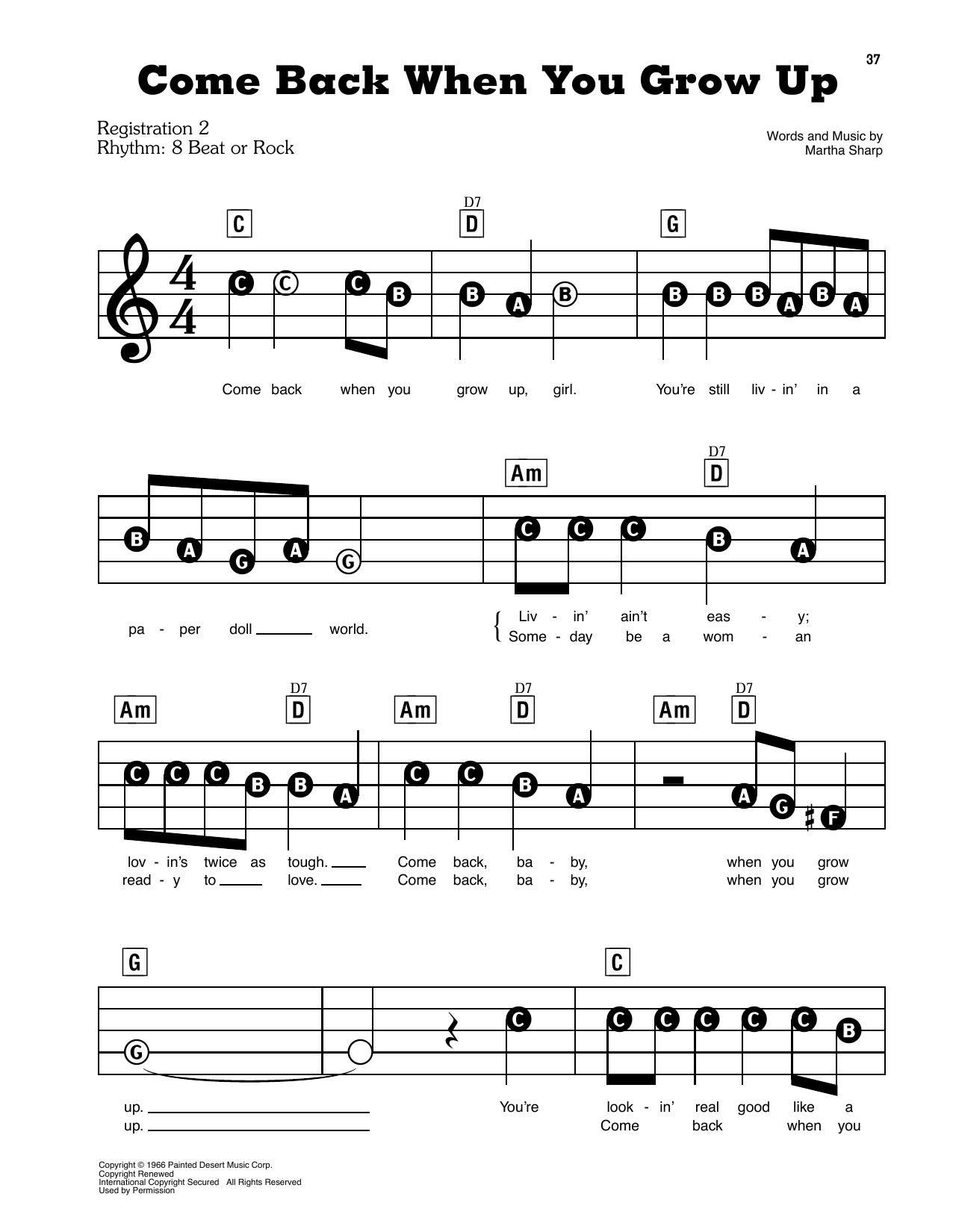
Come Back When You Grow Up: E-Z Play Today

As performed by Bobby Vee and The Strangers

Item: 35-DS00458284

Digital Download
$4.99
Description

Come Back When You Grow Up: E-Z Play Today isn't in MakeMusic Cloud just yet...but it could be. Let us know you'd like to see it, and you'll help shape what comes next. In the meantime, start a free trial and dive into thousands of interactive titles your students can play along with today.

Sample Audio
No sample audio found.
Sample Video
Additional Details
Publisher: Hal Leonard
Page Count: 3
SKU: 35-DS00458284

More about this title

About the Artist: Bobby Vee and The Strangers

Bobby Vee emerged as one of the most reliable pop hitmakers of the early 1960s, bringing a polished vocal style and infectious energy to the charts. His work with The Strangers helped define the sound of early rock and roll, balancing accessibility with genuine musicianship in a way that made his songs work equally well in live performance and recording studio contexts.

Why we love this

This track captures the playful, conversational tone that made early 1960s pop so enduring. Students get to explore how melody and lyrics work together to create character, while the arrangement stays straightforward enough that the fun doesn't get buried under complexity.

What to expect

Bright and youthful, with a winking sense of humor that comes through in the melody. The song lands somewhere between genuine affection and gentle teasing, making it feel contemporary in spirit even decades later.

Who it's for

Piano students who want to explore pop songwriting outside the contemporary bubble will find solid material here. This works especially well for students building confidence with lead sheets and understanding how accessible melodies carry narrative.

How to get the most out of it

  • Keep the tempo light and conversational; resist the urge to push it forward. The charm lives in the ease.
  • Pay attention to where the melody sits in your range. Adjust the octave if needed rather than straining for the original voicing.
  • Let the accompaniment groove gently. This isn't a ballad, but it's not racing either; think "easy swing" rather than rigid tempo.

How to use it

Pair this with other early 1960s pop standards in a retrospective concert celebrating songwriting craft across eras. It also serves as an excellent choice for students developing sight reading skills with real repertoire rather than etudes, offering melodic interest without harmonic obstacles.

Skills your students will build

  • Reading lead sheet notation and realizing chord symbols with intentional voicing choices
  • Balancing vocal melody with rhythmic accompaniment patterns
  • Interpreting style and tempo from lyrical context
  • Sustaining musical character over three pages without dynamic variety becoming monotonous

You May Also Like