Come As You Are (arr. Theo Janssen) Sheet Music Preview

Come As You Are (arr. Theo Janssen): SAB Choral Octavo

As performed by Nirvana / Arranged by Theo Janssen

Item: 35-DS00490682

Digital Download
$2.99
Description

Come As You Are (arr. Theo Janssen): SAB Choral Octavo isn't in MakeMusic Cloud just yet...but it could be. Let us know you'd like to see it, and you'll help shape what comes next. In the meantime, start a free trial and dive into thousands of interactive titles your students can play along with today.

Sample Audio
No sample audio found.
Sample Video
Additional Details
Publisher: Hal Leonard
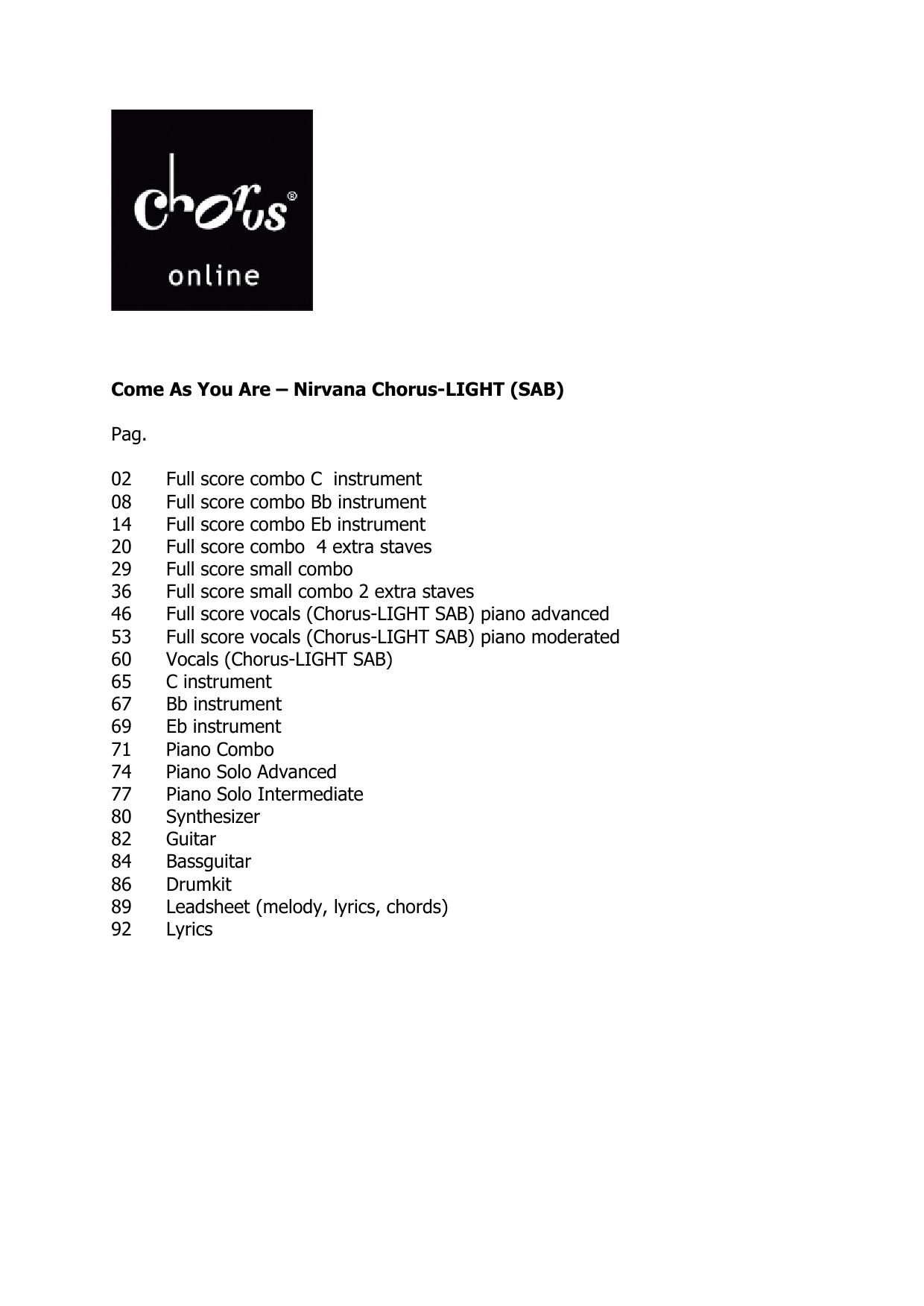
Page Count: 92
SKU: 35-DS00490682

More about this title

About the Artist: Nirvana

Nirvana emerged from Seattle's underground music scene in the late 1980s and became the defining band of grunge rock. Led by Kurt Cobain's raw songwriting and distinctive vocal delivery, the band channeled angst, vulnerability, and melodic sensibility into songs that resonated across generations. Their 1991 album "Nevermind" fundamentally shifted popular music and brought alternative rock into the mainstream.

For music educators, Nirvana's catalog offers genuine artistic merit alongside contemporary relevance. The songs balance accessibility with emotional depth, making them valuable entry points for engaging students in serious musical study. Arranging their work for choir demonstrates that rock music deserves the same thoughtful treatment as any other genre.

Why we love this

Theo Janssen's SAB arrangement makes a landmark rock composition available to choirs without the resources for full arrangements. The stripped-back design forces the focus onto the song's core melody and harmonic structure, revealing why this track endures. Your singers will connect immediately to material they likely already know, but approaching it as a choral ensemble transforms their understanding of the arrangement's sophistication.

What to expect

This arrangement captures the song's haunting simplicity and emotional directness. The open harmonies and straightforward vocal lines create space for introspection, while the rhythmic clarity keeps the groove grounded. Singing it together produces the strange alchemy of a familiar rock song suddenly becoming something communal and intimate.

Who it's for

Directors working with treble or mixed ensembles at the middle school through early college level will find this arrangement both singable and musically satisfying. It works equally well for concert choirs seeking contemporary material and for programs aiming to demonstrate that rock music belongs in the rehearsal room.

How to get the most out of it

  • Balance your parts carefully during the unison sections; the alto line needs presence without obscuring the soprano melody.
  • Shape the dynamic arc across the entire piece rather than treating each verse identically. Subtle builds toward the pre-chorus create momentum without requiring dramatic registration changes.
  • Tune the intervals in the three-part sections with particular attention; the harmonic language is simpler than classical voicings, so any intonation wobble becomes immediately audible.
  • Treat the lyrics with conversational phrasing. Avoid making it "musical theater" just because it's sung; the emotional restraint is what makes this arrangement powerful.

How to use it

Pair this with other contemporary arrangements or alternative rock settings for a concert exploring how classical training illuminates modern songwriting. It also serves as an excellent bridge between musical theater and concert repertoire, signaling to students that thoughtful arranging transcends genre. The accessible melody makes it suitable as an opener or a crowd-pleasing closer depending on how you program the emotional arc.

Skills your students will build

  • Singing sustained lines over rhythmic instrumental grooves
  • Maintaining ensemble blend in SAB/three-part voicing with minimal harmonic movement
  • Phrase shaping and dynamic control in contemporary popular music contexts
  • Reading and performing rock-influenced rhythmic patterns and notation

You May Also Like