
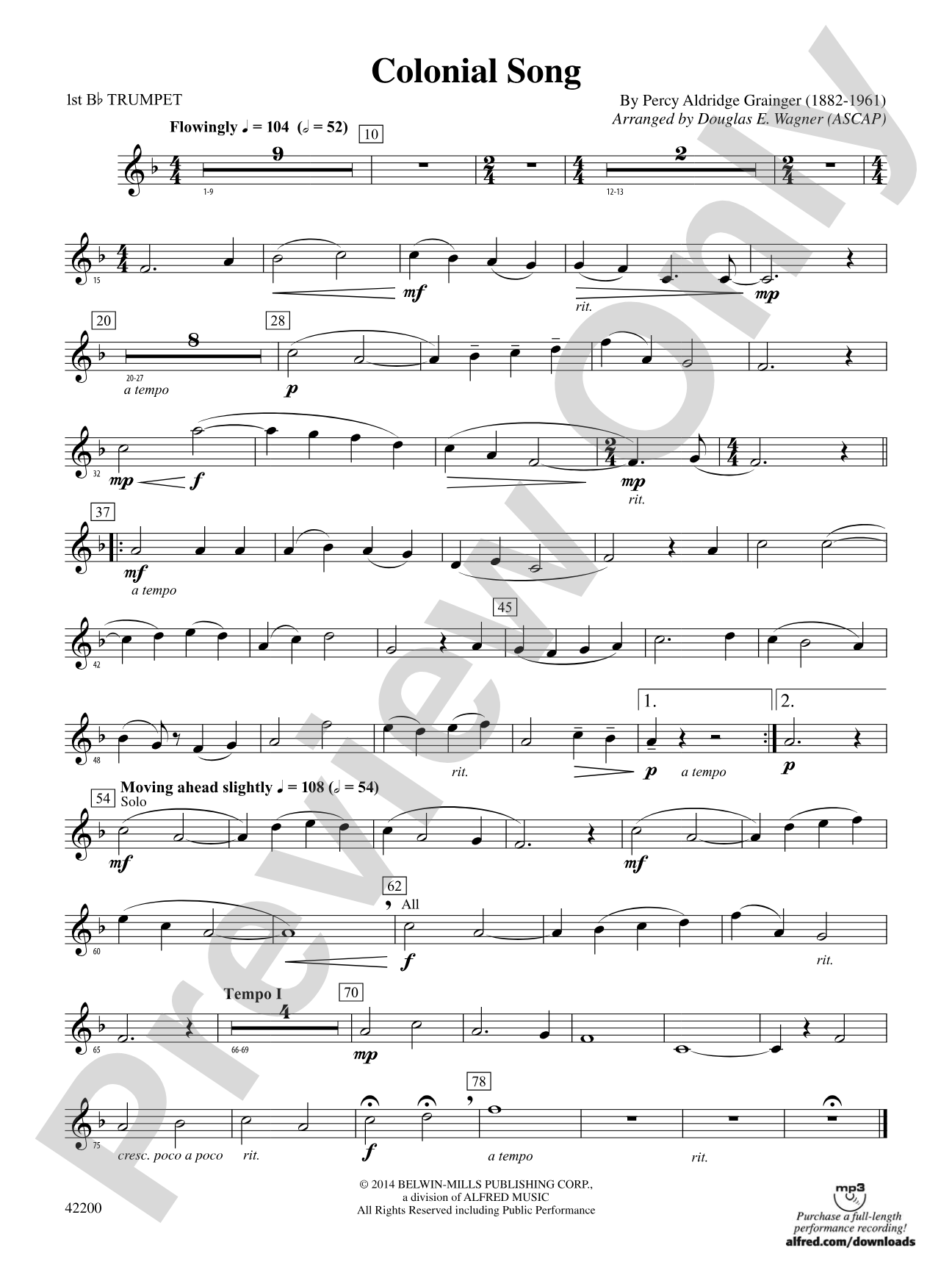

Colonial Song: 1st B-flat Trumpet
By Percy Aldridge Grainger / arr. Douglas E. Wagner
Grade: 3 (Medium Easy)
Item: 00-PC-0016561_T1
$3.00
Pickup currently not available
Description
This edition of a band repertoire classic is abridged and condensed, but has been left in the original key with all of Grainger's main themes, textures, and instrumental colorings presented in a very playable scoring for high school and more advanced middle school bands. (4:00) This title is available in MakeMusic Cloud.


Don't just read it, hear it, play along with it, and watch your students grow with it. In MakeMusic Cloud, Colonial Song: 1st B-flat Trumpet comes alive with professional accompaniment, adjustable tempo, and built-in practice tools that turn solo practice into real progress.
Open in the Player
Jump straight in and assign it today.
Start Your Free Trial
Open this title and explore the full library in minutes.
Sample Audio
1
Audio File
--:--
0:00
0:00
Sample Video
No sample videos found.
Additional Details
Series:
Belwin Concert Band
Publisher:
Alfred Music
Page Count:
182
SKU:
00-PC-0016561_T1
More about this title
About the Composer: Percy Aldridge Grainger
Percy Aldridge Grainger (1882-1961) was an Australian-born composer and pianist whose music bridged the Romantic tradition and modernist experimentation. A champion of folk music and unconventional orchestration, Grainger composed prolifically across genres and ensembles, creating works that remain central to band and orchestra repertoires worldwide.
Grainger's approach to composition emphasized color, texture, and the expressive potential of individual instruments. His willingness to reimagine traditional forms and his generous use of folk melodies made his music accessible without sacrificing artistic depth. For music educators, Grainger's output offers students exposure to sophisticated harmonic language, imaginative orchestration, and the integration of folk idioms into concert music.
Why we love this
Wagner's arrangement preserves everything that makes Colonial Song a concert staple while removing the barriers that keep many high school bands from tackling it. The orchestration remains colorful and distinctly Grainger, but the technical demands have been thoughtfully scaled. Your band gets to play authentic band literature with genuine depth, not a hollowed-out version.
What to expect
Colonial Song captures the spirit of a folk melody with warmth and nostalgia, unfolding like a musical memory being shared across a room. The arrangement moves between intimate passages where instruments seem to converse and fuller moments where the entire band resonates together with lyrical generosity. There is nothing aggressive or angular in this soundworld; instead, the piece invites listeners into a contemplative space where simple melodic ideas are treasured and explored with care.
Who it's for
High school bands and advanced middle school ensembles looking for concert and contest literature that combines musical substance with realistic technical demands. Directors seeking a work that develops musicianship through genuine artistic content rather than complexity for its own sake will find a natural fit here.
How to get the most out of it
- Balance the folk melody line when it passes between sections. The tune needs to sing clearly even as surrounding voices provide harmonic support, so cue entrances carefully during ensemble rehearsals.
- Shape the phrases with gentle dynamic swells rather than sudden changes. Grainger's textures thrive on gradual shifts in color and weight, which allows the band to sustain musical momentum across longer structures.
- Listen for the interaction between brass and woodwind color blocks. This arrangement showcases how different choirs can paint the same melodic material; make these transitions visible so the audience hears the orchestration shift.
- Trust the dynamic markings and let silence breathe. Grainger leaves space intentionally, and those moments of reduction or rest are as important as the fuller passages.
How to use it
Program this in a concert that highlights American classics or folk-inspired works. Its four-minute length and accessible emotional register make it effective as a centerpiece within a set of contrasting pieces, or as a way to open a program with something familiar and welcoming. The work also serves well in contest contexts where musicality and control matter more than technical virtuosity.
Skills your students will build
- Phrasing and dynamic shaping across long melodic lines
- Sectional balance and awareness of inner voices
- Orchestration listening (identifying how melody passes between instrumental choirs)
- Sustained tone production and breath management
- Reading and executing folk-influenced melodic style with appropriate lyricism