
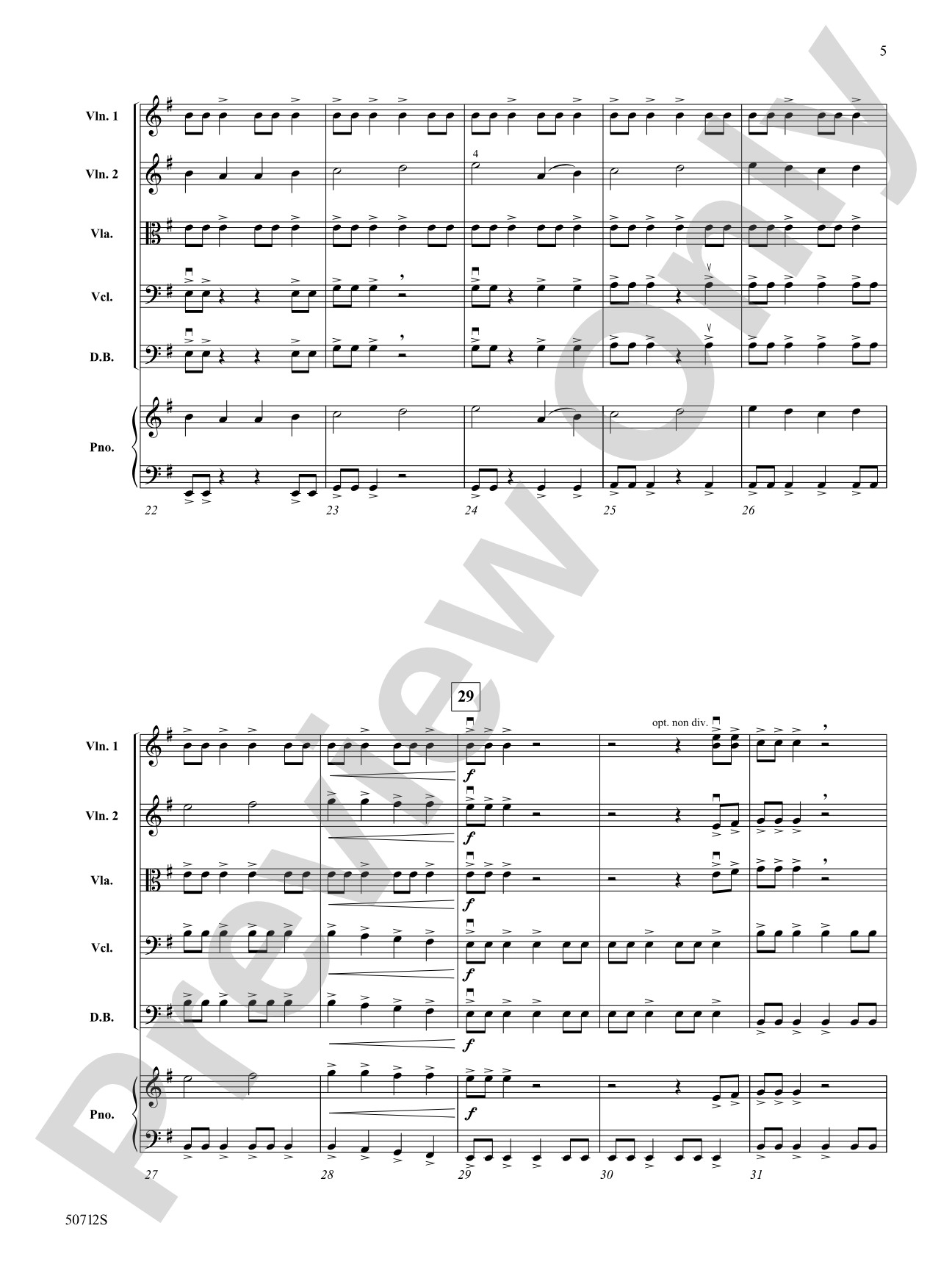
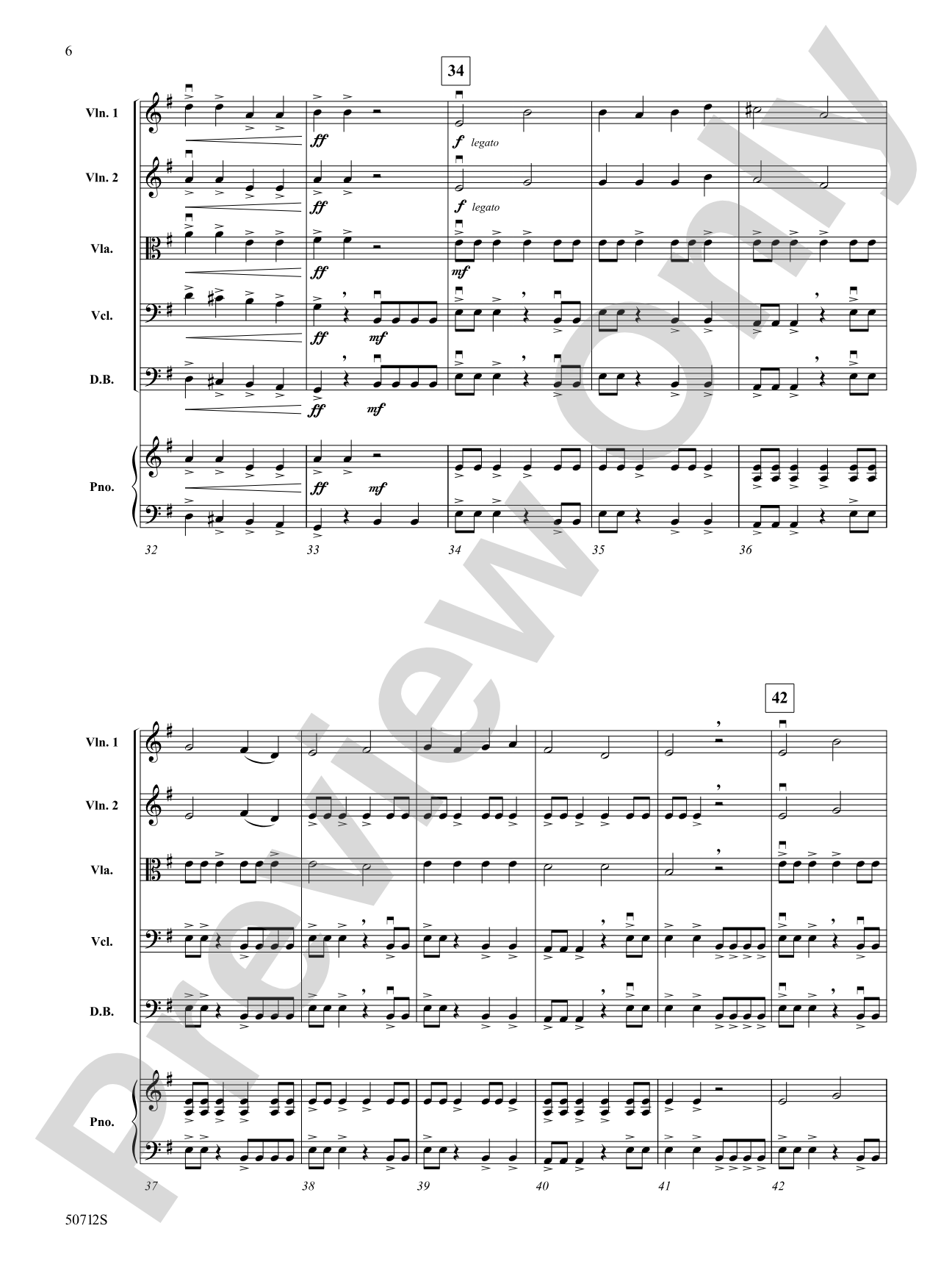
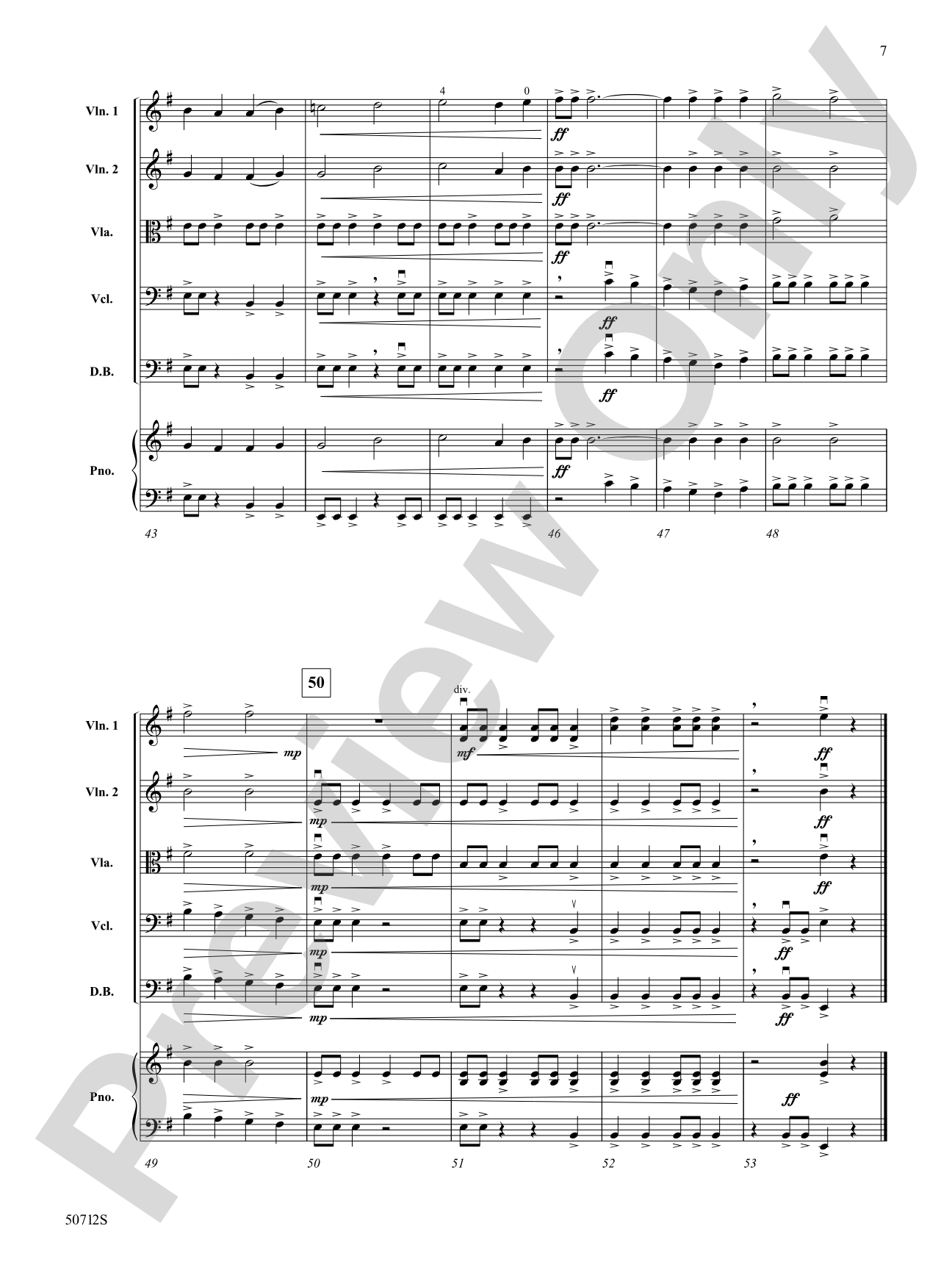

Colliding Fates: String Orchestra Conductor Score & Parts
By Tyler S. Grant
Grade: 2
Item: 00-PK-0008719

$55.00
One moment…
Description
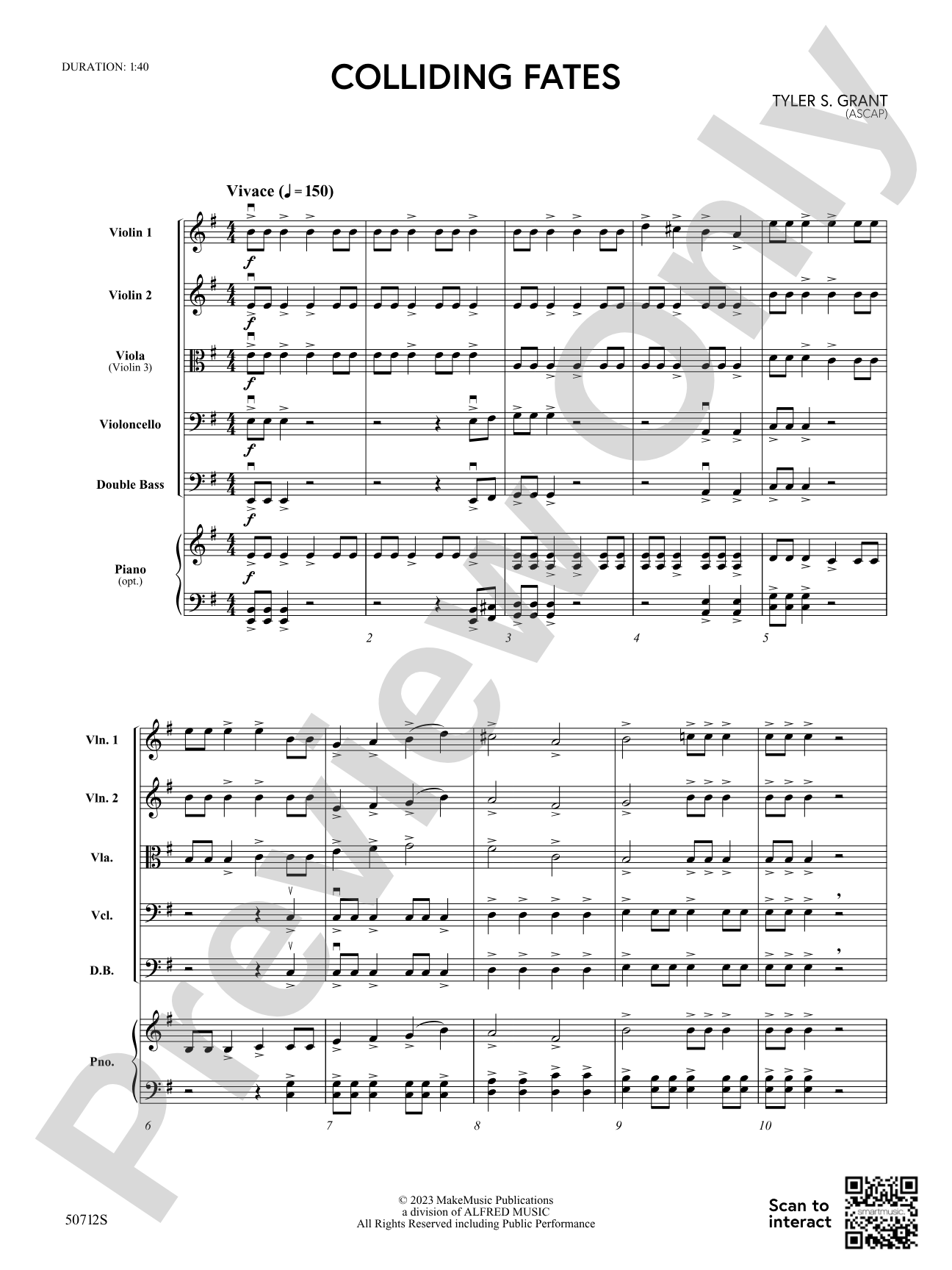
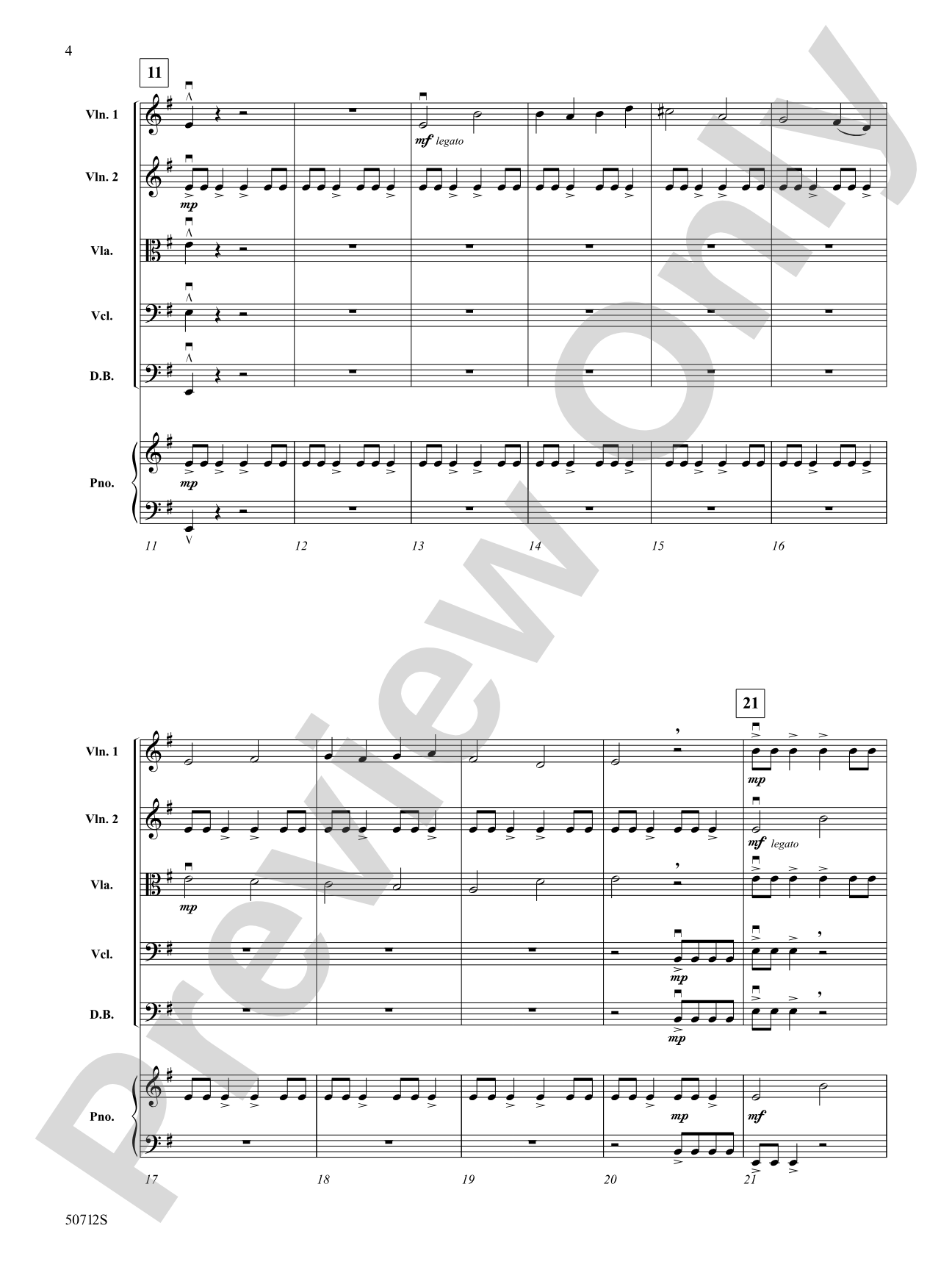
Full of action and drama, Colliding Fates will keep your students and audience on the edge of their seats! Composer Tyler S. Grant incorporates driving ostinati coupled with sweeping melodies and exciting harmonies to create tension and momentum. Sure to be a favorite! (1:40)


Don't just read it, hear it, play along with it, and watch your students grow with it. In MakeMusic Cloud, Colliding Fates: String Orchestra Conductor Score & Parts comes alive with professional accompaniment, adjustable tempo, and built-in practice tools that turn solo practice into real progress.
Open in the Player
Jump straight in and assign it today.
Start Your Free Trial
Open this title and explore the full library in minutes.
Sample Audio
1
Audio File
--:--
0:00
0:00
Sample Video
Additional Details
Series:
MakeMusic Intermediate Strings
Publisher:
MakeMusic Publications
SKU:
00-PK-0008719
More about this title
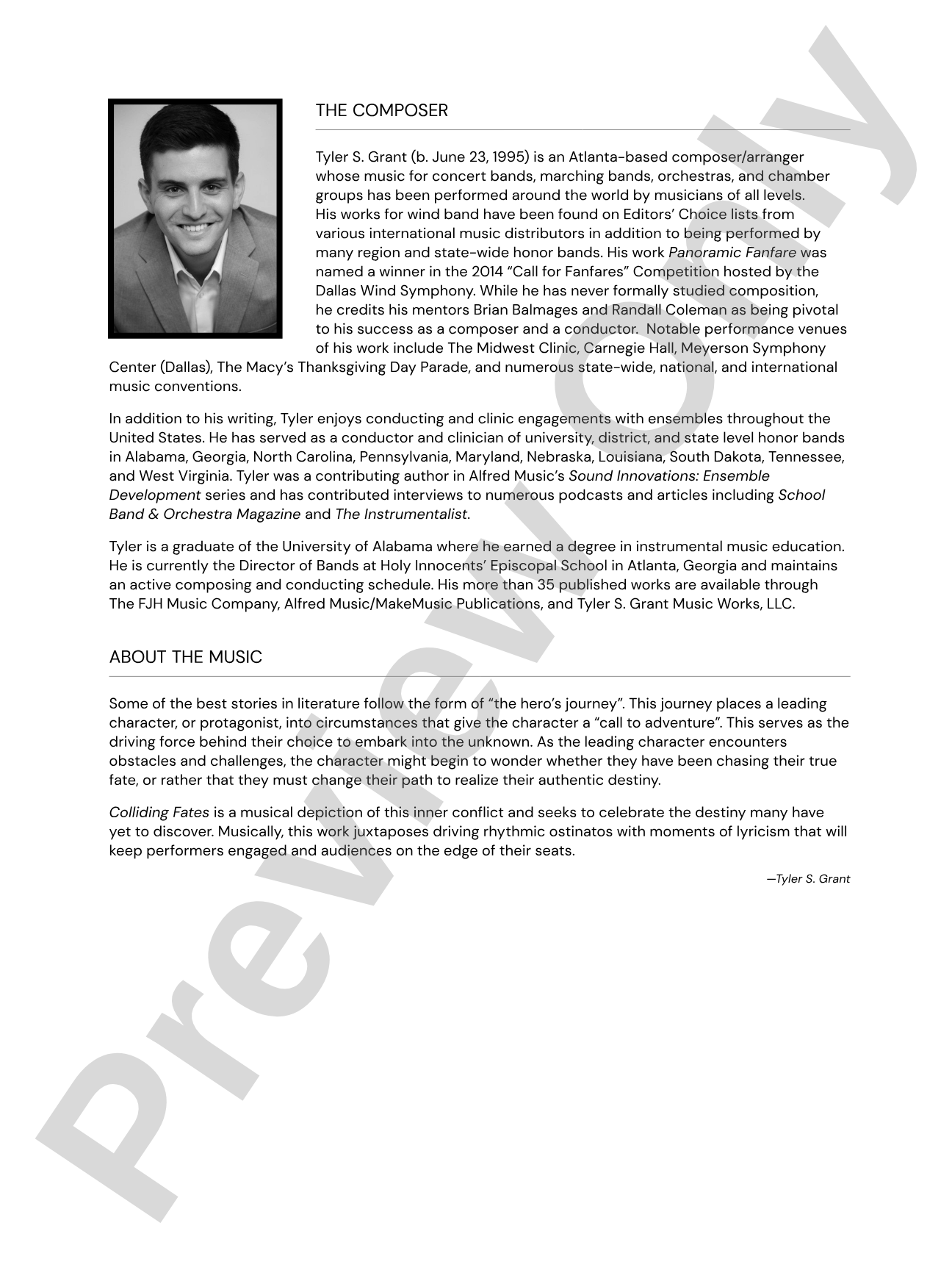
About the Composer: Tyler S. Grant

Tyler S. Grant has built a reputation as a prolific composer and arranger whose works appear regularly on honor ensemble and all-state repertoire lists across North America. His compositions have been premiered at prestigious venues including Carnegie Hall, The Midwest Clinic, and the Meyerson Symphony Center, and his Panoramic Fanfare won the Dallas Wind Symphony's 2014 "Call for Fanfares" Competition. Since 2010, he has accepted commissions consistently and released new publications for bands and orchestras annually.
Beyond the page, Grant is an active clinician and conductor who has worked with over 100 school instrumental music programs across 15 states. He earned his undergraduate degree in instrumental music education from the University of Alabama, where he studied conducting with Professor Randall Coleman. Grant credits composer Brian Balmages as a major influence on his development as a musician and composer.
Why we love this
Grant's gift for building momentum through layered ostinati and soaring melodic lines makes this piece engaging without demanding excessive technical facility. The 1:40 duration and Grade 2 level make it ideal for developing ensembles that still want to program something with genuine dramatic impact and contemporary energy.
What to expect
Colliding Fates pulses with forward momentum, balancing controlled intensity with moments of lyrical release. The piece grabs attention from the opening and maintains dramatic tension through interplay between relentless rhythmic drive and expressive melodic sweeps, creating a sense of escalating stakes throughout.
Who it's for
String orchestras at the Grade 2 level looking for a contemporary, high-energy piece with programmatic appeal. This works equally well for concert performances and festival competition, offering students exposure to modern compositional techniques without overwhelming technical demands.
How to get the most out of it
- Emphasize the rhythmic precision of the driving ostinati in rehearsal; they form the backbone of the piece's tension and must stay locked between sections.
- Shape the sweeping melodies with dynamic clarity so they cut through the rhythmic foundation rather than blend into it.
- Use the dramatic peaks to bring out the harmonic shifts Grant writes; these moments deserve a slight breath or tempo flexibility to land their full effect.
How to use it
Program this as an opener or closer when you want to showcase ensemble energy and musicality in a single piece. Its manageable length and contest/festival appeal make it ideal for both concert settings and competitive environments where you need maximum impact without excessive rehearsal investment.
Skills your students will build
- Executing precise rhythmic ostinati while maintaining ensemble cohesion
- Balancing lyrical phrasing within driving accompaniment figures
- Responding to dramatic dynamic and harmonic shifts
- Building tension and release through shape and articulation