Cole Porter Salute: 2nd F Horn Sheet Music Preview

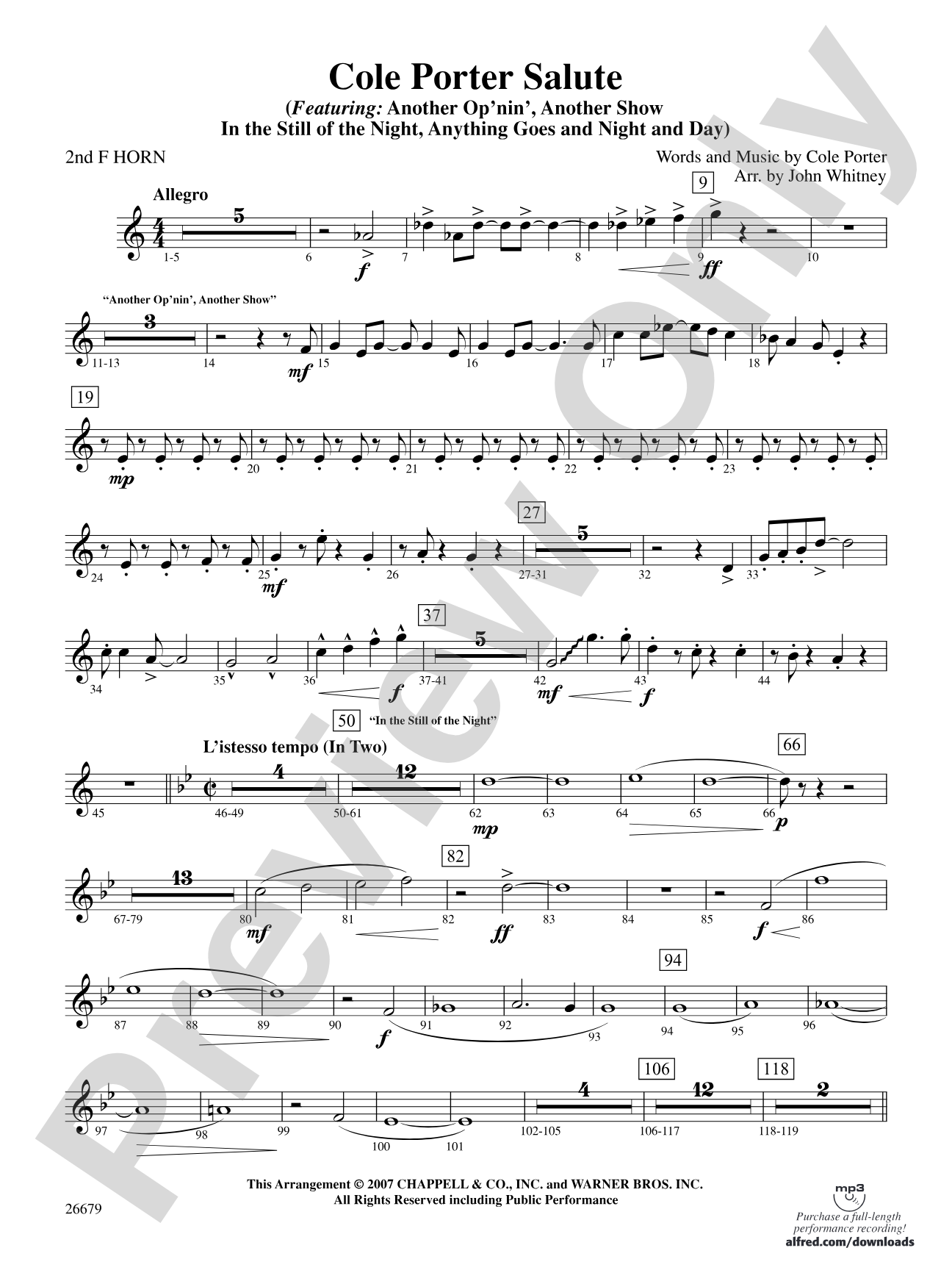
Cole Porter Salute: 2nd F Horn

Featuring: Another Op'nin', Another Show / In the Still of the Night / Anything Goes / Night and Day

By Cole Porter / arr. John Whitney

Grade: 4

Item: 00-PC-0015678_H2

Digital Download
$3.00
Description
A fabulous tribute to the great Porter in a captivating medley! Even young players will recognize the timeless melodies of these Cole Porter classics. Features "Another Op'nin', Another Show," "In the Still of the Night," "Anything Goes," and "Night and Day." Perfect for your spring concert! This title is available in MakeMusic Cloud.

Don't just read it, hear it, play along with it, and watch your students grow with it. In MakeMusic Cloud, Cole Porter Salute: 2nd F Horn comes alive with professional accompaniment, adjustable tempo, and built-in practice tools that turn solo practice into real progress.

Sample Audio
0:00
0:00
Sample Video
Additional Details
Series: Pop Concert Full Orchestra
Publisher: Alfred Music
Page Count: 188
SKU: 00-PC-0015678_H2

More about this title

About the Composer: Cole Porter

Cole Porter (1891-1964) was an American composer and lyricist who defined sophistication in American musical theater. His songs combine witty, urbane lyrics with melodies of remarkable elegance, and they remain standards in jazz and popular music nearly a century after their creation. Porter's influence on American songwriting is immeasurable; his melodic gift and harmonic sophistication set a standard that shaped generations of composers.

Why we love this

John Whitney's medley captures what makes Porter's catalog so enduring: immediately recognizable melodies that audiences of all ages respond to instantly. At Grade 4, this arrangement respects the sophistication of the source material while remaining accessible to young orchestra players, making it an ideal choice for concerts where you want polish and familiarity without programming something juvenile. The spring concert timing is perfect; this piece brings joy and elegance to the season.

What to expect

Urbane, warm, and stylish. This medley moves through some of Porter's most romantic and buoyant moments with a sense of ease and wit that reflects the composer's own voice. The orchestration captures the glow of a Broadway showstopper while remaining transparent enough for young musicians to navigate with clarity.

Who it's for

This arrangement works beautifully for orchestras in their second or third year of experience. Young players recognize the melodies immediately, which builds confidence and engagement. It's equally valuable for all-state or festival contexts where you want to program something polished and musically substantial that also connects with audiences.

How to get the most out of it

  • Balance the inner voices carefully during tutti passages. Porter's sophisticated harmonies can disappear if the melody and bass dominate; younger orchestras benefit from marking dynamic levels in parts that don't carry the primary line.
  • Shape the phrasing around the songbook origins of these melodies. These are standards meant to sing, so even in purely instrumental passages, treat the contours as if a vocalist were interpreting them.
  • Establish steady tempo relationships between sections. The medley moves through distinct songs, and clear transitions will help the audience follow the journey without losing momentum.
  • Give the rhythm section (particularly cello and bass) intentional character. Porter's harmonies depend on their clarity and precision to land effectively.

How to use it

Slot this into your spring concert as a sophisticated closer or mid-program lightener. It sits comfortably between heavier classical repertoire and pops selections, offering substance without drama. The medley format also makes it ideal for an educational preconcert talk about American musical theater and the Great American Songbook.

Skills your students will build

  • Stylistic interpretation of American songbook idiom
  • Balancing inner harmonic voices in sophisticated orchestrations
  • Transitioning smoothly between contrasting song sections
  • Precision in rhythm section articulation and ensemble cohesion
  • Reading and executing dynamic shaping that serves melodic content

You May Also Like