

Cole Porter (Classic String Quartets): 2nd Violin
Cole Porter / arr. Tony Esposito
Item: 00-PC-0016118_VN2
$6.00
Pickup currently not available
Description
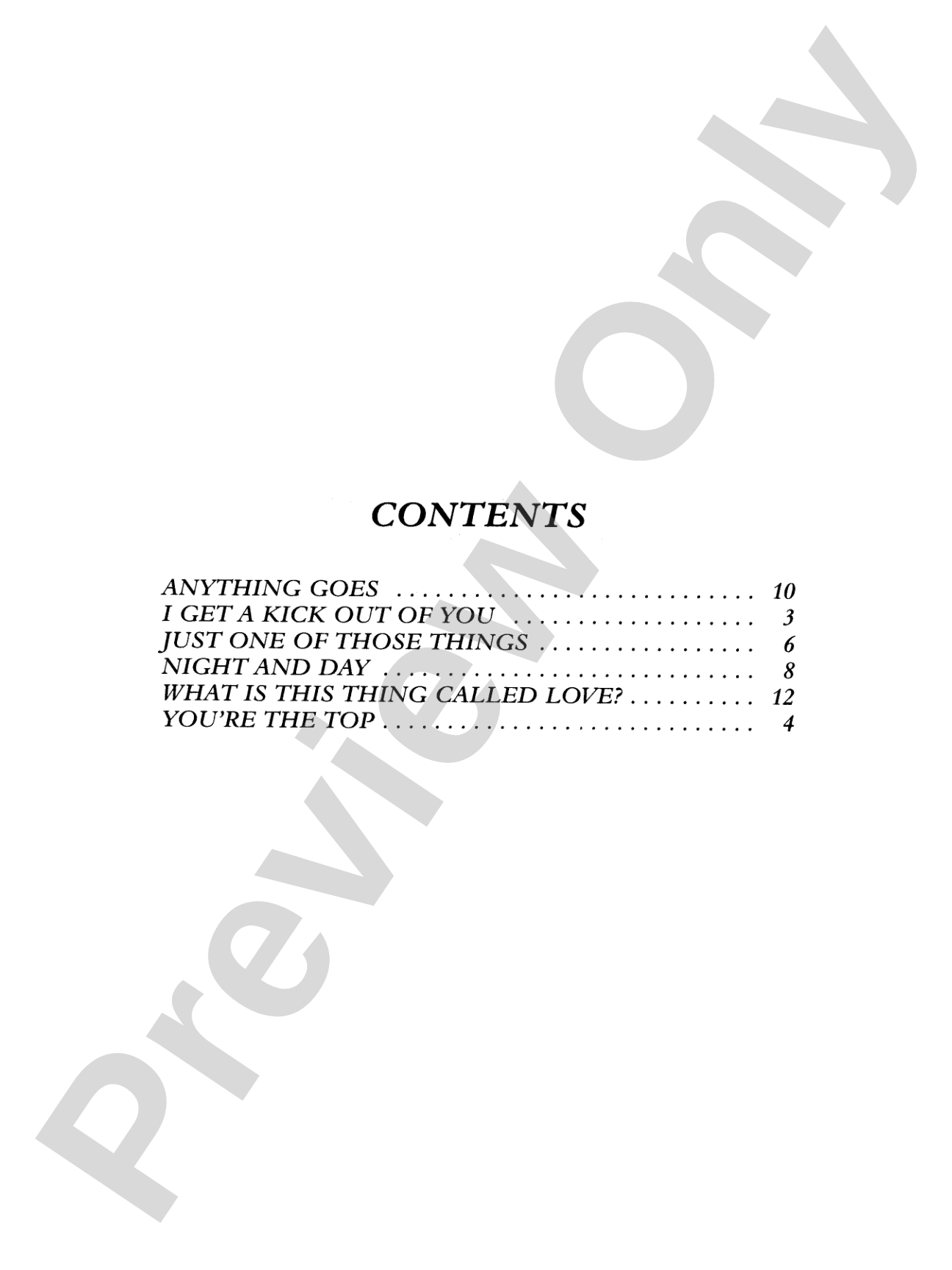
Includes: I Get a Kick Out of You * You're the Top * Just One of Those Things * Night and Day * Anything Goes * What Is This Thing Called Love?


Don't just read it, hear it, play along with it, and watch your students grow with it. In MakeMusic Cloud, Cole Porter (Classic String Quartets): 2nd Violin comes alive with professional accompaniment, adjustable tempo, and built-in practice tools that turn solo practice into real progress.
Open in the Player
Jump straight in and assign it today.
Start Your Free Trial
Open this title and explore the full library in minutes.
Sample Audio
No sample audio found.
Sample Video
No sample videos found.
Additional Details
Publisher:
Alfred Music
Page Count:
100
SKU:
00-PC-0016118_VN2
More about this title
About the Composer: Cole Porter
Cole Porter (1891-1964) was an American composer and lyricist whose sophisticated melodies and witty, urbane lyrics defined the Golden Age of musical theatre. His works appeared on Broadway and in Hollywood films throughout the 1920s, 1930s, and 1940s, earning him recognition as one of the most important songwriters of the twentieth century. Porter's harmonic language was advanced for his time, blending jazz influences with classical technique in ways that continue to challenge and delight musicians across all genres and ensembles.
For string players, Porter's standards offer an ideal entry point into jazz-inflected composition and American popular music. His melodies are memorable yet sophisticated, his harmonic progressions rewarding to play, and his works remain beloved in concert and recital settings worldwide.
Why we love this
Tony Esposito's arrangement captures the elegance and harmonic richness of Porter's songwriting while making these standards genuinely playable for intermediate string quartets. The collection pairs well-known melodies with arrangements that let each player voice meaningful musical content; this isn't a reduction where parts exist merely to fill texture. Programming these pieces signals versatility and appeals to audiences who love American songbook repertoire.
What to expect
Urbane and conversational. Porter's melodies lilt with a knowing charm, and Esposito's arrangements preserve that sophisticated ease while adding harmonic depth for the ensemble. You'll find moments of lyricism, rhythmic playfulness, and the kind of understated elegance that rewards careful listening.
Who it's for
String quartet ensembles at the intermediate to advanced level seeking repertoire that bridges classical and popular music worlds. This collection appeals to quartets programming chamber music concerts, studio recitals, or pops-oriented performances, as well as players interested in jazz-influenced harmony and American musical theatre literature.
How to get the most out of it
- Balance the melody across voices rather than isolating it in the first violin. Porter's sophistication lies partly in how his phrases move through the ensemble, so trade the lead and listen for smooth handoffs between parts.
- Treat the harmonic language with the same care you'd give to a contemporary classical work. Porter's jazz-influenced chord changes need clarity and intonation precision to sound intentional rather than accidental.
- Shape phrases by understanding the lyrical or dramatic arc of each tune. Even without words, you can honor the original song's character by breathing at natural phrase breaks and allowing rubato where the melody suggests it.
- Lock the rhythm section (cello and viola) early in rehearsal so the first and second violins can focus on balancing melody and countermelody without worrying about whether the harmonic foundation is solid.
How to use it
These pieces work beautifully as a thematic set on a chamber recital, or scattered throughout a concert program to offer variety and audience familiarity. A single Porter tune also serves as an excellent encore or pops concert staple. The collection's range of moods means you can program pieces strategically to shape an arc across a full recital or partner selections with contrasting classical fare.
Skills your students will build
- Intonation within jazz-influenced harmonic progressions (altered chords, chromatic voice leading)
- Balancing and trading melodic lines across four parts
- Shaping phrases without relying on bar-by-bar dynamic markings
- Articulation and rhythmic clarity in standards with swing or syncopated feel
- Reading and interpreting arrangement notation and optional cadenza passages