
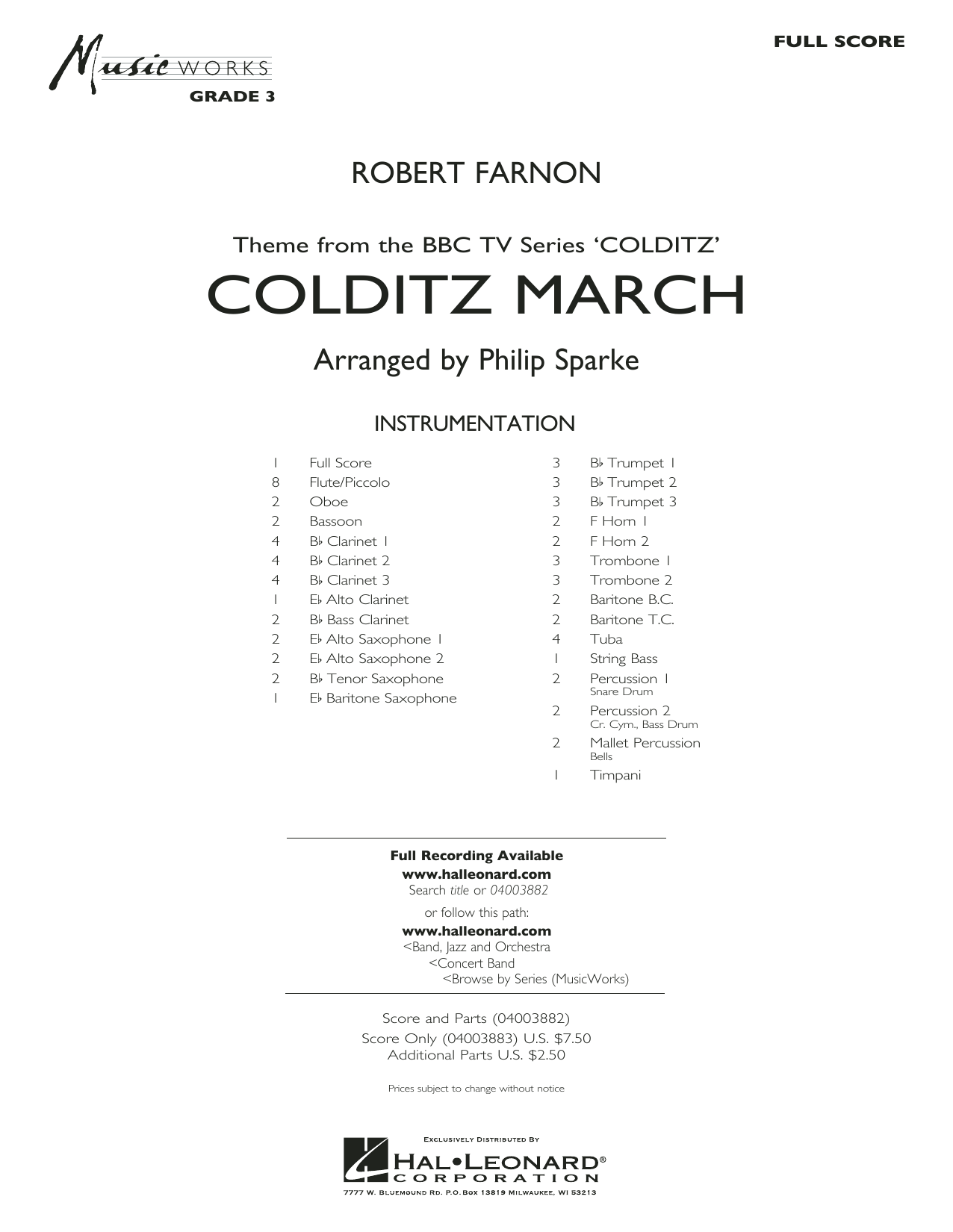

Colditz March (arr. Philip Sparke): Concert Band Conductor Score & Parts
By Robert Farnon / Arranged by Philip Sparke
Grade: 3
Item: 35-PK01212508
$65.00
Pickup currently not available
Buy Extra Parts (Digital PDF Download)
Parts Added to Cart!
Description
Acclaimed Canadian composer/arranger Robert Farnon penned this distinctive march theme for the 1970s BBC television drama "Colditz" telling the story of prisoners held at Colditz Castle in Germany during World War II. Philip Sparke's extended concert version is expertly scored for band and an elegant and powerful addition to any program. Dur: 3:00


Discover MakeMusic Cloud: thousands of interactive titles your students can play along with today.
Sample Audio
No sample audio found.
Sample Video
Additional Details
Publisher:
Hal Leonard
SKU:
35-PK01212508
More about this title
About the Composer: Robert Farnon
Robert Farnon (1917-2005) was a Canadian composer and conductor whose gift for melody and orchestration made him a prolific voice in film and television scoring throughout the mid-twentieth century. His work on the "Colditz" television series demonstrated his ability to craft themes that capture dramatic tension and historical weight, establishing music that would become iconic to audiences across generations.
Why we love this
Philip Sparke's arrangement transforms Farnon's memorable theme into a concert work that sits perfectly in the Grade 3 repertoire sweet spot: substantial enough to feel like a real musical statement, yet accessible enough that student musicians can execute it confidently. The march format gives your band a piece with immediate appeal and built-in energy, while the extended concert treatment adds harmonic and orchestral color that rewards careful rehearsal and fine ensemble listening.
What to expect
Dignified and purposeful, with an undercurrent of drama that nods to its origins in wartime storytelling. The march structure feels grounded and classical, yet Farnon's harmonic language brings a twentieth-century sophistication that keeps listeners engaged throughout its three minutes.
Who it's for
Bands working at the Grade 3 level who want a concert march with genuine musical substance and historical connection. This works equally well for groups seeking repertoire with cultural context or for directors building a concert around film and television music.
How to get the most out of it
- Shape the main march melody as though telling a story rather than simply marking time. The theme carries narrative weight from its television origins, so find the natural phrasing and let it breathe.
- Balance the countermelodies in the lower voices carefully. Sparke's arrangement weaves supporting material throughout; these lines deserve clarity without overwhelming the primary theme.
- Keep the tempo steady and deliberate. The three-minute duration works best when the march moves with purpose but without rushing, allowing the harmonic language to register fully.
- Address dynamic control early in rehearsal. The contrast between sections depends on clean transitions and ensemble agreement about volume relationships, not just individual part accuracy.
How to use it
Open a concert with this march to set a strong, confident tone for your audience. Alternatively, pair it with other film and television themes to build a thematic program, or position it as a bridge piece between more contemporary works and standard concert band fare. The three-minute length makes it flexible for various program slots.
Skills your students will build
- Balancing melody and accompaniment across the ensemble
- Executing march rhythm and meter with precision and musicality
- Reading and executing dynamic contrast and phrasing in concert band scoring
- Recognizing and responding to harmonic movement within a tonal framework
- Sustaining ensemble blend across a multi-section form