Cold Duck Time: E-flat Alto Saxophone Sheet Music Preview

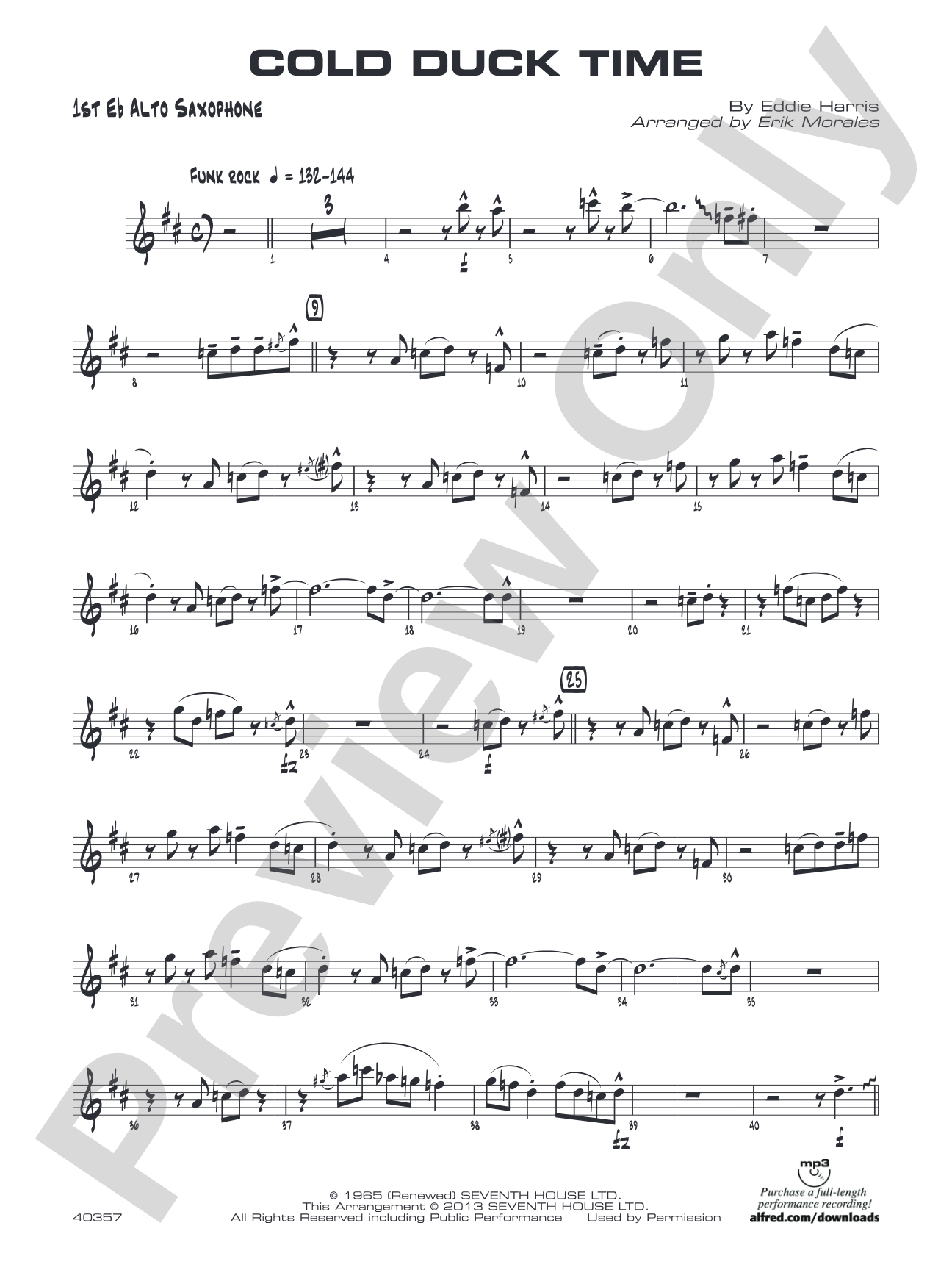
Cold Duck Time: E-flat Alto Saxophone

By Eddie Harris / arr. Erik Morales

Grade: 3 (Medium)

Item: 00-PC-0017253_AX1

Digital Download
$3.00
Description
Wow! This chart is totally smokin'. A terrific tune set in a funky-rock groove set around 132--144 BPM, a straight-eighth feel and very hip opening intro lick. Solos are available (written out) for alto, bari, trumpet 2, and guitar---and the lead trumpet range is to written A above the staff (optional B). Check it out! (4:02) This title is available in MakeMusic Cloud.

Don't just read it, hear it, play along with it, and watch your students grow with it. In MakeMusic Cloud, Cold Duck Time: E-flat Alto Saxophone comes alive with professional accompaniment, adjustable tempo, and built-in practice tools that turn solo practice into real progress.

Sample Audio
0:00
0:00
Sample Video
Additional Details
Series: Jazz Band Series
Publisher: Alfred Music
Page Count: 106
SKU: 00-PC-0017253_AX1

More about this title

About the Composer: Eddie Harris

Eddie Harris was a saxophonist and composer who bridged soul, funk, and jazz with an unmistakable groove sensibility. His work defined a particular strain of 1960s and 70s jazz that prioritized feel and accessibility without sacrificing harmonic sophistication.

Harris's compositions have become standards in the jazz education repertoire because they challenge students to lock into contemporary rhythmic feels while navigating sophisticated chord changes. Cold Duck Time exemplifies his gift for writing infectious, memorable melodies that sit naturally on horns.

Why we love this

This chart delivers what so many bands crave: a groove that's genuinely fun to play without being simplistic. The funky-rock foundation gives soloists something concrete to push against, while the written solos mean you're not gambling on whether students can execute the improvisation convincingly. Erik Morales's arrangement respects the original's swagger while adapting it smartly for ensemble texture.

What to expect

Immediately energetic and streetwise, with a groove that pulls listeners in without pretension. The straight-eighths and funky-rock foundation create momentum that feels current even decades later; this isn't bebop intellectualism but rather music that makes people move.

Who it's for

Medium-level jazz ensembles with at least one strong lead trumpet and competent soloists on alto, baritone, trumpet 2, and guitar. The arrangement gives first-time jazz soloists scaffolding (written parts) without removing the challenge of executing them musically. This works for programs pursuing contest or festival play.

How to get the most out of it

  • Lock the rhythm section into that straight-eighth feel immediately; the pocket is everything here, and rhythm guitar or keys should practice with the drum track before the full group rehearses.
  • The lead trumpet's optional high B is there if you have the player; don't force it, but know that taking it adds real punch to the moment.
  • Let soloists hear the recorded accompaniment multiple times in solo preparation sessions so they internalize the groove rather than fight against it.
  • Shape the opening intro lick with precision; this is your listener's first impression, and clarity here sets the energy for the whole performance.

How to use it

Program this on a concert where you want to shift energy and show your ensemble's rhythmic chops. It pairs naturally with harder-swinging standards or contemporary tunes and gives audiences a clear moment of swing and soul. The timing and energy also make it a strong closing number on a festival set.

Skills your students will build

  • Comping and maintaining straight-eighth grooves in rhythm section parts
  • Balancing precision with relaxation in a funk-rock feel
  • Reading and executing written-out jazz solos with stylistic accuracy
  • Navigating solo changes over a locked groove (especially for less-experienced improvisers)
  • Section cohesion and collective pocket awareness

You May Also Like