
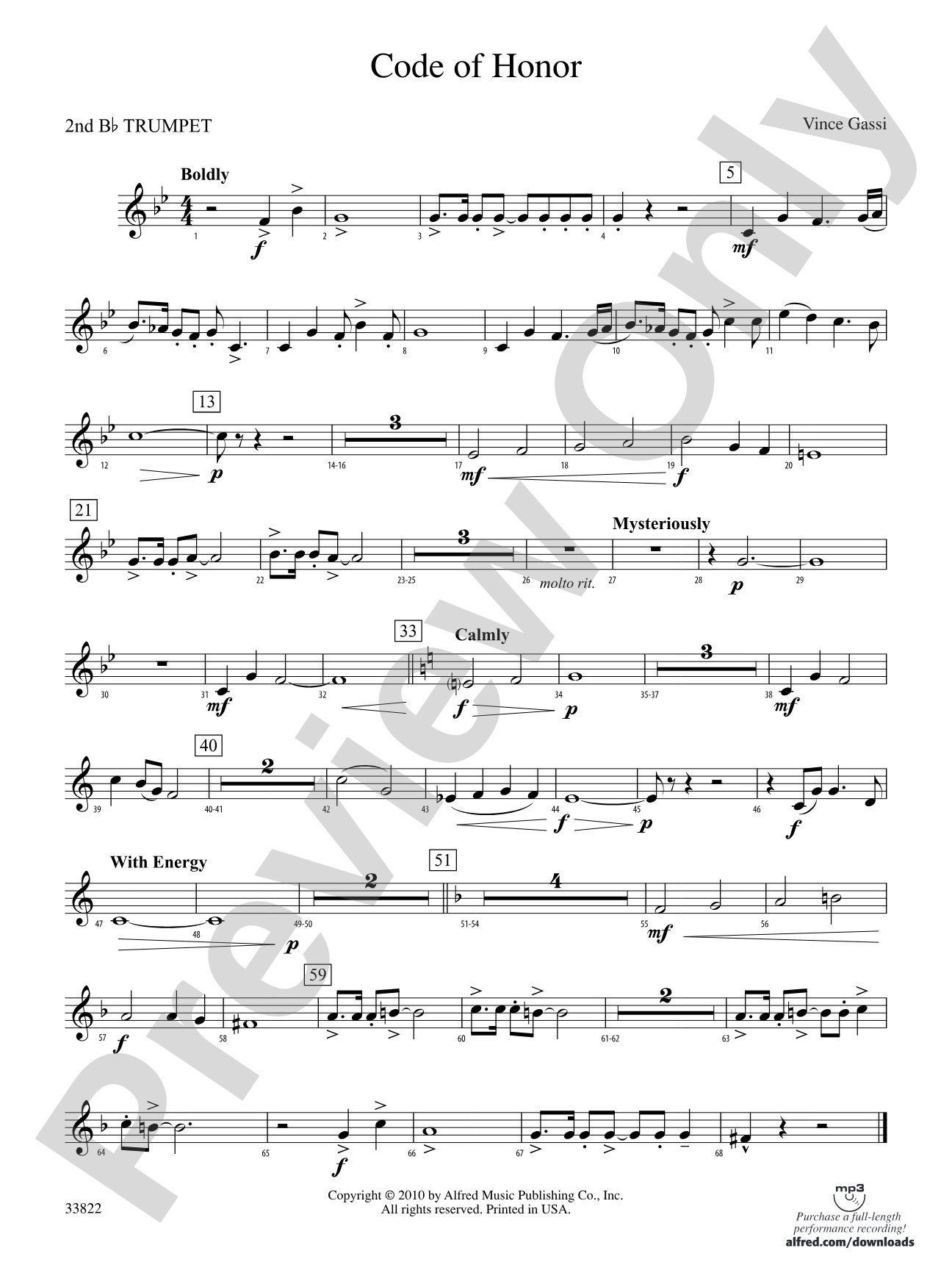

Code of Honor: 2nd B-flat Trumpet
By Vince Gassi
Grade: 1.5 (Easy)
Item: 00-PC-0014553_T2
$3.00
Pickup currently not available
Description
Perfect for your next concert or contest performance, Code of Honor will inspire feelings of courage and adventure. A robust opening flows naturally into the main theme proposed by the trumpets, accompanied by the dauntless snare drummer. Uplifting harmonies add to the already spirited mood. Things calm down a bit during a moving but dignified lyrical section. We are soon propelled once again into action by the snare drum and our heroic theme carries us to a rousing conclusion.


Don't just read it, hear it, play along with it, and watch your students grow with it. In MakeMusic Cloud, Code of Honor: 2nd B-flat Trumpet comes alive with professional accompaniment, adjustable tempo, and built-in practice tools that turn solo practice into real progress.
Open in the Player
Jump straight in and assign it today.
Start Your Free Trial
Open this title and explore the full library in minutes.
Sample Audio
1
Audio File
--:--
0:00
0:00
Sample Video
No sample videos found.
Additional Details
Series:
Challenger Band Series
Publisher:
Alfred Music
Page Count:
126
SKU:
00-PC-0014553_T2
More about this title
About the Composer: Vince Gassi
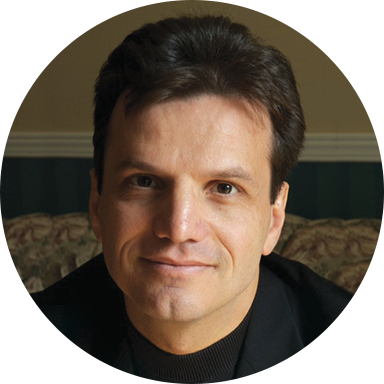
Vince Gassi has been composing and arranging music for young ensembles since earning his Bachelor of Music from the University of Western Ontario. His studies at the Dick Grove School of Music in Los Angeles sharpened his craft in composition and arranging, skills he has applied across more than 100 published works. He holds a Ph.D. from York University in Toronto.
For a quarter-century, Gassi taught instrumental music at elementary and secondary levels while building an international reputation as a guest conductor, adjudicator, and clinician. His workshops on creative engagement and digital workflows for music directors have shaped how teachers approach repertoire selection and ensemble management. His pieces appear regularly on concert and contest programs across North America, Europe, and Japan, and have become fixtures at prestigious venues like the Midwest Clinic in Chicago.
Why we love this
Gassi structures this piece to hold young musicians' attention across a full arc: the robust opening and trumpet-driven theme command focus, the lyrical section teaches musicians how to sustain dignity without drama, and the return to action rewards their work with a satisfying finale. At Grade 1.5, it sits in that sweet spot where groups can sound genuinely accomplished without drowning in technical difficulty, making it ideal for building confidence in early-season concerts or festival performances.
What to expect
Code of Honor opens with unmistakable vigor: bright, forward-moving energy that feels both spirited and achievable. The lyrical section offers genuine breathing room, inviting a more introspective mood before the final push propels the ensemble toward a rousing close. Throughout, the piece balances accessibility with authentic emotional content, never talking down to young musicians.
Who it's for
This piece serves beginning concert bands (Grades 4-6 or first-year high school groups) who are ready to tackle something with real structure and character. It works equally well for musicians preparing a concert or festival entry, since it gives conductors a credible, musically complete work that doesn't require a degree in score study.
How to get the most out of it
- Bring the snare drum into sharper focus during the opening and main theme sections. This is the piece's heartbeat, and young percussionists need clear direction about when they're driving the tempo versus laying back.
- Shape the lyrical section with real attention to phrase length. Many Grade 1.5 groups rush this calmer moment; marking clear breathing points in the score helps woodwinds and low brass sustain the "dignified" quality Gassi wrote into this passage.
- Let the trumpet section own the main theme completely. Balance the accompaniment lightly so the heroic melody stands without strain, which makes the return to the final section feel truly propelled rather than forced.
How to use it
Program this early in your season to establish momentum and build repertoire confidence, or use it as a festival entry that showcases your group's maturity without overextending them technically. It pairs well with lyrical or slower pieces, since its dramatic arc gives you natural programming contrast and leaves audiences with a sense of accomplishment.
Skills your students will build
- Phrasing and shaping in lyrical passages
- Dynamic contrast between section A (fast) and section B (slow) material
- Rhythmic precision with active snare drum parts
- Trumpet melody leadership and sustained tone production
- Ensemble balance and accompaniment awareness