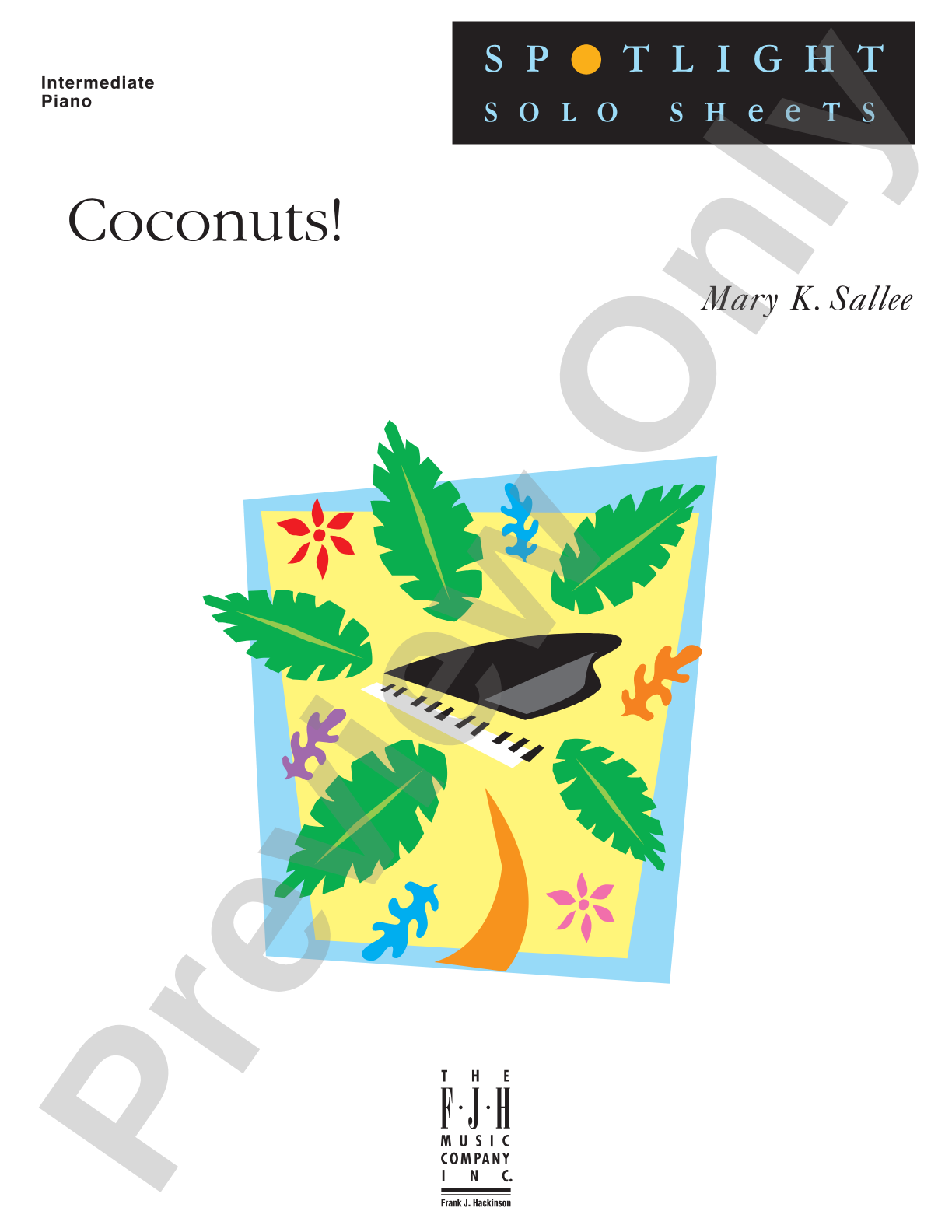
Warming up to jazz rhythms and blues? Here's music from the tropics, with easy syncopations that make it fun to play. Plenty of eighths in both hands to keep this one in constant motion, even during the riffs, with many sophisticated blue notes. Go nuts!
Discover MakeMusic Cloud: thousands of interactive titles your students can play along with today.
Mary K. Sallee brings deep classical training and authentic jazz experience to her composition work. She earned bachelor's degrees in both piano and voice, followed by a master's degree in piano performance and pedagogy from the University of Oklahoma. A Rotary Ambassadorial Scholar, she spent a year studying at the Hochschule für Musik in Vienna before establishing her independent piano studio in Norman, Oklahoma in 1986, where she has focused on adult learners for nearly four decades.
Beyond her teaching studio, Sallee has shaped Oklahoma's music education landscape through leadership roles with the Oklahoma Music Teachers Association and MTNA, adjudication work, and festival direction. Her compositional output reflects her dual identity as both a classical musician and jazz performer; she has published over 60 works, including pieces for her students that have earned recognition on National Federation lists. She continues to write and arrange for voice and choral ensembles, leads her own jazz ensemble, and maintains an active schedule as a clinician and church musician.
Why we love this
Sallee understands exactly what intermediate pianists need to build jazz credibility without overwhelming them. The piece strikes a genuine balance between accessible keyboard writing and authentic syncopation, so students feel they're learning real jazz vocabulary rather than a simplified approximation. The constant motion in both hands keeps engagement high while those blue notes and syncopated figures create instant musical personality.
What to expect
Bright and playful, with a tropical breeze running through syncopated jazz language. The constant eighth-note motion creates a propulsive energy that feels summery and carefree, even as the blue notes inject real harmonic sophistication beneath the surface.
Who it's for
Intermediate pianists encountering jazz idioms for the first time, particularly those studying with teachers who incorporate style diversity into their studios. This piece works equally well for students exploring jazz independently or as part of a formal curriculum that introduces syncopation and blues vocabulary.
How to get the most out of it
Lock in the eighth-note pulse first. Play slowly with a metronome to internalize the syncopated rhythms before adding tempo, so the syncopation sits confidently rather than feeling rushed.
Shape the blue notes expressively. These aren't accidents in the harmony; give them breath and slightly extended duration to let their color register.
Keep the riff figures clean and bouncy. Even though they're constructed from simple materials, articulation and rhythmic precision make them swing.
How to use it
Feature this in a recital set that showcases stylistic range, where it can sit comfortably between classical repertoire and other contemporary works. The approachable energy and distinctive voice make it ideal for student showcases or informal performances where you're introducing students to genres beyond the classical canon.
Skills your students will build
Reading syncopated rhythms in both hands simultaneously
Understanding and executing blue notes in a tonal context
Maintaining rhythmic independence between hands while keeping a steady pulse
Developing jazz articulation and phrasing conventions
You May Also Like
Scan to Complete Your Purchase
Use your phone's camera to scan the code below
You'll log in on your phone and the order will be added to your account