Cockles and Mussels (Molly Malone): Viola Sheet Music Preview

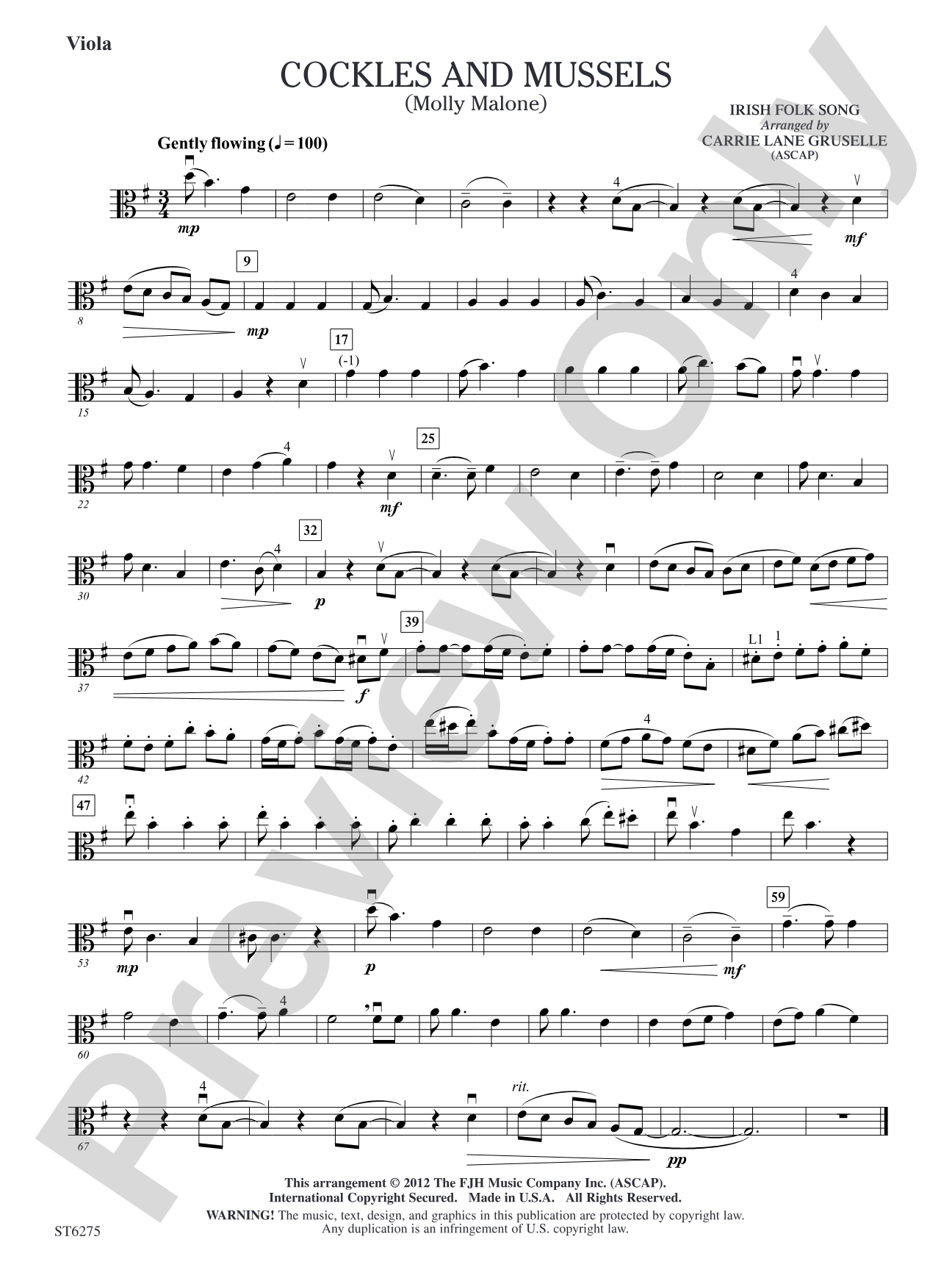
Cockles and Mussels (Molly Malone): Viola

Molly Malone

Arranged by Carrie Lane Gruselle

Grade: 3

Item: 98-PC-DST6275_VA1

Digital Download
$7.00
Description
The lush textures of this timeless melody are seamlessly woven into a tapestry of pure emotion. Plaintive yet sophisticated, the piece opens with a yearning three-note motif that softly spreads throughout the ensemble. Just as the music builds to its dramatic climax, the hushed sounds of the opening return and continue to fade, leaving the audience breathless.

Cockles and Mussels (Molly Malone): Viola isn't in MakeMusic Cloud just yet...but it could be. Let us know you'd like to see it, and you'll help shape what comes next. In the meantime, start a free trial and dive into thousands of interactive titles your students can play along with today.

Sample Audio
0:00
0:00
Sample Video
Additional Details
Series: FJH String Orchestra
Publisher: The FJH Music Company, Inc.
SKU: 98-PC-DST6275_VA1

More about this title

About the Arranger: Carrie Lane Gruselle

Carrie Lane Gruselle

Carrie Lane Gruselle teaches elementary and middle school strings in the Appleton Area School District while also directing cello studies through Lawrence University's Arts Academy. Her training spans both undergraduate music education at the University of Wisconsin, Eau Claire and graduate study at UW, Stevens Point, where she specialized in Suzuki pedagogy.

Gruselle brings classroom experience directly into her arranging work, understanding how young string players develop technique and musicality across multiple grade levels. Her dual role as both a K, 8 educator and university instructor keeps her connected to what students actually need to play and what teachers need to teach.

Why we love this

Gruselle's treatment respects the melody's emotional weight while building ensemble textures that Grade 3 players can genuinely execute. The strategic use of a repeating three-note motif creates a compositional anchor that young musicians can latch onto, turning a familiar folk melody into a study in orchestration and dynamic control rather than just playing notes in unison.

What to expect

The piece carries a wistful, almost aching quality from the very first measures, as if remembering something precious and distant. The architecture moves from intimate vulnerability outward to a moment of real power, then withdraws back into the quietness where it began, leaving resonance rather than resolution.

Who it's for

String orchestras working at Grade 3 level who want to tackle a beloved melody with sophistication and emotional maturity. This arrangement rewards directors who have built basic ensemble unity and who are ready to explore dynamic control and motivic development with their players.

How to get the most out of it

  • Shape the opening three-note motif as a unified statement across the ensemble; small inconsistencies in bow entry will blur the gesture, so rehearse the very first attack together before adding any vibrato or expression.
  • Balance the gradual layering of voices as the piece builds toward climax by having each section enter slightly softer than the one before it, creating forward momentum rather than pile-up.
  • Return to that opening material with intentional breath and space; the final fade is not a slow decrescendo but a series of gentle reductions that allow the audience to hear silence approaching.
  • Record a playthrough at rehearsal tempo and listen back as a group, focusing on whether the dramatic arc feels inevitable or rushed.

How to use it

Pair this with other folk settings to build a concert theme around world music and cultural storytelling, or position it as a moment of genuine stillness between more energetic contemporary pieces. The emotional arc makes it strong as a second-to-last selection on a program, where audiences have time to sit with its ending before the final bow.

Skills your students will build

  • Sustained dynamic control through crescendo and diminuendo over full phrases
  • Ensemble balance when multiple voices carry related melodic material simultaneously
  • Motivic recognition and development across sections
  • Bowing consistency and tonal clarity in exposed passages
  • Musical storytelling through textural layering rather than technical display

You May Also Like