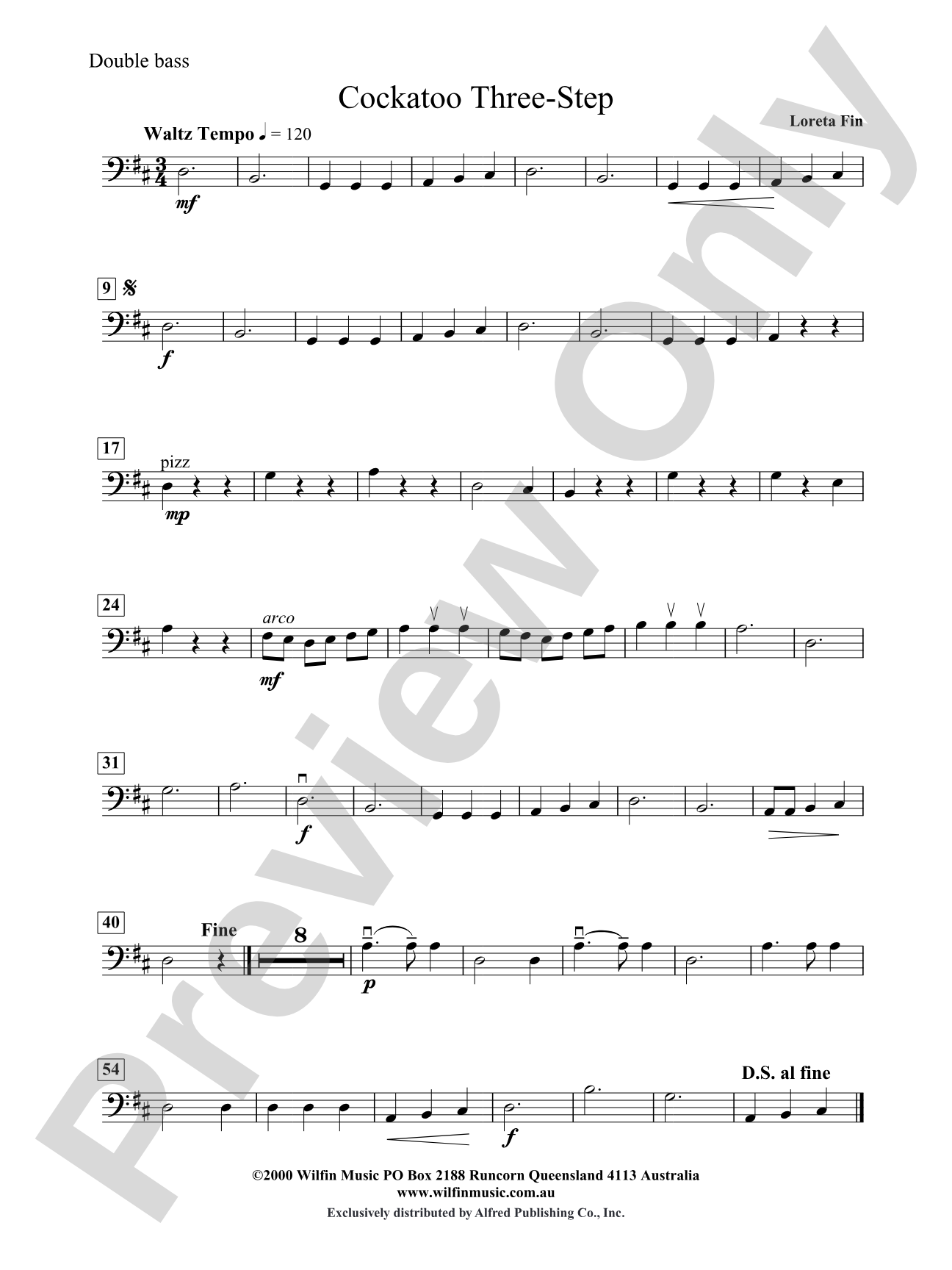
Cockatoo Three Step: String Bass Sheet Music Preview

Cockatoo Three Step: String Bass

By Loreta Fin

Grade: 2

Item: 76-PC-0000009_SB

Digital Download
$5.99
Description
Original tune in 3/4 with an abundance of interest throughout; lovely, unhurried ballad; piano part needed if no bass player.

Cockatoo Three Step: String Bass isn't in MakeMusic Cloud just yet...but it could be. Let us know you'd like to see it, and you'll help shape what comes next. In the meantime, start a free trial and dive into thousands of interactive titles your students can play along with today.

Sample Audio
No sample audio found.
Sample Video
Additional Details
Series: Wilfin String Orchestra: Young String Ensemble Series
Publisher: Wilfin Music
Page Count: 66
SKU: 76-PC-0000009_SB

More about this title

About the Composer: Loreta Fin

Loreta Fin

Loreta Fin AM studied violin at the Sydney Conservatorium of Music and began her career as a first violinist with the Sydney Youth Orchestra. Since then, she has established herself as a performer, educator, and composer across Australia and internationally, serving as Principal Viola player with the Queensland Pops Orchestra for over 25 years and Director of Strings at Somerville House School in Brisbane since 1993.

Fin has composed more than 100 works for string orchestra published worldwide by Alfred Music, and her contributions to music education have earned her recognition as a state and national leader. She has presented at American and Australian National String Teachers' Conferences, adjudicated major competitions across Australia, served as State and National President of the Australian Strings Association, and received the National Award for Services to Music and String Teaching. Currently, she serves as State Advisor for Strings with the Australian Music Examinations Board and regularly conducts state and national honours ensembles programs.

Why we love this

Fin writes with an intimate understanding of young string players' voices and what sounds good under their fingers. The unhurried ballad section gives developing musicians space to shape phrases without wrestling with technical complexity, while the three-step form keeps the piece fresh and engaging across all eight pages without feeling repetitive.

What to expect

Cockatoo Three Step unfolds with understated charm. The ballad section invites players into a quiet, introspective space, while the three-step sections sparkle with rhythmic clarity and lift. It's the kind of piece that feels rewarding to play the moment you get past page one.

Who it's for

String directors building programming around Grade 2 ensembles who want repertoire with genuine musicality and character. This piece works equally well for young chamber groups and school orchestras that need something engaging without extreme technical demands.

How to get the most out of it

  • Let the ballad breathe. Young players often rush through slower material; mark a steady tempo in your score and conduct with clarity so the ensemble hears what unhurried actually feels like.
  • Balance the string sections carefully during the three-step sections. With a Grade 2 ensemble, first violins will naturally project; use dynamic markings to draw out inner voices and keep the texture from sounding thin.
  • If you don't have a bass player, the piano part becomes your harmonic foundation. Rehearse with the pianist early and establish how they'll lead rhythm section cues to keep young players anchored.

How to use it

This works beautifully as a concert opener or closing piece; its conversational length and Grade 2 accessibility make it ideal for mixed-level programs where you want to showcase younger students without padding the program with filler. It pairs naturally with other character pieces and sits well alongside folk-based or light concert repertoire.

Skills your students will build

  • Phrasing and shape in slower ballad sections
  • Rhythmic precision in three-step meter
  • Balance and blend within four-part string texture
  • Sustaining tone quality across longer note values
  • Following harmonic movement in a piece without constant melodic direction

You May Also Like