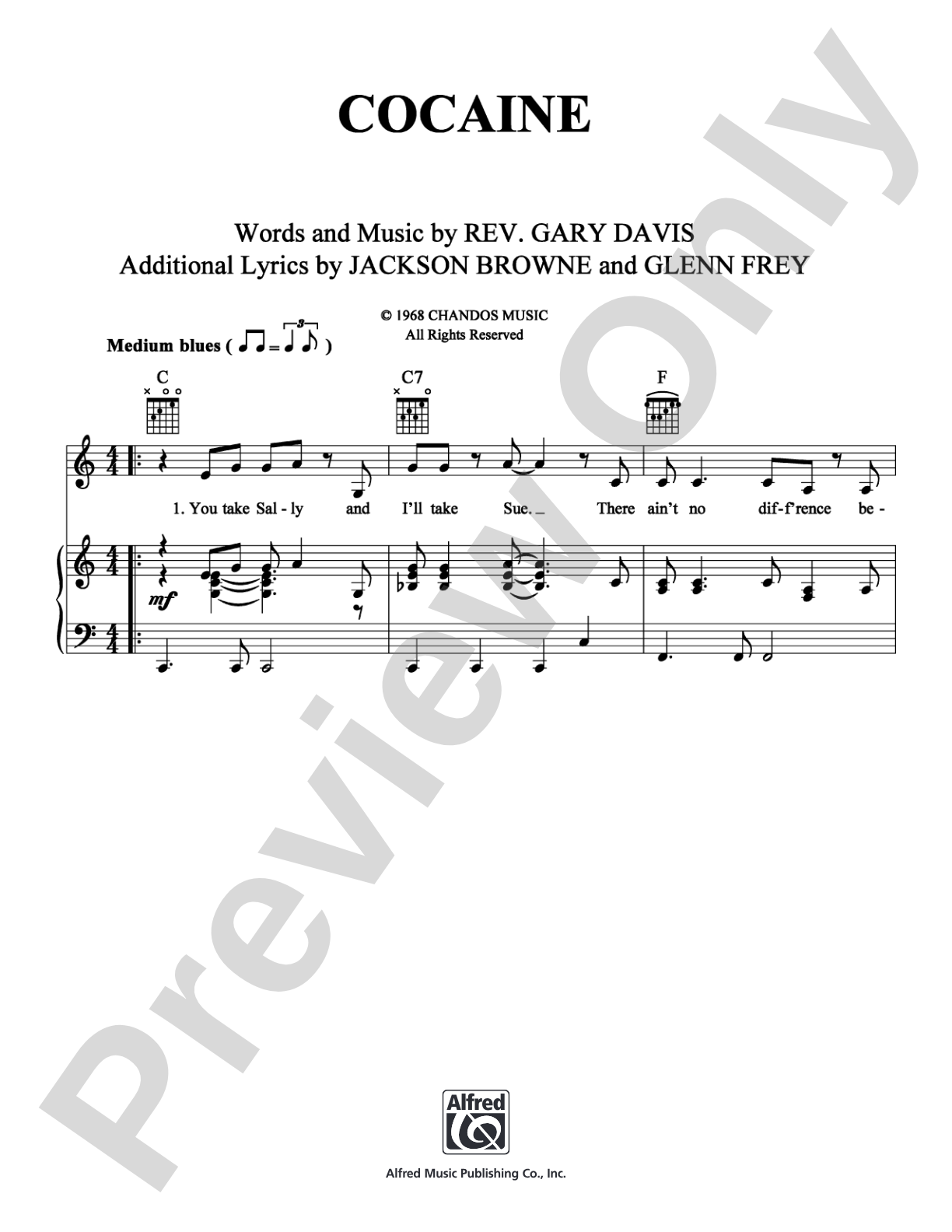
Cocaine: Piano/Vocal/Chords Digital Sheet Music

Cocaine: Piano/Vocal/Chords Digital Sheet Music

Jackson Browne, Gary Davis

Item: 00-PS-0006677

Digital Download
$2.95
Description

Cocaine: Piano/Vocal/Chords Digital Sheet Music isn't in MakeMusic Cloud just yet...but it could be. Let us know you'd like to see it, and you'll help shape what comes next. In the meantime, start a free trial and dive into thousands of interactive titles your students can play along with today.

Sample Audio
No sample audio found.
Sample Video
Additional Details
SKU: 00-PS-0006677

More about this title

About the Artist: Jackson Browne

Jackson Browne emerged from the California singer-songwriter tradition of the 1970s, bringing literary depth and emotional precision to rock music. His career spans five decades of acclaimed songwriting and performance, with work that addresses social conscience, personal introspection, and the American experience.

Why we love this

This song showcases Browne's gift for narrative songwriting with unflinching honesty. The piano/vocal/chords format gives singers and pianists direct access to the song's harmonic architecture and lyrical phrasing, making it ideal for studying how a master craftsman builds emotional weight through restraint.

What to expect

The song carries a conversational tone that masks deeper currents of concern and observation. The arrangement invites introspection, creating space for both the performer and listener to sit with uncomfortable truths.

Who it's for

Pianists and singers studying songwriting craft at intermediate level or higher will find this digital score invaluable for understanding how a seasoned songwriter handles melody, harmony, and narrative. Music educators teaching contemporary song analysis or popular music history can use this format to examine the song's structure and emotional architecture.

How to get the most out of it

  • Pay attention to the lyrical rhythm and how it shapes the melodic line; Browne's phrasing often sits slightly behind or ahead of the beat to create narrative tension.
  • Use the chord progression to inform your dynamic choices; shifts in harmony often signal emotional turning points worth highlighting.
  • Balance the vocal intimacy with piano support; this arrangement works best when the accompaniment frames rather than overshadows the story being told.

How to use it

This works well in recital contexts focused on American songwriting or social commentary in popular music. Solo performers building a set around singer-songwriter traditions will find it complements other Browne material or similar work from the 1970s California scene.

Skills your students will build

  • Reading and interpreting chord symbols in a contemporary song context
  • Analyzing narrative structure and how melody aligns with lyrical phrasing
  • Understanding conversational vocal delivery and restraint in emotional storytelling
  • Accompanying a vocal line with sensitivity to both harmonic and dramatic intent

You May Also Like