Clowning Around: 1st Percussion Sheet Music Preview

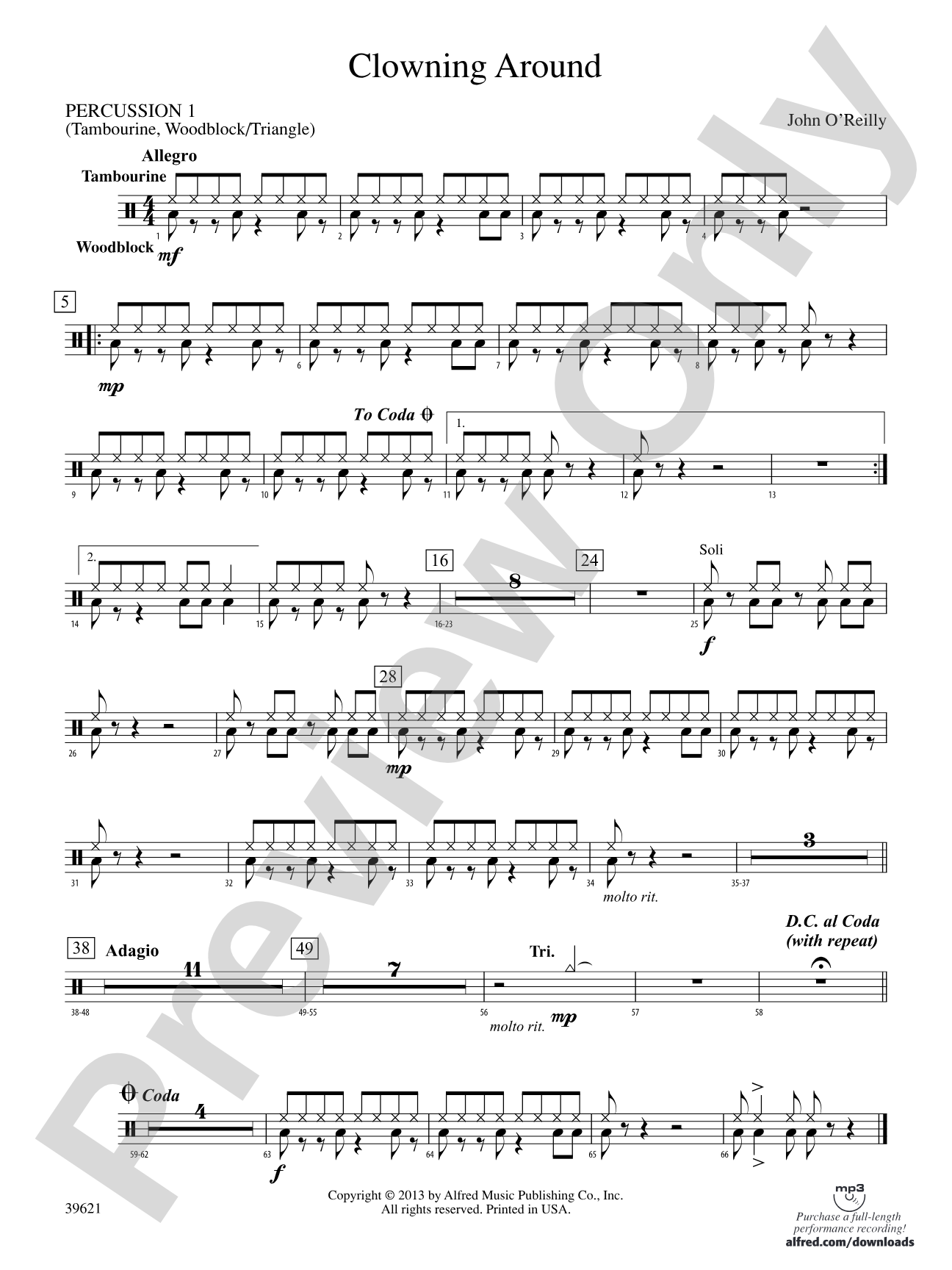
Clowning Around: 1st Percussion

By John O'Reilly

Grade: 1.5 (Easy)

Item: 00-PC-0015895_PC1

Digital Download
$3.00
Description
When the circus comes to town, one of the main attractions for children of all ages is the clowns. Their humorous antics always get the show rolling and they frequently move through the audience with their happy and sometimes sad faces. This work is a delightful composition that reflects on both personalities of the circus clowns. (2:30)

Don't just read it, hear it, play along with it, and watch your students grow with it. In MakeMusic Cloud, Clowning Around: 1st Percussion comes alive with professional accompaniment, adjustable tempo, and built-in practice tools that turn solo practice into real progress.

Sample Audio
0:00
0:00
Sample Video
Additional Details
Series: Alfred Debut Series
Publisher: Alfred Music
Page Count: 122
SKU: 00-PC-0015895_PC1

More about this title

Why we love this

O'Reilly captures the dual nature of clown personas without relying on heavy orchestration or complex harmonies, making this Grade 1.5 work genuinely expressive rather than simplistic. The piece moves naturally between lighthearted and poignant moments, giving young musicians real emotional content to communicate while staying well within their technical reach.

What to expect

Playful and theatrical, with moments of genuine tenderness woven through the whimsy. The music inhabits the world of the circus clown: colorful and entertaining on the surface, but with an underlying awareness of the complexity beneath the painted smile.

Who it's for

First and second-year concert bands seeking program content that engages young audiences without condescending to them. Directors working with developing ensembles benefit from accessible writing that still requires musical maturity to execute well.

How to get the most out of it

  • Shape the transition between happy and sad sections with clear articulation changes; let the mood shift live in the air rather than forcing it with tempo alone.
  • Balance the ensemble so that melodic lines remain audible even when supporting voices enter; this clarifies the emotional arc.
  • Use dynamic contrast as your primary storytelling tool at this level. Even small shifts from mezzo-piano to mezzo-forte will register powerfully with an audience.

How to use it

Program this early in a concert or family matinee to establish an accessible, entertaining tone without sacrificing musical substance. Its 2:30 duration makes it an ideal bridge between shorter opening pieces and weightier repertoire, or a satisfying standalone selection for young audiences.

Skills your students will build

  • Balancing melodic and harmonic roles within an ensemble texture
  • Executing sudden dynamic and character shifts with ensemble precision
  • Sustaining musical expression within Grade 1.5 technical limitations
  • Responding to conductor interpretation in narrative-driven music

You May Also Like