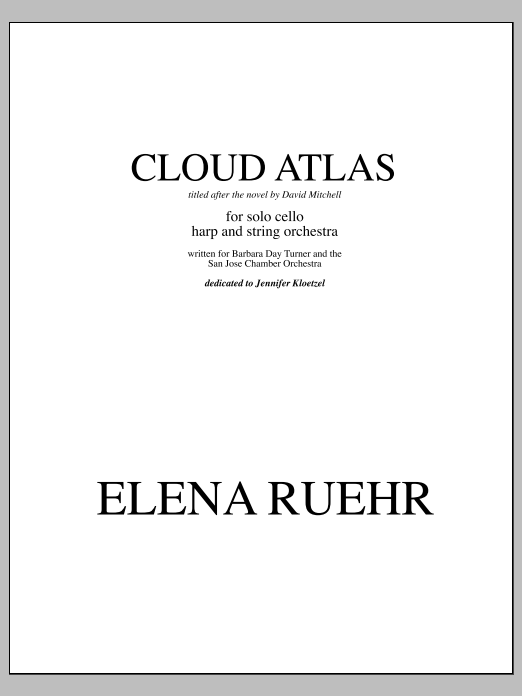
Cello Concerto written for Jennifer Kloetzel, romantic and virtuosic for the soloist, orchestral parts not difficult. Orchestra of strings and harp. Duration: 15:00
Discover MakeMusic Cloud: thousands of interactive titles your students can play along with today.
Elena Ruehr is a composer and arranger whose work spans orchestral, chamber, and vocal music. Her arrangements are known for preserving the essential character of source material while creating idiomatic writing for the forces at hand.
Why we love this
Ruehr has crafted an arrangement that honors the romantic sweep of the original while keeping orchestral demands manageable. The cello solist gets a genuinely virtuosic part that rewards technique and musical maturity, making this ideal for advanced young cellists or ensemble competitions where you want to showcase a strong soloist without stretching your string section.
What to expect
A intimate conversation between soloist and ensemble, unfolding with lyrical warmth and occasional virtuosic flourishes. The music breathes gently across fifteen minutes, with moments of crystalline beauty alongside passages of genuine technical brilliance from the solo cello.
Who it's for
String orchestras with an advanced cellist ready for a substantial solo role. This works equally well for concert performance, festival competition, or as a feature piece in a mixed chamber program.
How to get the most out of it
Balance the cello as the primary voice from the opening; the orchestra supports rather than competes, so remind your sections to listen across the ensemble for blend.
Work the harp texture carefully if you have a harpist available. If not, the string parts hold the harmonic foundation, but the harp color adds considerable richness worth pursuing.
Give your soloist space to breathe. This is romantic writing, not a display piece; the most compelling moments come when the cello line floats over sustained strings rather than drives through passages.
How to use it
Position this as a centerpiece work that pairs naturally with lighter or more abstract string works on either side. Its romantic sensibility and manageable orchestra demands make it valuable for a mid-winter or spring concert where you want to highlight ensemble musicianship without overloading rehearsal time on complex orchestration.
Skills your students will build
Playing as a supportive ensemble voice while maintaining musical shape and independence
Balancing texture between a featured soloist and accompaniment
Sustaining longer harmonic lines with consistent tone quality
Responding to and supporting virtuosic passagework in a partner part
You May Also Like
Scan to Complete Your Purchase
Use your phone's camera to scan the code below
You'll log in on your phone and the order will be added to your account