Close To You Sheet Music Preview

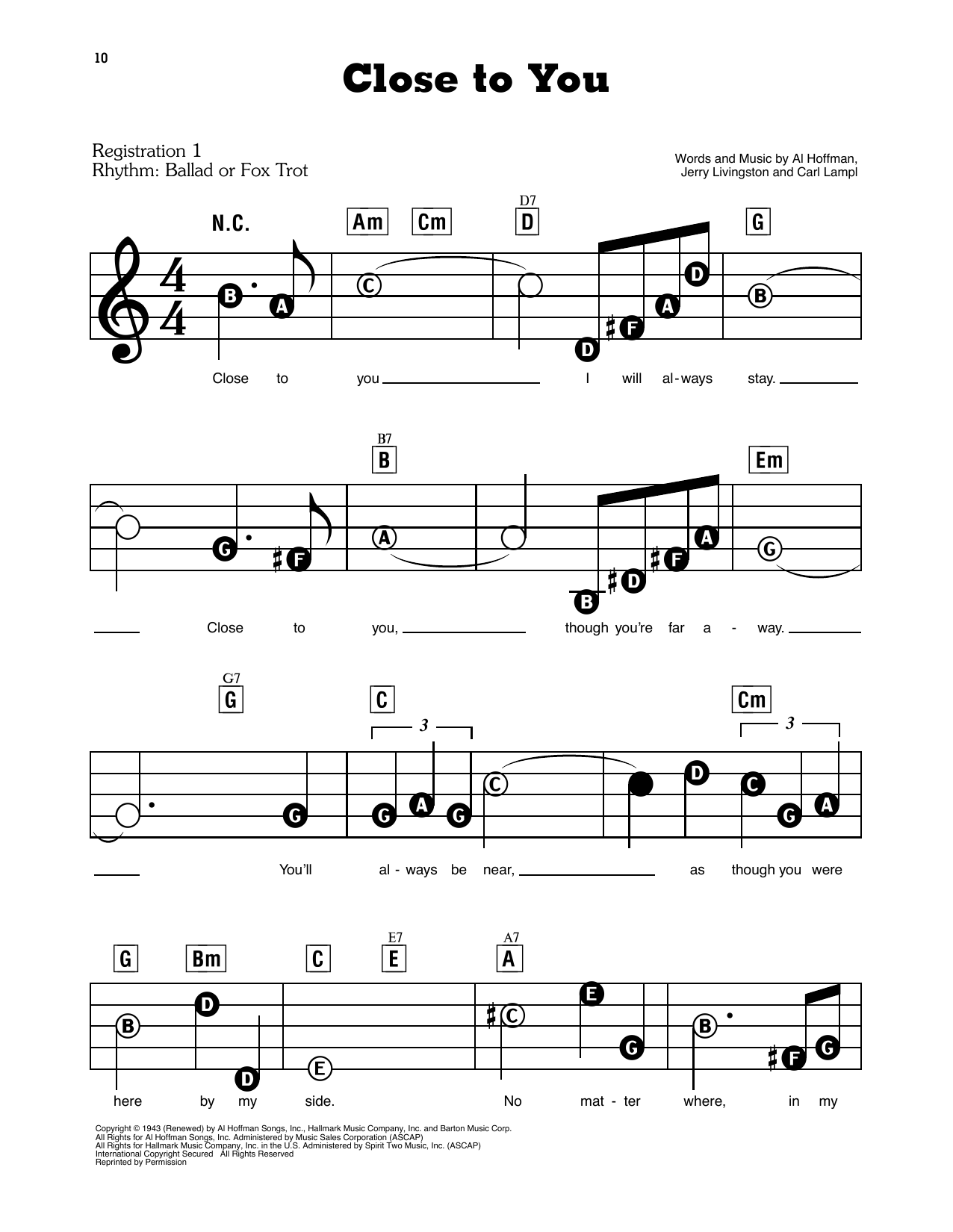
Close To You: E-Z Play Today

As performed by Frank Sinatra

Item: 35-DS00460512

Digital Download
$4.99
Description

Close To You: E-Z Play Today isn't in MakeMusic Cloud just yet...but it could be. Let us know you'd like to see it, and you'll help shape what comes next. In the meantime, start a free trial and dive into thousands of interactive titles your students can play along with today.

Sample Audio
No sample audio found.
Sample Video
Additional Details
Publisher: Hal Leonard
Page Count: 2
SKU: 35-DS00460512

More about this title

About the Artist: Frank Sinatra

Frank Sinatra redefined American popular singing through his mastery of phrasing, dynamic control, and interpretive depth. His approach to a melody combined technical precision with emotional authenticity, making him a model for musicians across genres who study how to shape a phrase and connect lyrics to music.

Why we love this

Sinatra's interpretations of standards reveal the architectural bones beneath these timeless melodies. For pianists, learning this arrangement offers insight into how to accompany a vocalist with sensitivity, leaving space for the singer while maintaining harmonic sophistication.

What to expect

Intimate and sophisticated. The arrangement breathes with restraint, creating space for vulnerability in the lyric while maintaining the harmonic richness that makes standards endure. There's a conversational quality to the writing that rewards careful listening.

Who it's for

Jazz pianists developing their comping skills, classical pianists expanding into the American songbook, and accompanists who need solid, elegant arrangements of standards. Any pianist building a repertoire of vocal support music will find this useful.

How to get the most out of it

  • Pay attention to the voicings in the left hand; they're voiced to support a vocal line, not to stand alone, so clarity and restraint matter more than volume.
  • Study a Sinatra recording of the original to understand the rhythmic liberties singers take, then practice following and supporting those small tempo fluctuations.
  • Balance the melody against the accompaniment by thinking of yourself as an ensemble member rather than a soloist, even when playing solo.

How to use it

Pair this with other Sinatra-era standards for a concert devoted to American songwriting, or use it as a standalone accompaniment piece for a vocalist in a jazz or cabaret setting. It's also an excellent teaching tool for intermediate pianists studying how arrangements serve a singer.

Skills your students will build

  • Vocal accompaniment techniques and sensitivity to phrasing
  • Harmonic analysis of jazz standards and functional chord progressions
  • Dynamic control and voicing clarity in the left hand
  • Rubato and rhythmic flexibility in response to a lyrical line

You May Also Like