
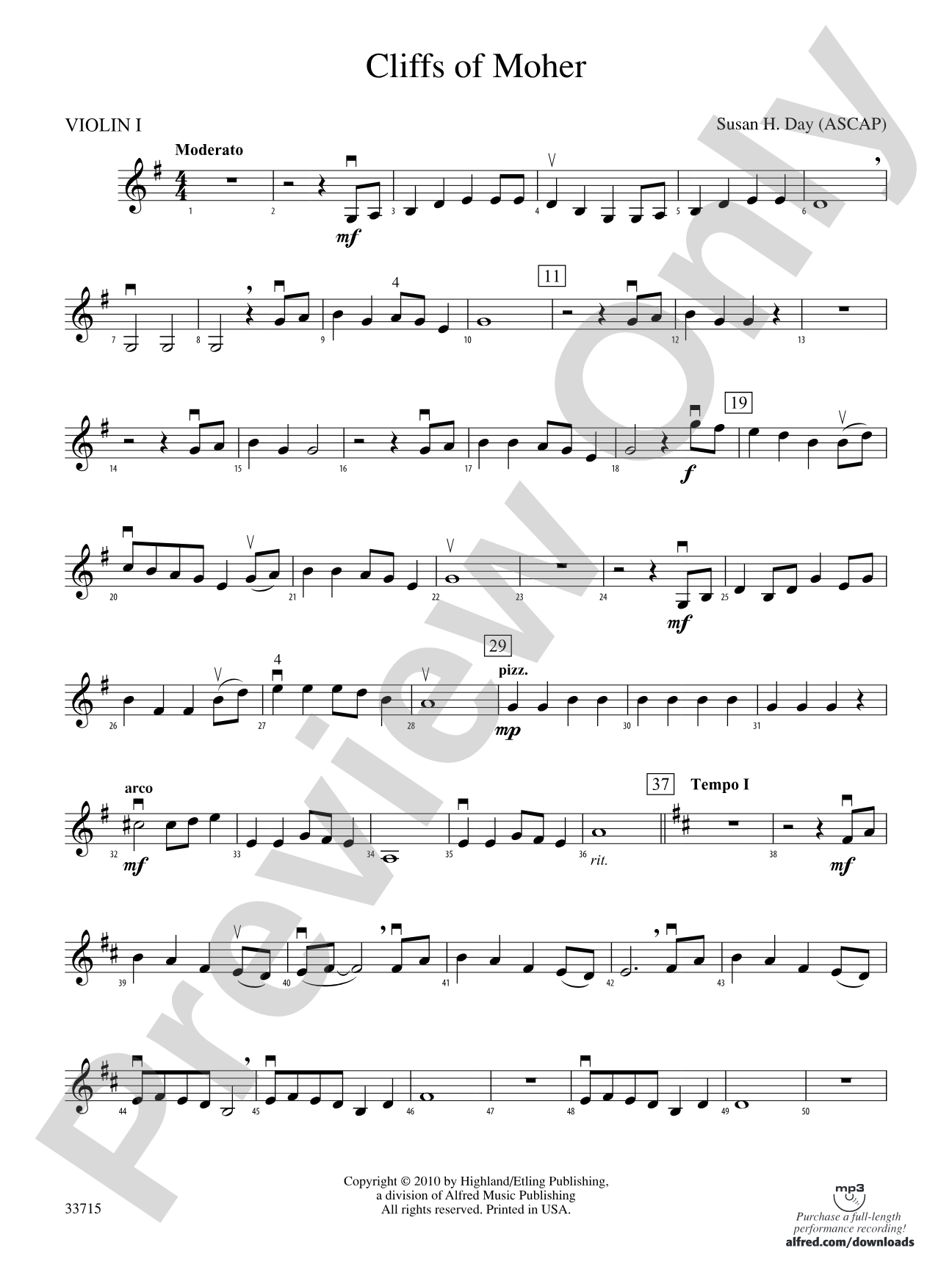

Cliffs of Moher: 1st Violin
By Susan H. Day
Grade: 2
Item: 00-PC-0014500_VN1
$5.99
Pickup currently not available
Description
Reminiscent of the music of Ireland, this piece captures the majestic beauty of one of Ireland's most visited natural wonders, the spectacular Cliffs of Moher, which tower over the Atlantic Ocean. Written in the keys of G major and D major, all parts stay in first position and have interesting melodic lines, including a fun dance-like round section to bring to mind the waves beating at the rocks. A variety of techniques, such as pizzicato, open string double stops, slurs, and even a few easy open string harmonics, are featured. The perfect choice for your next concert! This title is available in MakeMusic Cloud.


Don't just read it, hear it, play along with it, and watch your students grow with it. In MakeMusic Cloud, Cliffs of Moher: 1st Violin comes alive with professional accompaniment, adjustable tempo, and built-in practice tools that turn solo practice into real progress.
Open in the Player
Jump straight in and assign it today.
Start Your Free Trial
Open this title and explore the full library in minutes.
Sample Audio
1
Audio File
--:--
0:00
0:00
Sample Video
Additional Details
Series:
Highland/Etling String Orchestra
Publisher:
Alfred Music
Page Count:
124
SKU:
00-PC-0014500_VN1
More about this title
Why we love this
Day writes with a keen sense of what Grade 2 orchestras can accomplish without overextending them. The programmatic anchor gives students a real reason to shape phrases and balance voices—they're not just playing notes, they're painting a landscape. The round section lands that rare combination of being genuinely fun to play while sounding intentional and musical.
What to expect
Irish melody floats over the sound of the sea. There's movement and drama in the round section as wave after wave builds, then gentle moments of reflection as if gazing out across the Atlantic. The harmonics shimmer like light on water; the pizzicato dances like wind.
Who it's for
This piece suits Grade 2 string orchestras ready to engage with program music and small technical challenges that build confidence without overwhelming. Conductors programming a concert with thematic coherence will find Cliffs of Moher an immediate audience draw—students and families alike respond to music that tells a story.
How to get the most out of it
- Balance the melody carefully during the round section so the echo effect remains clear; assign one section per entrance and have them listen actively to avoid rushing ahead.
- Approach the pizzicato passages with rhythmic precision and a consistent pluck; they'll propel the piece forward and help younger players feel the momentum of those waves.
- Let the open string harmonics breathe slightly; they're striking moments that deserve a touch of space, and students will hear how different they sound from regular stopped notes.
- Shape the slurred passages with direction rather than separation; this keeps the melodic lines singing even at Grade 2 technical level.
How to use it
Program this as a concert centerpiece that feels substantial without requiring soloists or complicated logistics. It pairs well with contrasting classical forms or as a bridge piece between movements of a larger program. The visual storytelling makes it an excellent choice for family concerts or educational performances where you want to engage non-traditional audiences.
Skills your students will build
- Playing in first position across all string parts
- Reading and executing open string double stops
- Performing basic harmonics on open strings
- Pizzicato technique with rhythmic control
- Following rounded/sectional form with clear entrances
- Shaping slurred passages with musical intention
- Listening for balance while carrying independent melodic lines in a round