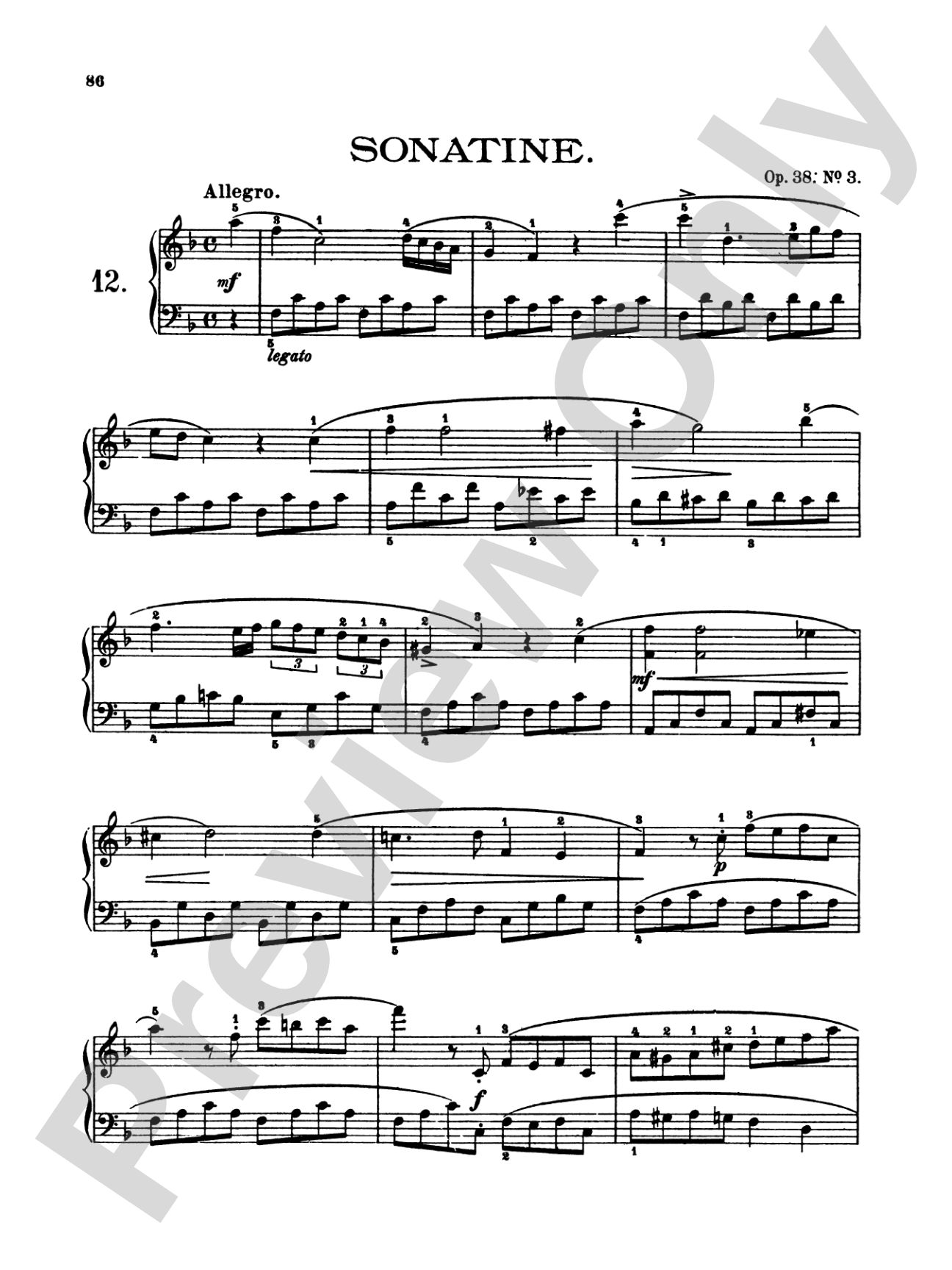
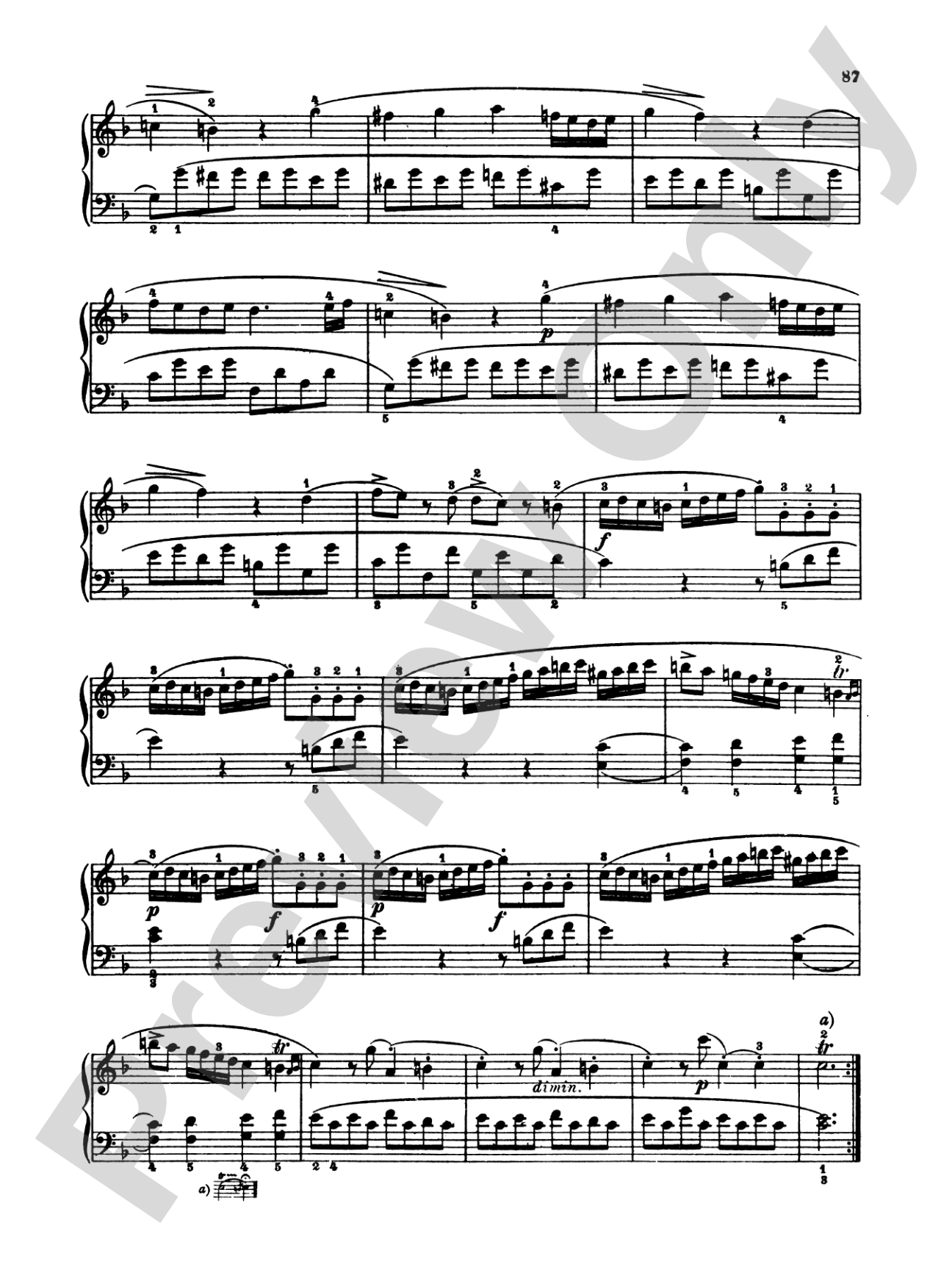
Clementi: Twelve Sonatinas
By Muzio Clementi
Item: 00-PC-0005995
Pickup currently not available
Description
Don't just read it, hear it, play along with it, and watch your students grow with it. In MakeMusic Cloud, Clementi: Twelve Sonatinas comes alive with professional accompaniment, adjustable tempo, and built-in practice tools that turn solo practice into real progress.
Jump straight in and assign it today.
Open this title and explore the full library in minutes.
Sample Audio
Sample Video
Additional Details
More about this title
About the Composer: Muzio Clementi
Muzio Clementi (1752-1832) stands as a bridge between the Classical and Romantic eras, though his significance in piano literature often gets overshadowed by his contemporaries. An Italian composer, virtuoso pianist, and music publisher, Clementi shaped the modern piano sonata through his technical innovations and lyrical sensibility. His sonatinas, particularly the twelve from Opp. 36, 37, and 38, became foundational repertoire for generations of pianists and remain essential studies in the transition from Classical form to Romantic expression.
Clementi's career spanned Europe's greatest musical centers. He performed as a touring virtuoso, directed opera in London, and built a publishing house that disseminated new music across the continent. His pedagogical instincts made him acutely aware of what developing pianists needed: pieces that balanced technical growth with genuine musicality. The sonatinas reflect this philosophy entirely, offering structured progress without sacrificing artistic substance.
Why we love this
These sonatinas occupy the exact pedagogical sweet spot where students transition from elementary pieces to full sonata-form thinking. Clementi writes with immediate accessibility paired with genuine compositional substance; there's nothing condescending here, only clear harmonic language and elegant melodic lines that reward both student and teacher with music worth playing repeatedly. Programming them gives your students legitimate Classical repertoire while building habits of listening to phrase architecture, dynamic shaping, and formal logic.
What to expect
Clementi's sonatinas glow with crystalline clarity and restrained warmth. Bright allegros sparkle with Classical proportions; slow movements unfold with an almost Romantic longing despite their harmonic simplicity. There's an irresistible forward momentum throughout these pieces, a sense that Clementi trusted his students to handle genuine musical substance without excess complexity. Playing them feels like stepping into a sunlit room where elegance and sincerity are one and the same.
Who it's for
These sonatinas serve intermediate pianists working toward early-intermediate level (grades 4-6 ABRSM or RCM equivalents). They're ideal for students who have mastered basic technique and are ready to engage with multi-movement form, but who need scaffolding before tackling Mozart or Beethoven sonatas. Private studio teachers rely on this collection as a cornerstone of classical training.
How to get the most out of it
- Shape the opening themes with gentle but audible dynamic contours; Clementi's melodies sing when you trace their natural peaks and valleys rather than playing them as flat statements.
- Treat ornamental passages (turns, trills, grace notes) as integral to the phrase, not embellishment added on top; they breathe when integrated into the larger line.
- Maintain textural clarity in the Alberti bass patterns that anchor many movements; consistent pulse without heaviness supports the melody's forward motion.
- Observe the dramatic potential in key modulations and contrasting middle sections; these aren't mere structural devices but genuine musical conversations waiting to unfold.
How to use it
These sonatinas work beautifully in student recitals when you want to program a complete multi-movement work alongside single character pieces. They also serve as valuable stepping stones in a studio's curriculum: assign a single sonatina over the course of several months to develop interpretive maturity, or program contrasting ones back-to-back to showcase growth across an academic year. For group performances, select movements for ensemble arrangements or feature them in salon-style concerts that celebrate Classical form.
Skills your students will build
- Reading and executing Classical sonata form (exposition, development, recapitulation)
- Maintaining consistent pulse and texture in Alberti bass accompaniment patterns
- Shaping long melodic lines through phrasing and dynamic control
- Interpreting ornaments (trills, turns, grace notes) as integral musical elements
- Balancing technical demands with lyrical expression across multi-movement structures
- Understanding harmonic progressions and functional harmony through listening and performance