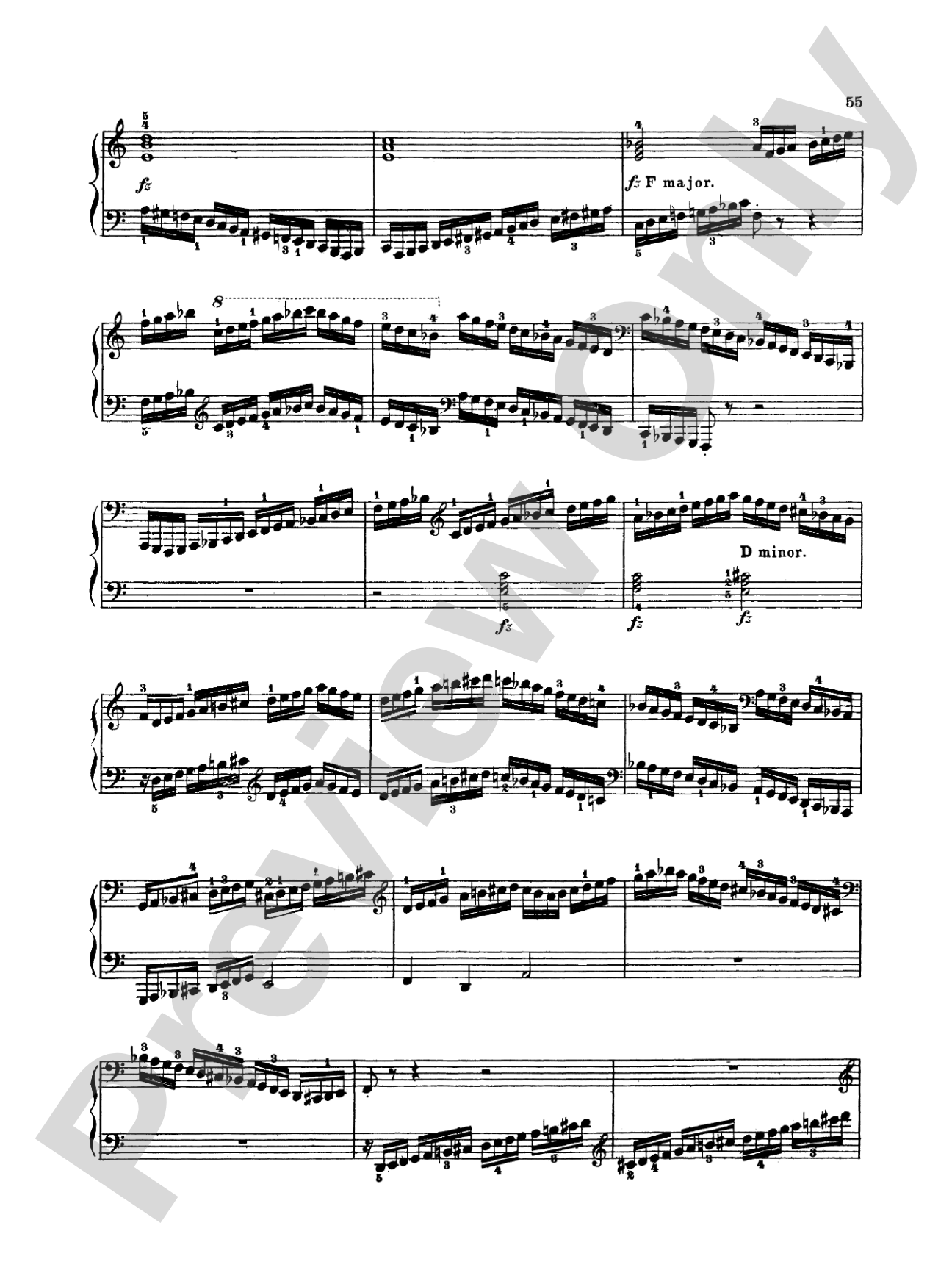
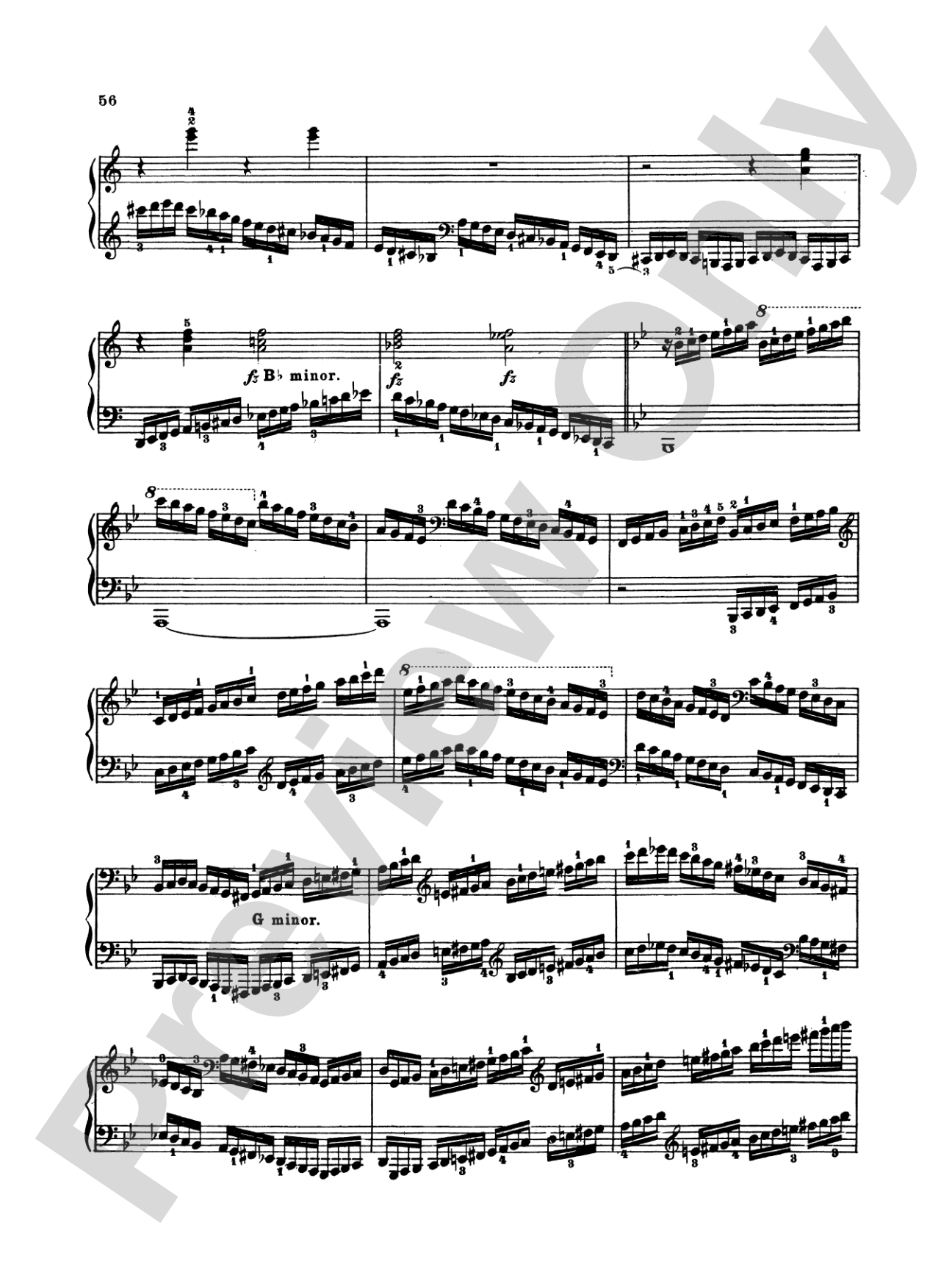
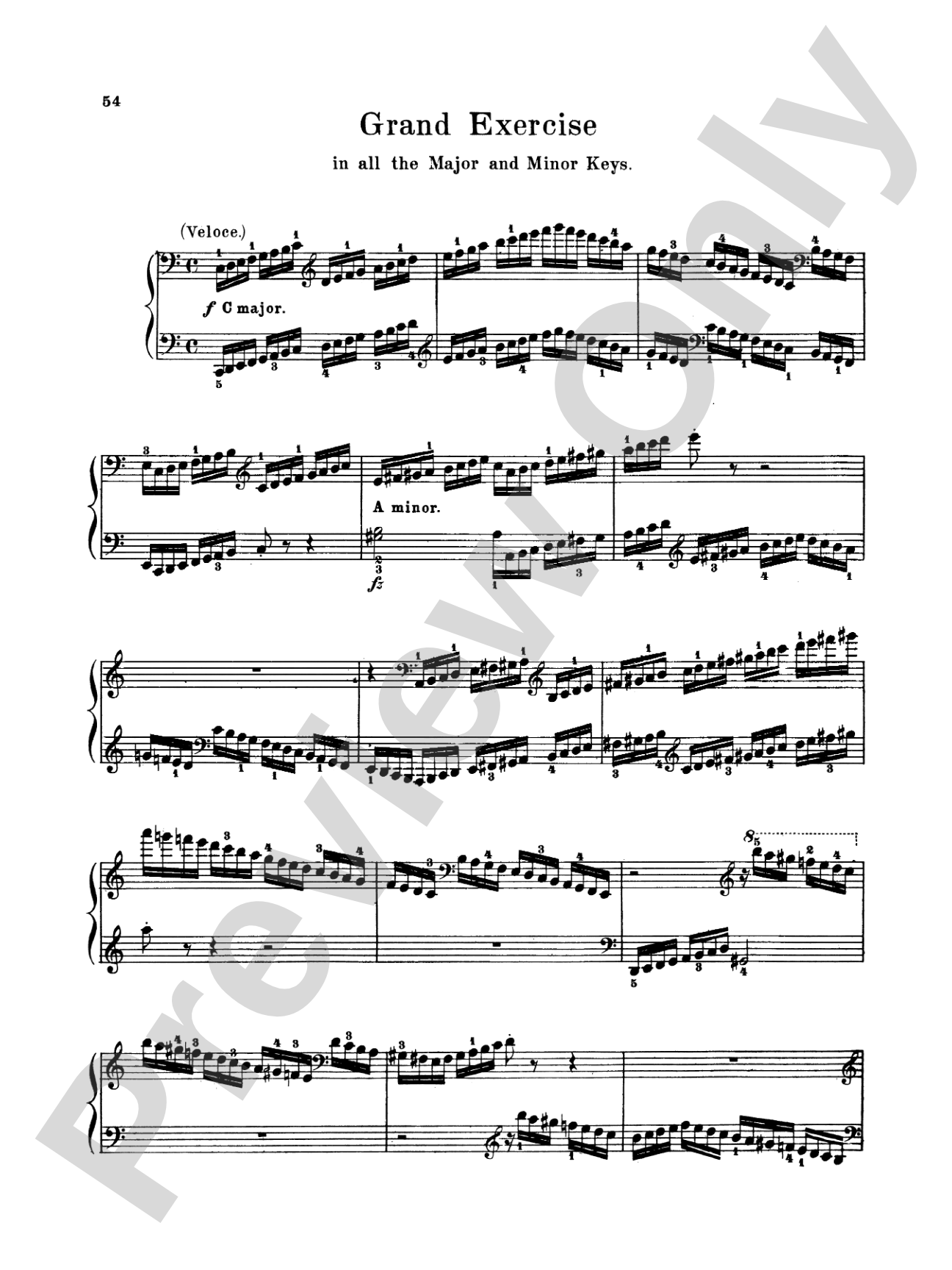
Clementi: Preludes and Exercises Sheet Music Preview

Clementi: Preludes and Exercises

By Muzio Clementi

Item: 00-PC-0006097

Digital Download
$0.99
Description
Muzio Clementi (1752--1832) was a famed composer, pianist, pedagogue, conductor, music publisher, editor, and piano manufacturer. Although born in Italy, he spent most of his life in England. In his time, he was known as "the father of the pianoforte," "father of modern piano technique", and "father of Romantic pianistic virtuosity." This collection progressive preludes and scale exercises in all major and minor keys.

Don't just read it, hear it, play along with it, and watch your students grow with it. In MakeMusic Cloud, Clementi: Preludes and Exercises comes alive with professional accompaniment, adjustable tempo, and built-in practice tools that turn solo practice into real progress.

Sample Audio
No sample audio found.
Sample Video
Additional Details
Series: Kalmus Edition
Publisher: Alfred Music
Page Count: 68
SKU: 00-PC-0006097

More about this title

About the Composer: Muzio Clementi

Muzio Clementi (1752-1832) revolutionized piano technique and pedagogy during the transition from Classical to Romantic eras. An Italian-born virtuoso who established himself in England, Clementi earned his reputation not only as a virtuosic performer and composer but also as a thoughtful teacher whose exercises and sonatinas became foundational to piano instruction across Europe and beyond.

Clementi's dual legacy rests on his compositional output and his systematic approach to building technical facility. Unlike many contemporaries who viewed scales and technical studies as mere drudgery, Clementi crafted preludes and exercises that were musically rewarding to practice. His influence extended through his work as a publisher and piano manufacturer, making him a central figure in shaping the modern pianoforte and the technical demands composers would place on it.

Why we love this

Clementi understood that technical study and musical content need not be separated. These preludes and exercises maintain genuine musical interest while methodically building the hand position, finger independence, and scalar fluency that form the foundation of Classical and Romantic repertoire. Teachers return to this collection repeatedly because it bridges the gap between rote technique and the pieces students actually want to play.

What to expect

These preludes and exercises radiate Classical clarity and poise while hinting at the expressive possibilities that Romantic composers would develop. The writing is transparent and direct, allowing the pianist to hear exactly what their hands are doing while maintaining enough musical substance to hold attention across the full keyboard.

Who it's for

Pianists working through early-intermediate to intermediate repertoire who benefit from systematic technical preparation in all keys. This collection serves students transitioning from simplified educational materials toward Classical sonatas and Romantic character pieces, as well as teachers seeking musically coherent study material rather than disconnected exercises.

How to get the most out of it

  • Maintain evenness across all fingers as you work through the scalar passages; uneven tone often masks gaps in finger independence that will complicate later repertoire.
  • Observe the key relationships within each prelude; understanding how Clementi modulates between relative and parallel keys deepens comprehension of harmonic function.
  • Shape phrases according to natural breath points rather than mechanical subdivision; these are musical ideas, not mechanical drills.

How to use it

Integrate these exercises into daily practice rather than as formal recital material. A teacher might select a single prelude or short exercise sequence as a warm-up or diagnostic tool during lessons, using it to assess technical readiness before moving to more demanding repertoire. The systematic key organization makes this resource ideal for building fluency across the chromatic spectrum over the course of a semester or year.

Skills your students will build

  • Scalar passage work and finger independence across all major and minor keys
  • Hand position stability and evenness of tone in extended runs
  • Harmonic literacy through sequential key relationships and modulations
  • Musical phrasing applied to technically challenging material
  • Sight-reading facility in varied tonal centers

You May Also Like