
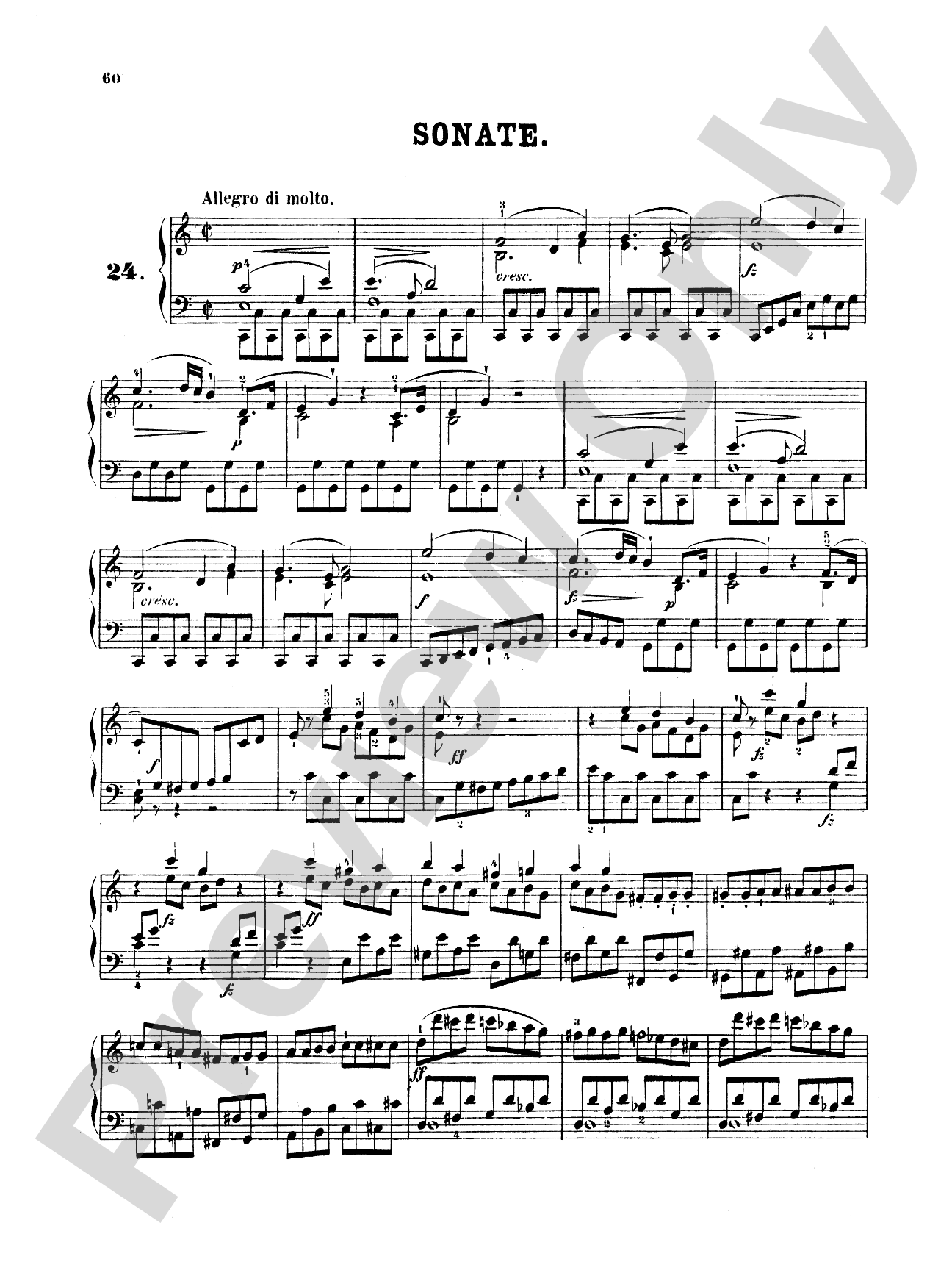
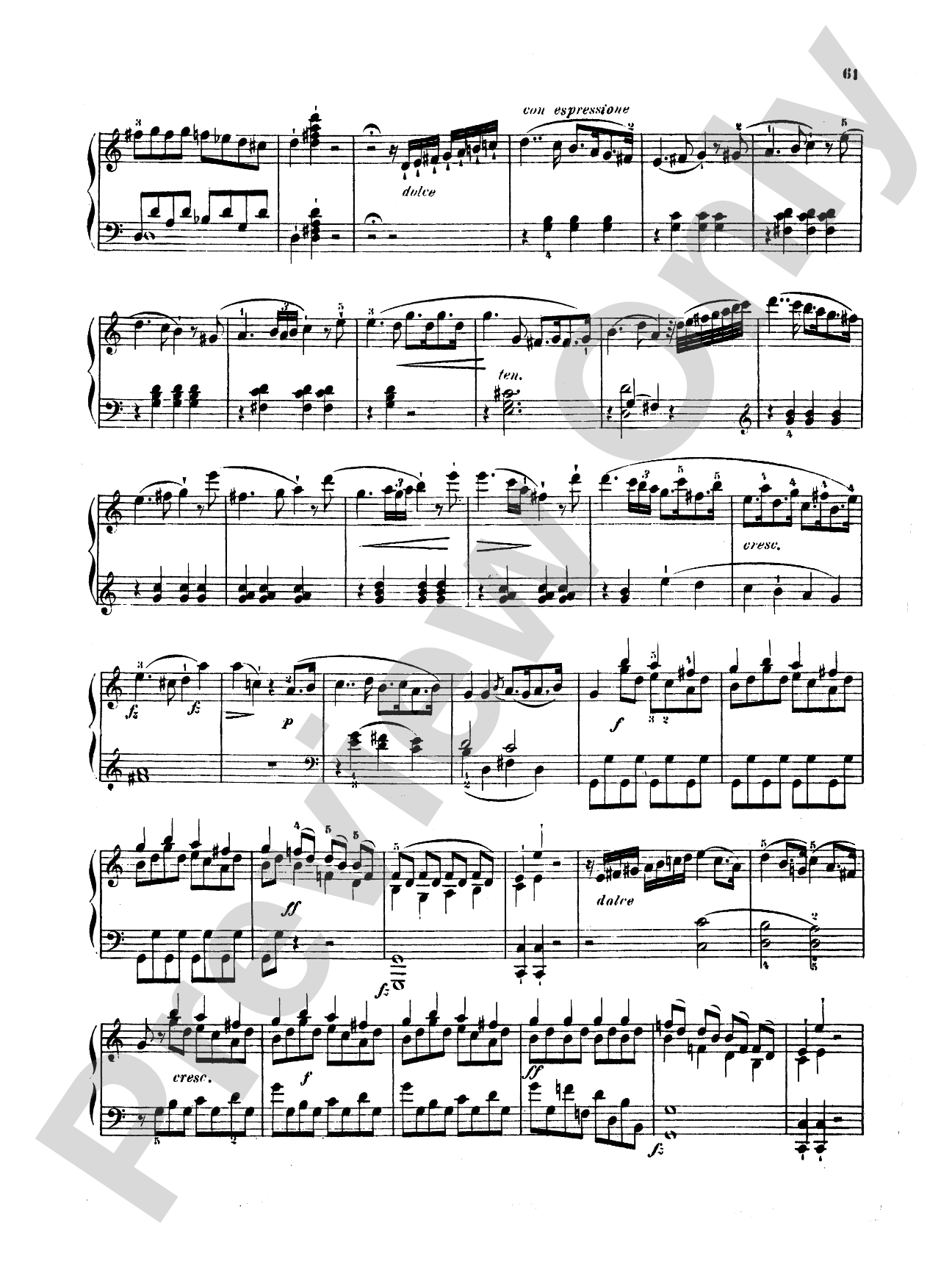
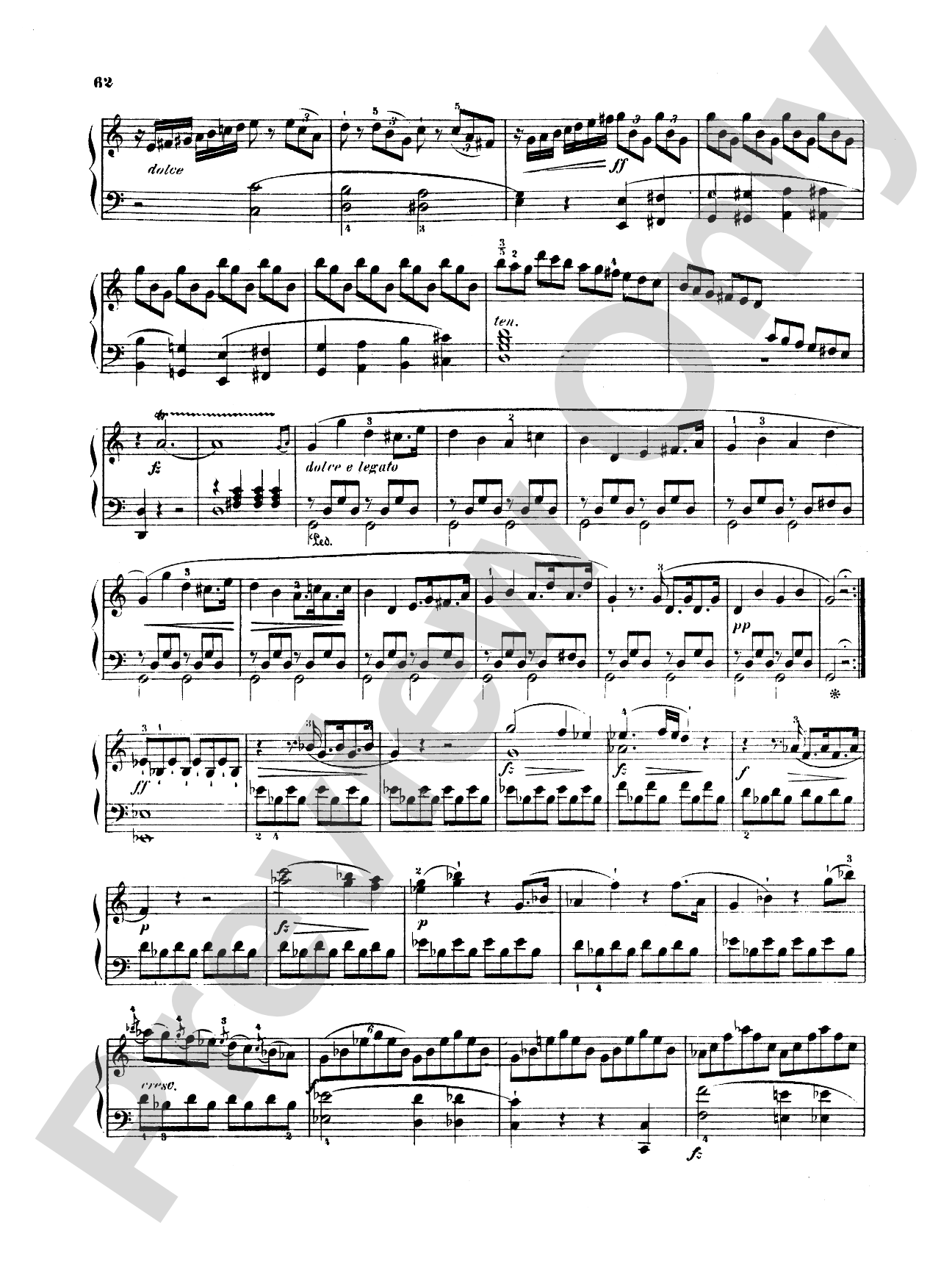
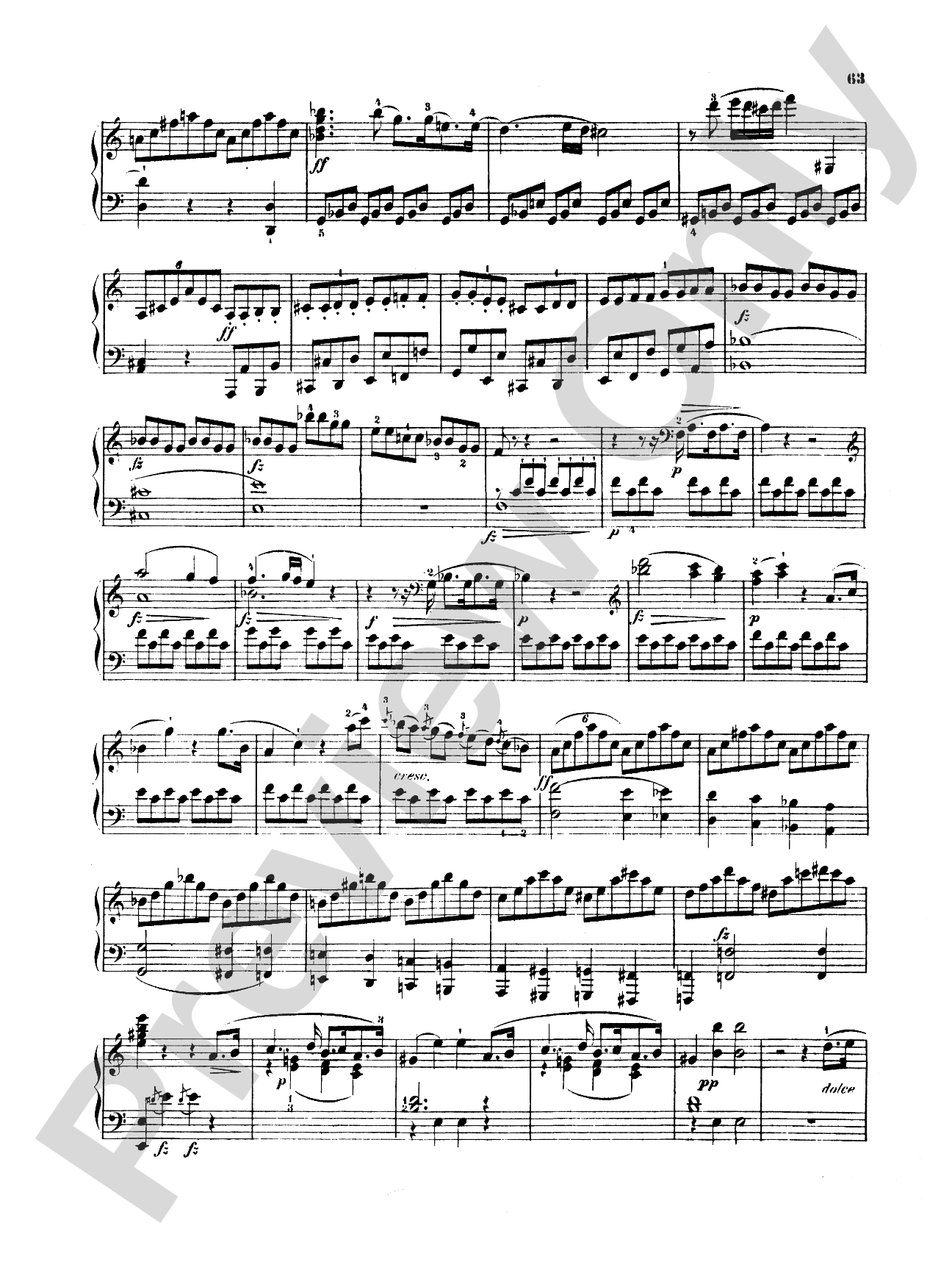

Clementi: Piano Sonatas (Volume IV)
By Muzio Clementi
Level: Advanced
Item: 00-PC-0013265
$1.99
Pickup currently not available
Description
Muzio Clementi (1752--1832) was a famed composer, pianist, pedagogue, conductor, music publisher, editor, and piano manufacturer. Although born in Italy, he spent most of his life in England. In his time, he was known as "the father of the pianoforte," "father of modern piano technique", and "father of Romantic pianistic virtuosity." This is Volume 4 of Clementi's Sonatas and includes: Sonata No. 19 in E-flat major * Sonata No. 20 in G minor * Sonata No. 21 in E-flat major * Sonata No. 22 in C major * Sonata No. 23 in A major * Sonata No. 24 in C major.


Don't just read it, hear it, play along with it, and watch your students grow with it. In MakeMusic Cloud, Clementi: Piano Sonatas (Volume IV) comes alive with professional accompaniment, adjustable tempo, and built-in practice tools that turn solo practice into real progress.
Open in the Player
Jump straight in and assign it today.
Start Your Free Trial
Open this title and explore the full library in minutes.
Sample Audio
No sample audio found.
Sample Video
No sample videos found.
Additional Details
Series:
Kalmus Edition
Publisher:
Alfred Music
Page Count:
80
SKU:
00-PC-0013265
More about this title
About the Composer: Muzio Clementi
Muzio Clementi (1752–1832) shaped the piano and its literature more profoundly than nearly any figure of his era. A virtuoso performer from childhood, he became a teaching master whose compositions codified modern keyboard technique while expanding the expressive range of the instrument itself. His career spanned composition, performance, pedagogy, publishing, and even piano manufacturing, making him a force in establishing both the technical and commercial foundations of piano culture.
Clementi's sonatas bridge Classical form and Romantic sensibility in ways that influenced Beethoven and countless composers who followed. Though born in Rome, he spent his most productive years in London, where he built a legacy as an innovator unwilling to be confined by any single role. His pedagogical works and performed repertoire remain touchstones for advanced pianists studying the transition from Classical clarity to early Romantic expression.
Why we love this
Volume IV contains some of Clementi's most mature sonatas, where technical demands and musical substance reach their fullest expression. These works demand genuine virtuosity while rewarding deep musical interpretation; they sit perfectly in the advanced repertoire gap between early Beethoven and the Romantic virtuoso works students often crave. Teaching from this collection reminds students that technical brilliance and emotional authenticity go hand in hand.
What to expect
These sonatas move between Classical elegance and proto-Romantic intensity. Fast movements sparkle with energetic passage work and brilliant figuration, while slow movements offer intimate harmonic exploration and lyrical singing. The set as a whole conveys both mastery of form and a composer unafraid to push toward something new.
Who it's for
Advanced pianists with solid technique and the stamina for multi-movement works that combine Classical form with early Romantic idiom. This collection suits conservatory students, serious amateur pianists preparing for recital, and teachers seeking sophisticated repertoire that bridges pedagogical and artistic development.
How to get the most out of it
- Attend to the dynamic and articulation markings with precision. Clementi's notation is specific about touch and shaping; these details distinguish his writing from his contemporaries and reveal the architecture of each movement.
- Practice the hand position and finger independence required for rapid passages in isolation. The technical demands are substantial, but they serve the musical line rather than existing for display alone.
- Explore the harmonic language in slow movements and transitions. Clementi ventures into unexpected tonal areas that reward careful listening and intentional voicing.
- Use the weight of your arm to project thematic material while maintaining clarity in accompaniment figures. The balance between solo-like melodies and supporting textures is essential to these sonatas.
How to use it
These six sonatas work as individual recital pieces or as a cycle for a dedicated concert. Pairing one with an earlier Clementi sonata or with works by Beethoven or Mozart reinforces the historical arc from Classical clarity to Romantic expansion. They also serve advanced students preparing for competitions or degree jury requirements.
Skills your students will build
- Rapid scalar passages and hand position management under tempo
- Harmonic analysis in expanded tonality and unexpected modulations
- Multi-movement form comprehension (Allegro-slow-rondo structures)
- Balance between brilliant technical figuration and sustained melodic line
- Historical understanding of piano technique development from Classical to early Romantic idiom