
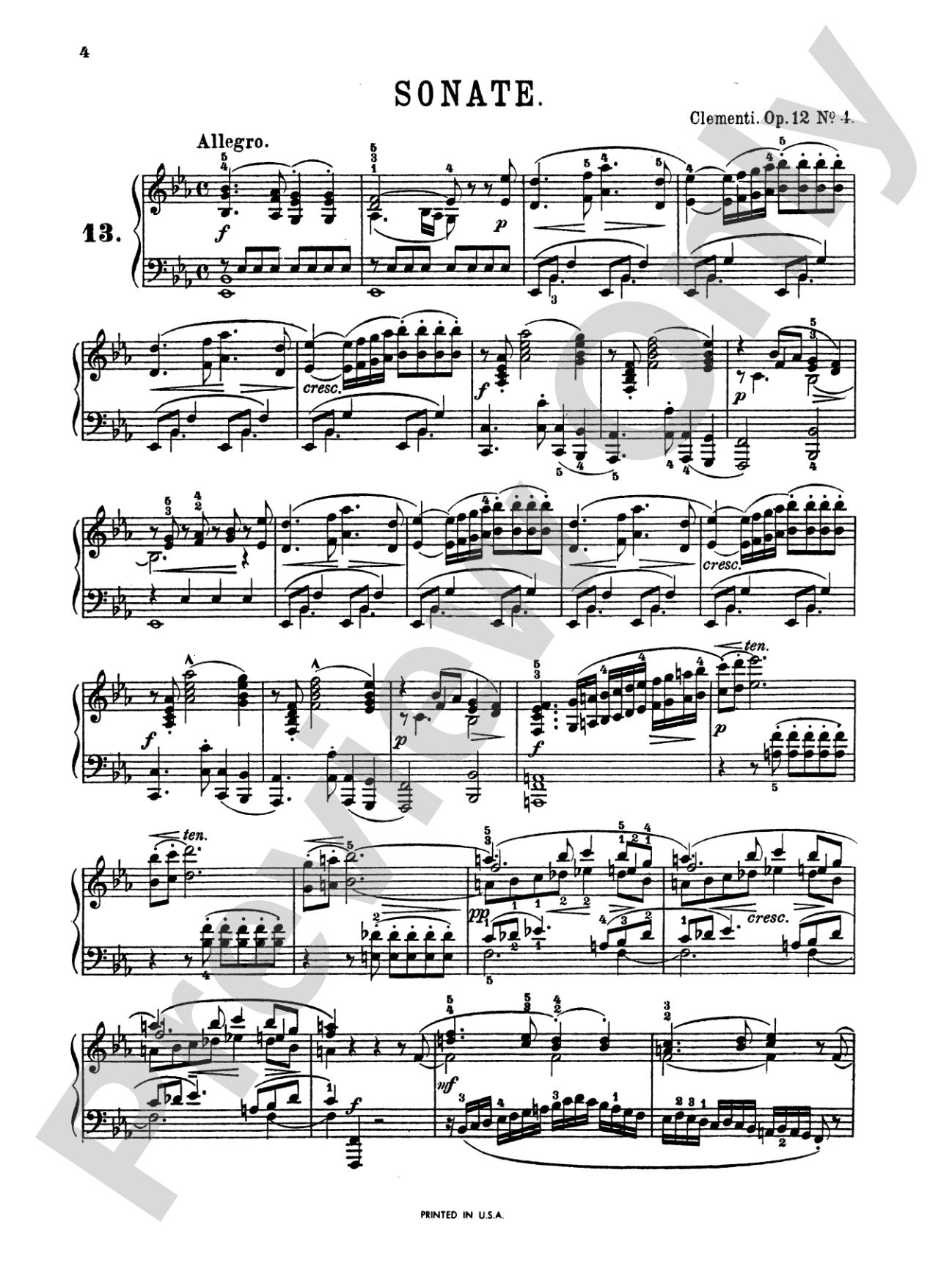
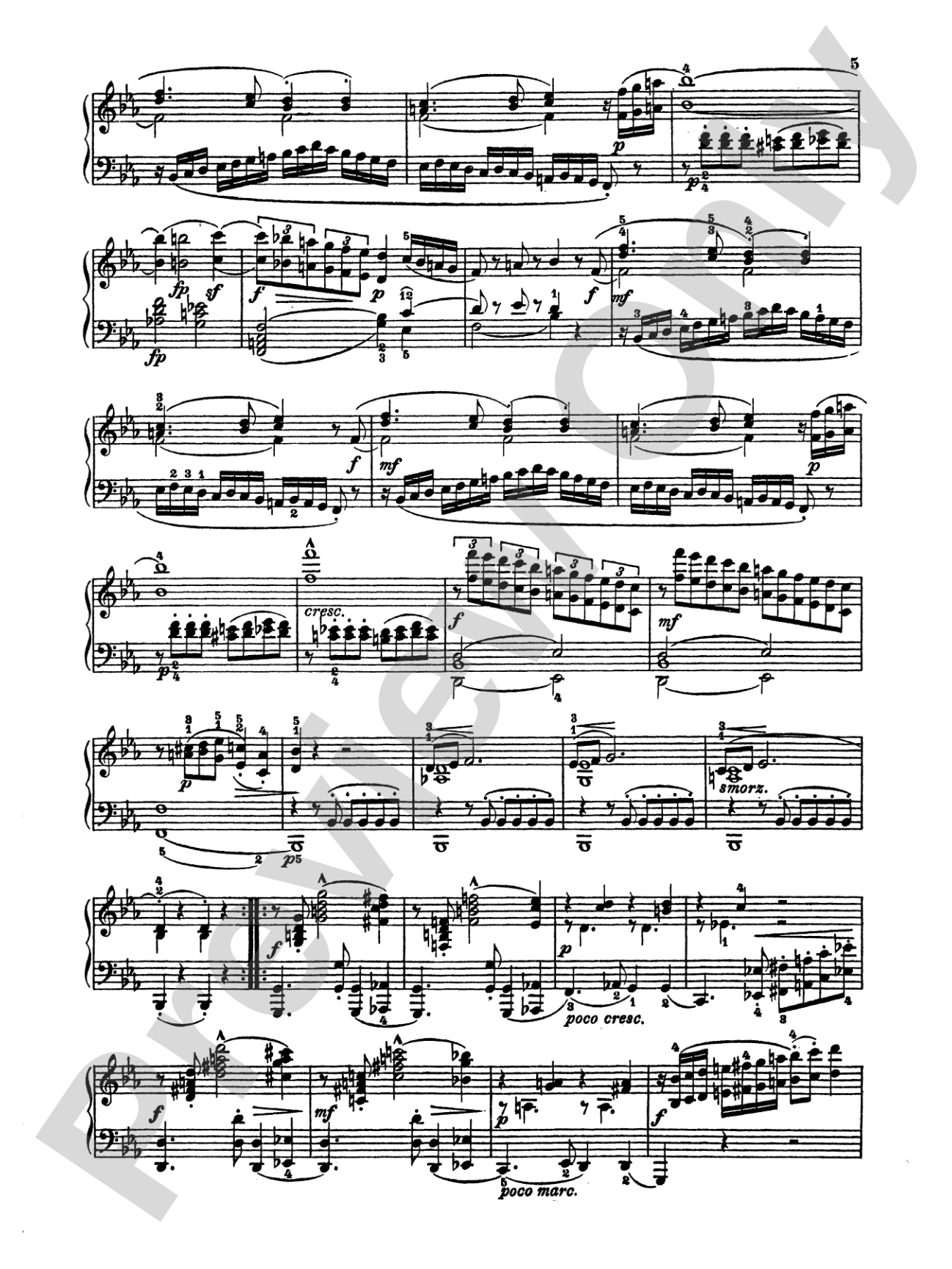
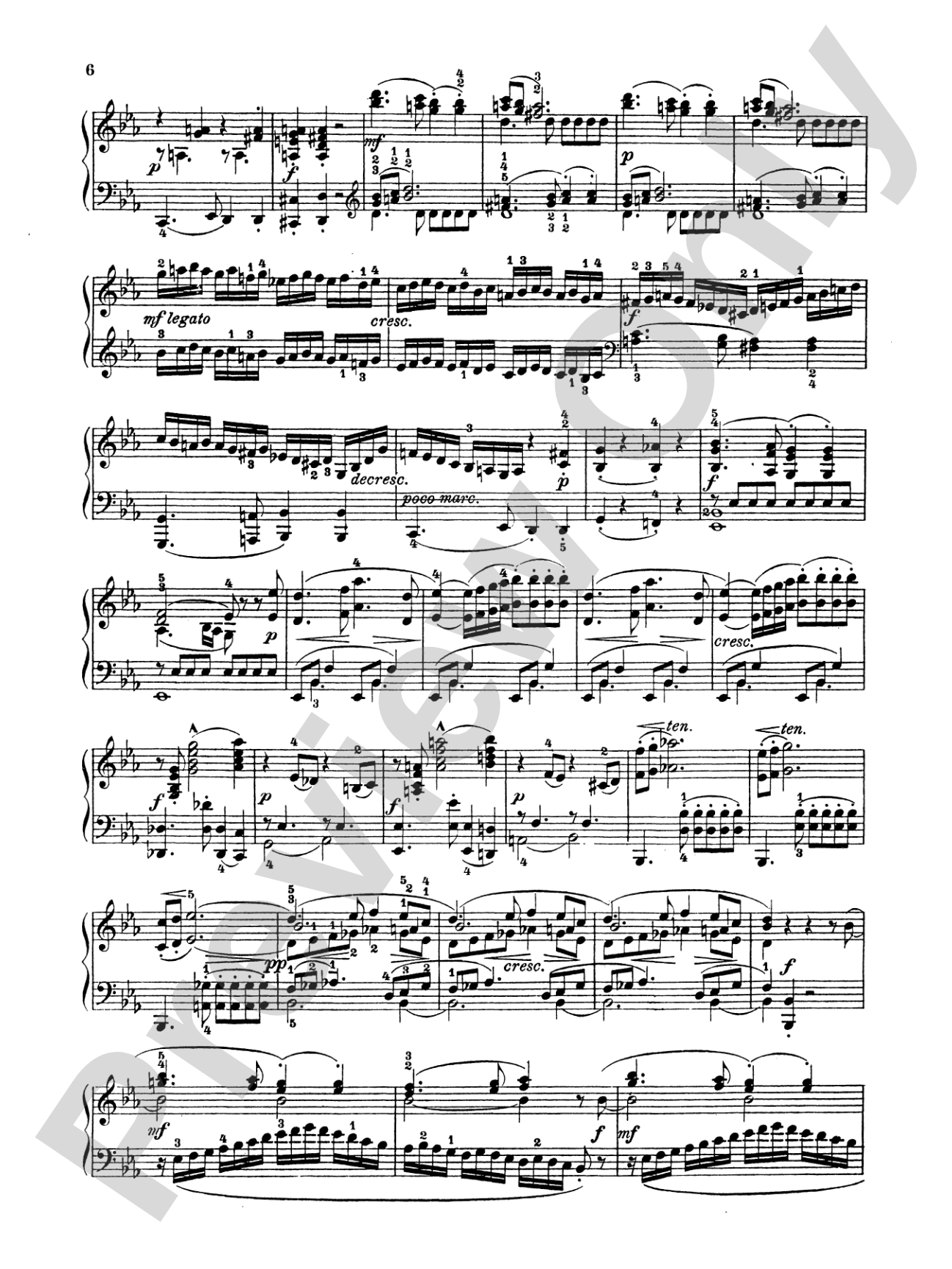
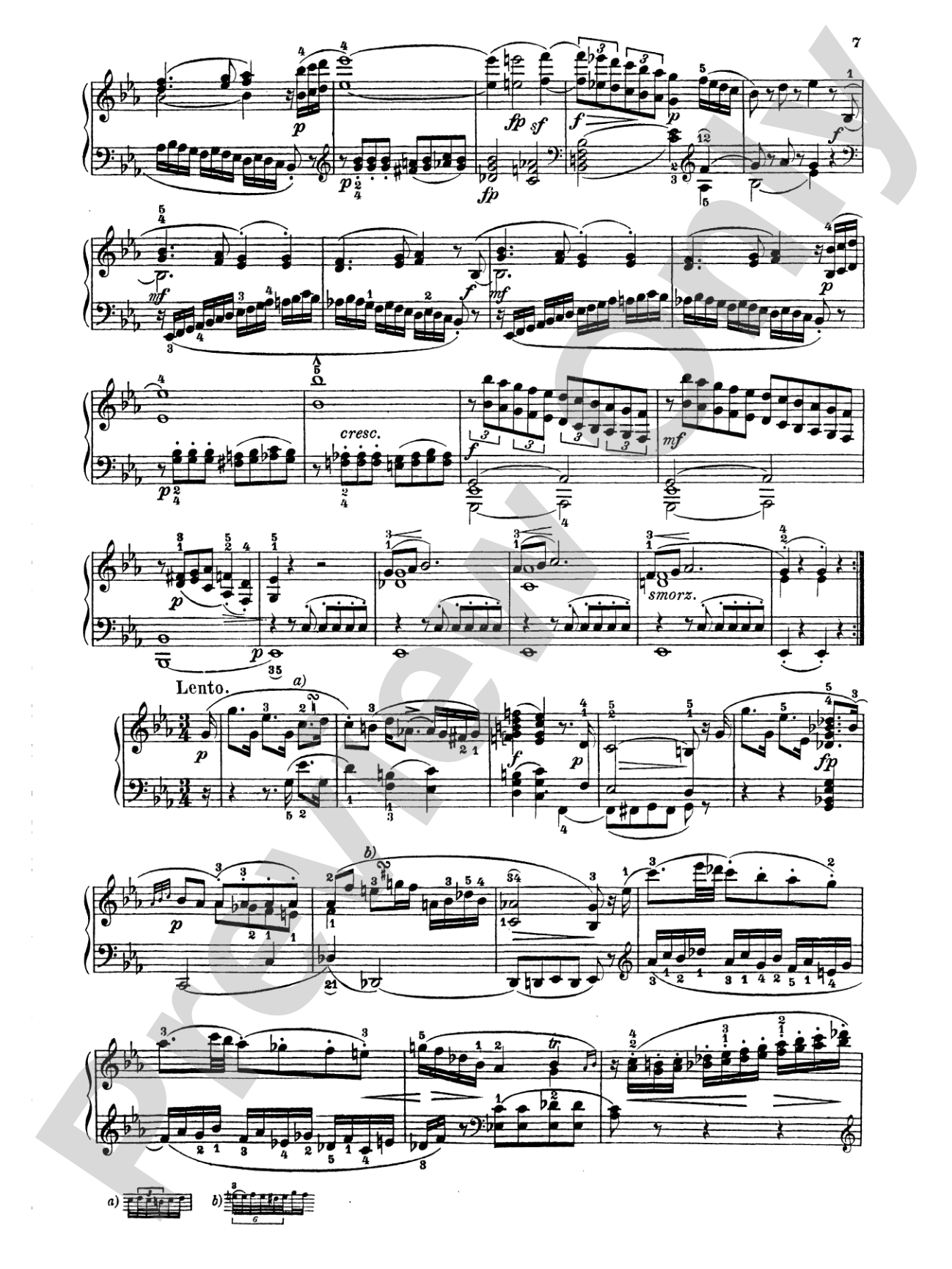
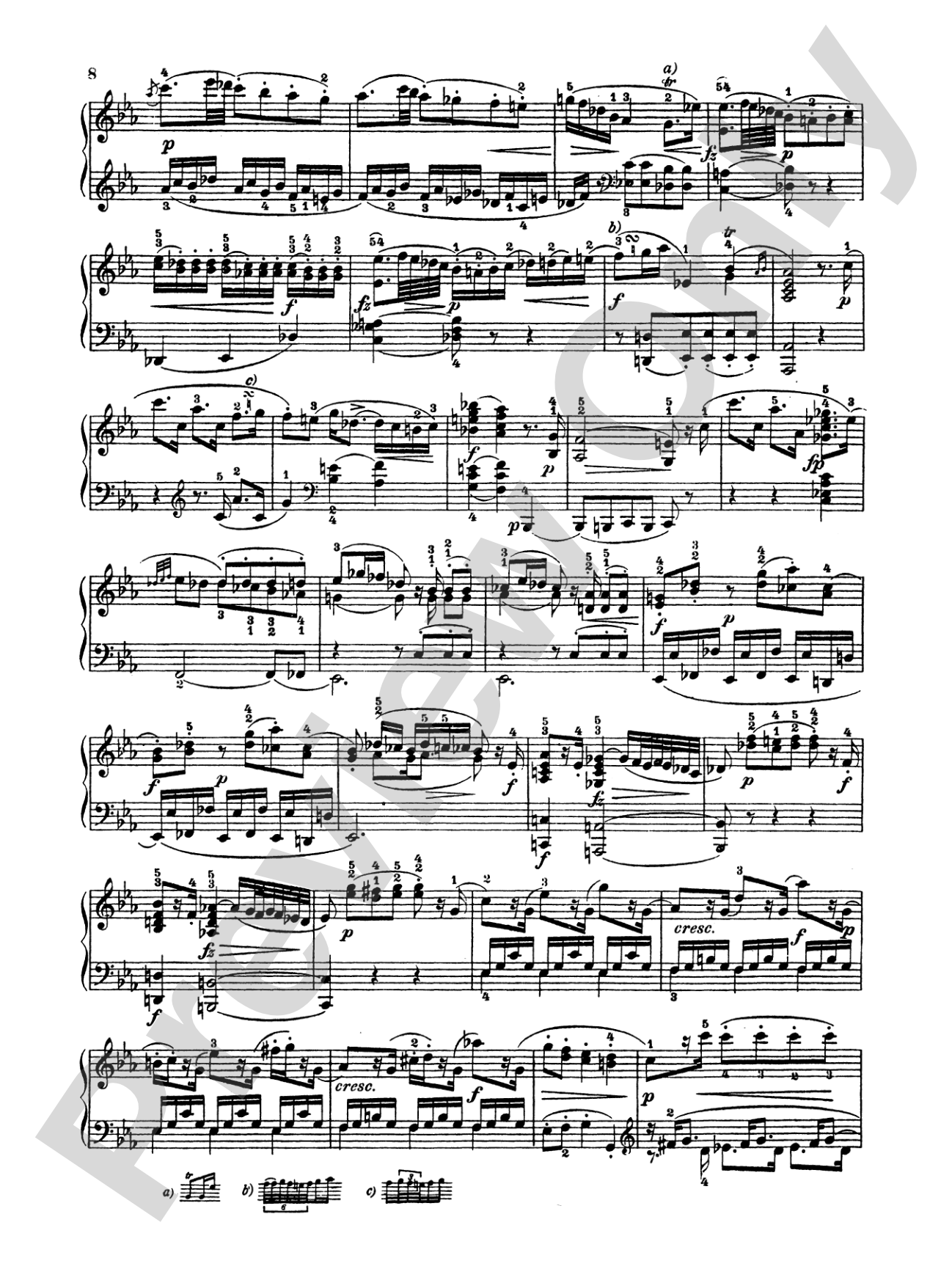
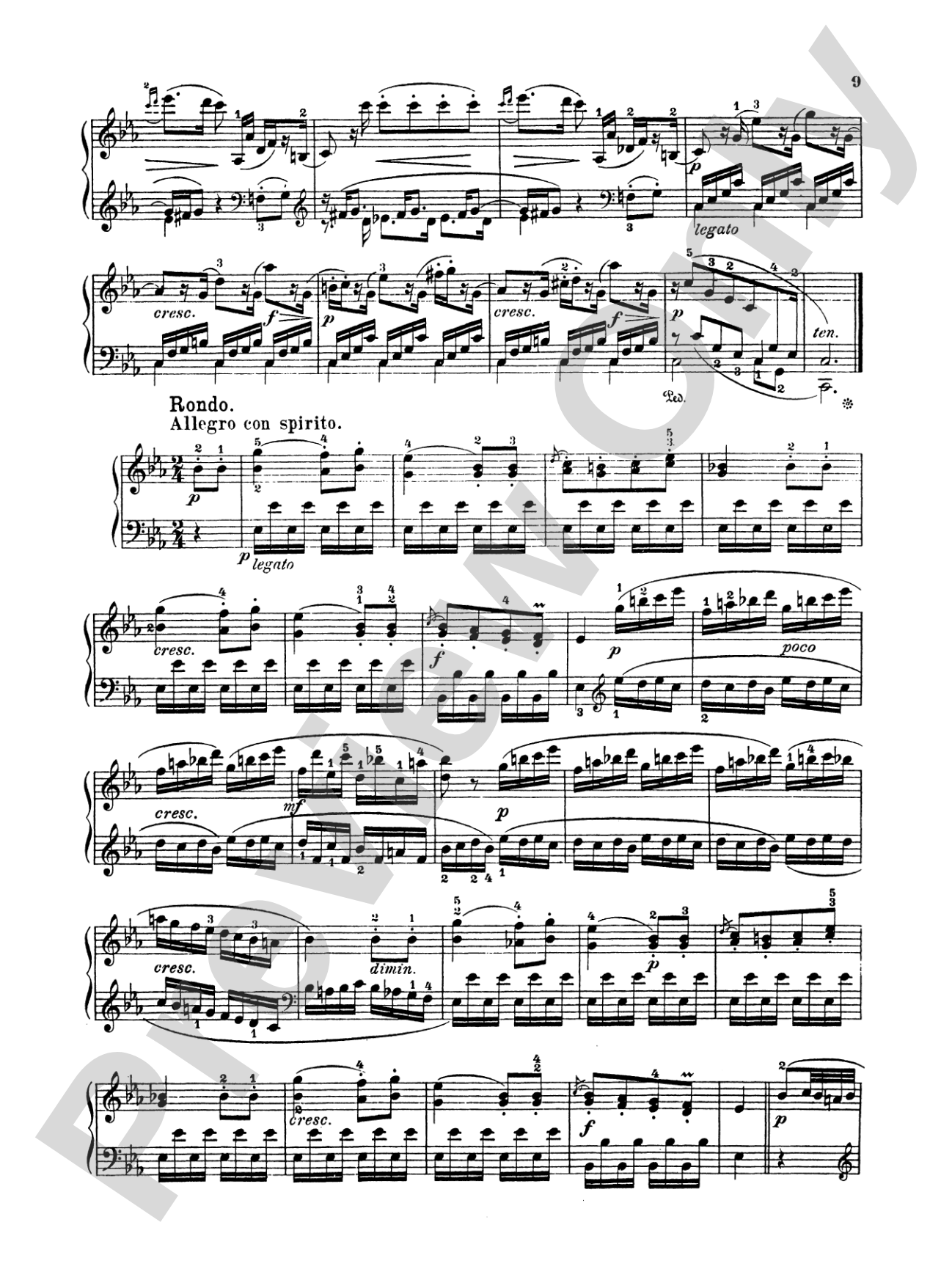
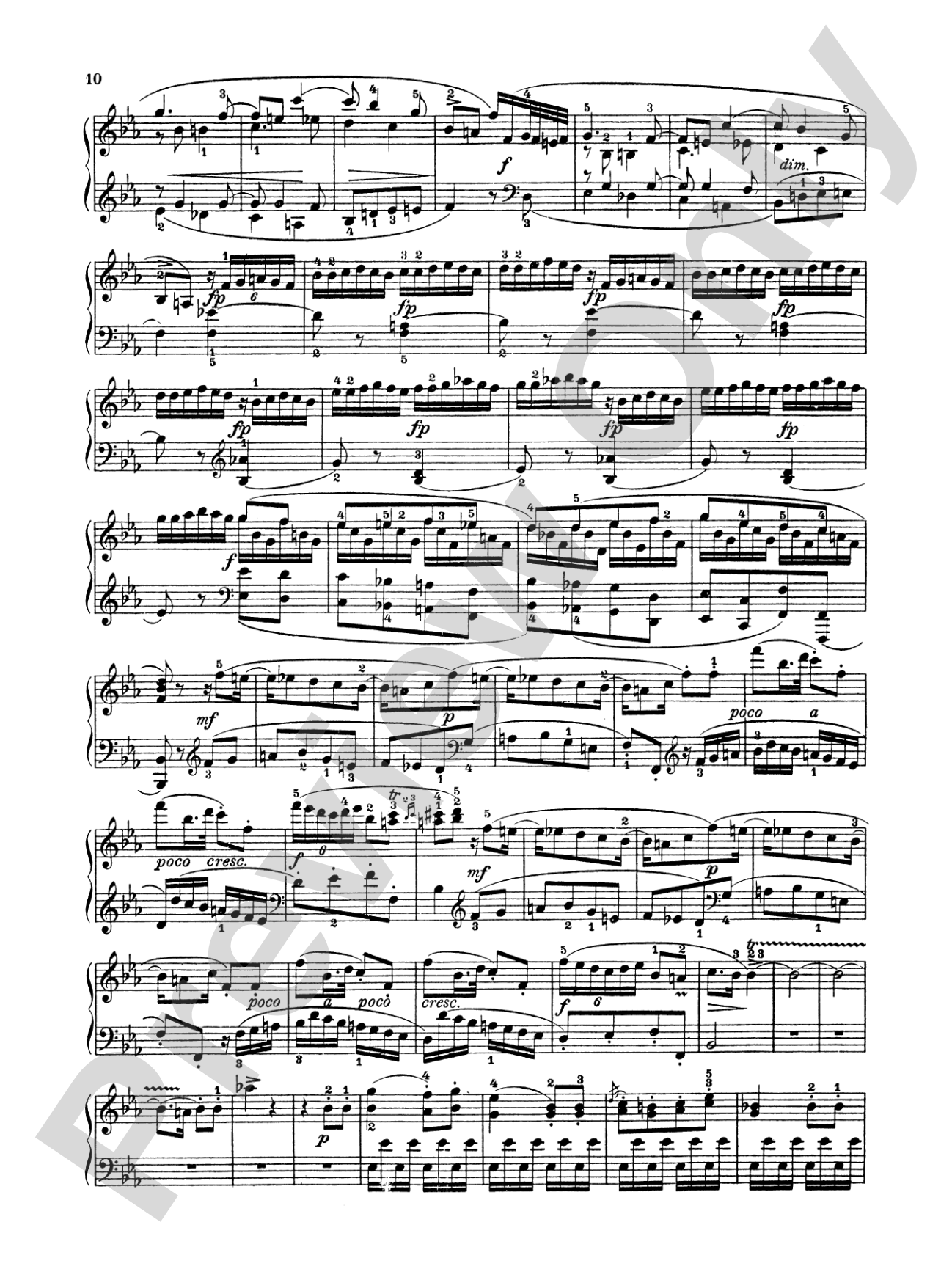
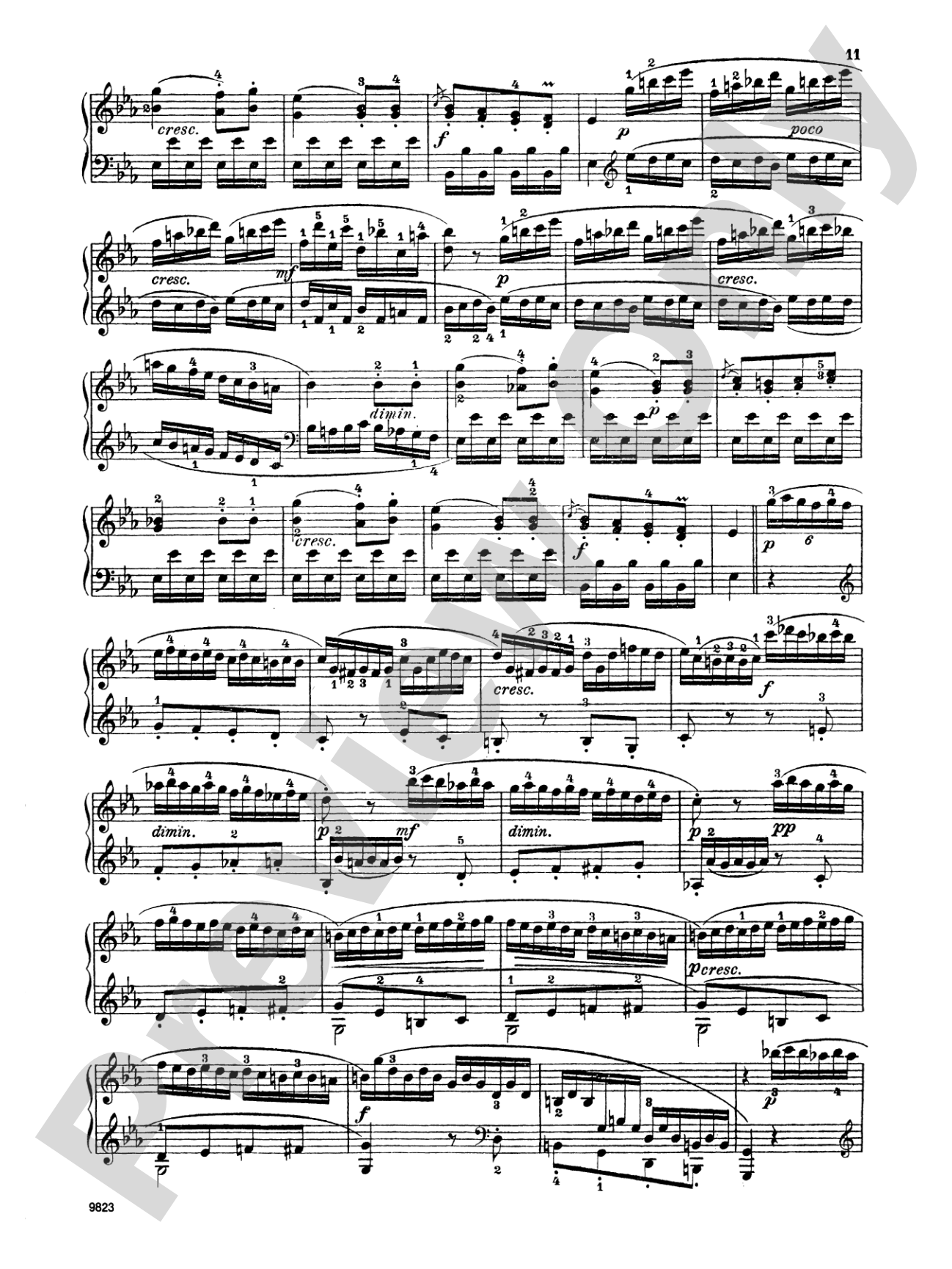
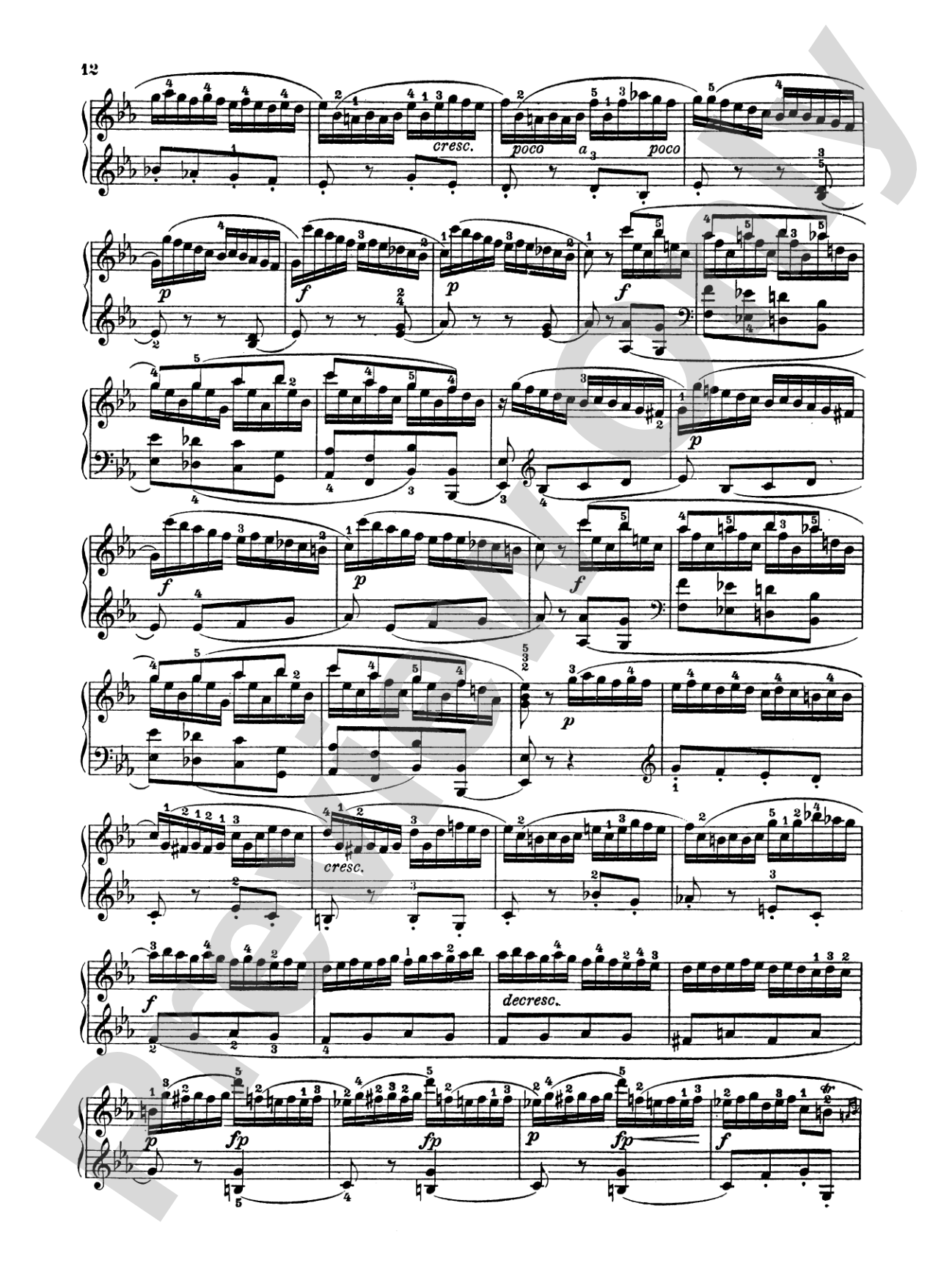
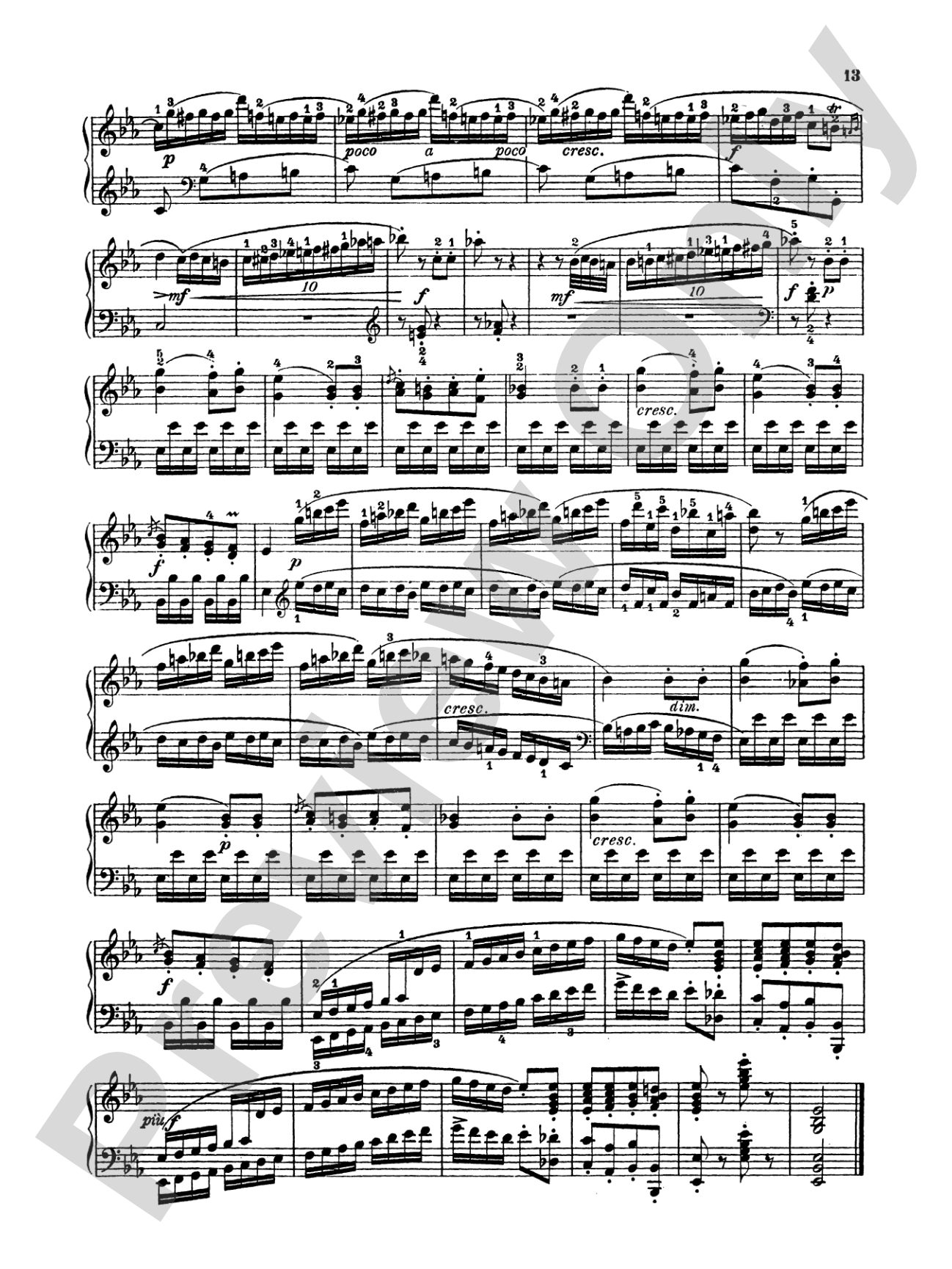

Clementi: Piano Sonatas (Volume III): Piano Book
By Muzio Clementi
Item: 00-PK-0003866

$12.99
Pickup currently not available
Buy Extra Parts (Digital PDF Download)
| Product | Price | Quantity |
|---|---|---|
| Clementi: Piano Sonatas (Volume III) | $1.99 | |
| Clementi: Piano Sonatas (Volume III) | $1.99 | |
| Clementi: Piano Sonatas (Volume III) | $1.99 | |
| Clementi: Piano Sonatas (Volume III) | $1.99 | |
| Clementi: Piano Sonatas (Volume III) | $1.99 | |
| Clementi: Piano Sonatas (Volume III) | $1.95 |
Parts Added to Cart!
Related Items
Piano Sonatas, Volume III (Nos. 13-18): Piano Book |
$12.95
|
View |
Description
Muzio Clementi (1752--1832) was a famed composer, pianist, pedagogue, conductor, music publisher, editor, and piano manufacturer. Although born in Italy, he spent most of his life in England. In his time, he was known as "the father of the pianoforte," "father of modern piano technique", and "father of Romantic pianistic virtuosity." This is Volume 3 of Clementi's Sonatas and includes: Opus 12, No. 4 in E-flat major * Opus 24, No. 2 in F major * Opus 25, No. 2 in G major * Opus 39, No. 2 in G major * Opus 39, No. 3 in D major * Opus 50, No. 3 in G minor.


Don't just read it, hear it, play along with it, and watch your students grow with it. In MakeMusic Cloud, Clementi: Piano Sonatas (Volume III): Piano Book comes alive with professional accompaniment, adjustable tempo, and built-in practice tools that turn solo practice into real progress.
Open in the Player
Jump straight in and assign it today.
Start Your Free Trial
Open this title and explore the full library in minutes.
Sample Audio
No sample audio found.
Sample Video
No sample videos found.
Additional Details
Series:
Kalmus Edition
Publisher:
Alfred Music
Page Count:
84
SKU:
00-PK-0003866
More about this title
About the Composer: Muzio Clementi
Muzio Clementi (1752, 1832) shaped the technical and expressive possibilities of the piano more than any composer of his generation. An Italian-born virtuoso who established himself in London, he bridged the galant style of his youth and the emerging Romantic sensibility through his keyboard writing. His sonatas remain foundational to the pianist's development because they demand both technical facility and musical intelligence.
Clementi's influence extended far beyond composition. He was an accomplished pedagogue whose pedagogical works circulated throughout Europe, a conductor who elevated orchestral standards, a music publisher, and even a piano manufacturer. His legacy as "the father of modern piano technique" reflects his commitment to unlocking the instrument's full expressive range.
Why we love this
These six sonatas represent Clementi at a compositional peak, when his voice had matured beyond formulaic structures yet remained accessible to serious students. The variety across this volume, from the brilliant E-flat major sonata to the introspective G minor, allows pianists to explore different temperaments and technical challenges without overwhelming them. Programming them builds a repertoire foundation that teachers can reference across years of study.
What to expect
Clementi's writing combines crystalline Classical architecture with surprising emotional directness. You'll encounter moments of elegance and restraint alongside passages of genuine drama and virtuosic energy. The sonatas feel purposeful and tightly constructed, yet they invite performers to find warmth and individuality within their formal boundaries.
Who it's for
This collection serves pianists working at advanced intermediate to early advanced levels who are ready to engage with serious Classical and proto-Romantic repertoire. Teachers will find these sonatas invaluable for students preparing for competitions, college auditions, or recitals, and for building understanding of how keyboard technique and form evolved in the late eighteenth century.
How to get the most out of it
- Attend to Clementi's original articulation markings carefully. His slurs and staccatos are compositional choices, not merely performance conventions. They define phrase shape and character in ways that differ significantly from later composers.
- Balance technical clarity with lyrical singing. These sonatas contain passage work that can easily sound mechanical if played without attention to line and phrasing; treat rapid figuration as an extension of melody rather than pure display.
- Explore the full range of the keyboard Clementi writes across. Many passages benefit from deliberate use of register shifts and dynamic contrast to bring out inner voices and harmonic movement.
- Use the repeat marks as compositional invitations. Clementi often wrote first and second endings with subtle differences; repeats allow you to hear the architecture of the form more clearly and to refine your interpretation of repeated material.
How to use it
Program a single sonata from this volume as a Classical centerpiece on a mixed recital, or pair two from different opus numbers to create a thematic program that traces Clementi's stylistic evolution. These works also pair well with Bach, Mozart, or early Beethoven, and can be programmed alongside contemporary Romantic works to illuminate the transition between eras.
Skills your students will build
- Idiomatic Classical keyboard technique (hand position, finger independence, clarity in scalar and arpeggiated figuration)
- Reading and executing Clementi's articulation markings and stylistic conventions
- Formal analysis and structural awareness (sonata form, key relationships, cadential function)
- Balance between technical display and musical line
- Interpretation of repeat sections and ornamentation appropriate to the Classical era
- Harmonic awareness and voice leading in multi-textured passages