
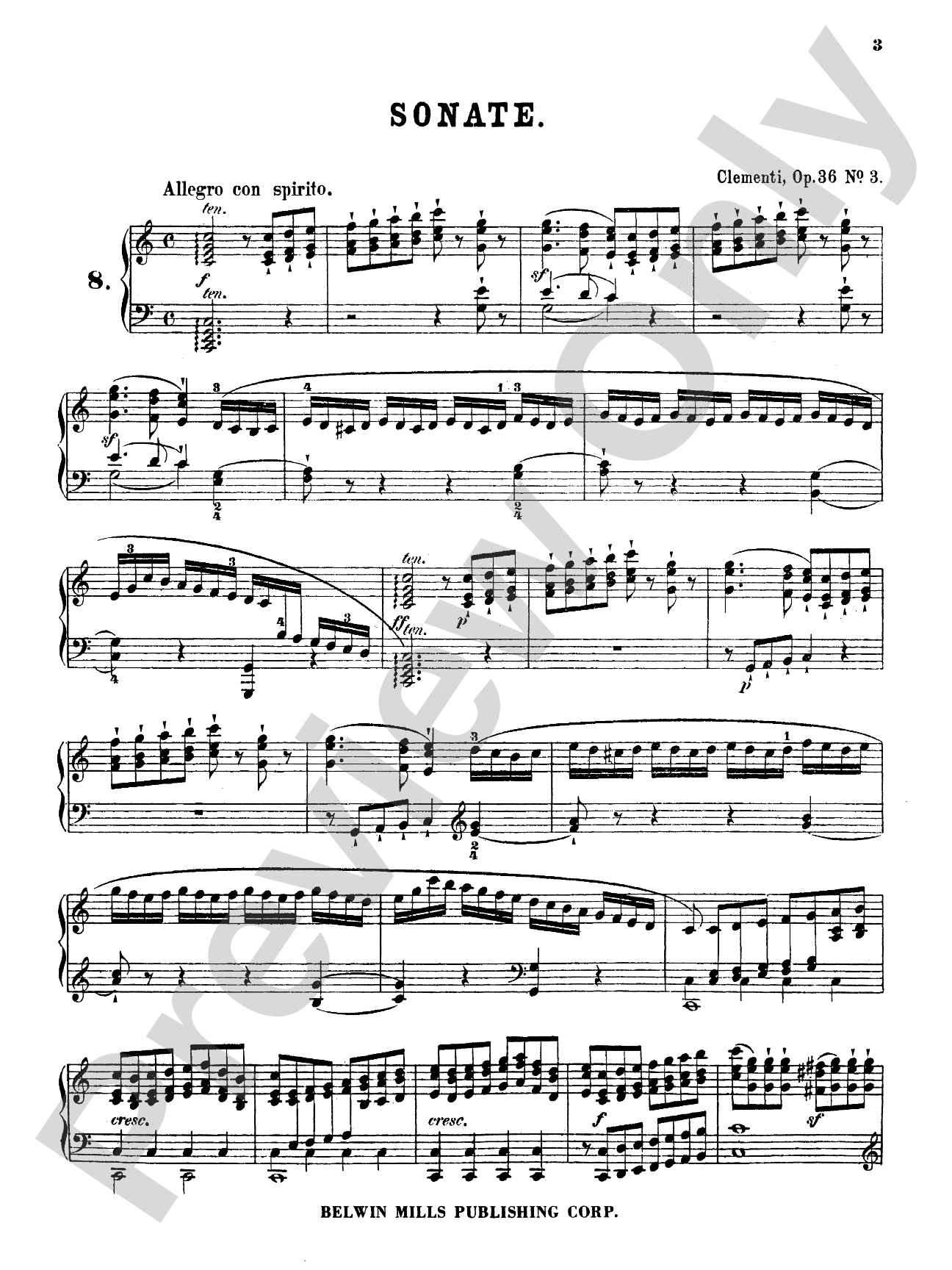
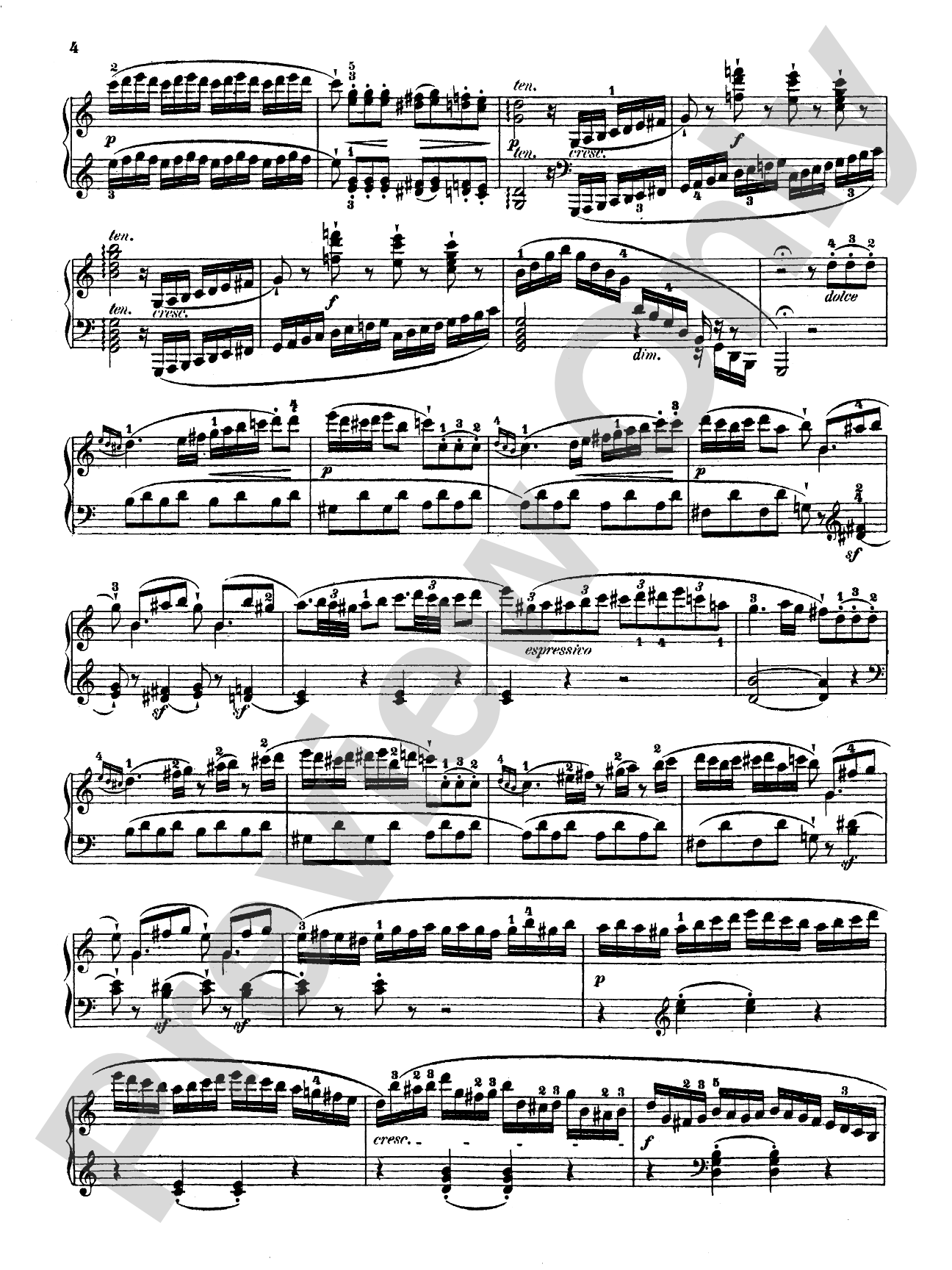
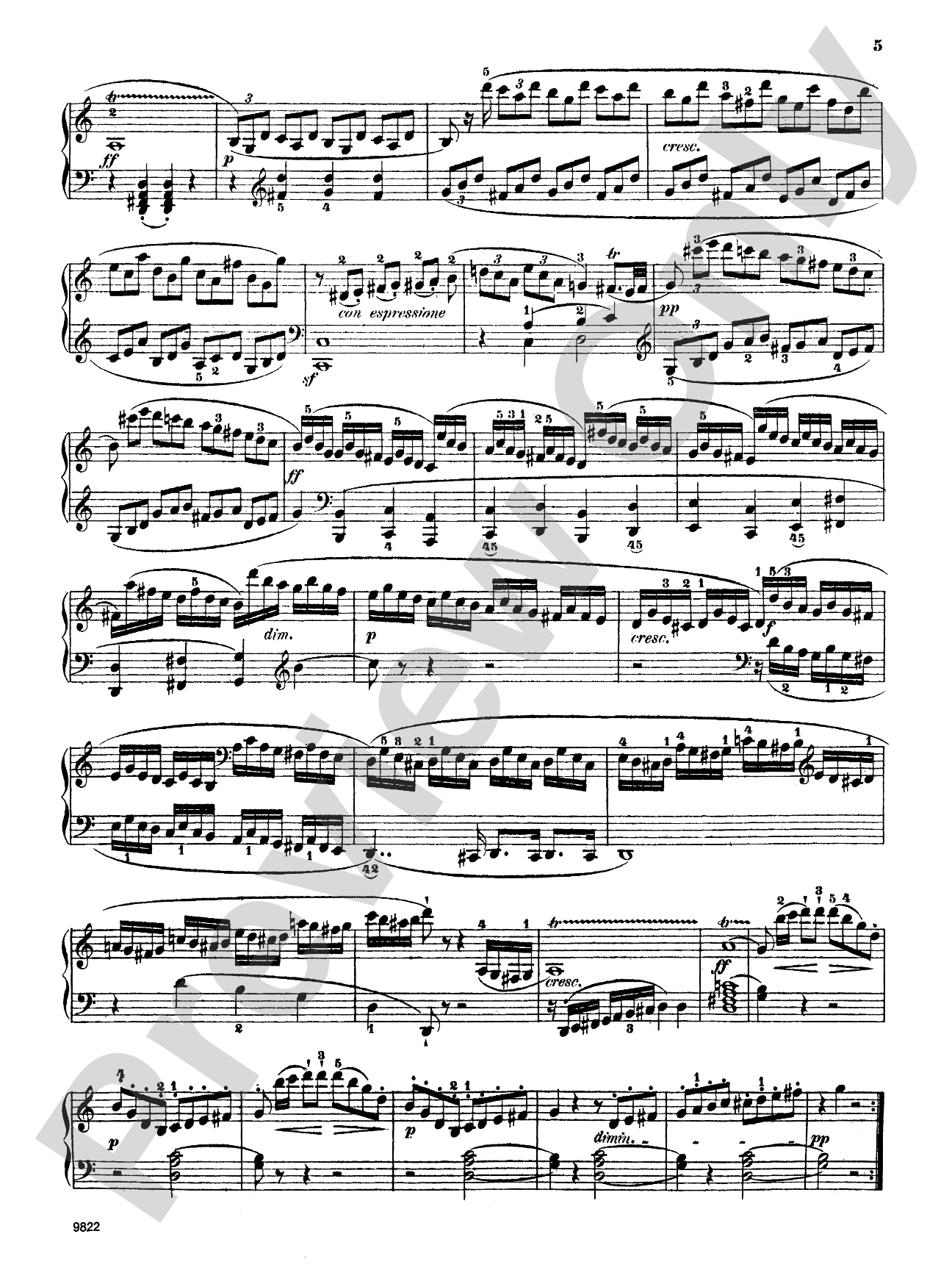
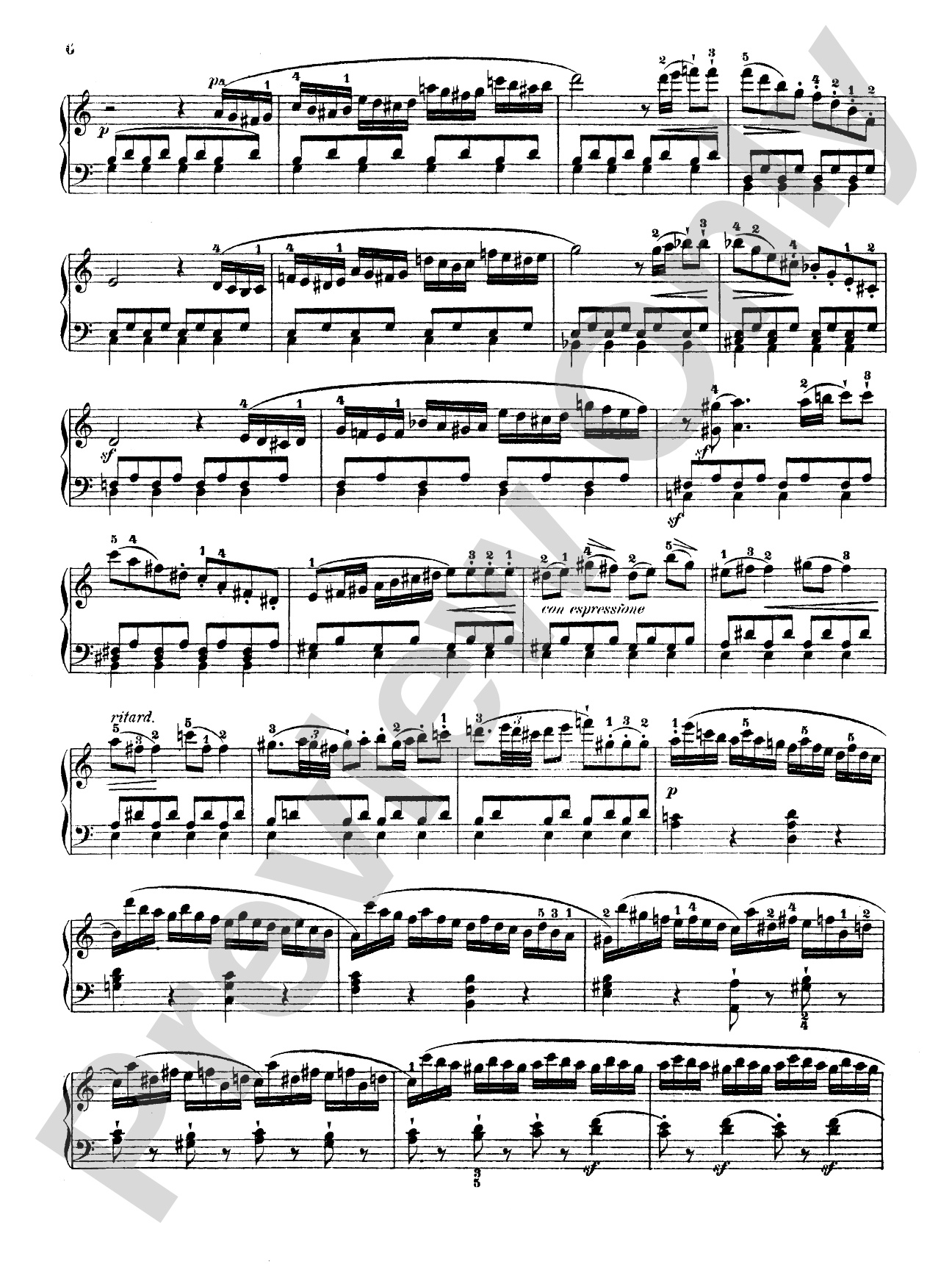
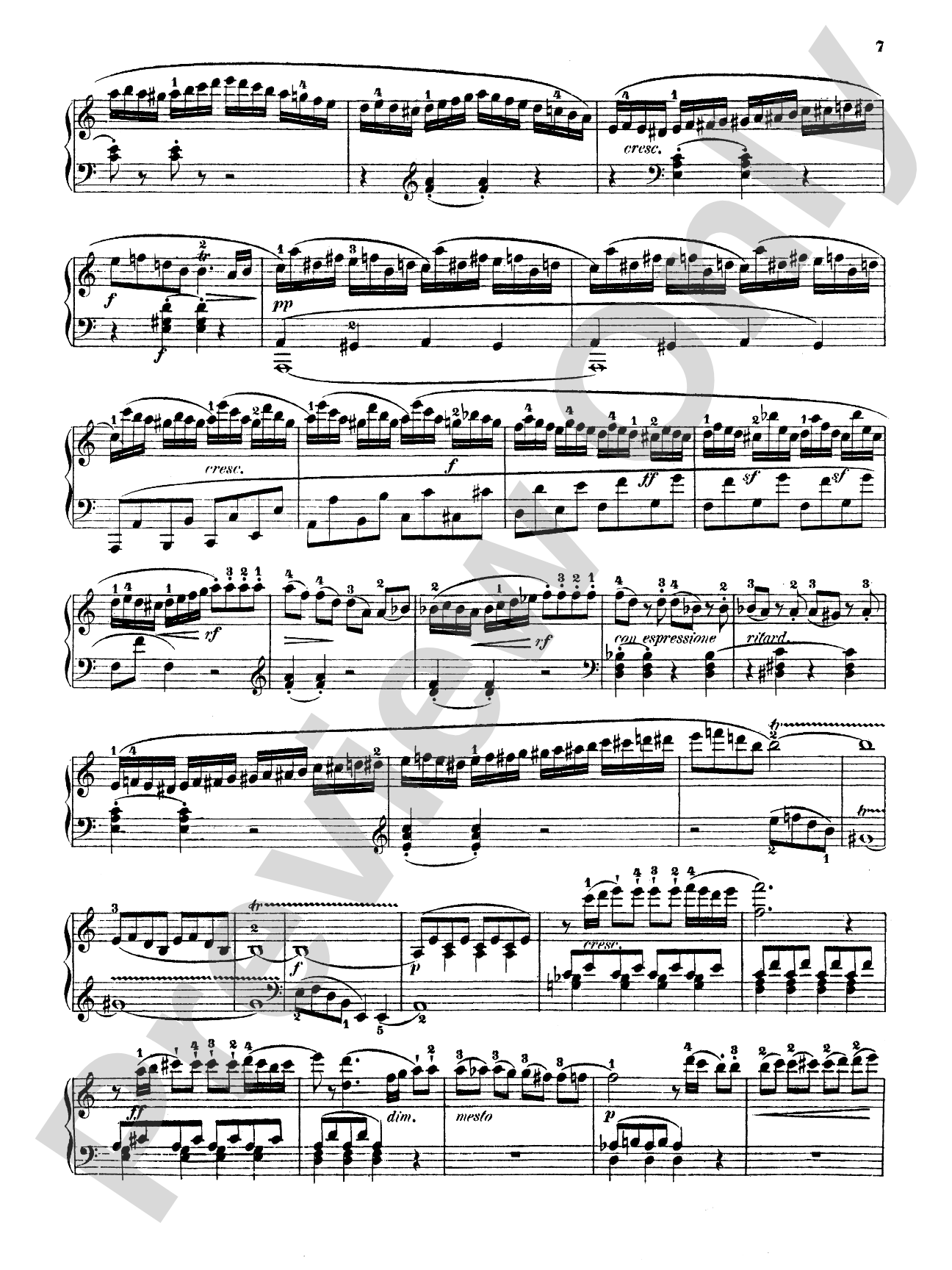
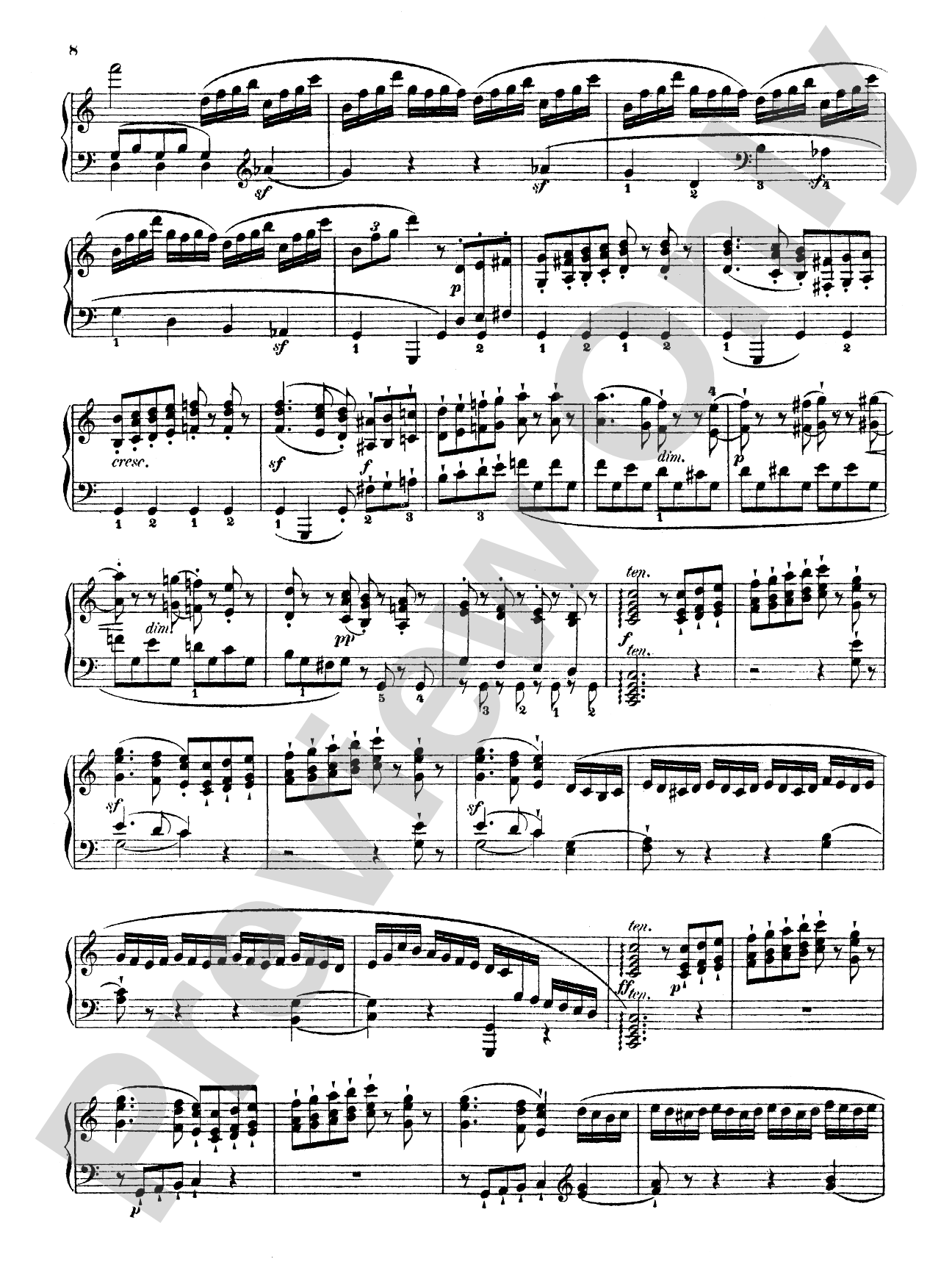
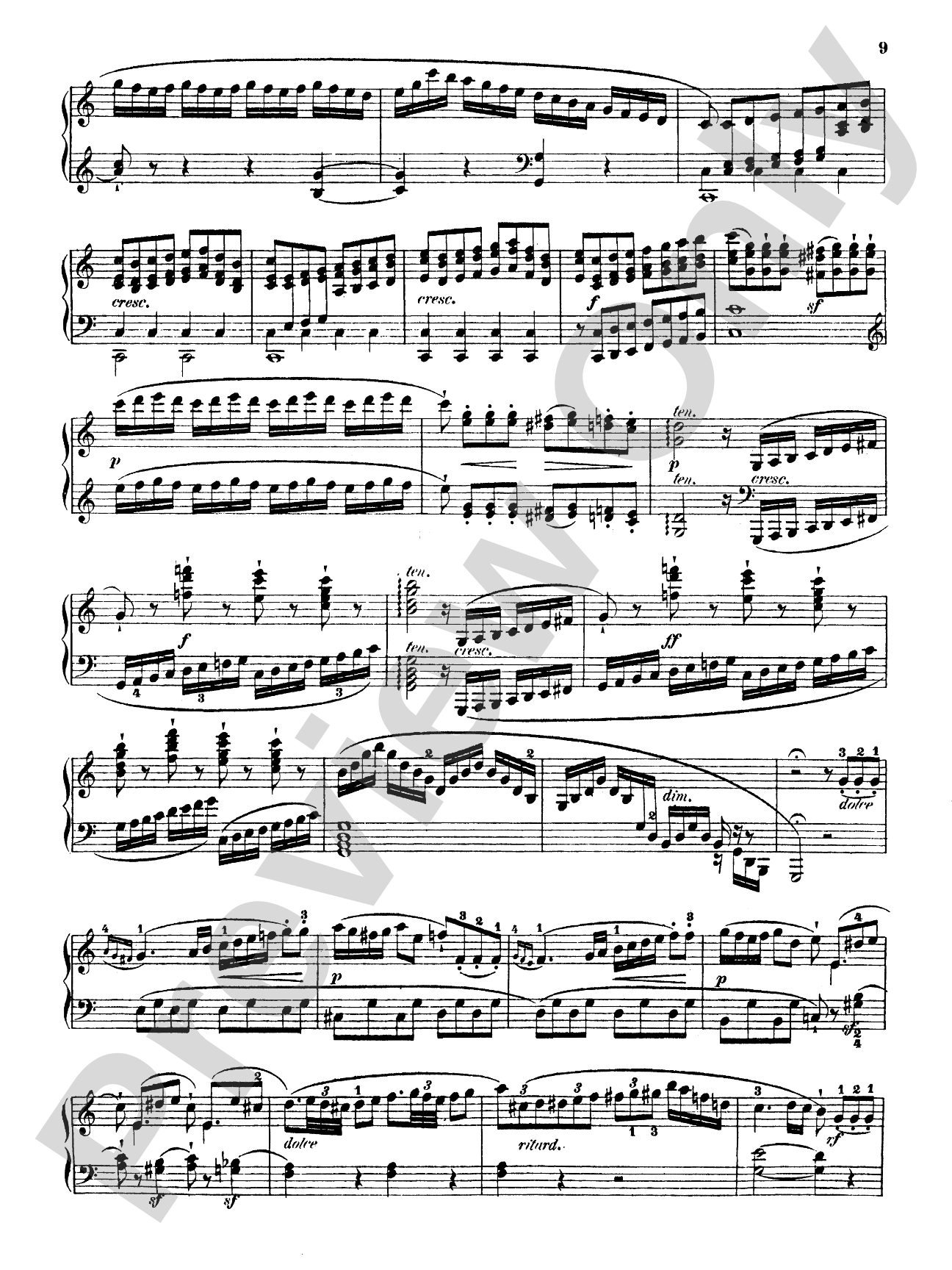
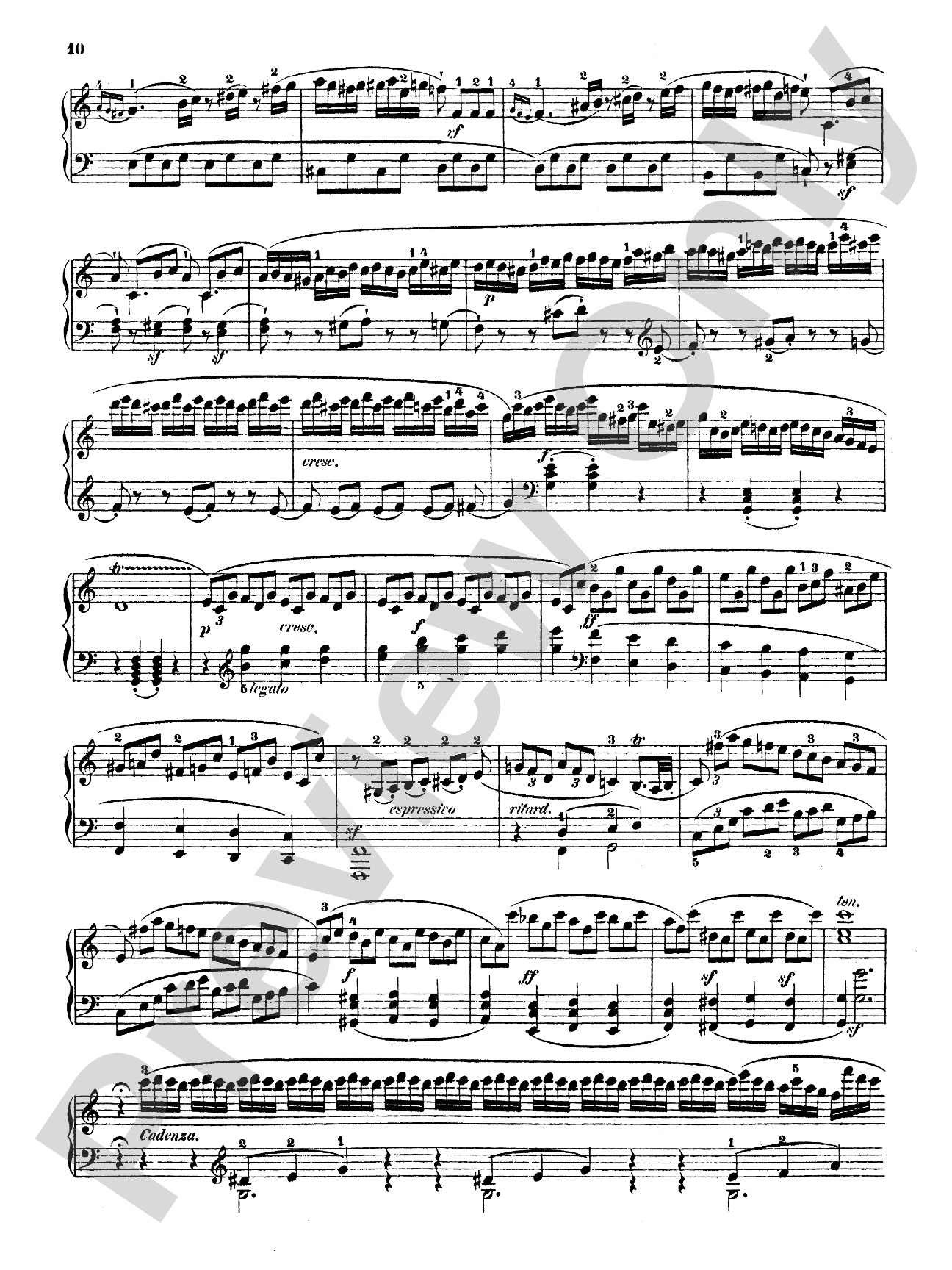
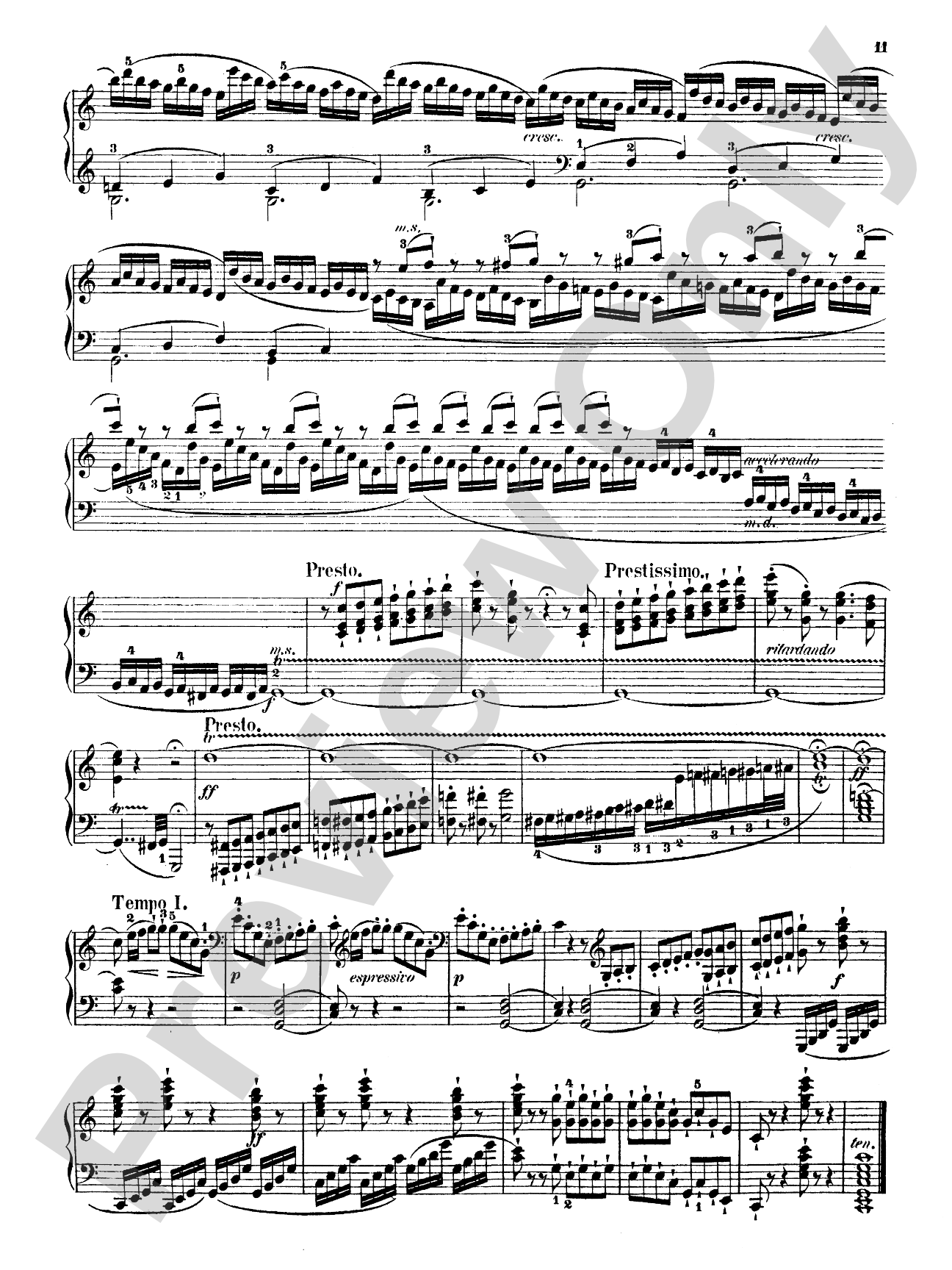
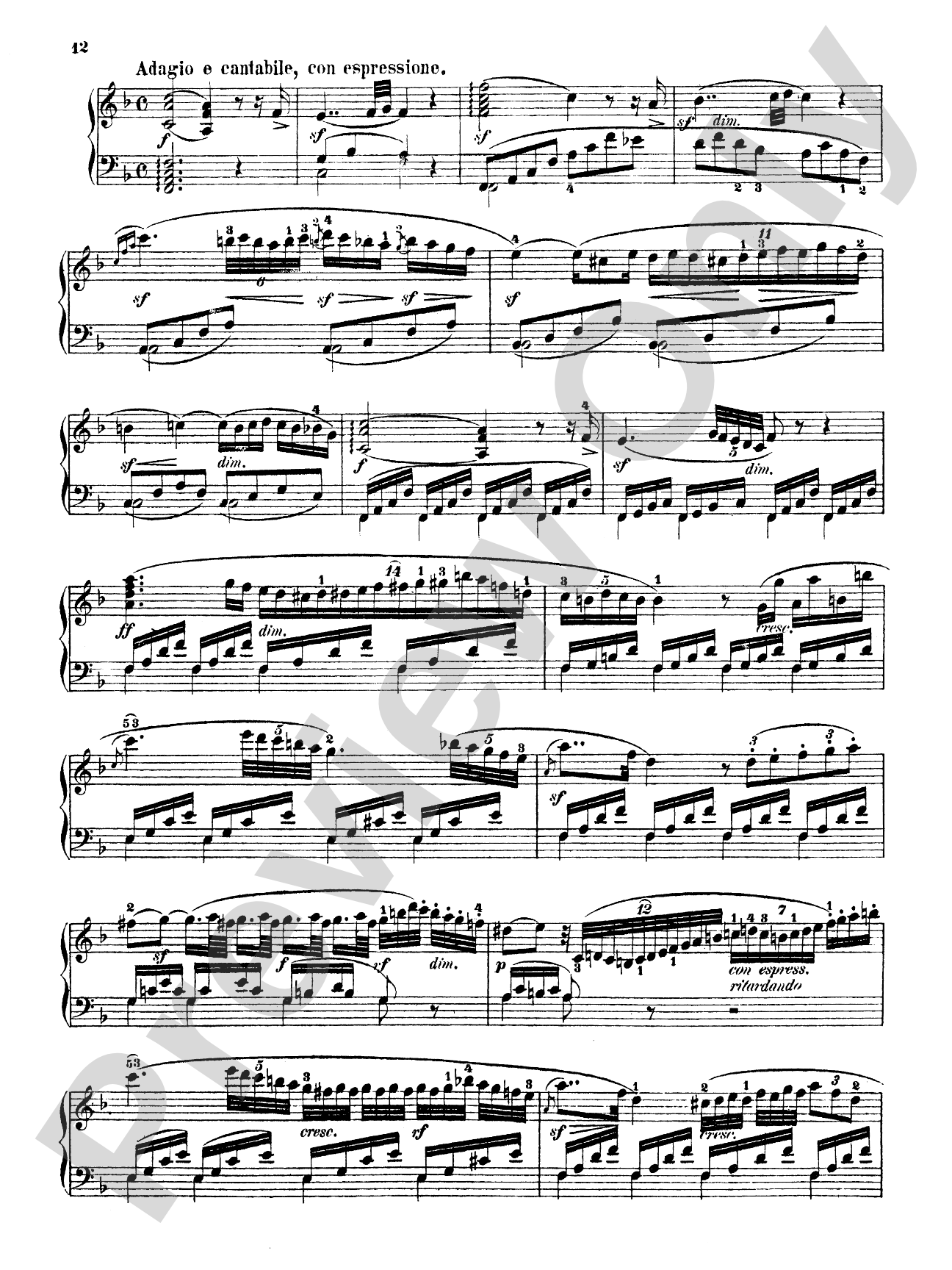
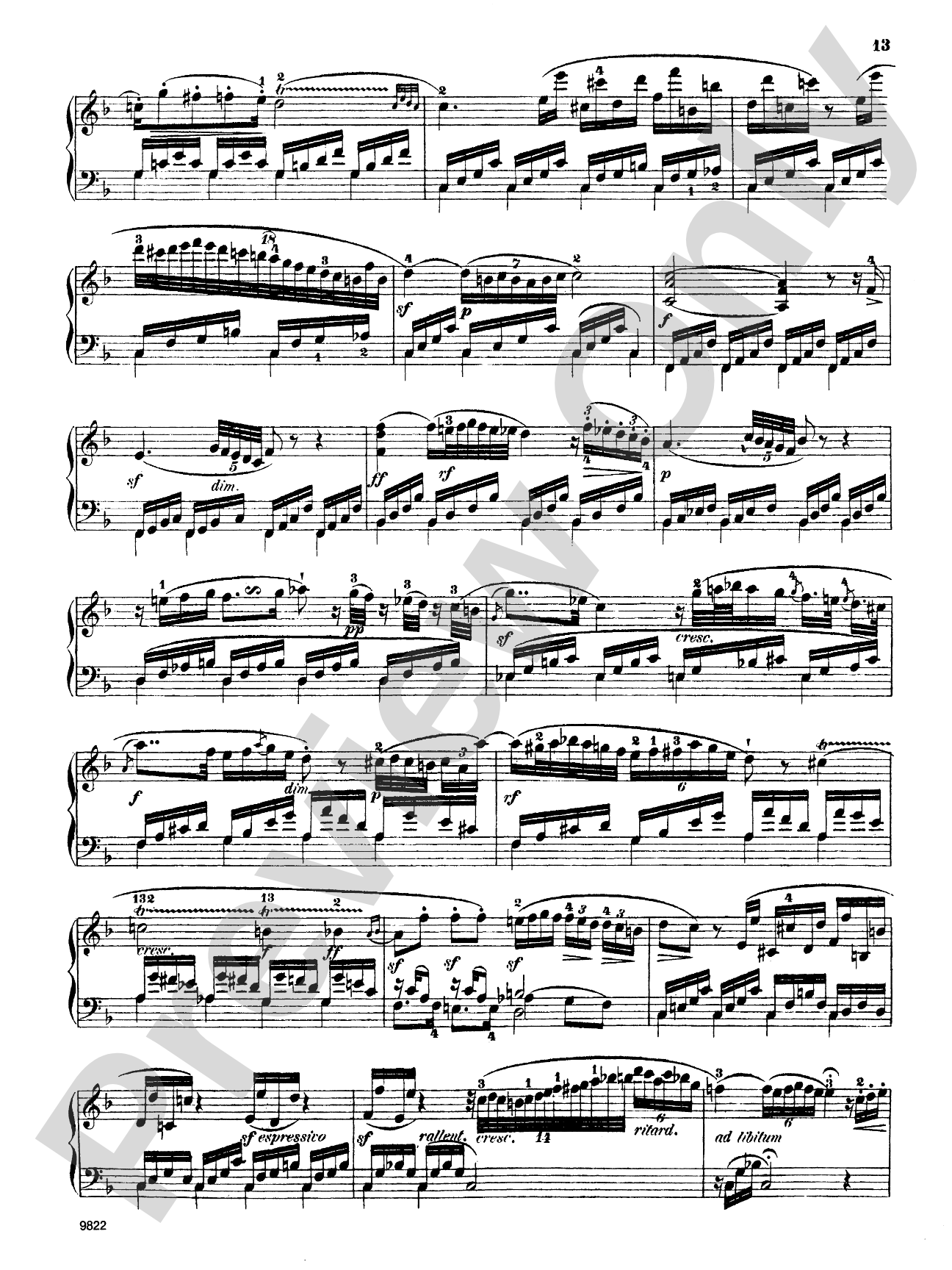
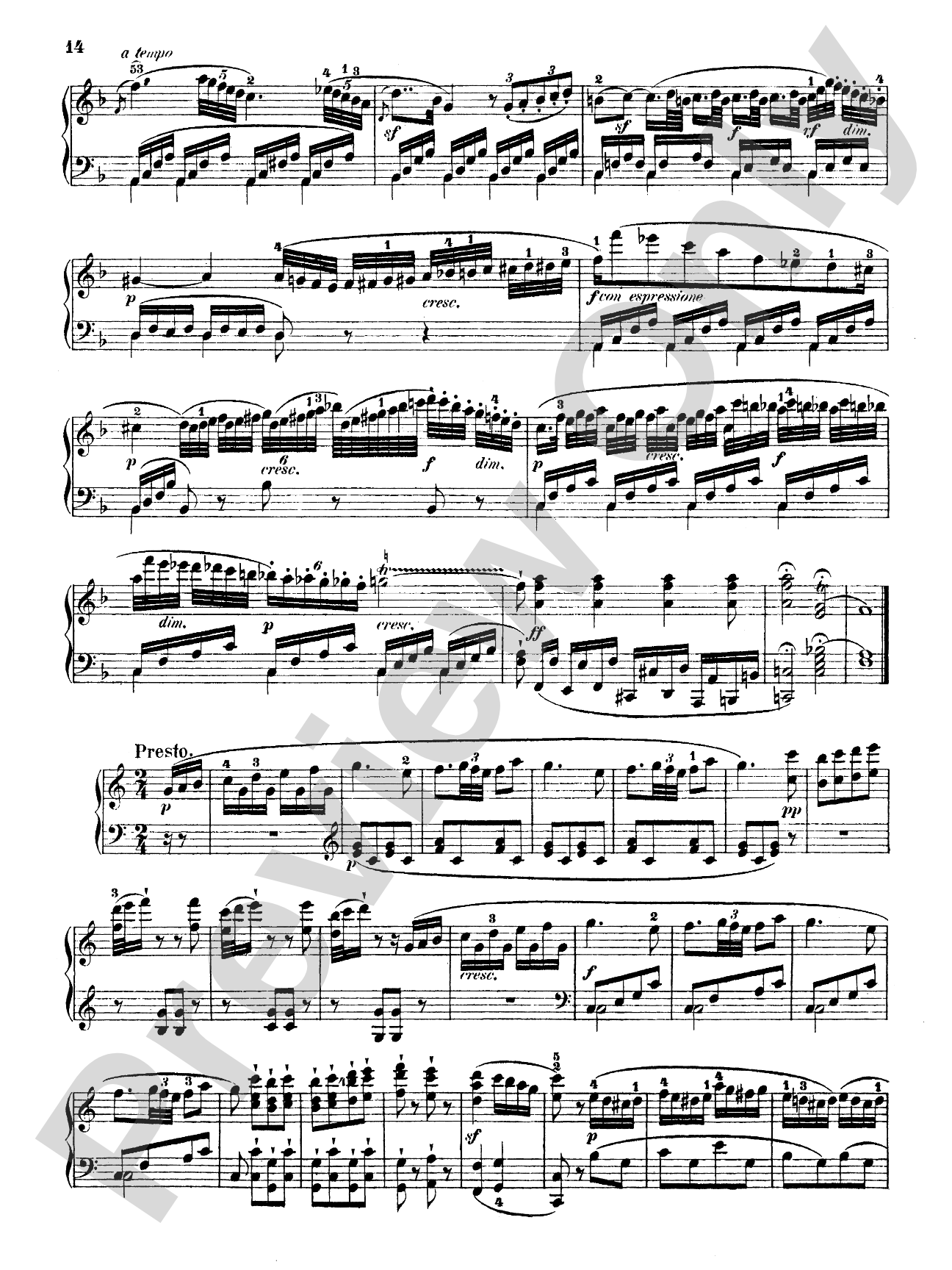
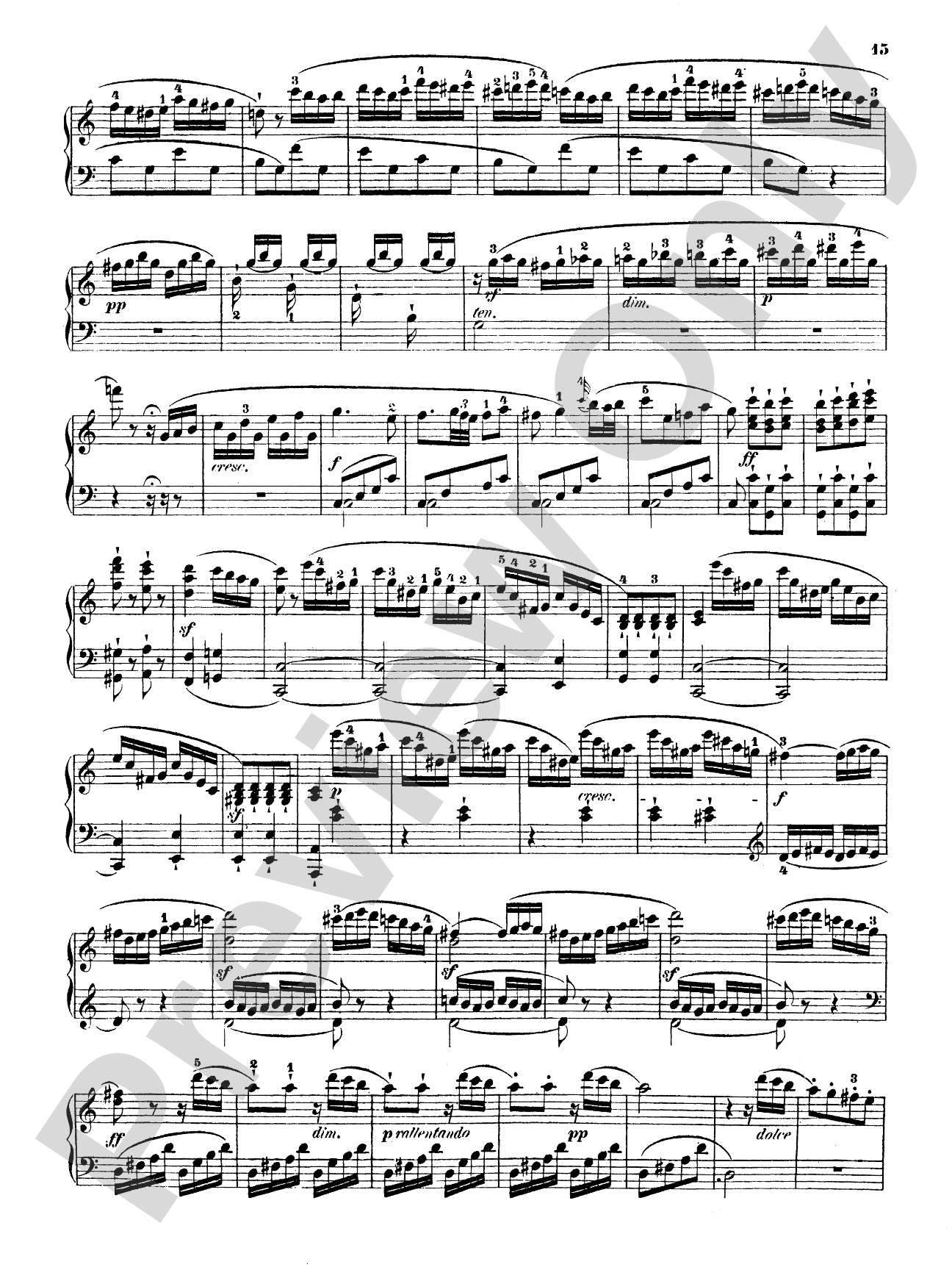
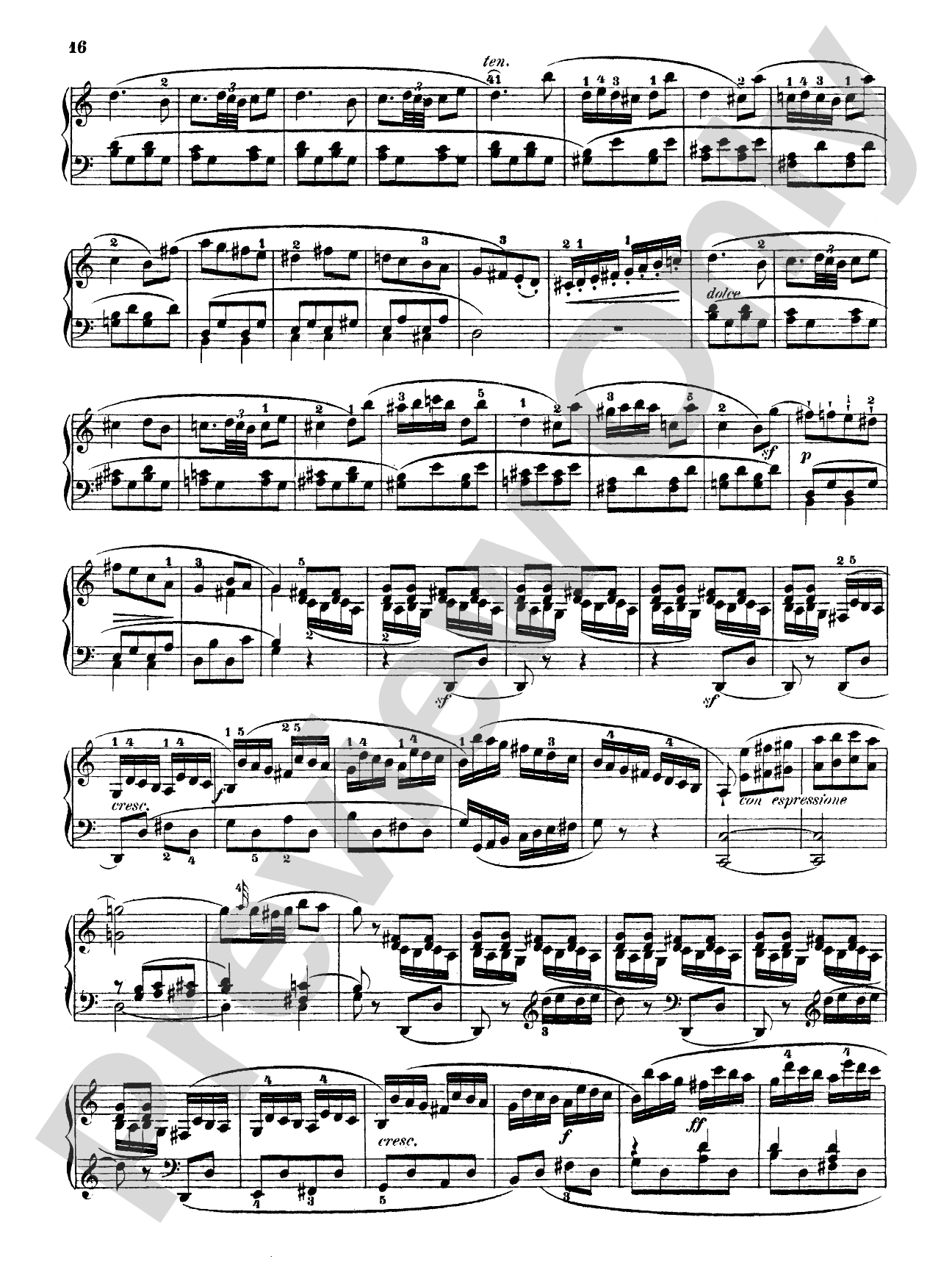
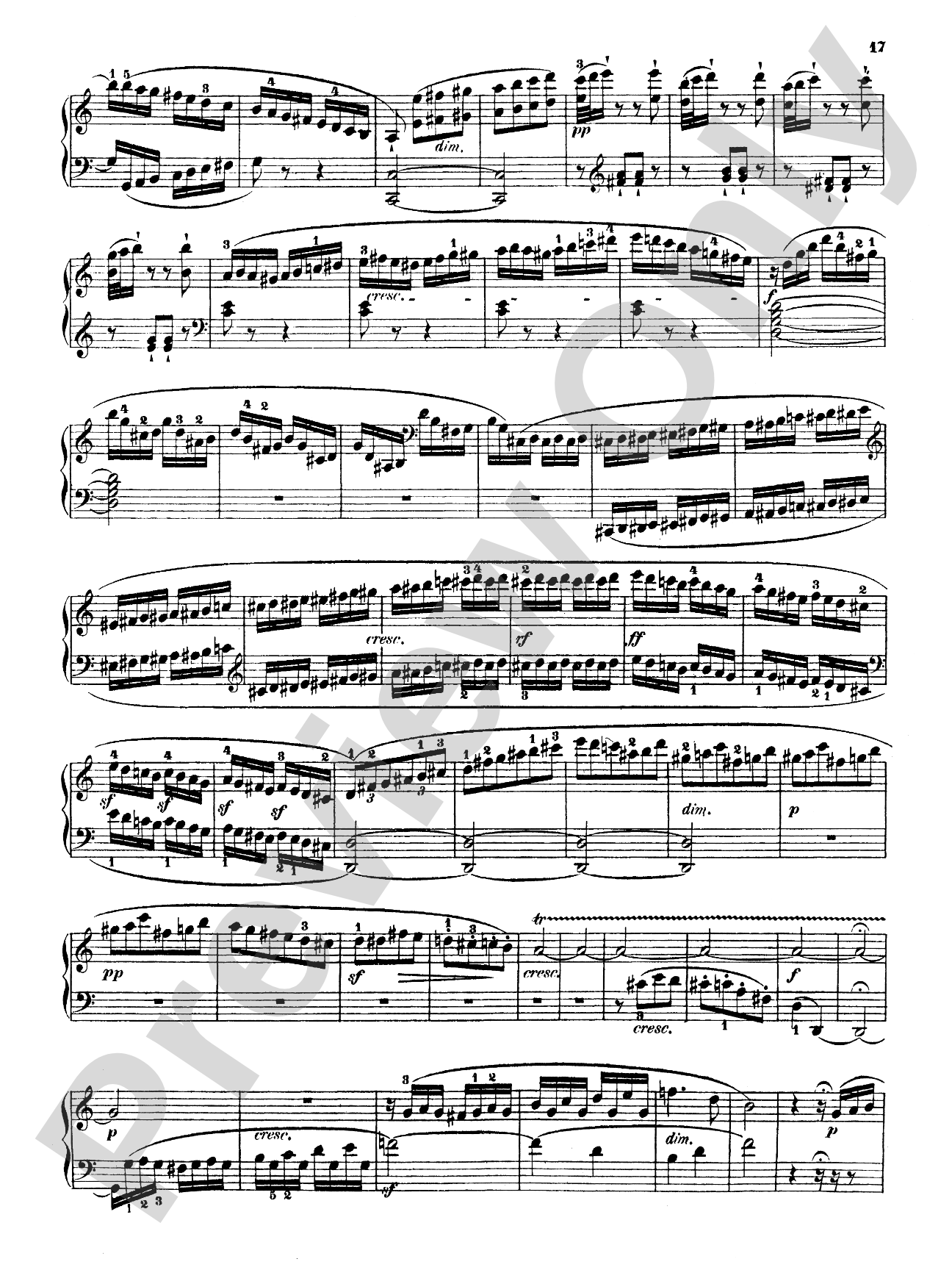
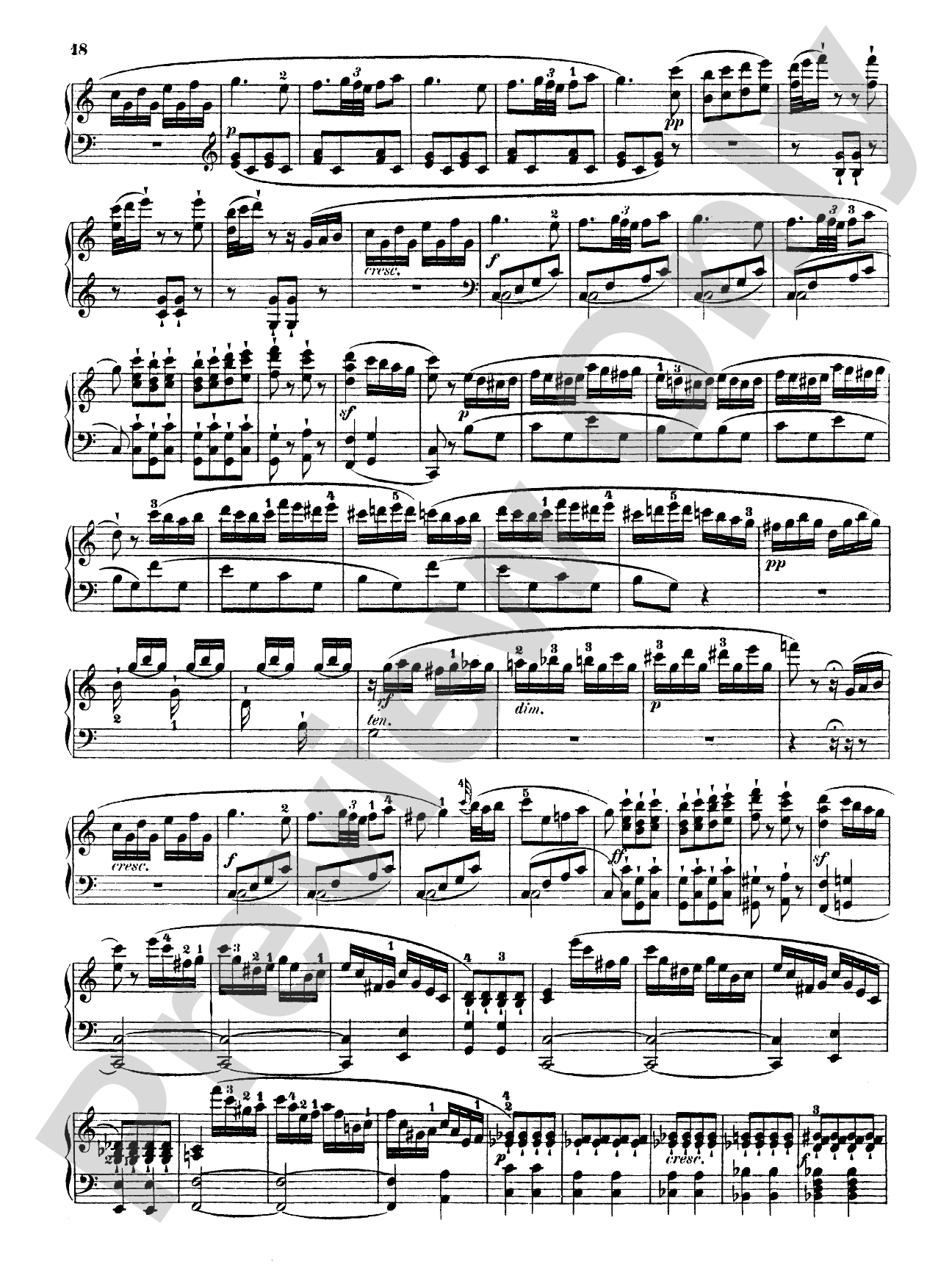
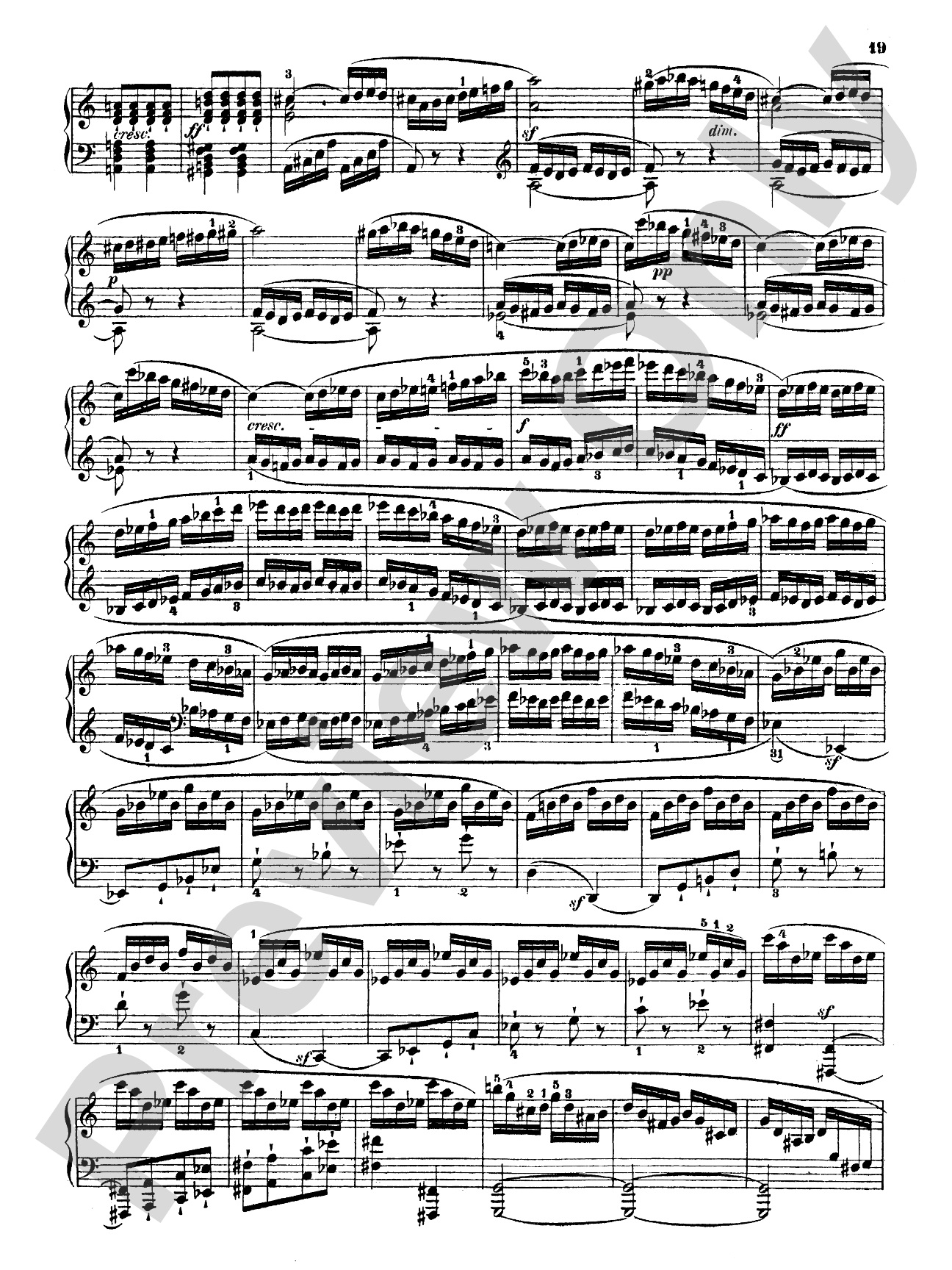
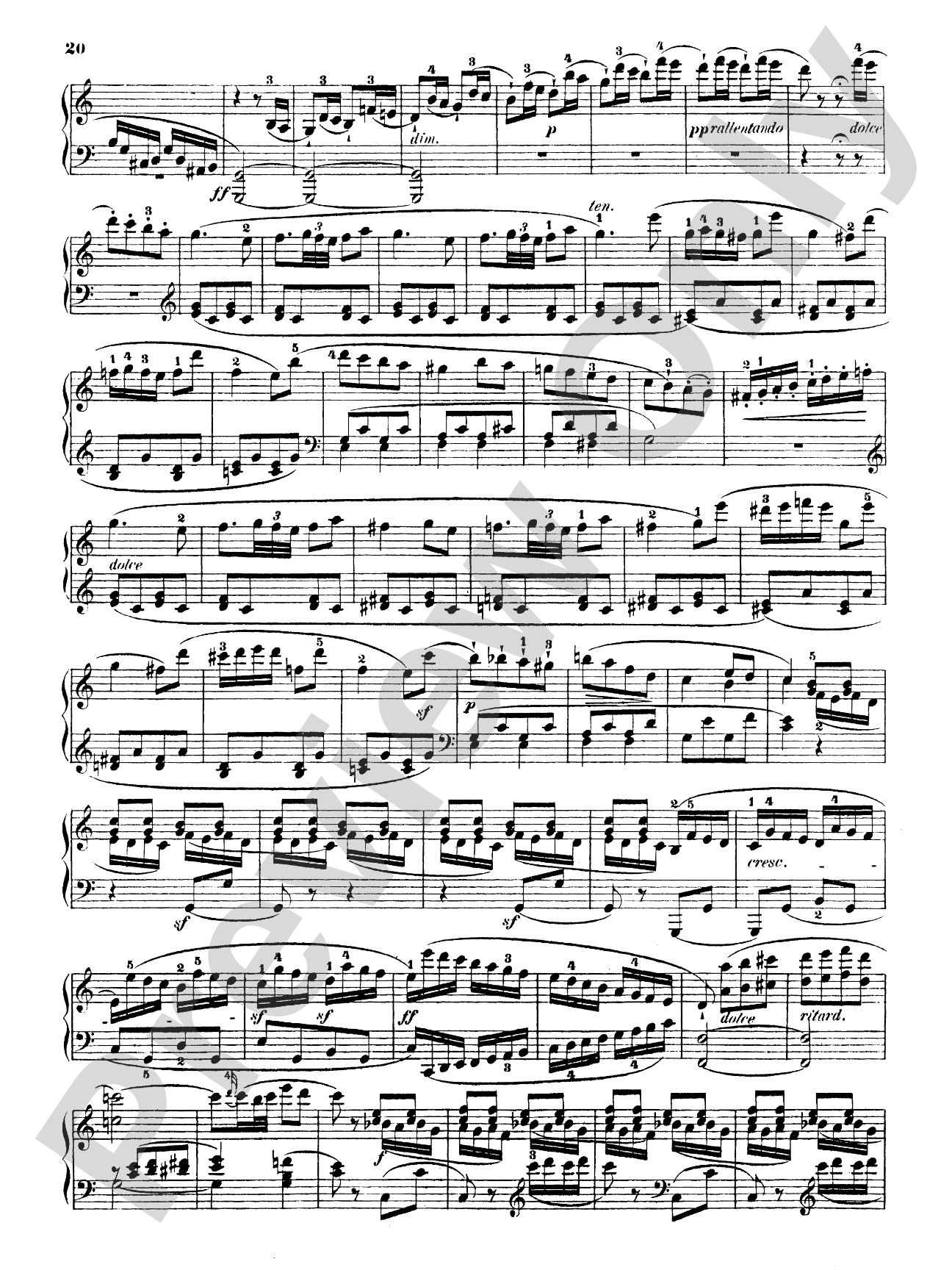
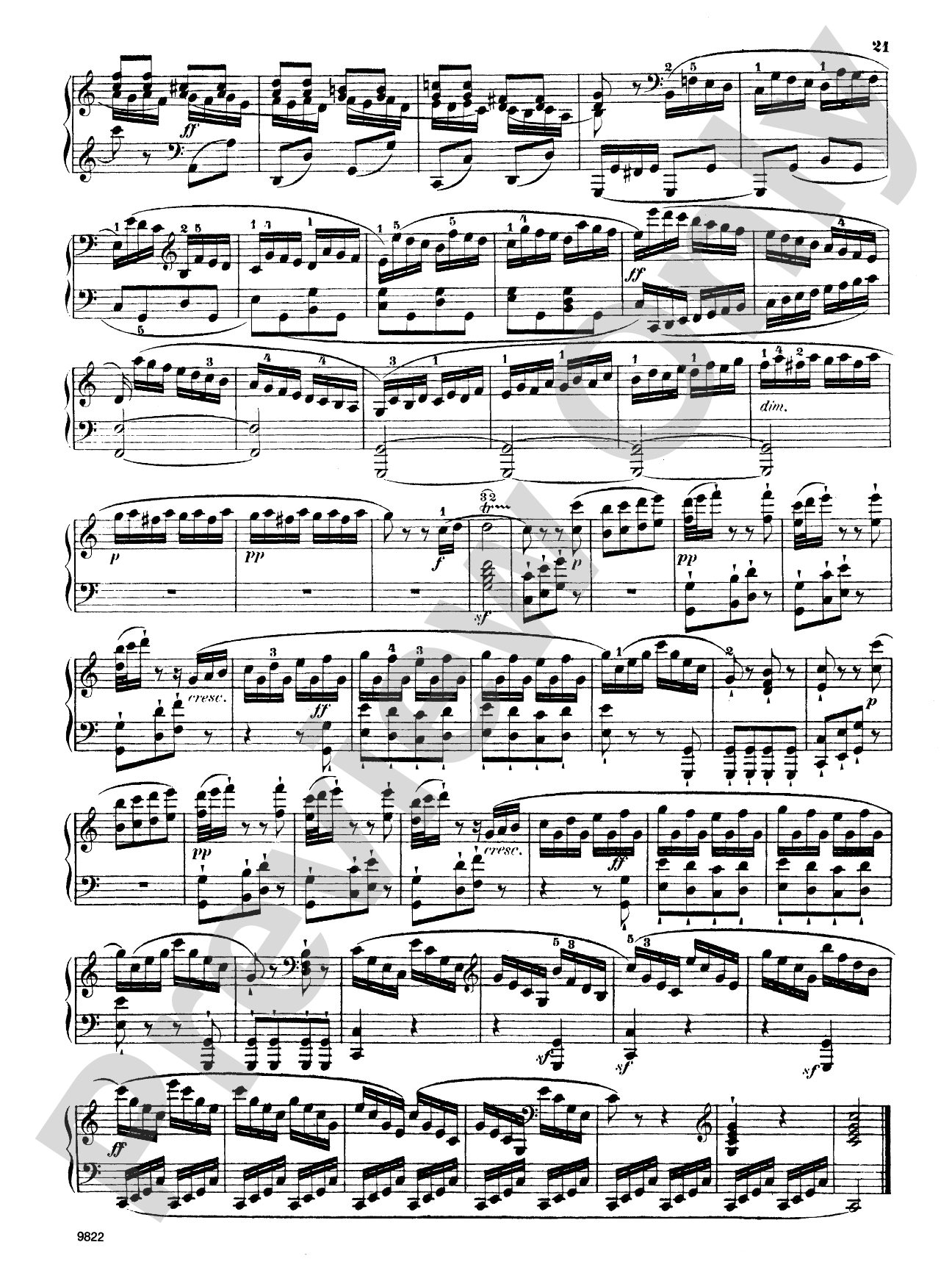

Clementi: Piano Sonatas (Volume II): Piano Book
By Muzio Clementi
Item: 00-PK-0003865

$12.99
Pickup currently not available
Buy Extra Parts (Digital PDF Download)
| Product | Price | Quantity |
|---|---|---|
| Clementi: Piano Sonatas (Volume II) | $1.95 | |
| Clementi: Piano Sonatas (Volume II) | $1.95 | |
| Clementi: Piano Sonatas (Volume II) | $1.99 | |
| Clementi: Piano Sonatas (Volume II) | $1.95 | |
| Clementi: Piano Sonatas (Volume II) | $1.99 |
Parts Added to Cart!
Related Items
Piano Sonatas, Volume II (Nos. 8-12): Piano Book |
$12.95
|
View |
Description
Muzio Clementi (1752--1832) was a famed composer, pianist, pedagogue, conductor, music publisher, editor, and piano manufacturer. Although born in Italy, he spent most of his life in England. In his time, he was known as "the father of the pianoforte," "father of modern piano technique", and "father of Romantic pianistic virtuosity." This is Volume 2 of Clementi's Sonatas and includes: Opus 36, No. 3 in C major * Opus 40, No. 1 in G major * Opus 40, No. 2 in B minor * Opus 40, No. 3 in D minor * Opus 47, No. 2 in B-flat major.


Don't just read it, hear it, play along with it, and watch your students grow with it. In MakeMusic Cloud, Clementi: Piano Sonatas (Volume II): Piano Book comes alive with professional accompaniment, adjustable tempo, and built-in practice tools that turn solo practice into real progress.
Open in the Player
Jump straight in and assign it today.
Start Your Free Trial
Open this title and explore the full library in minutes.
Sample Audio
No sample audio found.
Sample Video
No sample videos found.
Additional Details
Series:
Kalmus Edition
Publisher:
Alfred Music
Page Count:
88
SKU:
00-PK-0003865
More about this title
About the Composer: Muzio Clementi
Muzio Clementi (1752, 1832) shaped the piano and how we play it. Born in Rome but based in London for most of his career, he was simultaneously a virtuoso performer, a prolific composer, and a shrewd businessman who manufactured pianos and published music. His sonatas marked the transition from Beethoven's earlier Classical language toward the technical demands and emotional range that defined early Romanticism.
Clementi's influence on pedagogy runs deep. He wrote the Gradus ad Parnassum, a collection of studies that became foundational for pianist training, and his compositions were designed to develop technique while remaining musically substantial. For his contemporaries and for educators today, Clementi represents the moment when the piano became the instrument of choice for ambitious composers.
Why we love this
These five sonatas showcase Clementi's gift for writing pianistically idiomatic music that demands real technique without sacrificing structural integrity. Each work presents distinct character and harmonic language, making Volume II ideal for students ready to move beyond early sonata forms into more sophisticated harmonic terrain and increased textural variety.
What to expect
These sonatas balance Classical clarity with increasingly expressive melody and harmonic color. There is elegance and refinement throughout, but also moments of dramatic gesture and virtuosic display that hint at Romanticism; the music feels both structured and alive.
Who it's for
Intermediate to advanced pianists (roughly grades 5-7) with solid technical foundation and experience in multi-movement form. These sonatas suit students preparing for college auditions, competitions, or recitals who want to deepen their understanding of Classical and early Romantic compositional technique.
How to get the most out of it
- Attend to the hand independence required in fast passages; Clementi's figuration often sits comfortably under the hand but demands clarity and evenness of touch rather than speed alone.
- Shape longer lyrical sections with phrase-level breathing. Clementi's melodic writing benefits from subtle rubato and dynamic shaping that honors Classical form without obscuring it.
- Balance the often-florid right-hand passagework against clear harmonic support in the left hand; muddy accompaniment will obscure the architecture Clementi has carefully constructed.
How to use it
Program individual sonatas in student or faculty recitals to span the Classical-to-Romantic transition. Volume II works especially well in a chronological survey of sonata form, or paired with contemporary Beethoven or Mozart to show how Clementi's approach diverged and paralleled his peers.
Skills your students will build
- Control of rapid scalar and arpeggiato passagework across multiple octaves
- Balance between ornamental figuration and underlying harmonic structure
- Phrasing and rubato within Classical formal constraints
- Independence of hand parts in textures combining melody, accompaniment, and counterpoint
- Interpretation of multi-movement form with contrasting tempos and characters