
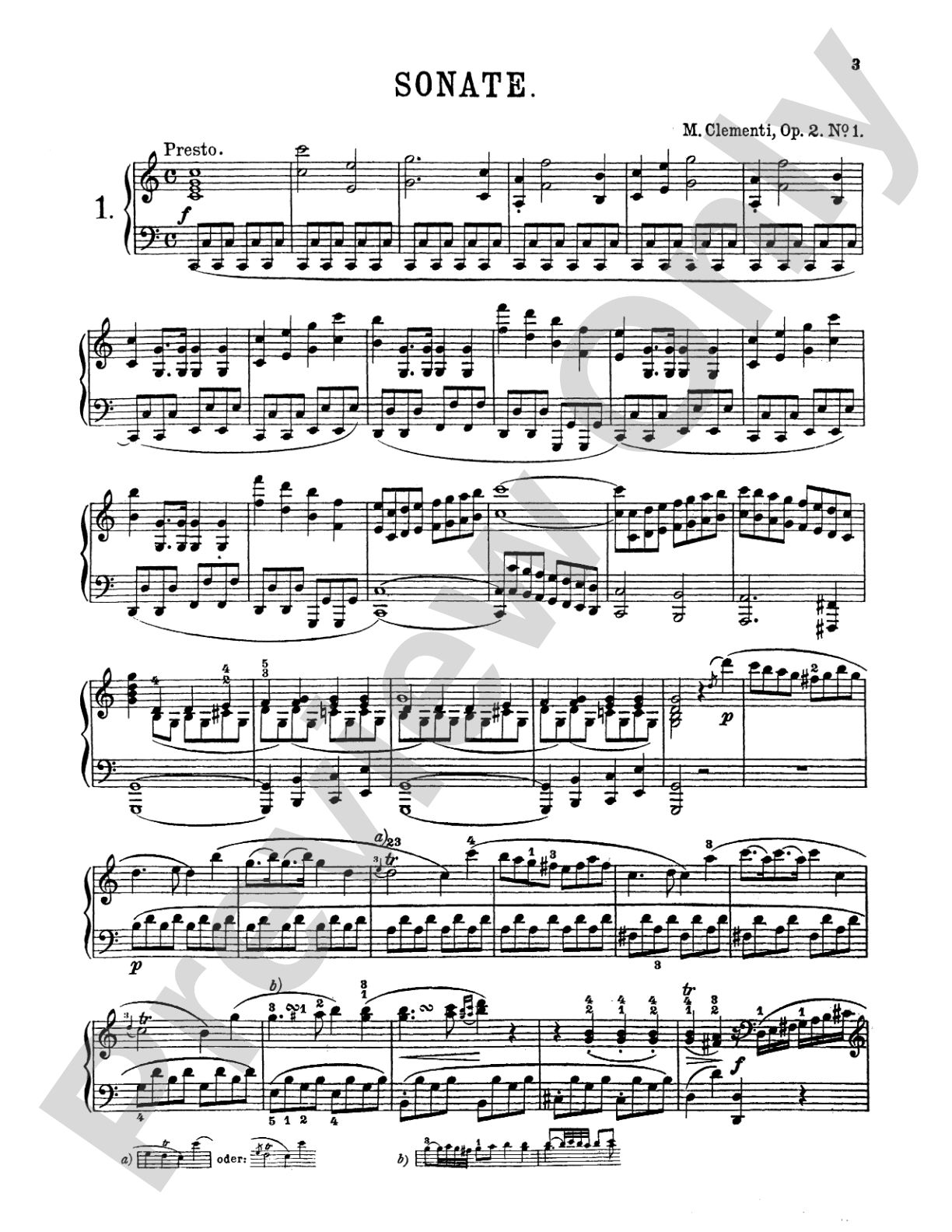
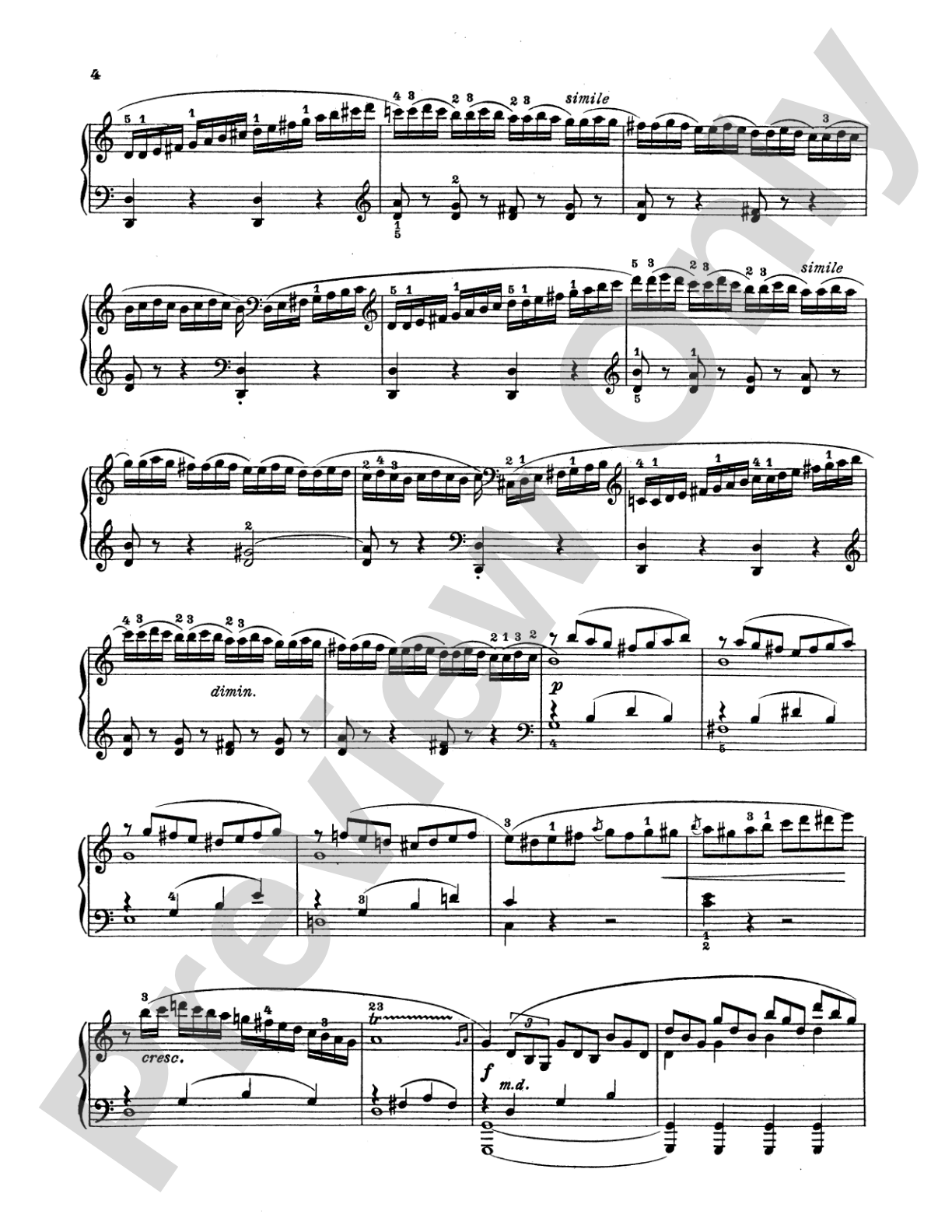
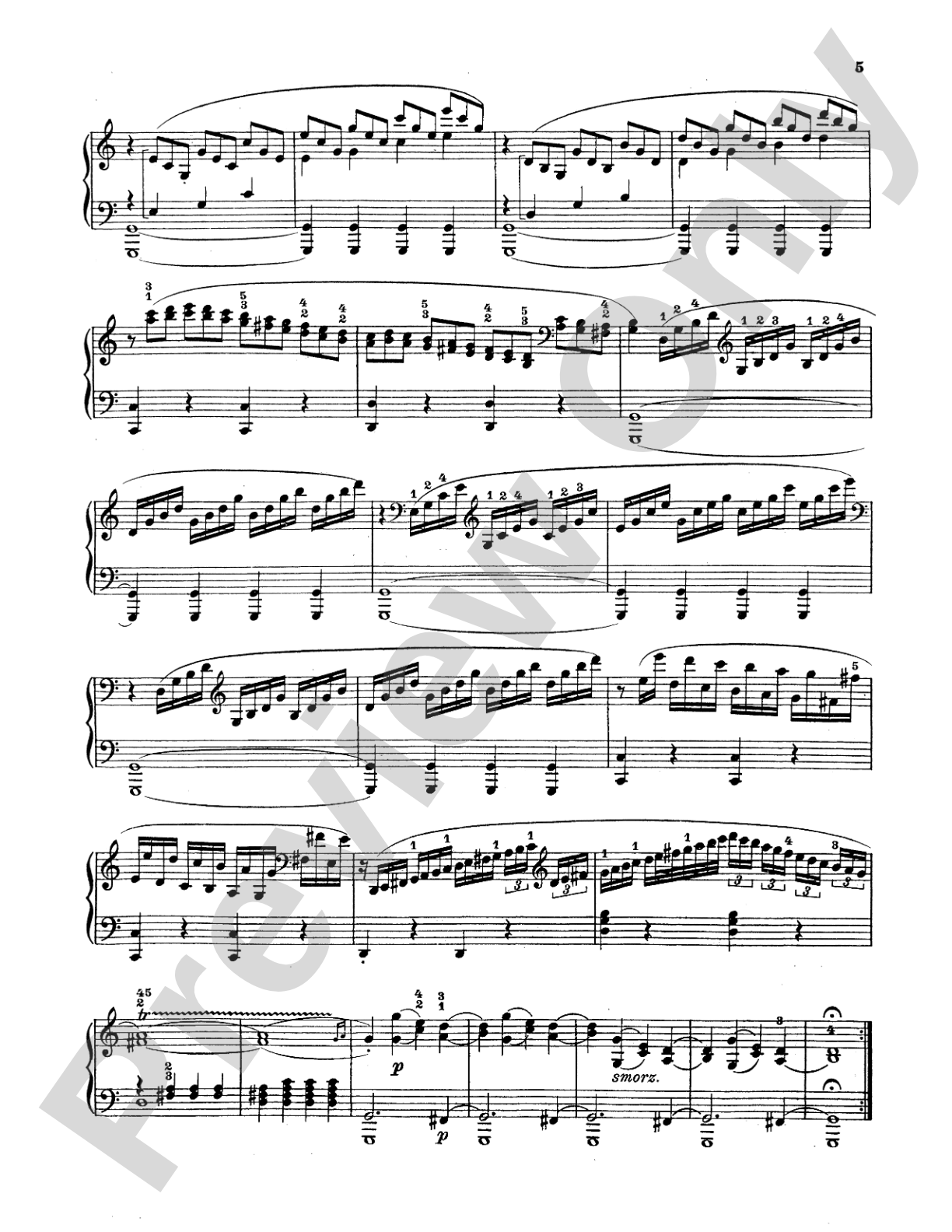
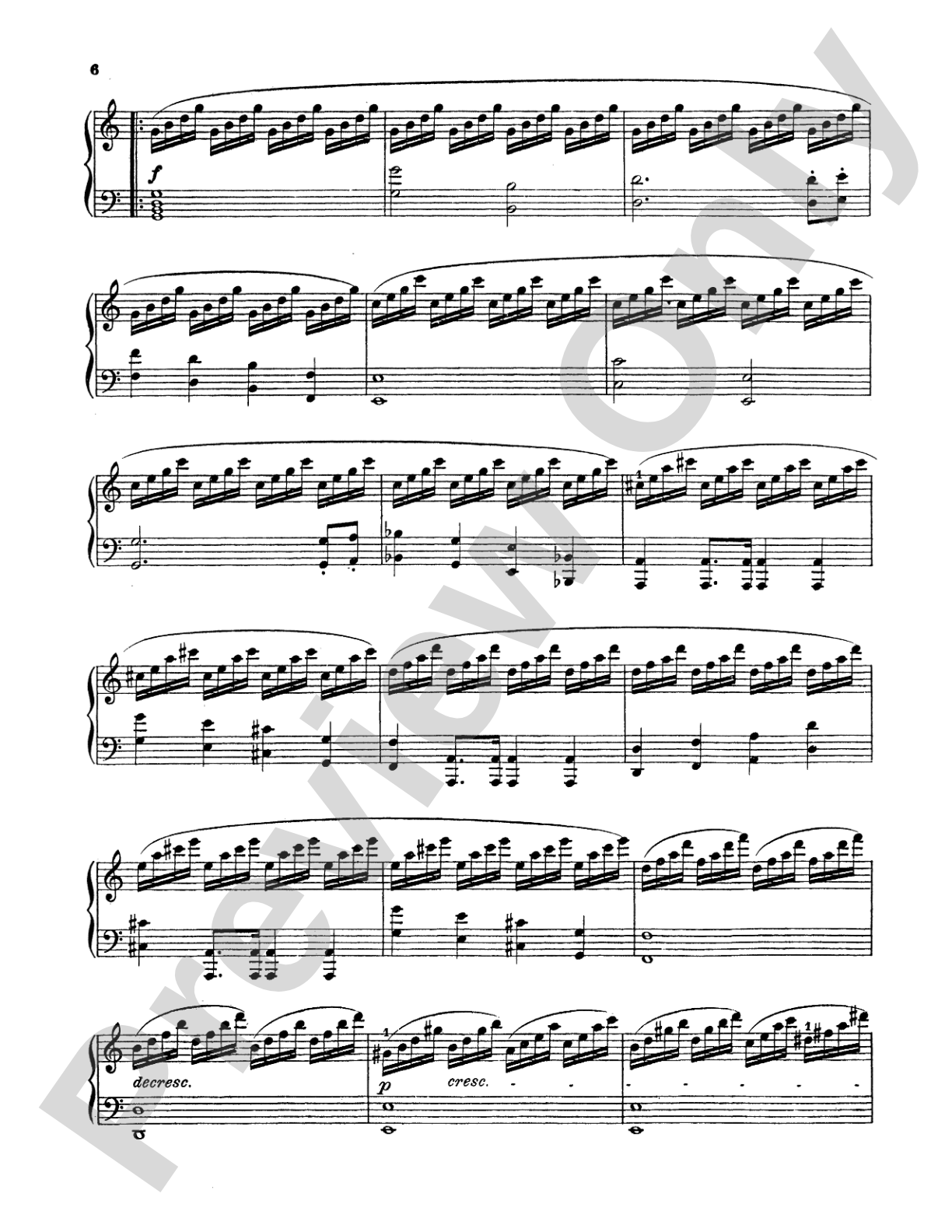
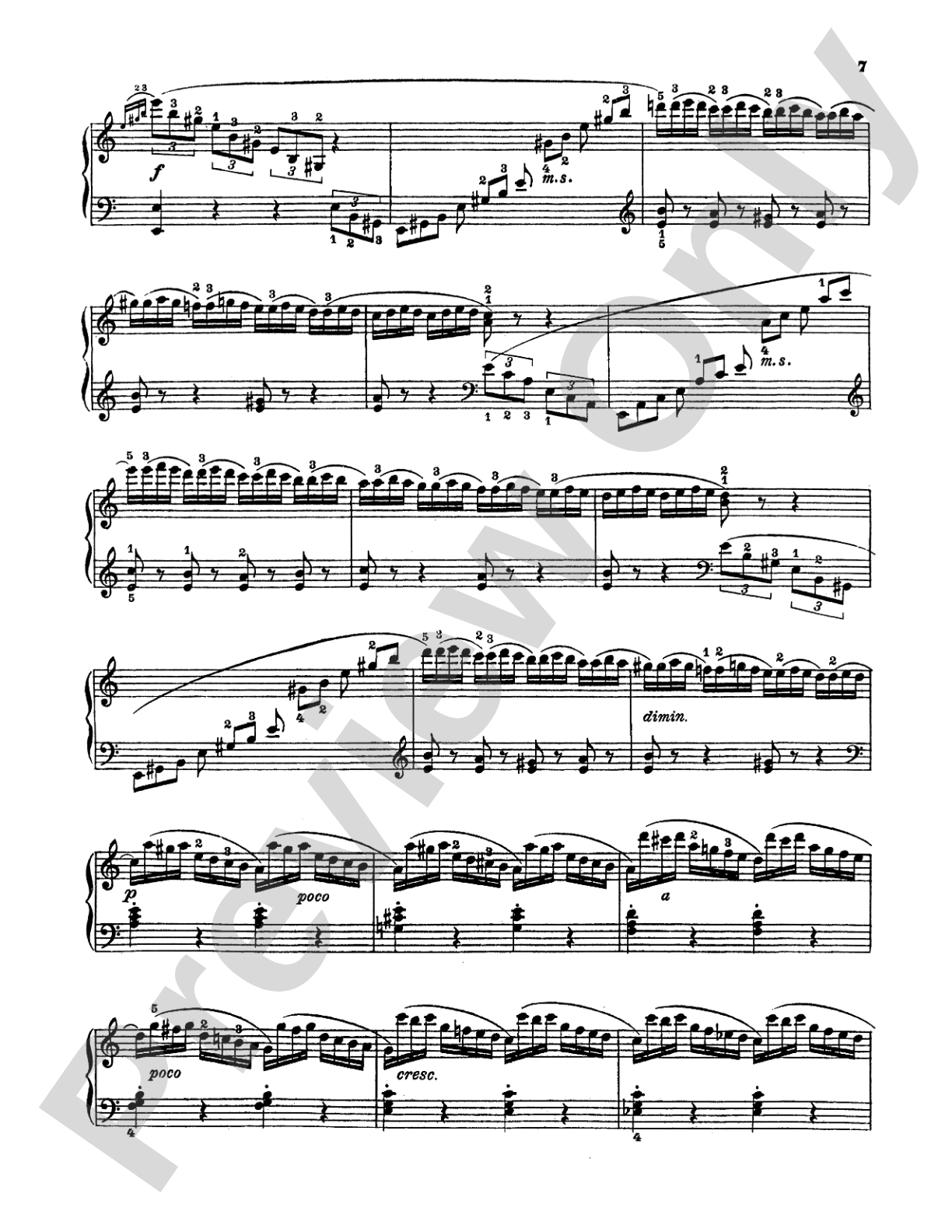
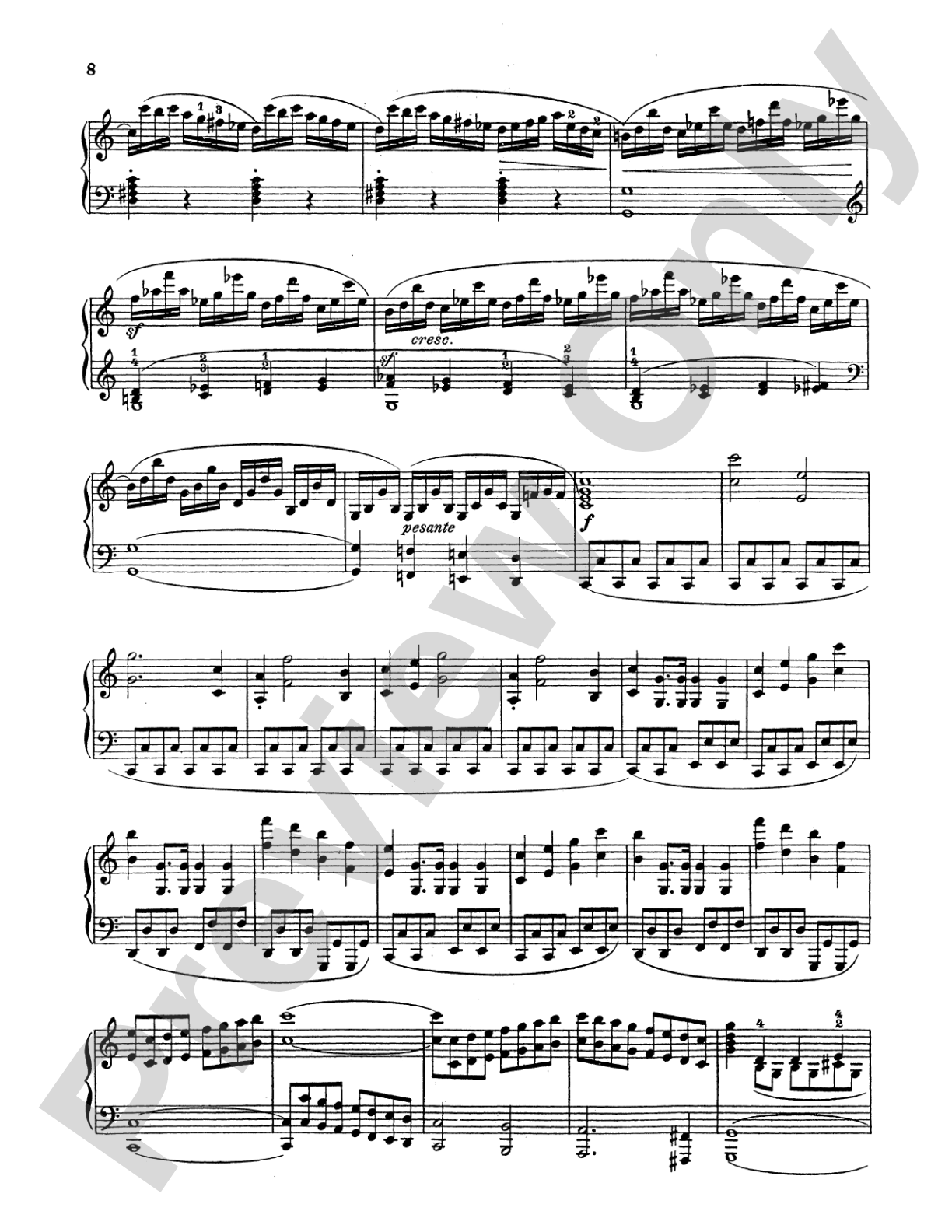
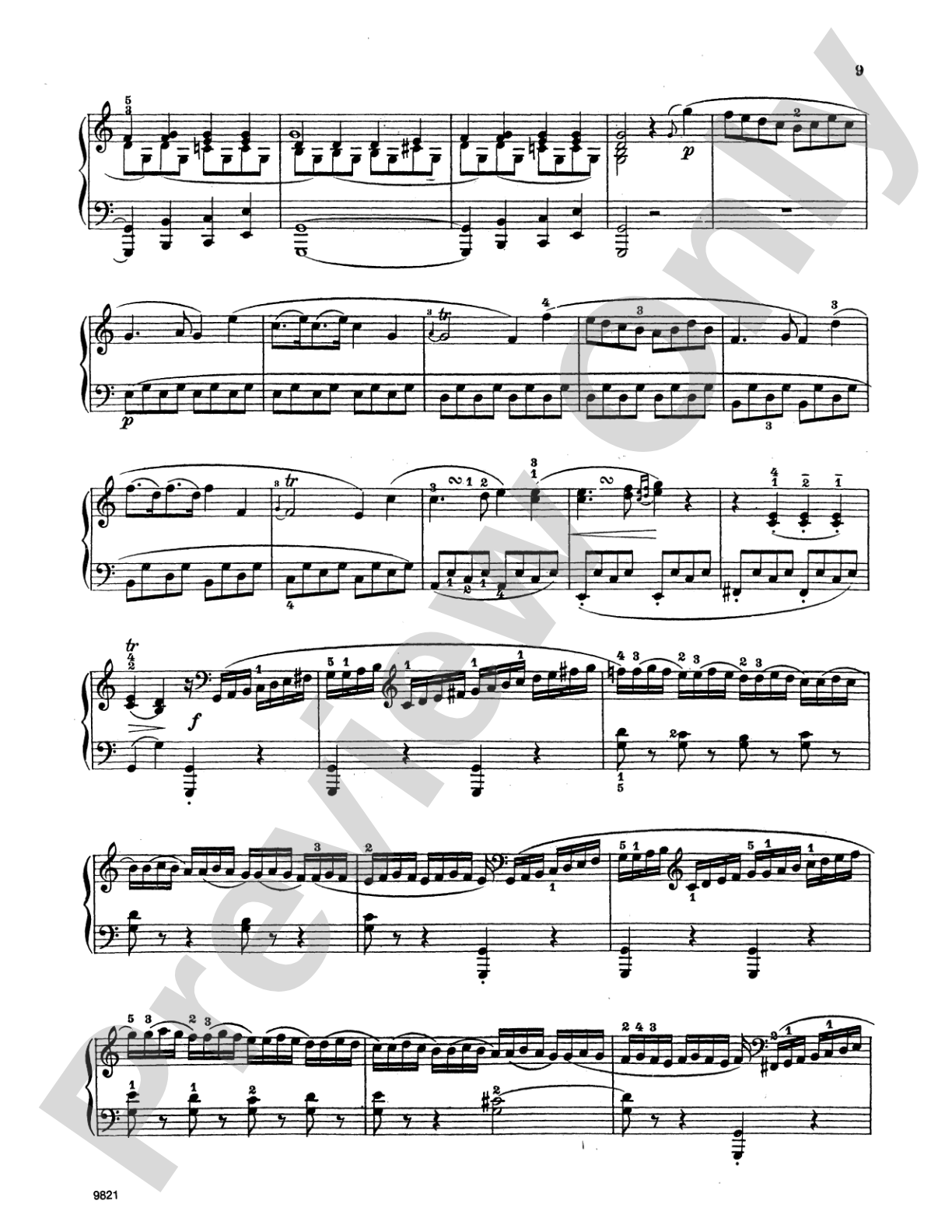
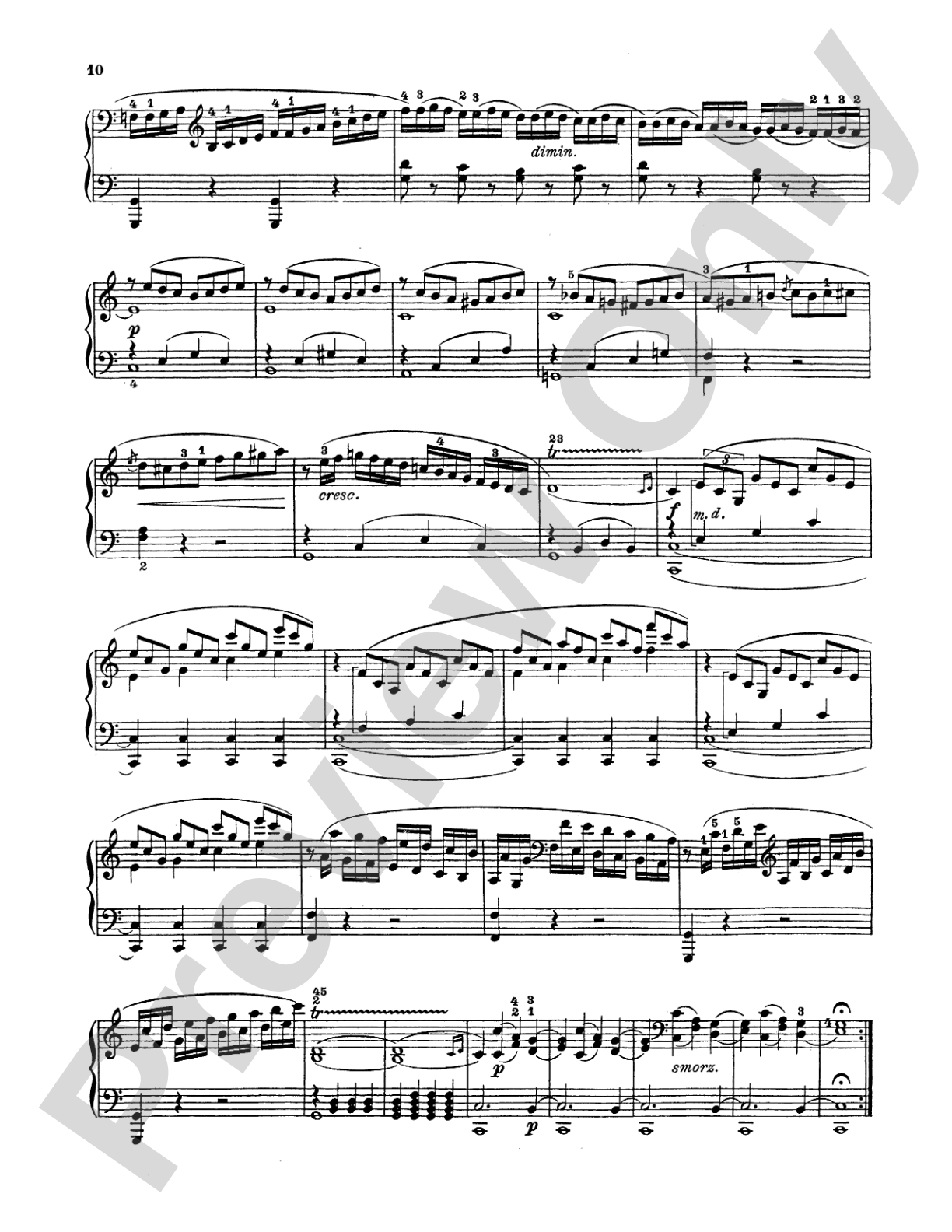
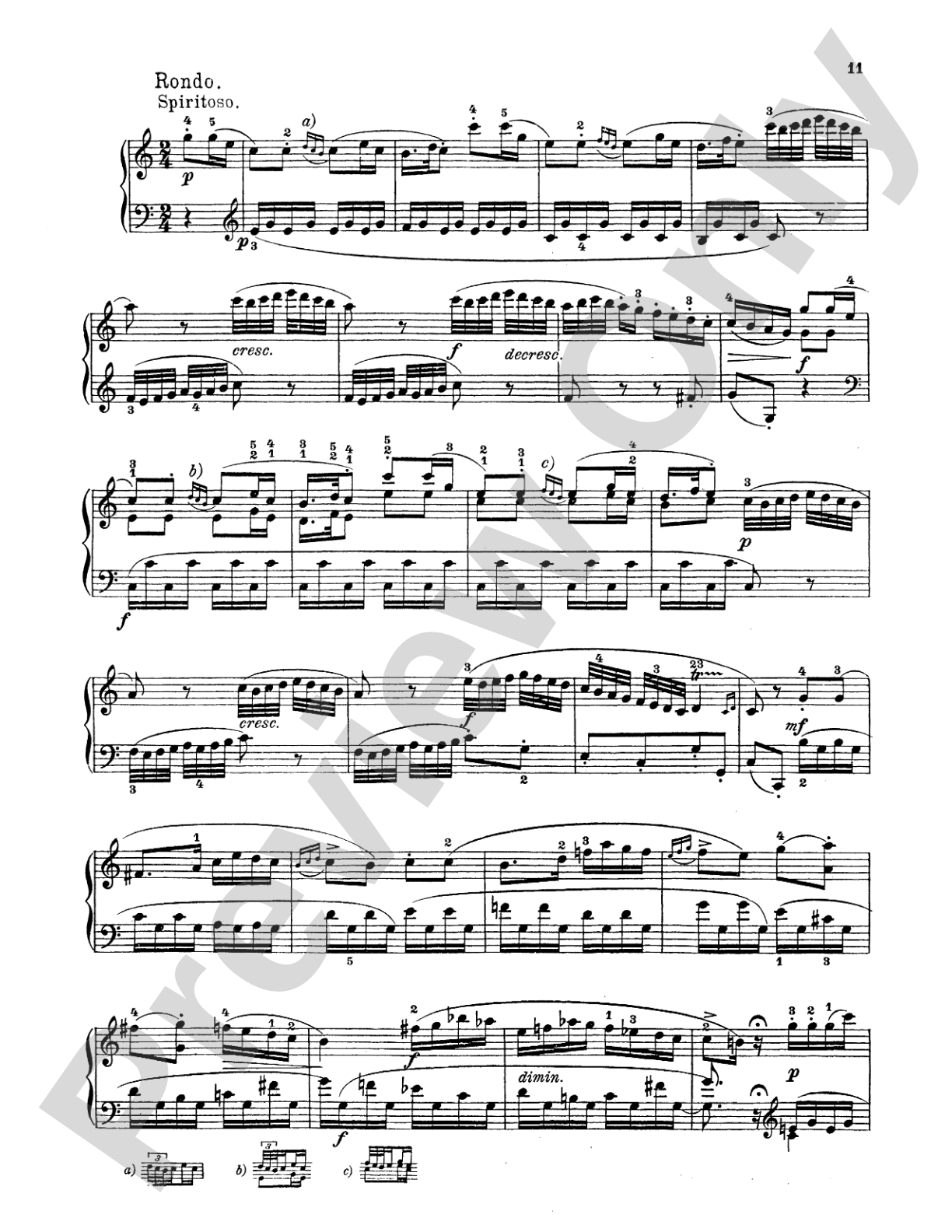
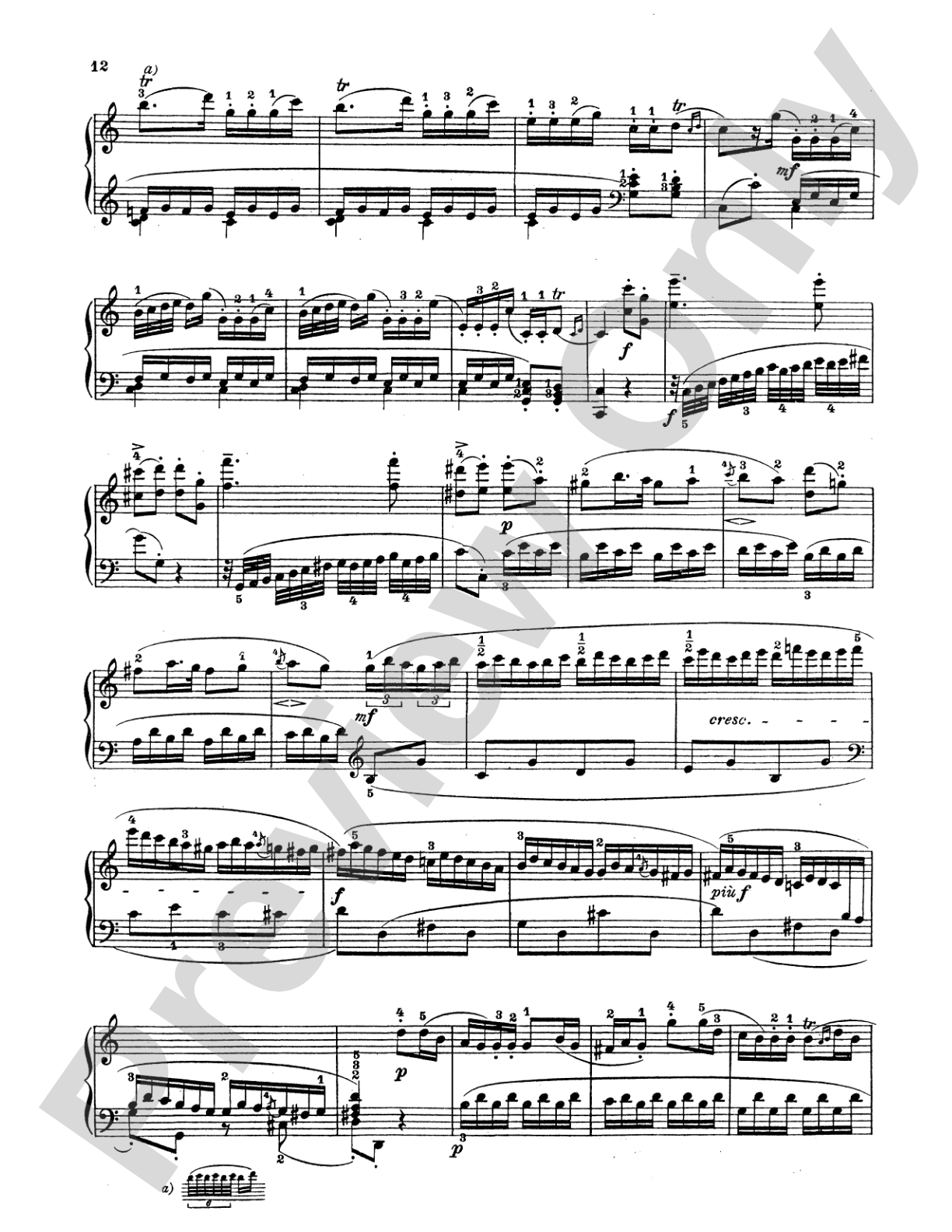
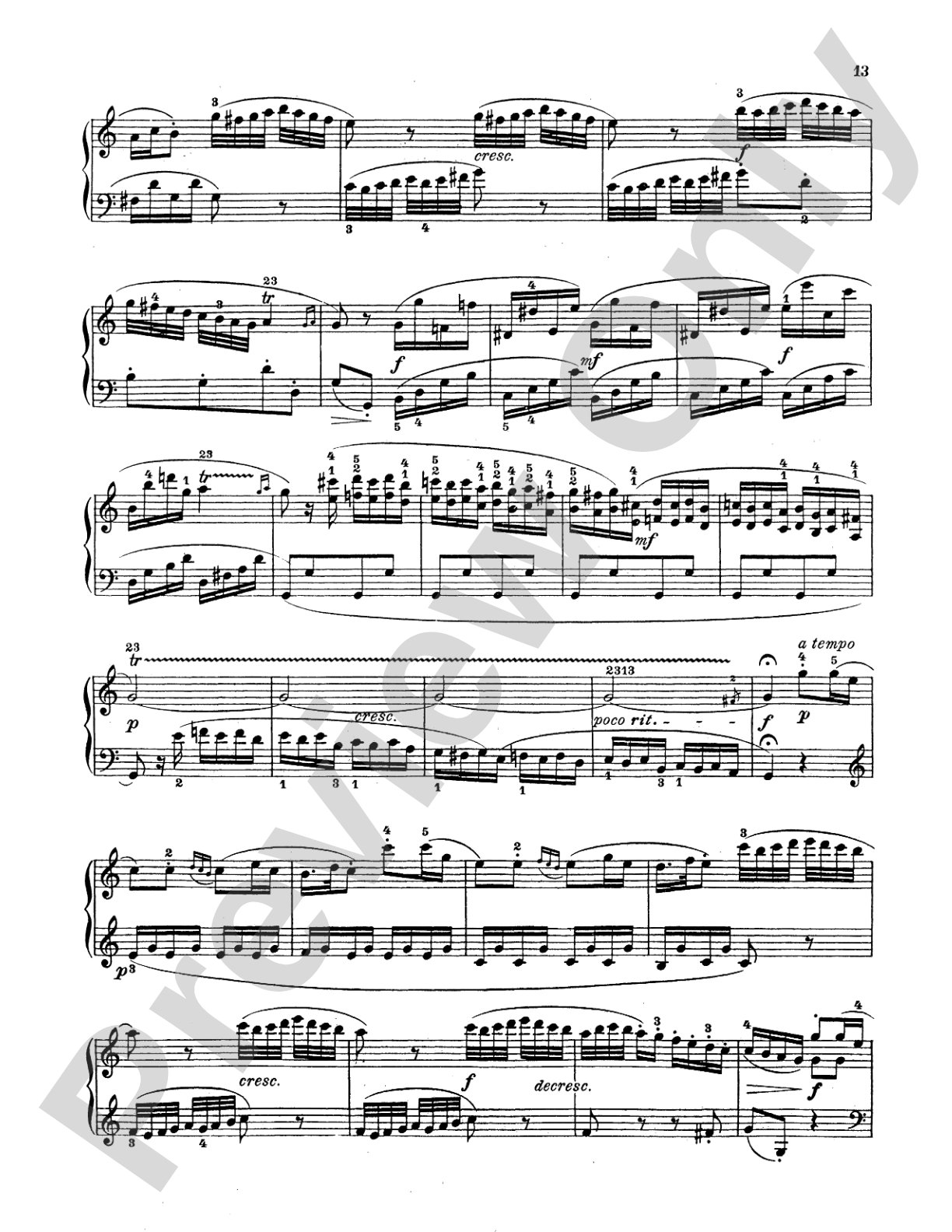
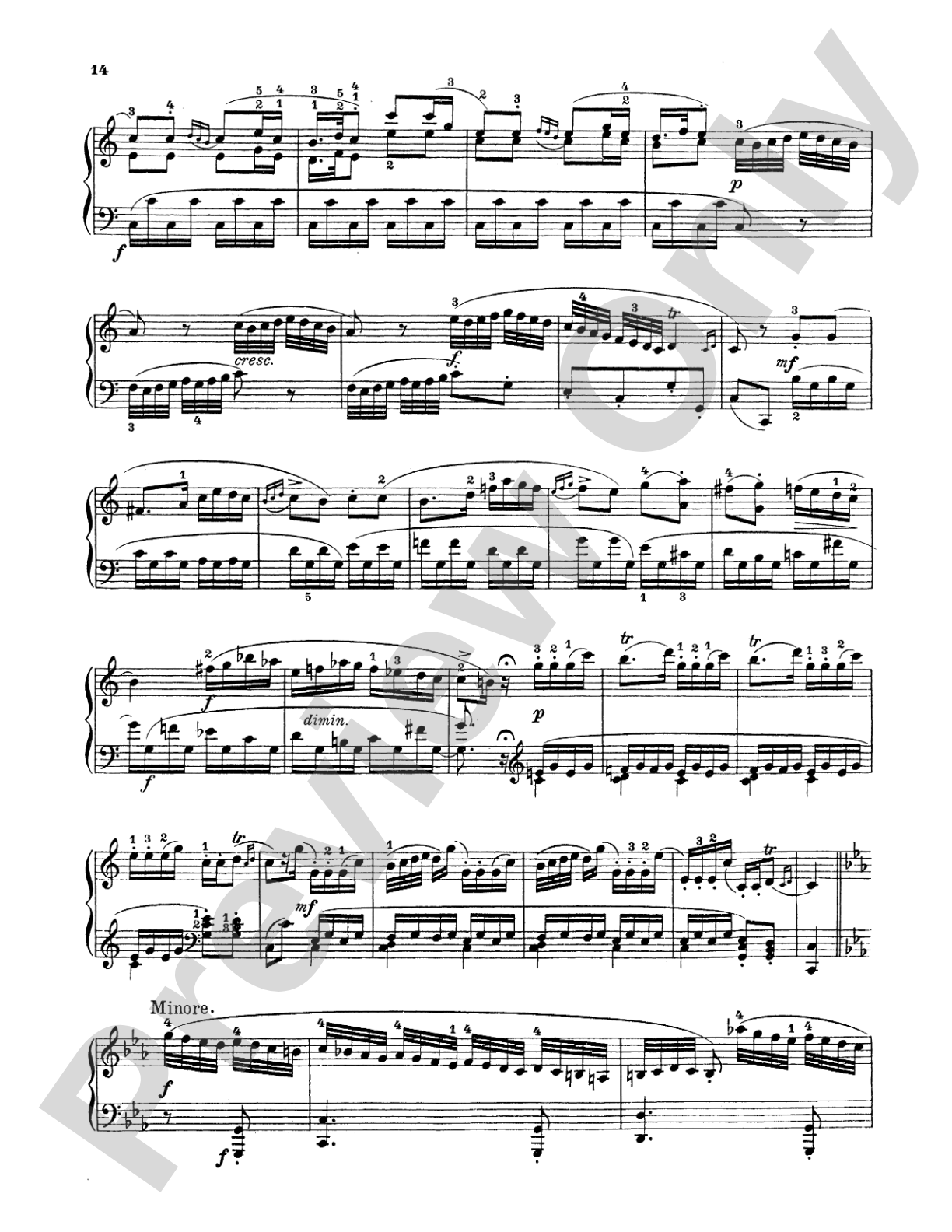
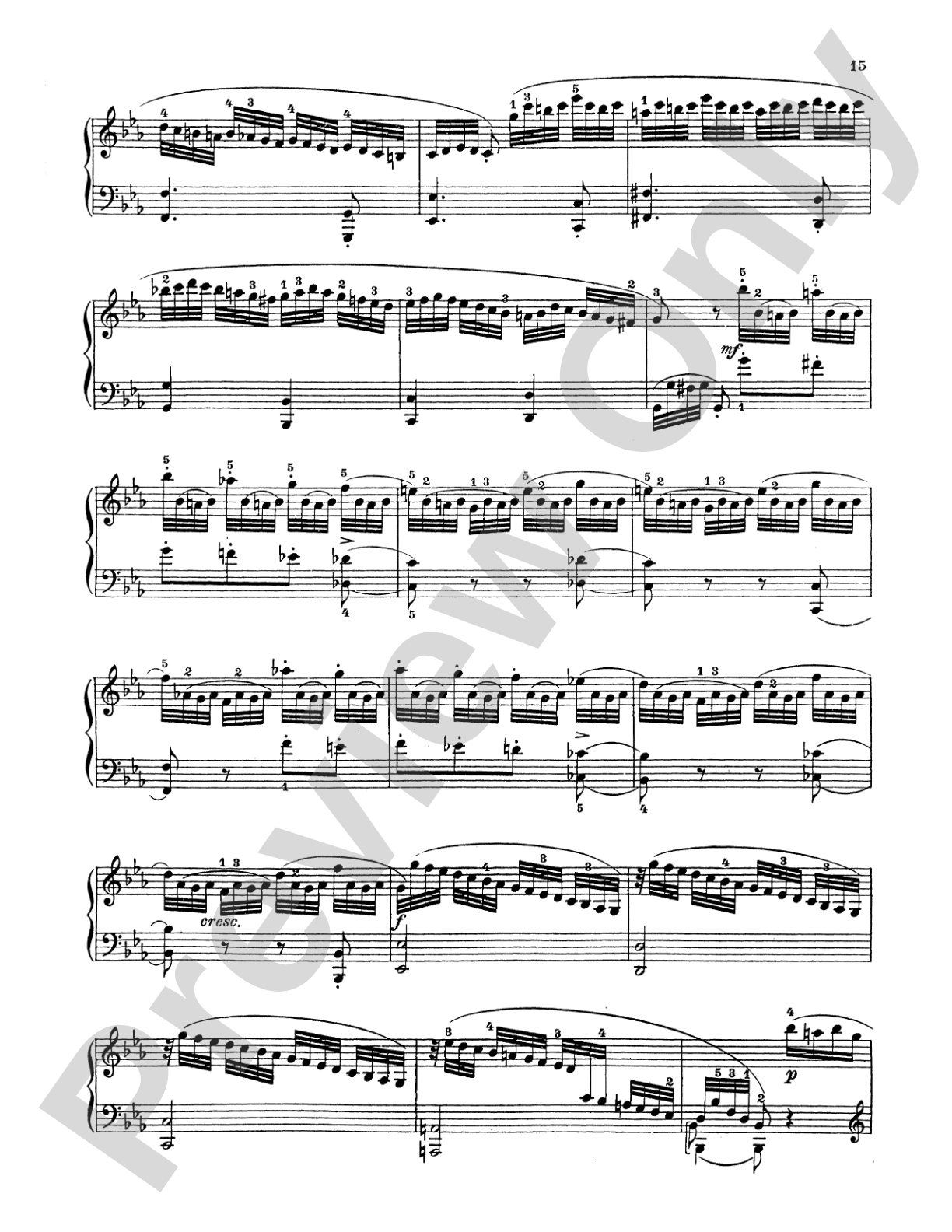
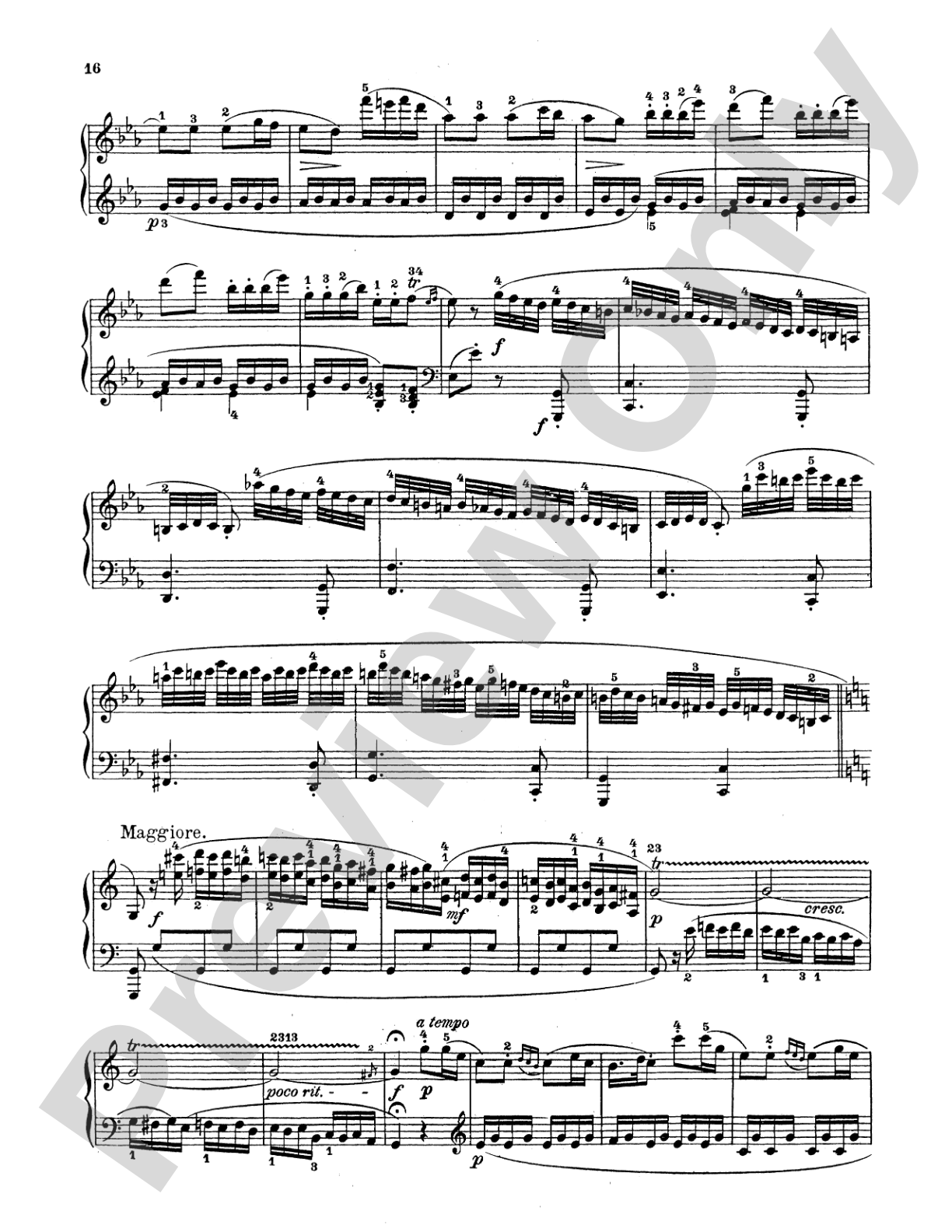
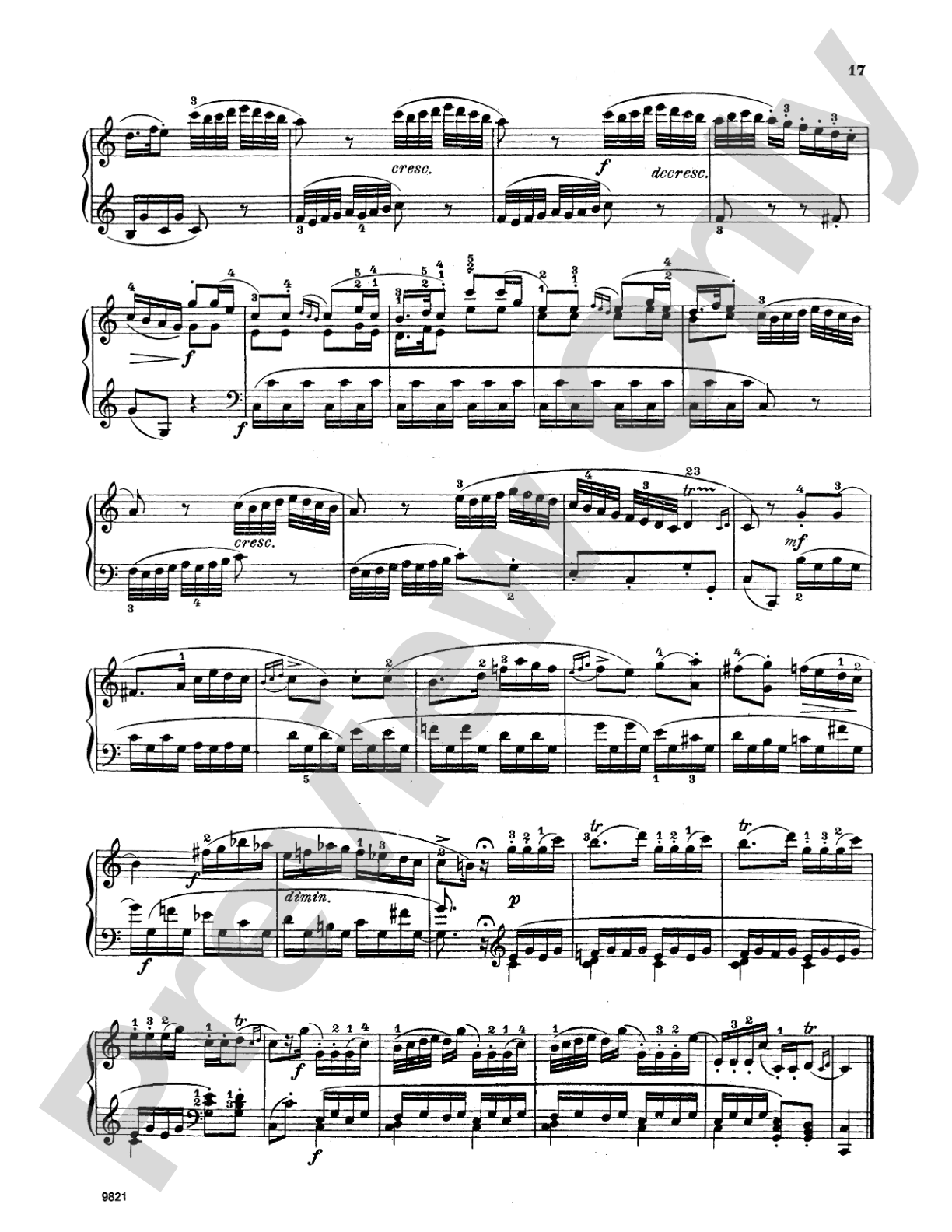

Clementi: Piano Sonatas, (Volume I): Piano Book
By Muzio Clementi
Item: 00-PK-0003864

$17.99
Pickup currently not available
Buy Extra Parts (Digital PDF Download)
| Product | Price | Quantity |
|---|---|---|
| Clementi: Piano Sonatas, (Volume I) | $1.99 | |
| Clementi: Piano Sonatas, (Volume I) | $1.99 | |
| Clementi: Piano Sonatas, (Volume I) | $1.99 | |
| Clementi: Piano Sonatas, (Volume I) | $1.99 | |
| Clementi: Piano Sonatas, (Volume I) | $1.95 | |
| Clementi: Piano Sonatas, (Volume I) | $1.99 | |
| Clementi: Piano Sonatas, (Volume I) | $1.99 |
Parts Added to Cart!
Related Items
Piano Sonatas, Volume I (Nos. 1-7): Piano Book |
$17.95
|
View |
Description
Muzio Clementi (1752--1832) was a famed composer, pianist, pedagogue, conductor, music publisher, editor, and piano manufacturer. Although born in Italy, he spent most of his life in England. In his time, he was known as "the father of the pianoforte," "father of modern piano technique", and "father of Romantic pianistic virtuosity." This is Volume 1 of Clementi's Sonatas and includes: Opus 2, No. 1 in C major * Opus 12, No. 1 in B-flat major * Opus 26, No. 2 in F-sharp minor * Opus 26, No. 3 in D major * Opus 34, No. 1 in C major * Opus 36, No. 1 in A major * Opus 36, No. 2 in F major.


Don't just read it, hear it, play along with it, and watch your students grow with it. In MakeMusic Cloud, Clementi: Piano Sonatas, (Volume I): Piano Book comes alive with professional accompaniment, adjustable tempo, and built-in practice tools that turn solo practice into real progress.
Open in the Player
Jump straight in and assign it today.
Start Your Free Trial
Open this title and explore the full library in minutes.
Sample Audio
No sample audio found.
Sample Video
No sample videos found.
Additional Details
Series:
Kalmus Edition
Publisher:
Alfred Music
Page Count:
112
SKU:
00-PK-0003864
More about this title
About the Composer: Muzio Clementi
Muzio Clementi (1752, 1832) shaped modern piano technique as profoundly as any composer in history. His sonatas bridged the Classical world of Haydn and Mozart with the emerging Romantic era, introducing passage work, hand crossing, and dynamic range that demanded a new kind of virtuosity from performers. Beyond composition, Clementi was a tireless innovator: he performed across Europe, founded a publishing house, manufactured pianos, and taught students who became influential pedagogues themselves.
Clementi's influence on piano pedagogy remains direct and practical. His sonatas aren't theoretical exercises; they solve real problems in musical expression and technical development. Teachers return to these works generation after generation because they teach genuine musicianship alongside technical growth.
Why we love this
These seven sonatas represent some of the most rewarding Classical-era repertoire for advancing pianists because they demand real musicianship without the monumental architecture of a Beethoven sonata. Clementi's writing balances technical brilliance with genuine melodic appeal, and this collection in particular spans his development from his earlier, more galant style through works that anticipate Romantic expression and virtuosity. The variety of keys and character across these pieces makes them ideal for students preparing recitals or auditions who need both showpiece-worthy material and substantive musical content.
What to expect
These sonatas sparkle with the brilliance and optimism of the Classical era while hinting at the emotional depth to come in the Romantic period. You'll encounter crystalline textures and elegant melodies alongside passages that demand real virtuosity and feeling; the cumulative effect is one of elegant sophistication with moments of genuine virtuosic display and lyrical warmth.
Who it's for
This collection serves pianists at the upper-intermediate through early advanced level who are ready to engage with substantial Classical works beyond the most frequently performed repertoire. Advanced students preparing for competitions, recitals, or college auditions will find these sonatas offer both crowd-pleasing virtuosity and musical substance that impresses experienced listeners.
How to get the most out of it
- Approach the Alberti bass patterns and repeated figurations with rhythmic independence rather than mechanical precision; Clementi expected these accompanimental textures to breathe with the melodic line above, not mechanically mark time beneath it.
- Pay attention to Clementi's dynamic markings and phrase shapes, as they often signal structural points and harmonic goals; resist adding unmarked agogic accents or expressive rubato that would obscure his careful architecture.
- In the faster movements, maintain clarity in the passagework while listening for the larger harmonic progression; Clementi's rapid scalar runs and figurations are always in service of tonal direction, not mere display.
- Balance the Classical restraint of the earliest works in this volume with the emerging Romantic intensity of the later sonatas; each opus number reflects Clementi's evolving aesthetic, so the collection rewards attention to chronological context.
How to use it
Program individual Clementi sonatas in student recitals to provide stylistic contrast with Baroque or Romantic-era pieces, or use an entire sonata as a centerpiece for a Classical period concert. In a teaching studio, this collection offers a natural progression through Clementi's stylistic evolution; assign the earlier, more transparent sonatas to students transitioning into Classical repertoire, then move to the later works for those ready to explore the bridge between Classical and Romantic idioms.
Skills your students will build
- Hand independence and coordination in Alberti bass accompaniment patterns
- Clarity in rapid scalar passages and figurative work across both hands
- Harmonic analysis and the ability to hear tonal direction through elaborate passagework
- Musical phrasing and long-line singing at the keyboard in Classical contexts
- Stylistic awareness of late 18th-century keyboard music and its evolution toward Romanticism
- Technical execution of Classical-era cadential figures and ornamental writing