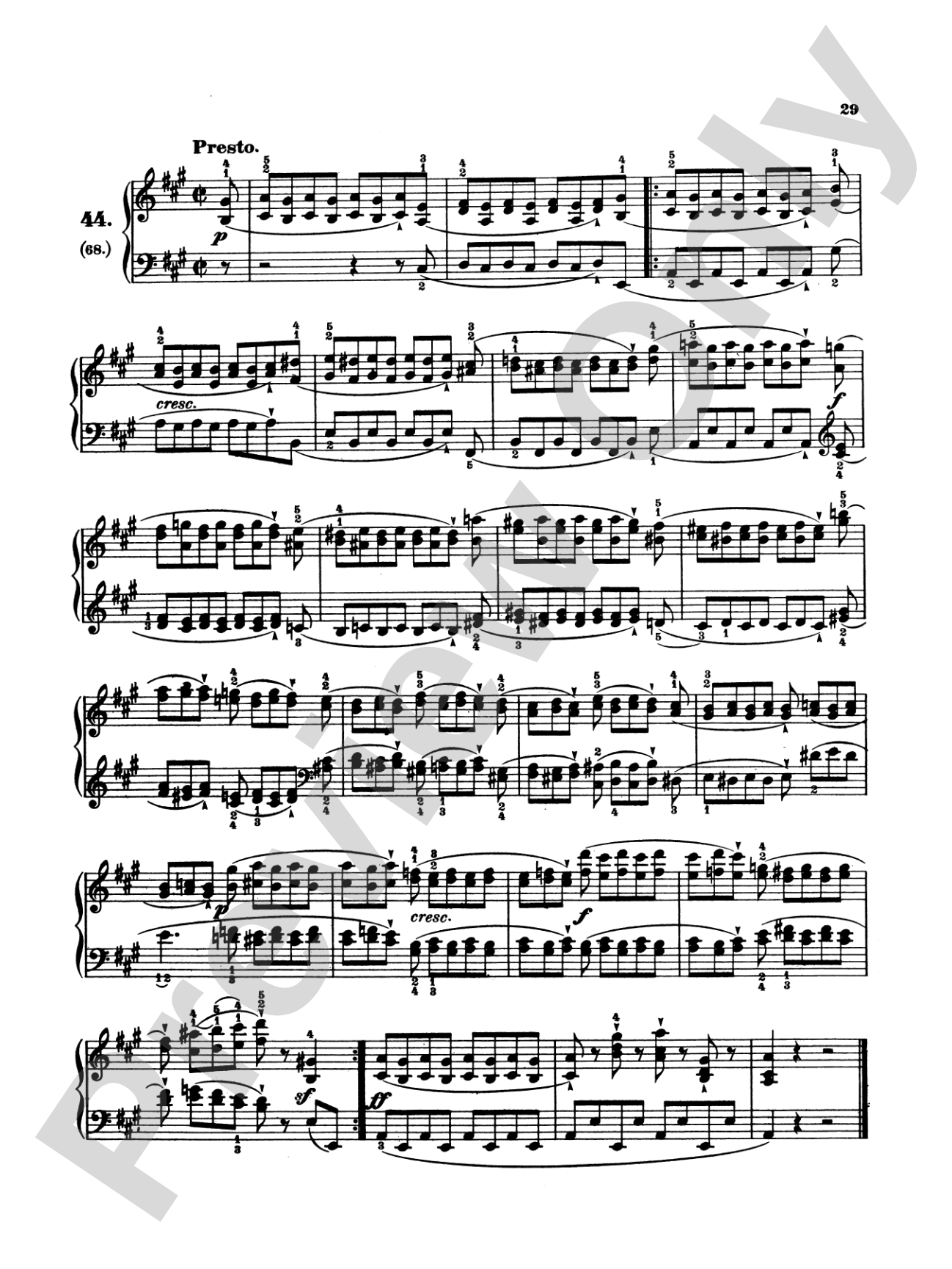
Clementi: Gradus ad Parnassum (Volume II)
By Muzio Clementi
Item: 00-PC-0006046
Pickup currently not available
Description
Don't just read it, hear it, play along with it, and watch your students grow with it. In MakeMusic Cloud, Clementi: Gradus ad Parnassum (Volume II) comes alive with professional accompaniment, adjustable tempo, and built-in practice tools that turn solo practice into real progress.
Jump straight in and assign it today.
Open this title and explore the full library in minutes.
Sample Audio
Sample Video
Additional Details
More about this title
About the Composer: Muzio Clementi
Muzio Clementi (1752-1832) shaped the keyboard landscape of his era as composer, performer, and innovator. Though Italian by birth, he established himself in England and became synonymous with advancing piano technique from its infancy. His pedagogical vision extended beyond composition; he built pianos, published music, and mentored musicians who would carry his ideas forward.
Clementi's legacy rests on his understanding that technical mastery and musical expression must develop together. The Gradus ad Parnassum stands as proof of this philosophy: each study builds genuine musicianship, not mere finger work. His influence permeates the pedagogical tradition that followed, from Czerny through to modern conservatory curricula.
Why we love this
Volume II of the Gradus ad Parnassum offers a more sophisticated toolkit than most studies at this level. These pieces (Nos. 37-70) blend technical challenge with genuine musical substance; students aren't just solving mechanical problems, they're learning how Romantic pianists thought about phrasing, voicing, and tone control. Teachers appreciate that Clementi's progression builds naturally from the earlier studies while maintaining high artistic standards that make daily practice feel purposeful.
What to expect
These pieces inhabit the space where Classical restraint meets Romantic warmth. You'll encounter lyrical passages that sing from the keyboard, rapid passage work that demands clarity without harshness, and harmonic shifts that suggest greater emotional depth than pure finger studies typically allow. There's an elegance throughout, a sense that Clementi understood how to make difficulty feel graceful.
Who it's for
Pianists preparing for recitals or conservatory examinations benefit from the serious technical and musical development these studies offer. Intermediate to advanced students looking to deepen their command of hand independence, voicing, and Romantic-era keyboard writing will find sustained challenges across all 34 studies. Teachers seeking studies that don't sacrifice artistry for technique will return to this volume repeatedly.
How to get the most out of it
- Listen closely to how voices interact across the hand registers; Clementi frequently weaves melody and accompaniment between right and left hand in ways that reward attention to balance and independence.
- Practice slowly enough that you can shape each phrase with intention; these studies work only when tempo serves the music, not the other way around.
- Experiment with different pedal colorations, particularly in the later studies where harmonic complexity deepens; Clementi's own pedal markings are often sparse, inviting interpretive choice.
- Separate out the rhythmic and melodic ideas in passages with ornaments; understanding the underlying gesture makes the decoration serve the phrase rather than obscuring it.
How to use it
These studies work best as sustained solo practice materials rather than recital pieces, though a few of the more lyrical numbers (particularly from the later selections) can anchor a program exploring the bridge between Classical and Romantic keyboard writing. They fit naturally into a curriculum where students are consolidating intermediate technique while beginning to explore the expressive vocabulary of the 19th century.
Skills your students will build
- Hand independence and separation between right and left hand voices
- Passage work evenness and clarity at moderate to rapid tempos
- Voicing and balance in multi-part textures
- Sustaining legato and shaping long melodic lines within rapid technical contexts
- Reading and executing ornaments (trills, turns, mordents) in context
- Understanding harmonic movement and phrasing across extended passages
- Control of dynamic inflection within repeating technical patterns