

Clementi: Gradus ad Parnassum (Volume I)
By Muzio Clementi
Level: Intermediate / Advanced
Item: 00-PC-0006015
$0.99
Pickup currently not available
Description
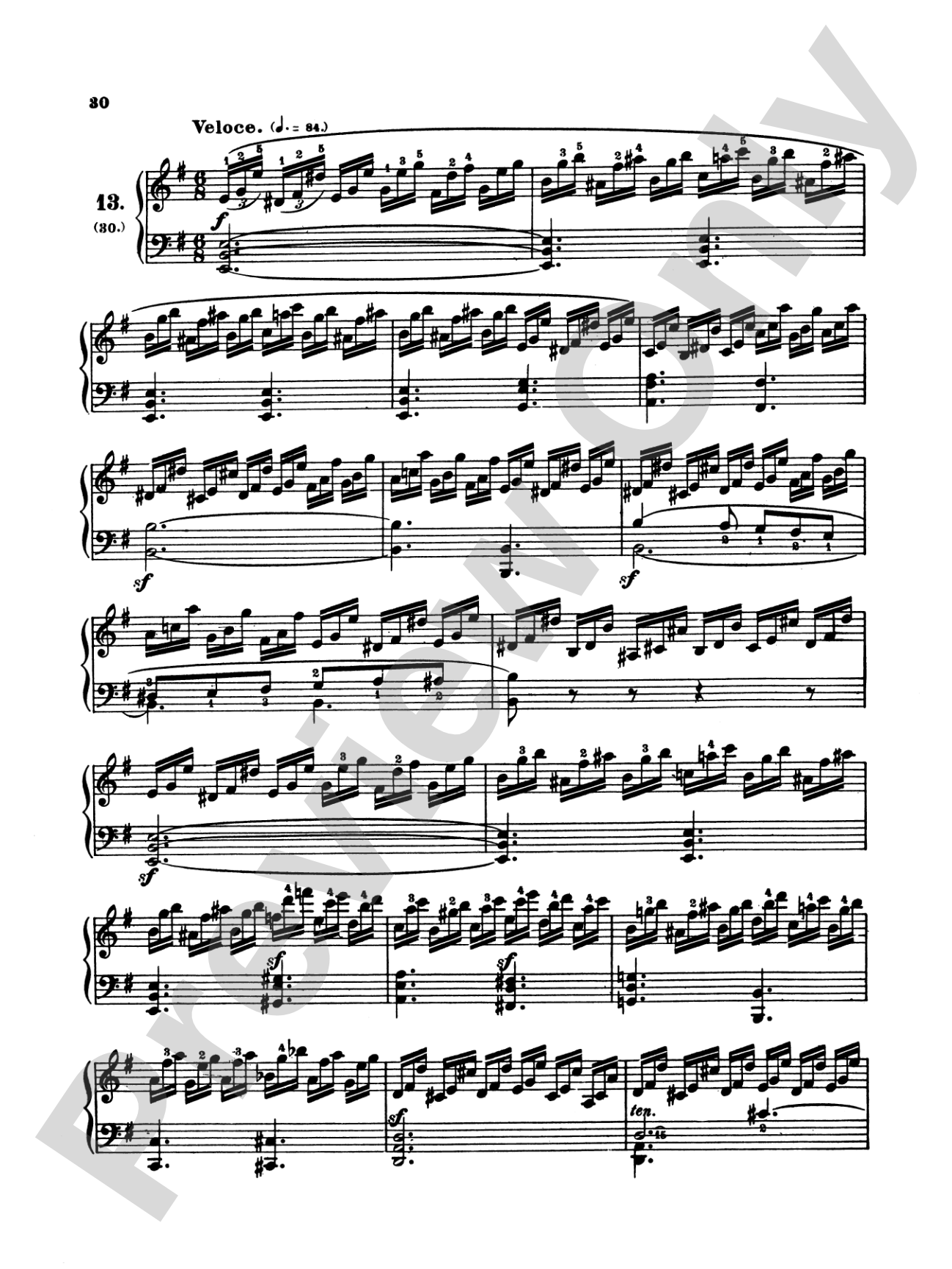
Muzio Clementi (1752--1832) was a famed composer, pianist, pedagogue, conductor, music publisher, editor, and piano manufacturer. Although born in Italy, he spent most of his life in England. In his time, he was known as "the father of the pianoforte," "father of modern piano technique", and "father of Romantic pianistic virtuosity." This collection, Volume 1, contains Clementi's progressive finger studies Nos. 1-36 under the title "Gradus ad Parnassum" (also known as "The Art of Playing the Piano").


Don't just read it, hear it, play along with it, and watch your students grow with it. In MakeMusic Cloud, Clementi: Gradus ad Parnassum (Volume I) comes alive with professional accompaniment, adjustable tempo, and built-in practice tools that turn solo practice into real progress.
Open in the Player
Jump straight in and assign it today.
Start Your Free Trial
Open this title and explore the full library in minutes.
Sample Audio
No sample audio found.
Sample Video
No sample videos found.
Additional Details
Series:
Kalmus Edition
Publisher:
Alfred Music
Page Count:
136
SKU:
00-PC-0006015
More about this title
About the Composer: Muzio Clementi
Muzio Clementi (1752–1832) bridged the Classical and Romantic eras as a virtuoso pianist, prolific composer, and shrewd businessman who fundamentally shaped how pianists approach the instrument. Born in Rome but based in London for most of his career, Clementi earned his reputation through tireless innovation in keyboard technique and design; he manufactured pianos, published music, and conducted orchestras while composing prolifically across genres. His pedagogical vision centered on the belief that technical mastery should serve musical expression, not exist for its own sake.
Clementi's legacy in music education remains unmatched. The Gradus ad Parnassum ("Steps to Parnassus"), his six-volume collection of progressive studies, established a new standard for systematic piano training and influenced generations of teachers and composers, including Czerny and Liszt. These works transcend the typical "exercise" label by embedding musical substance within technical challenges, making them as rewarding to perform as they are instructive to study.
Why we love this
Volume 1 delivers exactly what intermediate and advancing pianists need: studies that demand real technical growth without sacrificing musicality. The progression from study to study is intelligent and graduated, allowing students to build confidence and capability in a logical sequence rather than hitting walls. Clementi's voice as a composer shines through in these pieces, so students experience them as compositions to interpret, not mere finger drills.
What to expect
These studies live in a distinctive Classical-Romantic hybrid space where elegance and virtuosity coexist. You'll encounter lyrical passages requiring singing tone, rapid scales and arpeggios that demand clarity and evenness, and harmonic movement that feels both refined and purposeful. The overall effect is one of musical satisfaction mixed with productive challenge; you finish each study feeling you've played something that mattered, not just survived a technical gauntlet.
Who it's for
Pianists in the intermediate to advanced range who are ready to strengthen technique while deepening musicianship through repertoire that rewards interpretation. Teachers seeking a time-tested pedagogical resource can assign these studies progressively throughout a year or across multiple levels, knowing each piece has genuine musical content alongside its technical purpose. Adult learners and serious students returning to the piano will find these studies engaging and achievable without feeling condescending.
How to get the most out of it
- Observe the articulation markings carefully; Clementi's slurs and staccatos define phrasing and often reveal the harmonic structure beneath the figuration.
- Work through each study slowly enough to shape the musical line rather than chase tempo. The character often emerges only when you can hear what you're playing.
- Pay attention to hand position and weight distribution from the first study onward. Many later technical demands become manageable when foundational alignment is secure.
- Use the dynamic markings to shape longer phrases. Clementi wasn't writing etudes in isolation; he was teaching how to build architecture across a complete piece.
How to use it
Assign these studies as core technical work for students preparing intermediate repertoire, rotating through the collection across semesters or years to build a comprehensive foundation. For studio teachers, they pair naturally with Classical sonatas and character pieces, allowing students to apply emerging techniques in both study and repertoire simultaneously. Some teachers program individual Clementi studies in student recitals, where their musical completeness makes them appropriate public performances rather than hidden daily work.
Skills your students will build
- Even scale and arpeggio execution across hand positions and dynamics
- Legato playing and finger independence within extended passages
- Rapid hand crossing and position changes
- Dynamic shaping and phrasing across multi-measure lines
- Rhythmic precision in syncopated and cross-rhythmic figures
- Pedal independence and clarity of texture
- Interpretation of Classical-era articulation markings