
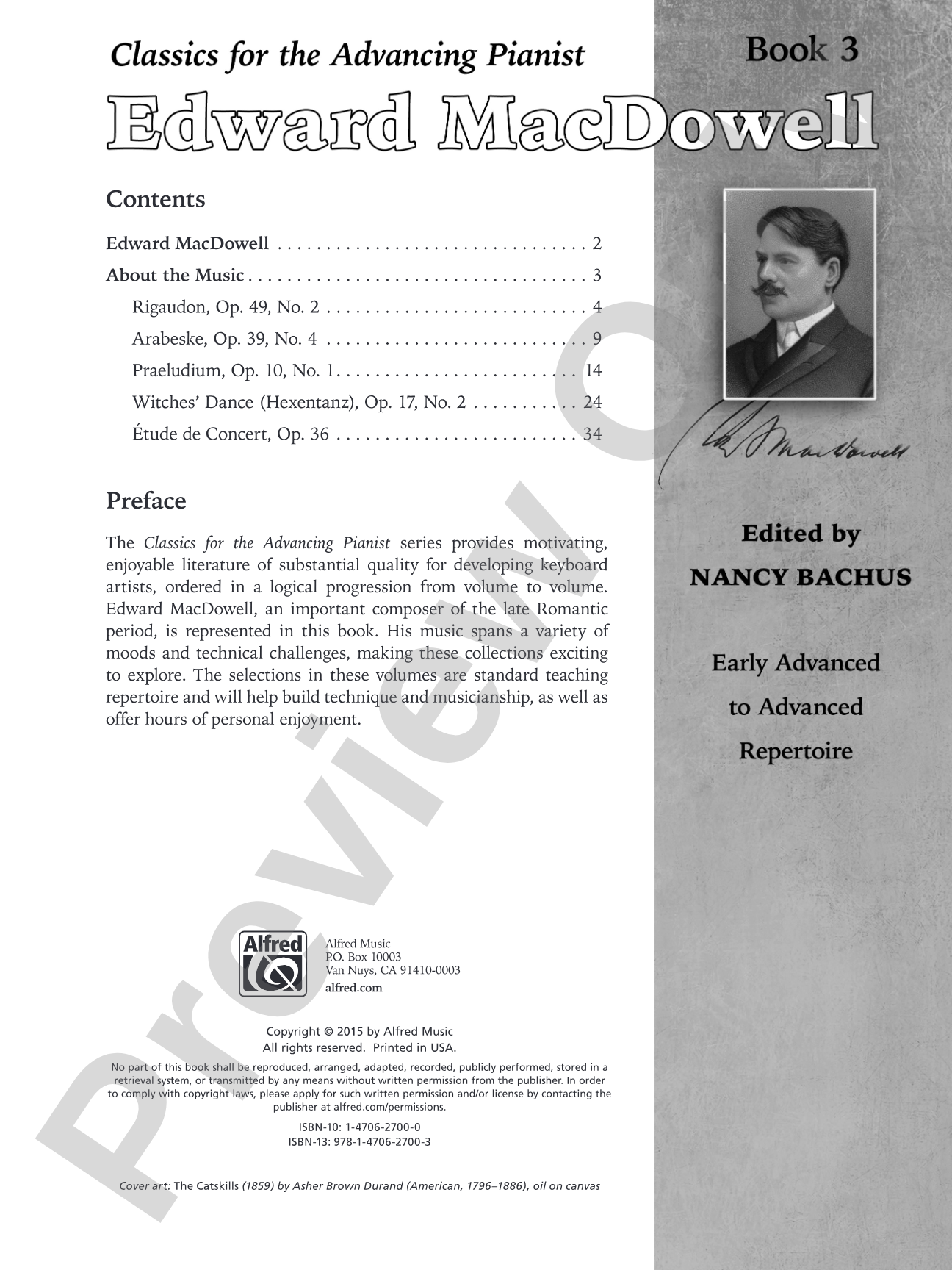

Classics for the Advancing Pianist: Edward MacDowell, Book 3: Early Advanced to Advanced Repertoire: Piano
Early Advanced to Advanced Repertoire
By Edward MacDowell / ed. Nancy Bachus
Level: Early Advanced / Advanced
Item: 00-PB-0000611
$9.99
Pickup currently not available
Related Items
Classics for the Advancing Pianist: Edward MacDowell, Book 3: Piano Book |
$9.99
|
View |
Description
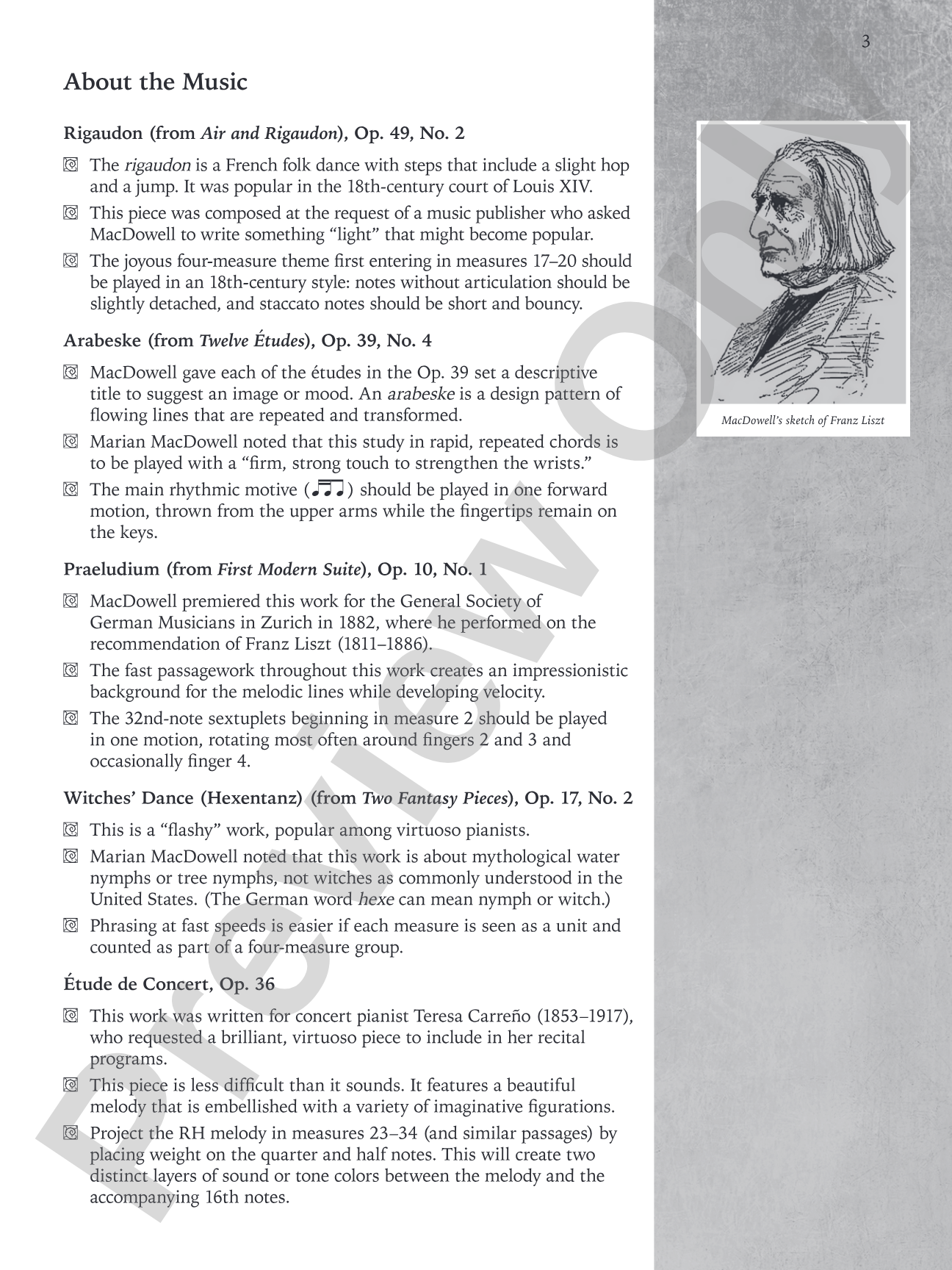
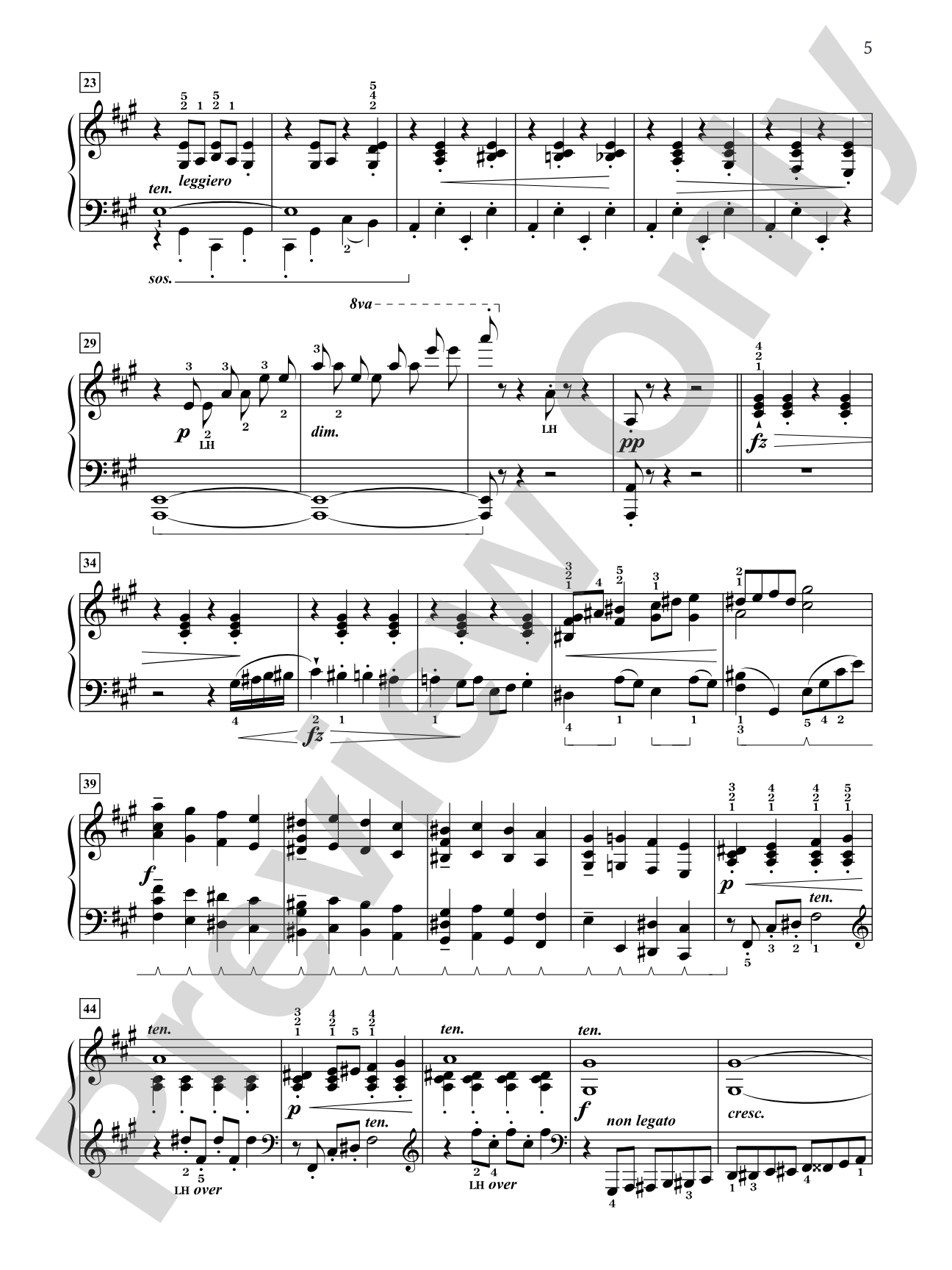
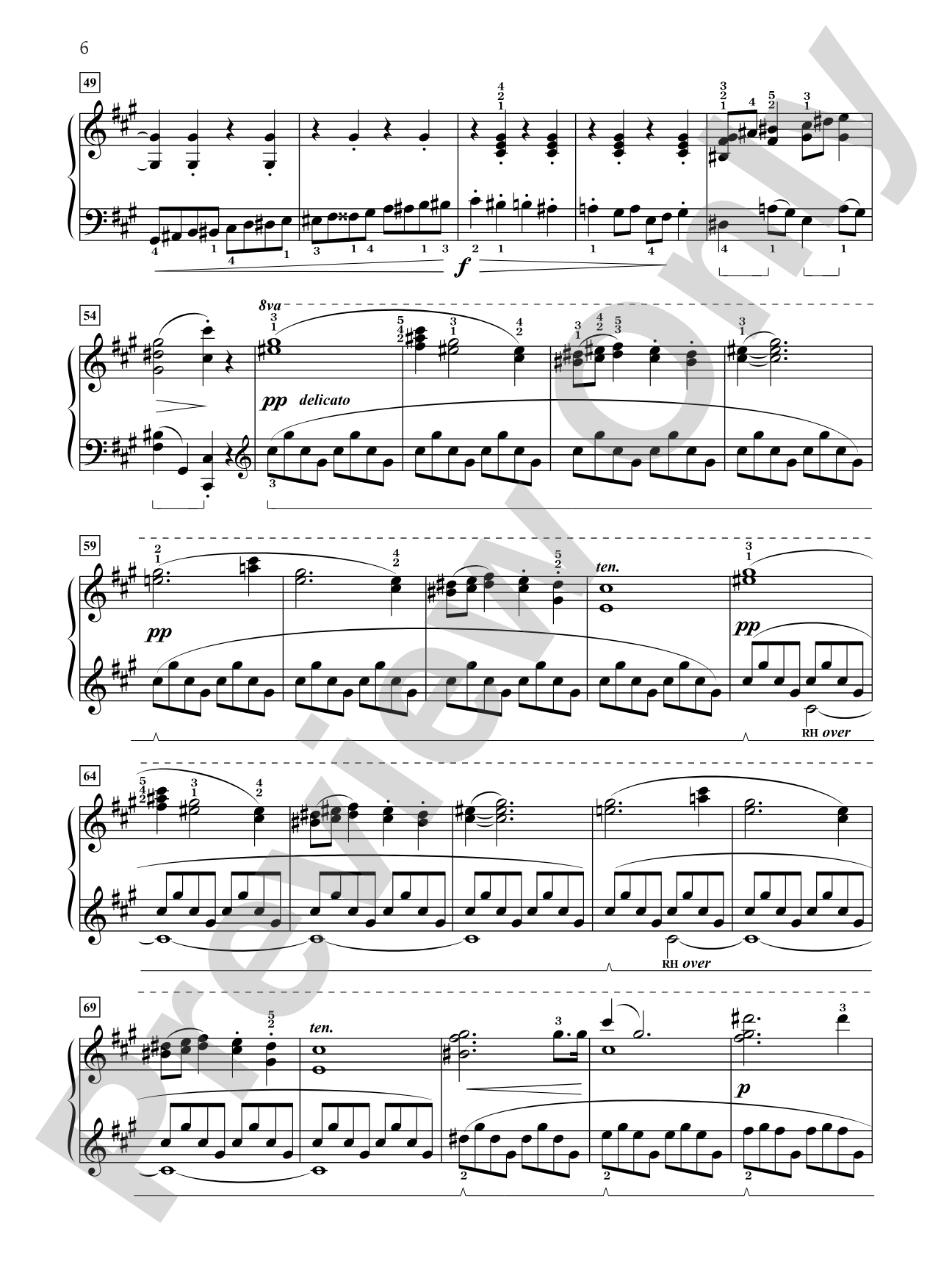
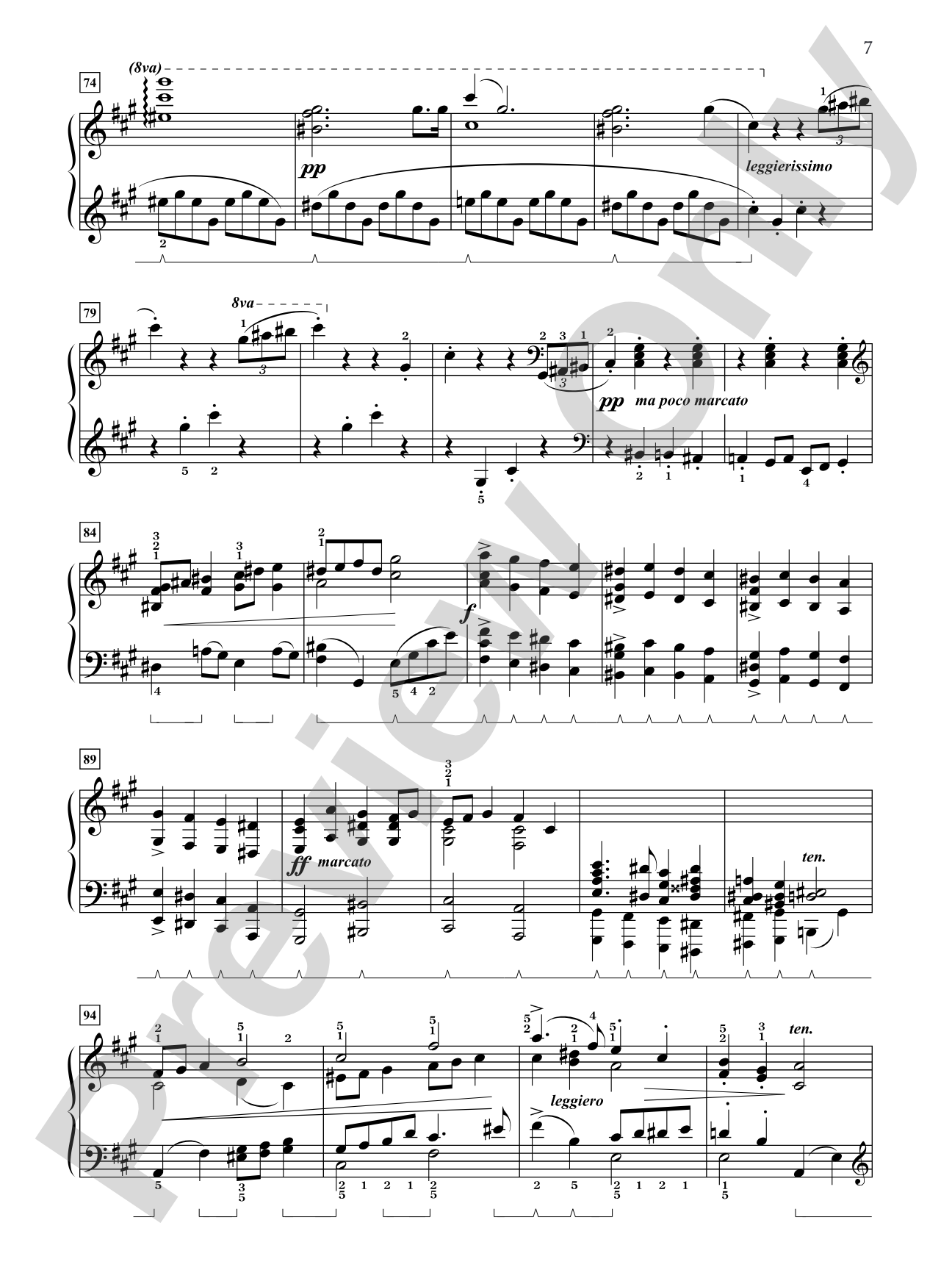
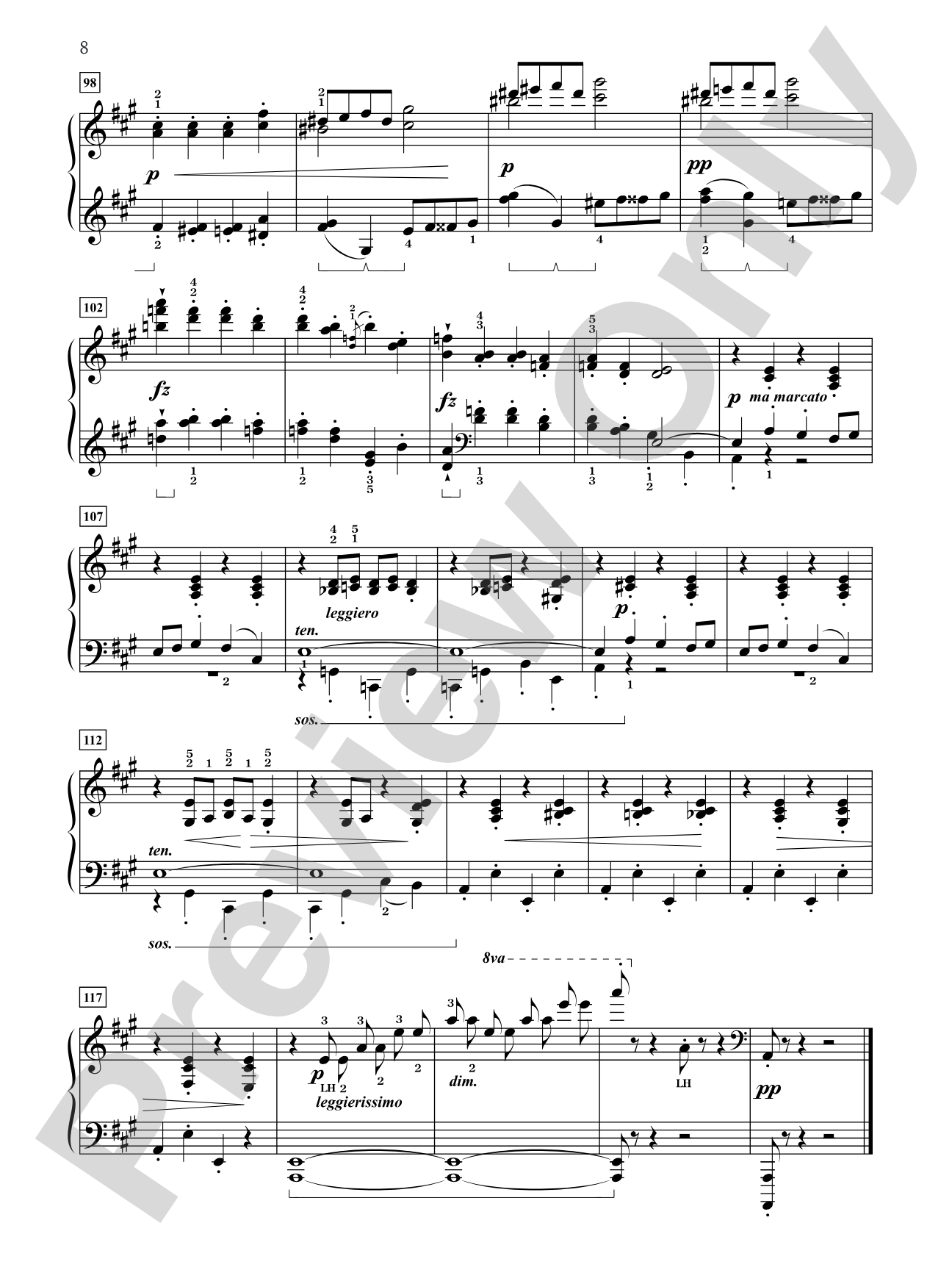
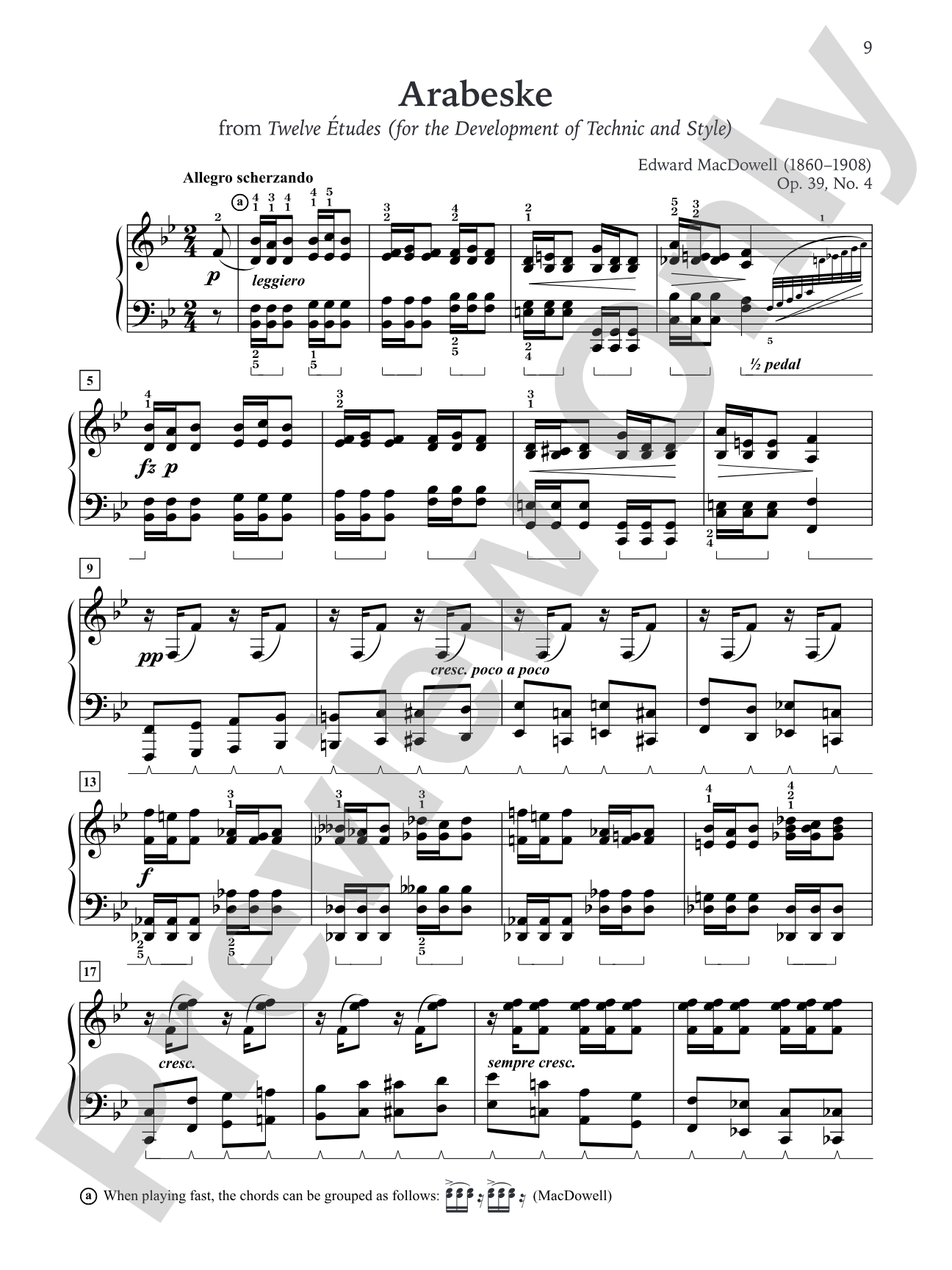
The Classics for the Advancing Pianist series provides motivating, enjoyable literature of substantial quality for developing keyboard artists. The pieces in the series, ordered in a logical progression from volume to volume, help the performer work within his or her abilities while developing playing and listening skills. This standard teaching repertoire will help build technique and musicianship, as well as offer hours of personal enjoyment. Titles: Arabeske, Op. 39, No. 4 * Étude de Concert, Op. 36 * Praeludium, Op. 10, No. 1 * Rigaudon, Op. 49, No. 2 * Witches' Dance (Hexentanz), Op. 17, No. 2. A Federation Festivals 2024-2028 selection.


Classics for the Advancing Pianist: Edward MacDowell, Book 3: Early Advanced to Advanced Repertoire: Piano isn't in MakeMusic Cloud just yet...but it could be. Let us know you'd like to see it, and you'll help shape what comes next. In the meantime, start a free trial and dive into thousands of interactive titles your students can play along with today.
Request This Title
Tell us you want it.
Start Your Free Trial
Explore everything that's ready to play right now.
Sample Audio
No sample audio found.
Sample Video
No sample videos found.
Additional Details
Series:
Classics for the Advancing Pianist
Publisher:
Alfred Music
Page Count:
44
SKU:
00-PB-0000611
More about this title
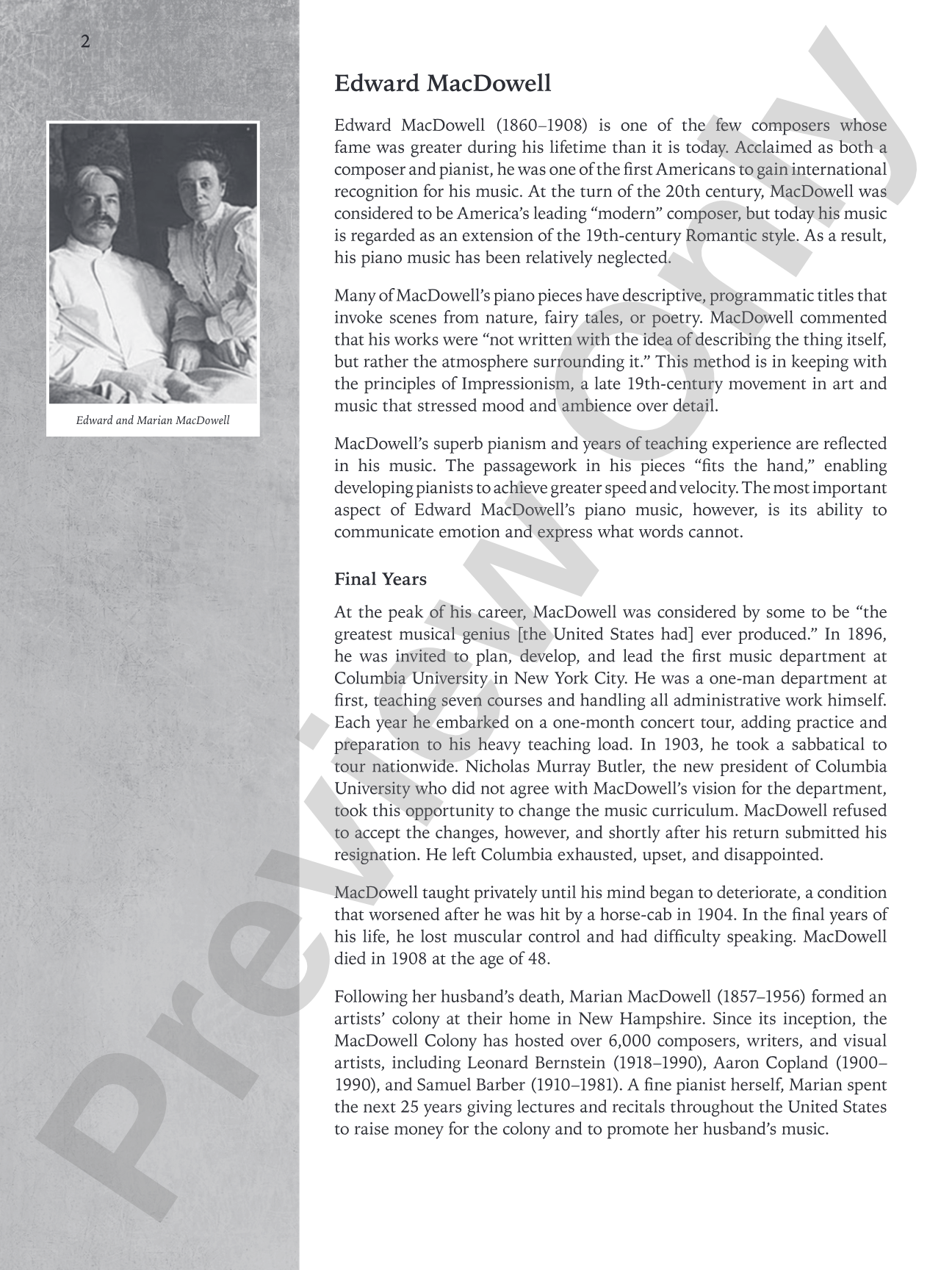
About the Composer: Edward MacDowell
Edward MacDowell (1860, 1908) was the first American composer to achieve international recognition, establishing himself as a serious voice in the European Romantic tradition while remaining rooted in American identity. His piano works, which form the core of his legacy, combine lyrical songfulness with genuine compositional ambition, drawing on folk idioms, dance forms, and the harmonic language of Liszt and Brahms without sacrificing clarity or directness.
Why we love this
MacDowell's later piano works strike a rare balance: they demand real technique and interpretive maturity from advancing students, yet they reward those efforts immediately with music that sings rather than merely impresses. These five pieces (a Federation selection, no less) function beautifully as standalone recital items or as a curated suite, giving your advanced pianists substantial concert material that feels both personally rewarding and genuinely artful.
What to expect
These works inhabit a graceful middle ground between European refinement and American directness. You'll encounter ornamental filigree and genuine virtuosity, but also moments of quiet lyricism and folk-like simplicity. The overall arc feels both personal and polished, inviting the performer to find their own voice within MacDowell's elegant structures.
Who it's for
Pianists at the early advanced to advanced level who are building a recital repertoire and want to explore American Romantic composers beyond Gershwin and Copland. Teachers seeking substantial, musically rewarding pieces that develop both technique and interpretive independence will find five distinct vehicles for growth here.
How to get the most out of it
- Approach the Arabeske and Praeludium as contrasting lyrical bookends; the first ornamental and flowing, the second more introspective. Clarity of line matters more than surface brilliance in both.
- The Étude de Concert demands consistent voicing of the inner melodic material even as the right hand decorates; resist the urge to let accompaniment textures blur together.
- Witches' Dance works best when rhythmic precision locks in early, freeing you to enjoy the harmonic color and gestural playfulness rather than fighting the tempo.
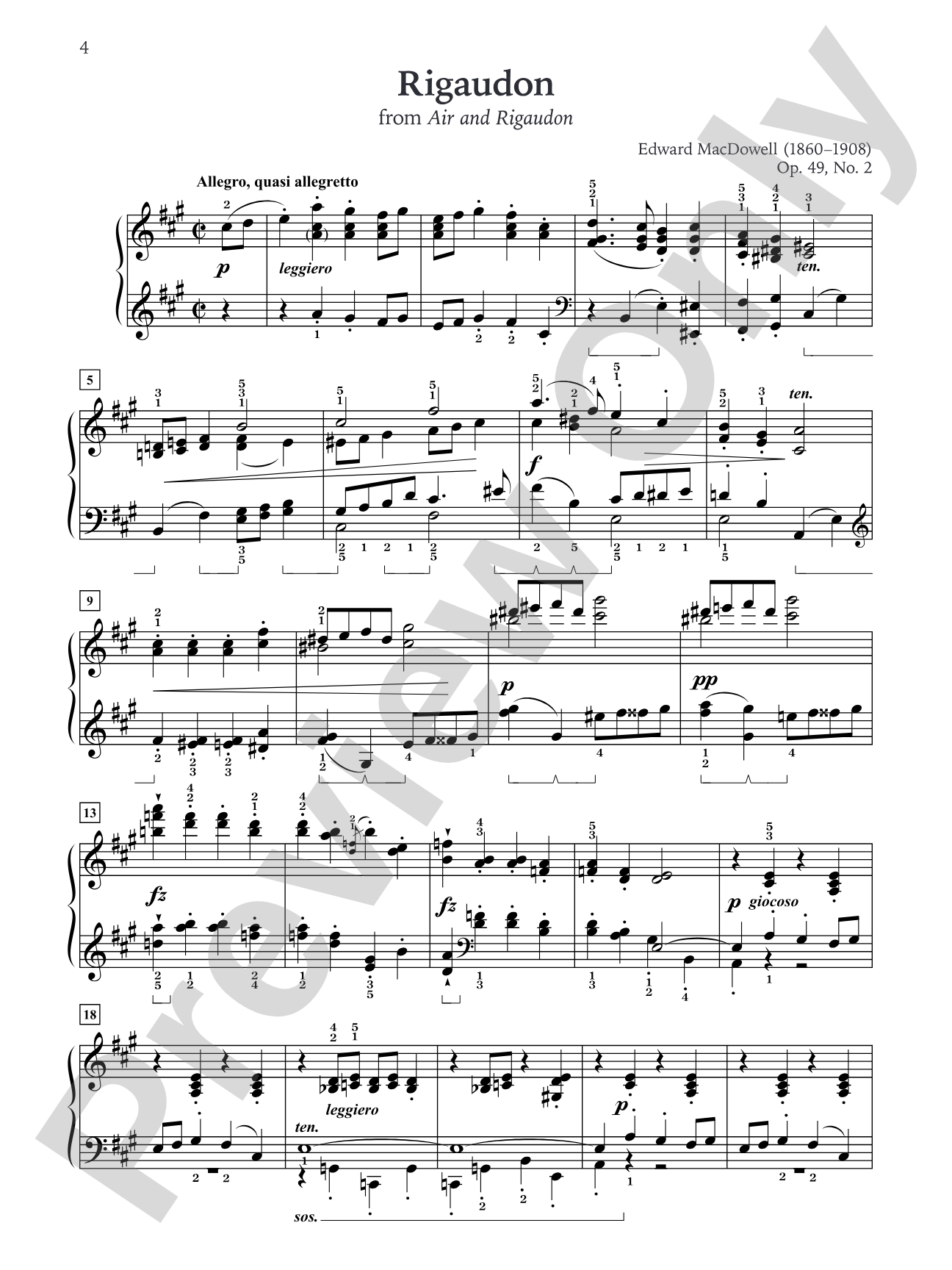
- Let the Rigaudon's dance character breathe through articulation and phrasing; it's courtly, not mechanical.
How to use it
Build a recital around a single piece from this collection as your American Romantic selection, or program several together to create a thematic set exploring MacDowell's range. The Witches' Dance and Rigaudon pair especially well with contemporary Romantic repertoire, while the Praeludium functions as an excellent opening or transition piece in any program.
Skills your students will build
- Baroque-derived ornamental passagework and finger independence
- Lyrical singing tone across varied textures and registers
- Harmonic color and voicing in the Romantic idiom
- Rhythmic precision in dance forms (rigaudon, witches' dance)
- Building emotional arc and phrasing across multi-section forms
- Concert-level interpretation and memorization