
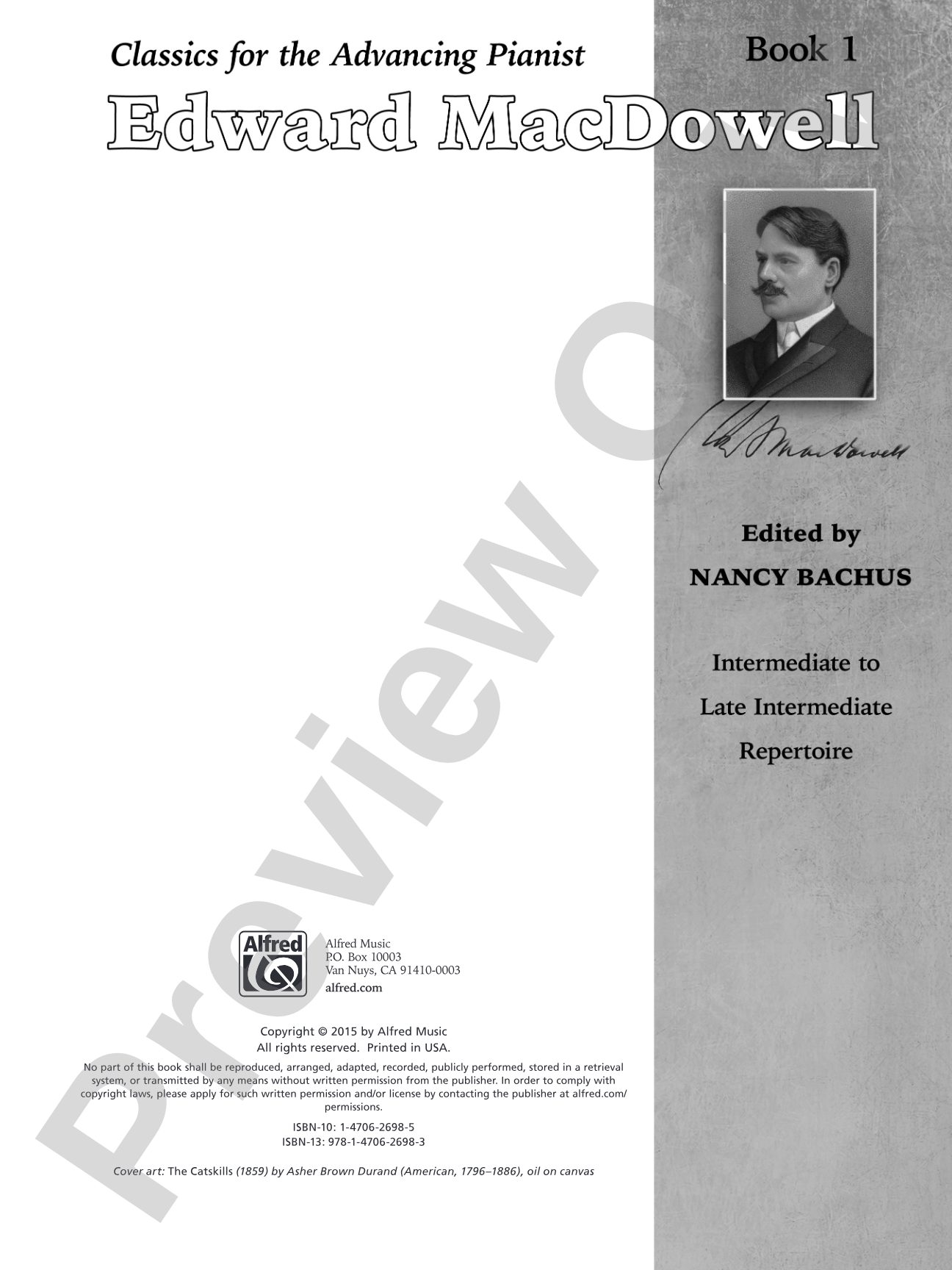

Classics for the Advancing Pianist: Edward MacDowell, Book 1: Intermediate to Late Intermediate Repertoire: Piano
Intermediate to Late Intermediate Repertoire
By Edward MacDowell / ed. Nancy Bachus
Level: Intermediate / Late Intermediate
Item: 00-PB-0000585
$8.99
Pickup currently not available
Related Items
Classics for the Advancing Pianist: Edward MacDowell, Book 1: Piano Book |
$8.99
|
View |
Description
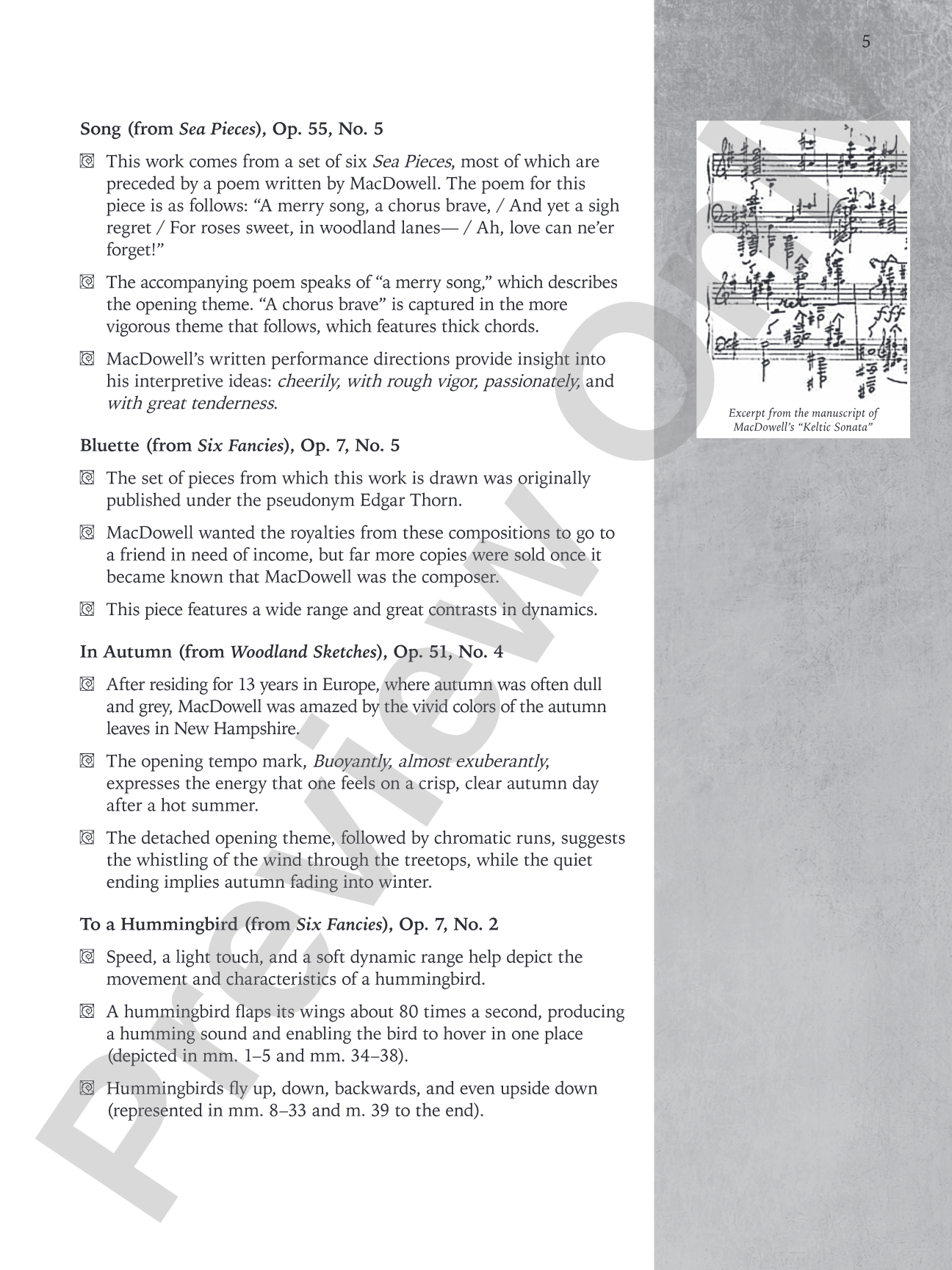
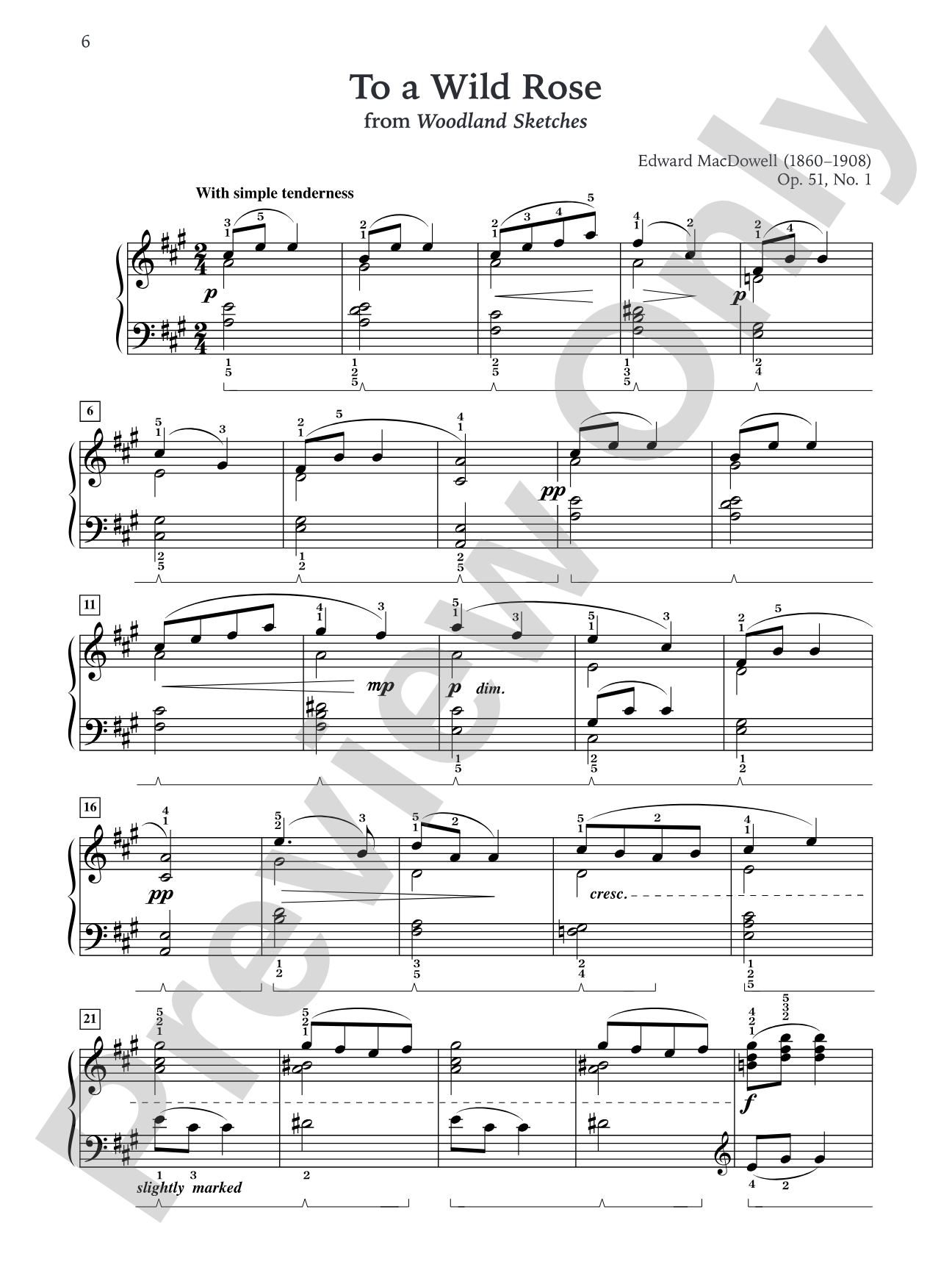
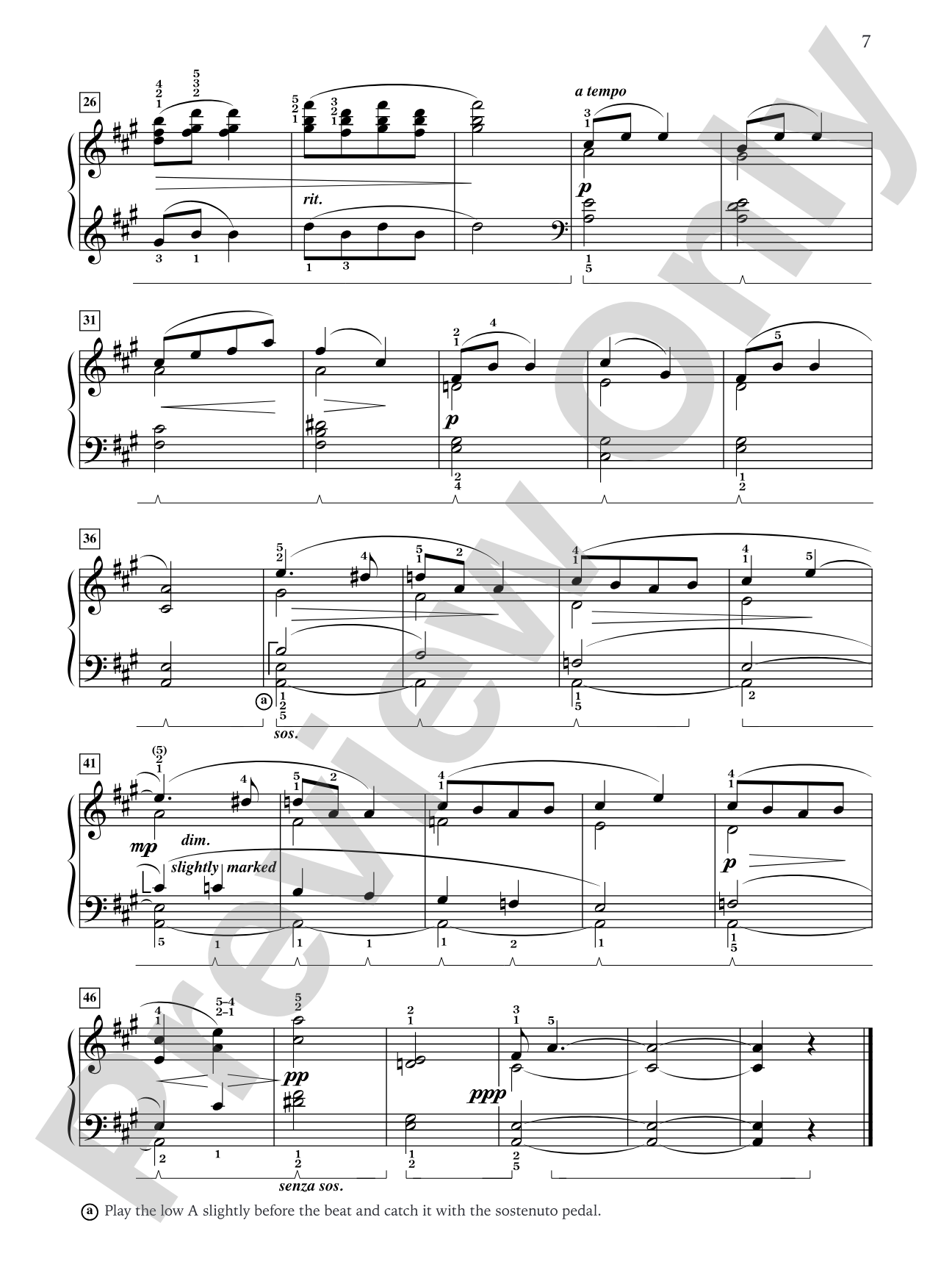
The Classics for the Advancing Pianist series provides motivating, enjoyable literature of substantial quality for developing keyboard artists. The pieces in these books, written by Edward MacDowell and ordered in a logical progression from volume to volume, help the performer work within his or her abilities while developing playing and listening skills. This standard teaching repertoire will help build technique and musicianship, as well as offer hours of personal enjoyment. Titles: Alla Tarantella, Op. 39, No. 2 * Beauty in the Rose Garden, Op. 4, No. 3 * Bluette, Op. 7, No. 5 * In Autumn, Op. 51, No. 4 * Song, Op. 55, No. 5 * A Tin Soldier's Love, Op. 7, No. 1 * To a Hummingbird, Op. 7, No. 2 * To a Wild Rose, Op. 51, No. 1. A Federation Festivals 2024-2028 selection.


Classics for the Advancing Pianist: Edward MacDowell, Book 1: Intermediate to Late Intermediate Repertoire: Piano isn't in MakeMusic Cloud just yet...but it could be. Let us know you'd like to see it, and you'll help shape what comes next. In the meantime, start a free trial and dive into thousands of interactive titles your students can play along with today.
Request This Title
Tell us you want it.
Start Your Free Trial
Explore everything that's ready to play right now.
Sample Audio
No sample audio found.
Sample Video
No sample videos found.
Additional Details
Series:
Classics for the Advancing Pianist
Publisher:
Alfred Music
Page Count:
32
SKU:
00-PB-0000585
More about this title
About the Composer: Edward MacDowell
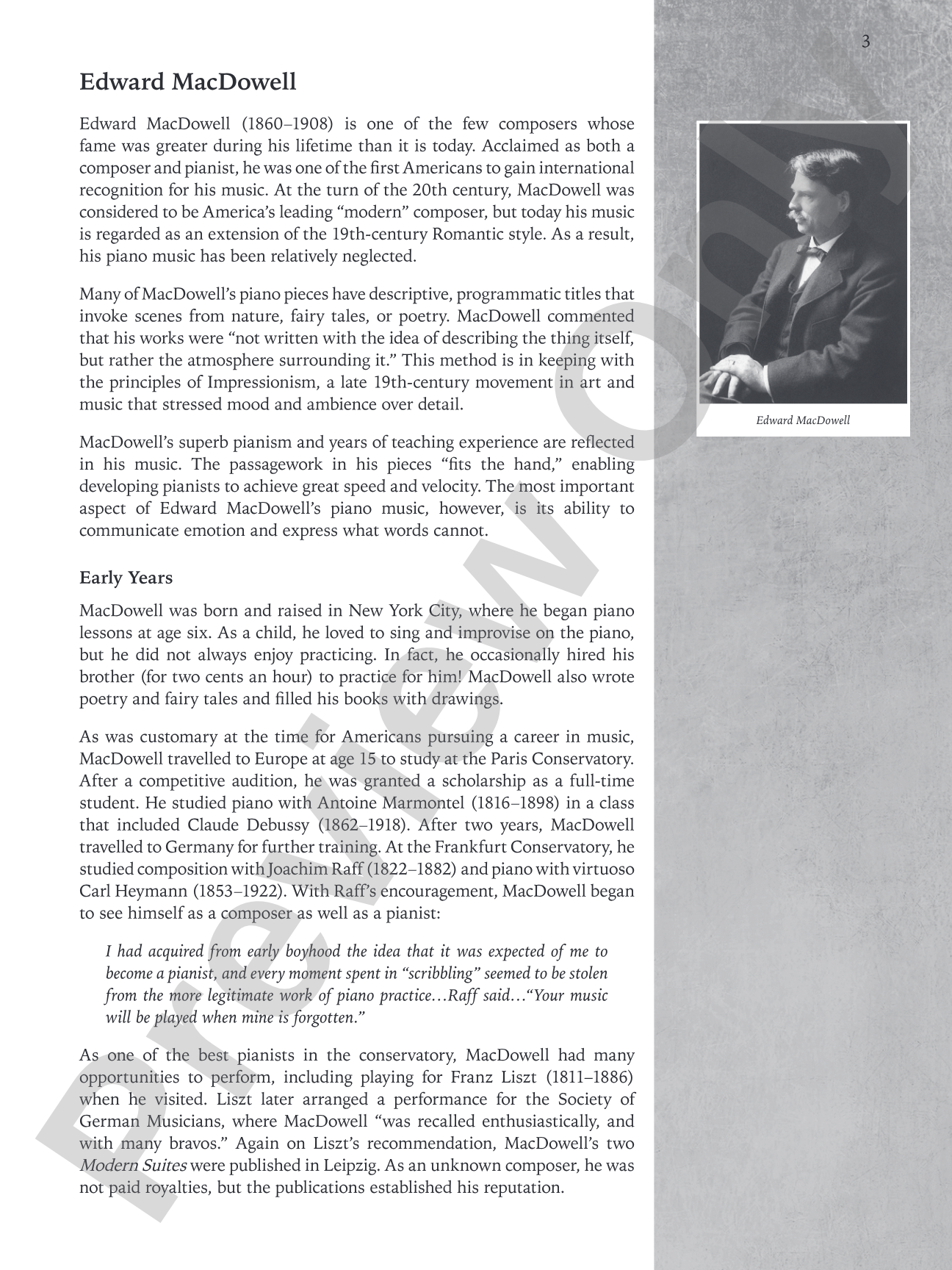
Edward MacDowell (1860, 1908) was America's first internationally recognized composer of classical music, and his piano works remain central to American Romantic repertoire. He studied in Europe under some of the finest pedagogues of his era, then returned to the United States to establish himself as both composer and teacher, eventually directing the Columbia College School of Music.
MacDowell's gift for lyrical melody and his understanding of the piano's expressive range made him an ideal composer for developing musicians. His shorter character pieces, in particular, balance technical demands with musical accessibility, allowing students to engage with genuine artistic content while building their facility at the keyboard.
Why we love this
These eight selections showcase MacDowell's gift for accessible lyricism without sacrificing musical substance. The collection sits at exactly the right difficulty level for students ready to move beyond basic repertoire but not yet ready for virtuosic demands. Programming MacDowell signals to audiences that you're developing serious musicians with taste.
What to expect
MacDowell's writing evokes intimacy and natural melody throughout. Whether you're sketching autumn landscapes in In Autumn, mimicking the quick flutter of To a Hummingbird, or exploring the tender sentiment of To a Wild Rose, these pieces invite you into a world of clear, singable lines and responsive harmonies that feel pianist-friendly while never condescending to the performer.
Who it's for
Pianists at the intermediate to late intermediate level, particularly those preparing for festival competitions or working toward more substantial recital programs. Students ready to explore Romantic-era character pieces with genuine artistic merit will find these selections rewarding to learn and perform.
How to get the most out of it
- Balance the decorative figurations in pieces like Alla Tarantella against the underlying melodic line; resist letting the passagework overshadow the shape of the phrase.
- Explore the recorded accompaniment for pieces with optional orchestral parts; it contextualizes how MacDowell conceived these works and can deepen your understanding of the harmonic foundation.
- Let the descriptive titles guide your interpretive choices. To a Wild Rose benefits from a singing tone and gentle rubato, while A Tin Soldier's Love needs rhythmic precision and a touch of humor.
- Pay close attention to MacDowell's dynamic markings and pedal indications; they reveal his specific intentions for color and resonance at each moment.
How to use it
These pieces work beautifully as standalone recital selections, especially the more substantial character pieces like To a Wild Rose and In Autumn, which have become standards in American piano literature. Consider pairing several from this collection to create a thematic program exploring MacDowell's genius for depicting natural imagery. Festival competitions often welcome this repertoire, and the Federation Festivals selection ensures it meets contemporary adjudication standards.
Skills your students will build
- Pedal control and color differentiation across varied textures
- Phrasing in lyrical, song-like melodic lines
- Rhythmic precision in character pieces with distinctive accompaniment patterns
- Reading and interpreting Romantic-era harmonic language and dynamic indications
- Balancing technical figuration against expressive content
- Tempo flexibility and rubato in performance