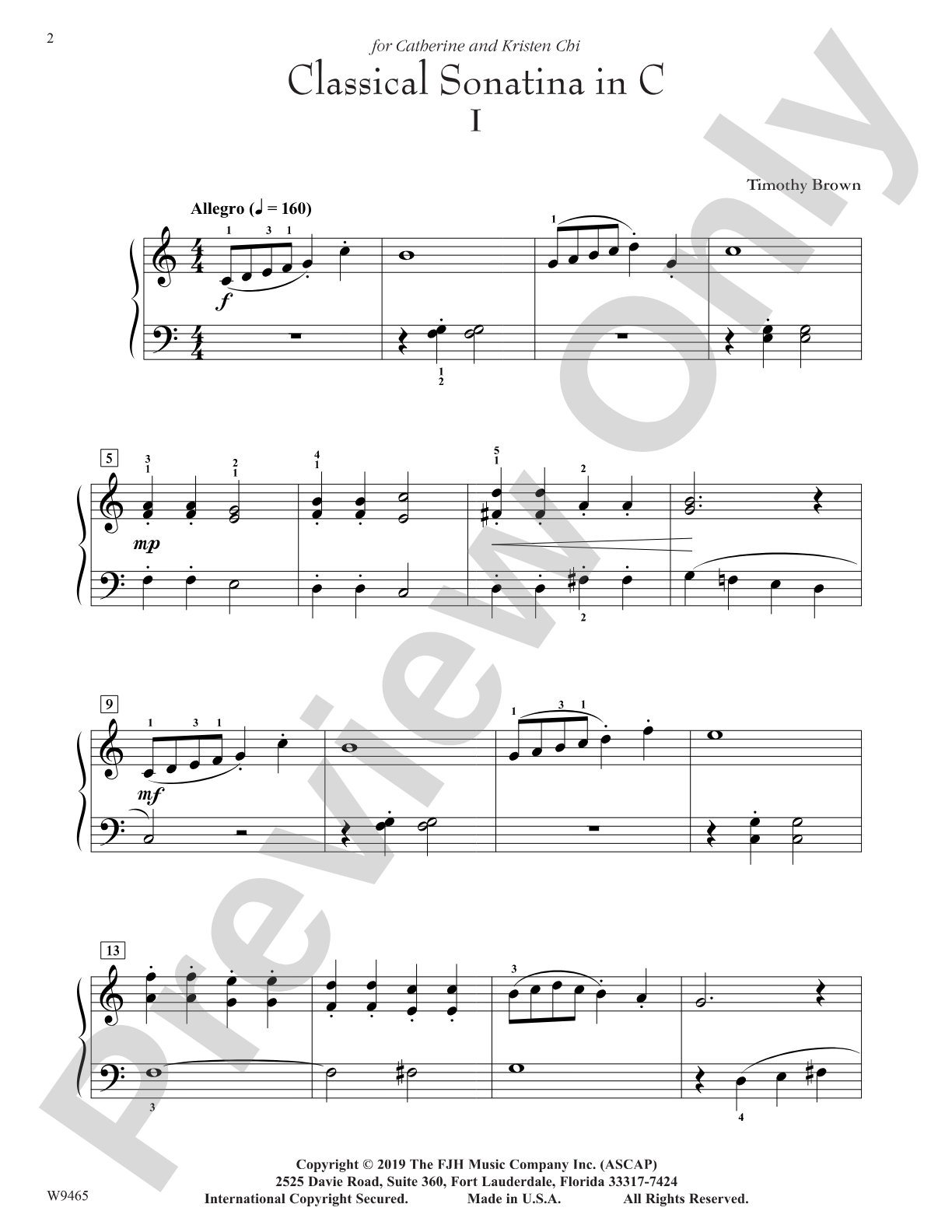
Classical Sonatina in C Sheet Music Preview

Classical Sonatina in C: Piano

By Timothy Brown

Item: 98-DW9465

Digital Download
$3.50
Description
Small hands will be able to play this three-movement sonatina that is excellent preparation for the easy Mozart or Clementi sonatinas. Each cheerful movement is two pages long and can be learned quickly.

Classical Sonatina in C: Piano isn't in MakeMusic Cloud just yet...but it could be. Let us know you'd like to see it, and you'll help shape what comes next. In the meantime, start a free trial and dive into thousands of interactive titles your students can play along with today.

Sample Audio
No sample audio found.
Sample Video
Additional Details
Series: Written For You
Publisher: The FJH Music Company, Inc.
SKU: 98-DW9465

More about this title

Why we love this

Brown has sized this sonatina precisely for the hand span and technical range of early intermediate pianists, which means students actually enjoy playing it rather than struggling with awkward stretches. The three-movement structure gives young pianists a complete formal experience without the length or complexity that can derail motivation at this stage.

What to expect

Bright and unpretentious, with the natural elegance of a piece that doesn't try too hard. Each movement maintains a light touch while introducing small technical and structural challenges that reward attentive practice.

Who it's for

Young pianists with hands still growing into standard repertoire who are ready for three-movement form and basic sonata principles. This works especially well for students preparing to move into the standard sonatina literature and needing a comfortable stepping stone.

How to get the most out of it

  • Shape each movement with deliberate tempo choices that reflect its character. Since each movement runs only two pages, clarity of structure matters more than rushing through.
  • Balance the cheerful character with rhythmic precision. Early intermediate players often sacrifice accuracy for enthusiasm; lock in the pulse before adding expressive weight.
  • Listen to how the accompaniment patterns support the melody in each movement. This awareness transfers directly to your interpretation of the Mozart and Clementi pieces that follow.

How to use it

Feature this as a recital opener to establish a calm, classical mood before more substantial works. Its manageable length and cheerful demeanor also make it ideal for young pianists building their performance confidence early in the year.

Skills your students will build

  • Three-movement sonata form (Allegro-Andante-Rondo structures)
  • Hand position management for sustained passages without fatigue
  • Dynamic shaping within a limited technical range
  • Articulation control (legato and staccato contrast)
  • Voicing melody against accompanying figures

You May Also Like