

Classic Mallet Trios---Tchaikovsky: Score
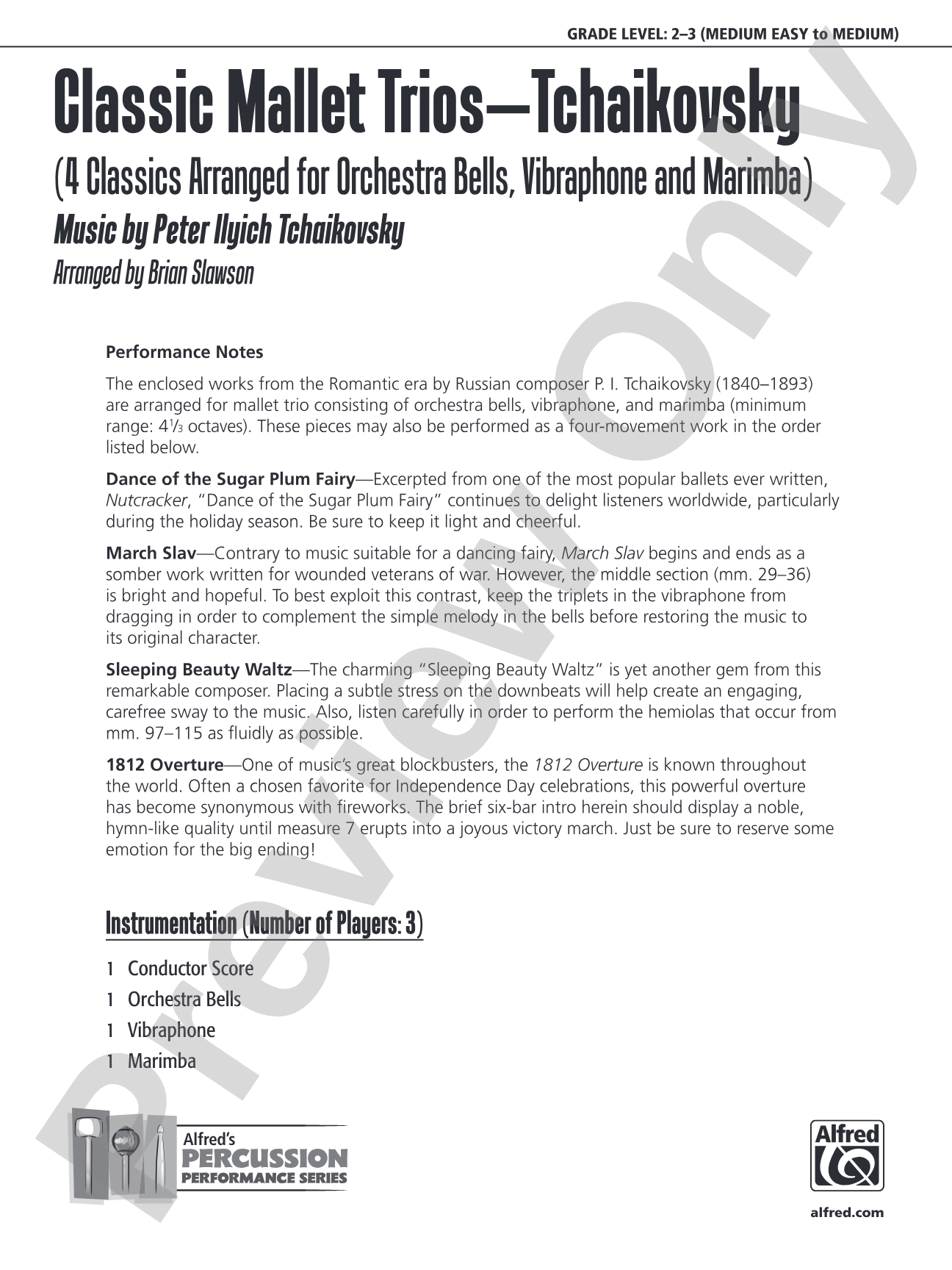
4 Classics Arranged for Orchestra Bells, Vibraphone, and Marimba
Music by Peter Ilyich Tchaikovsky / arr. Brian Slawson
Item: 00-PR-0004339
$8.00
Pickup currently not available
Description
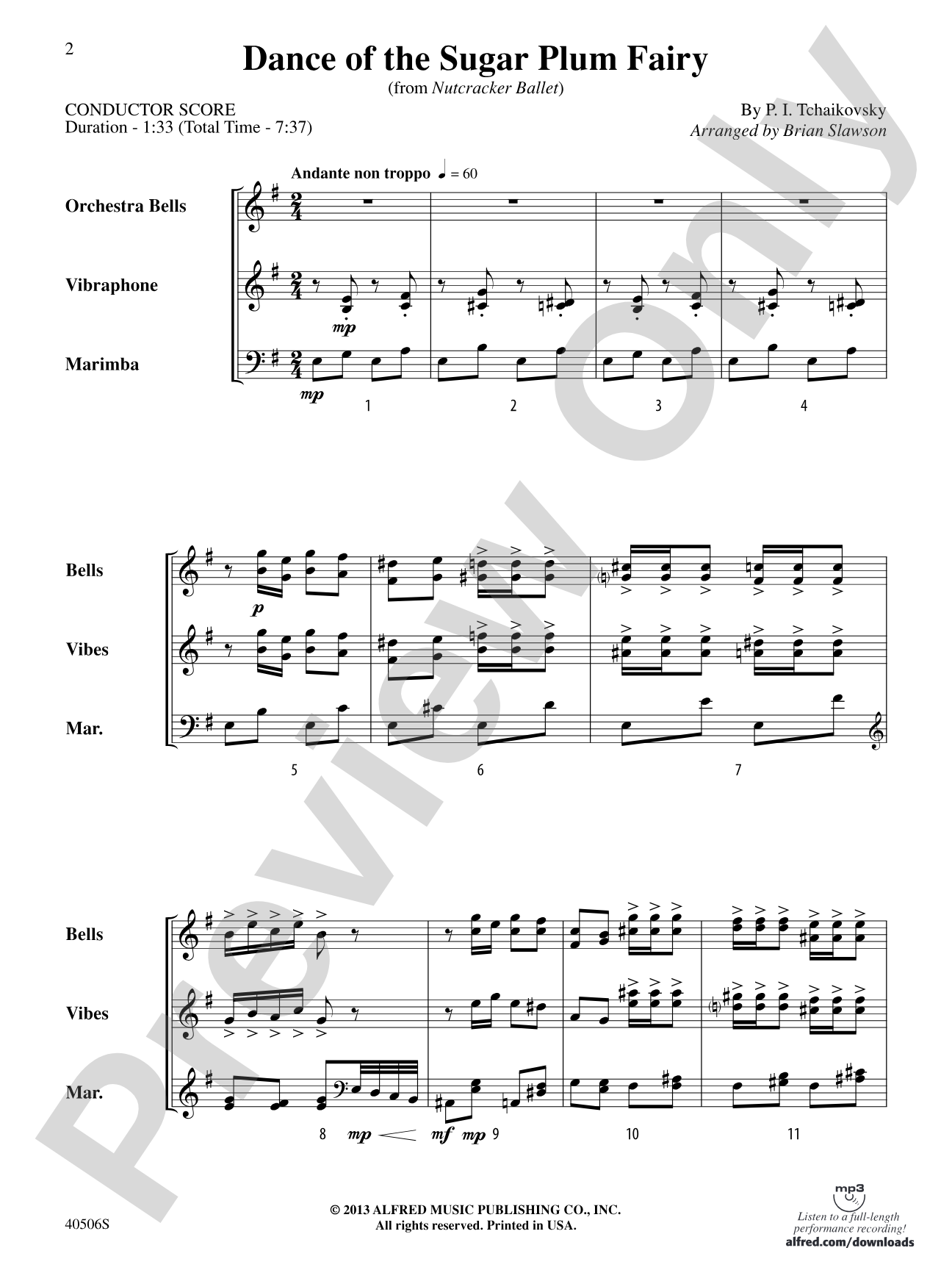
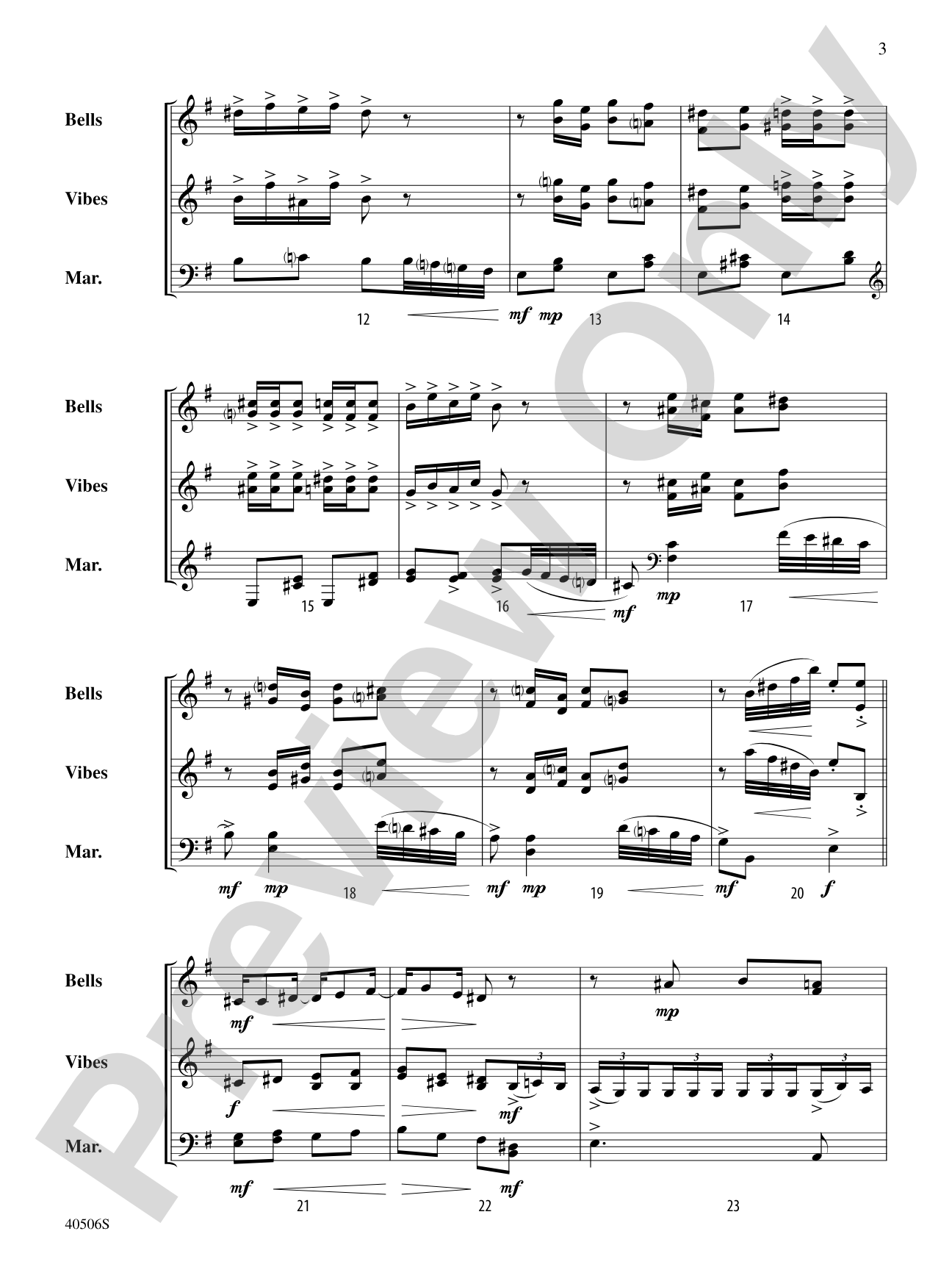
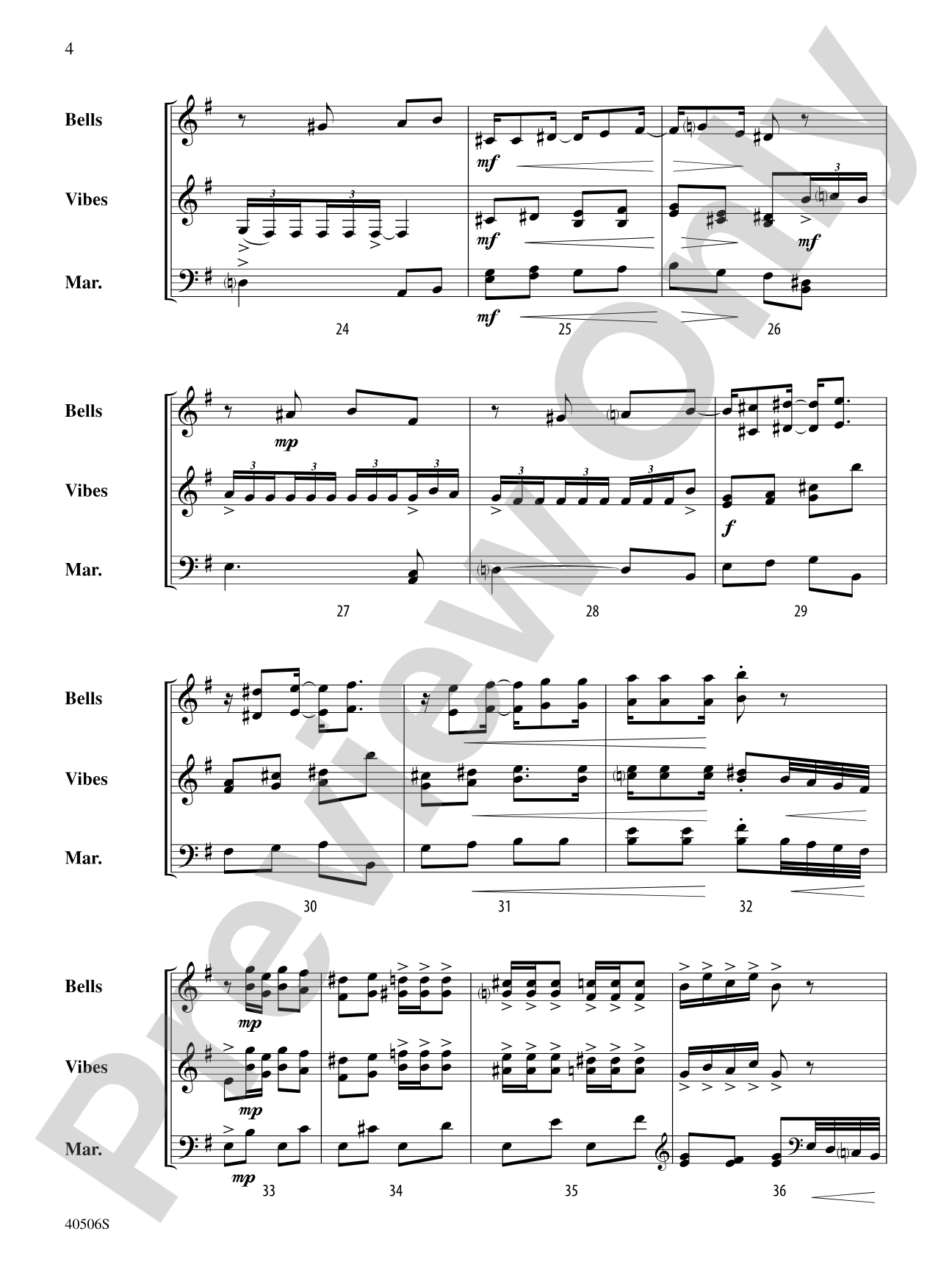
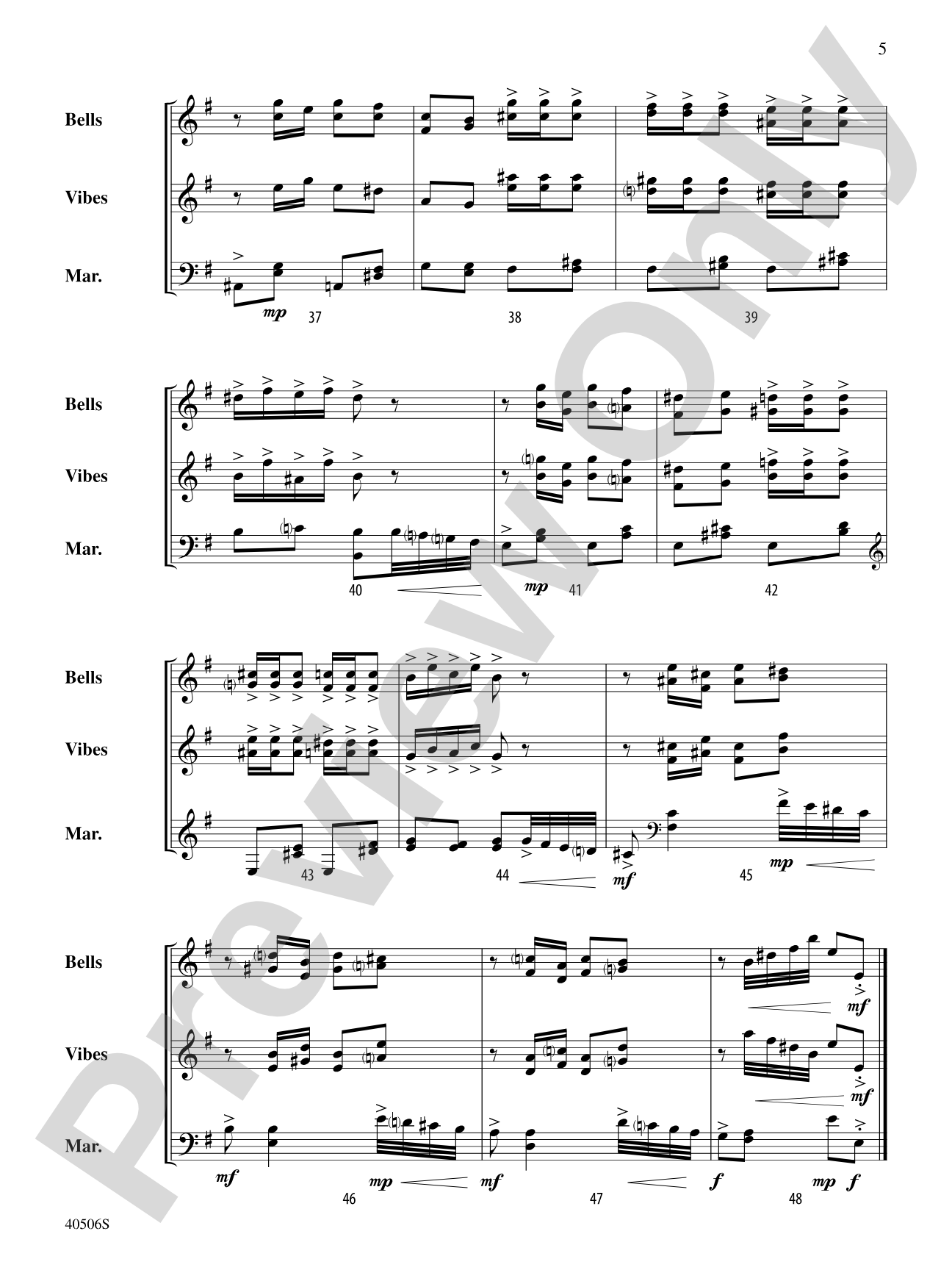
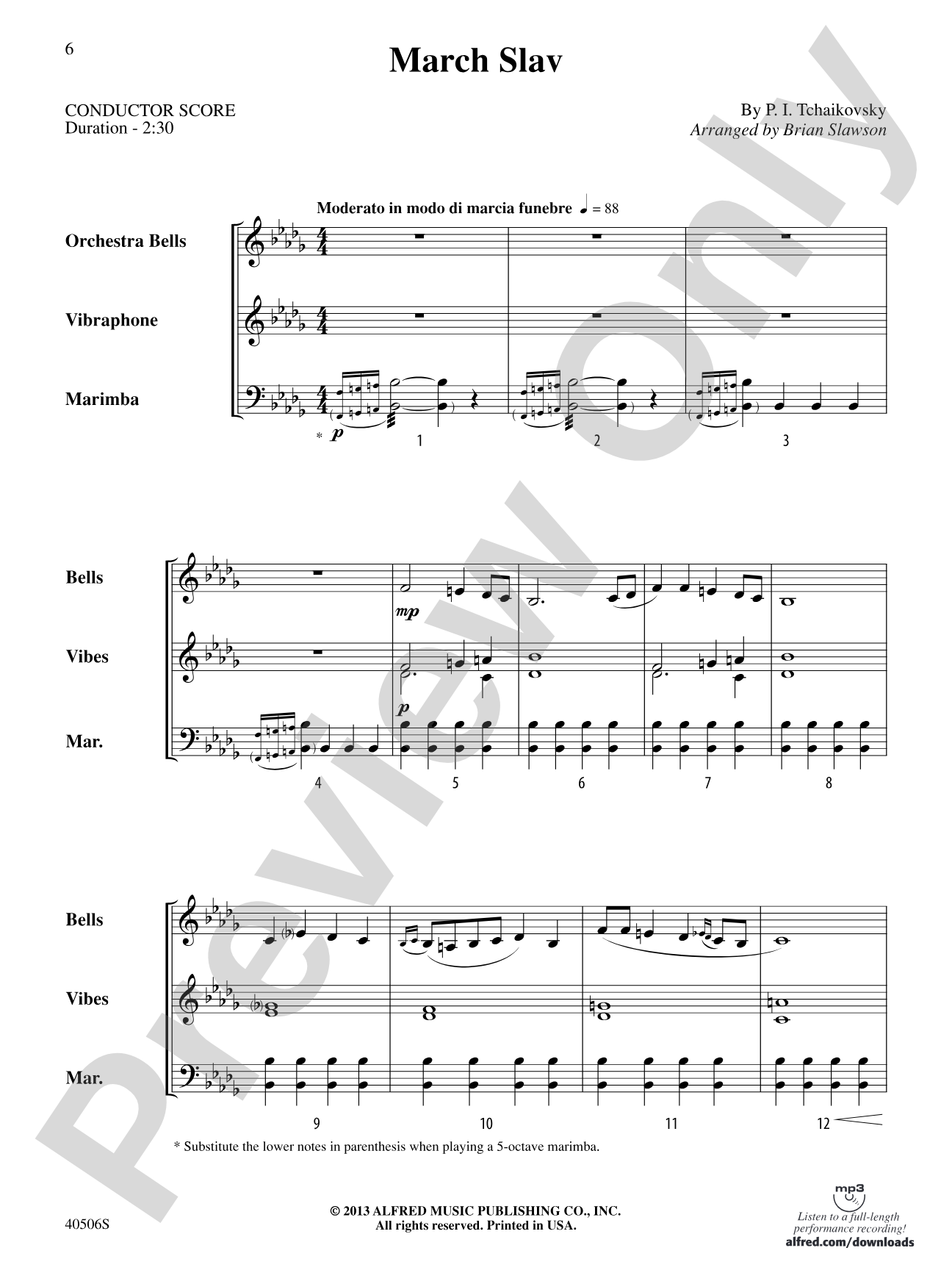
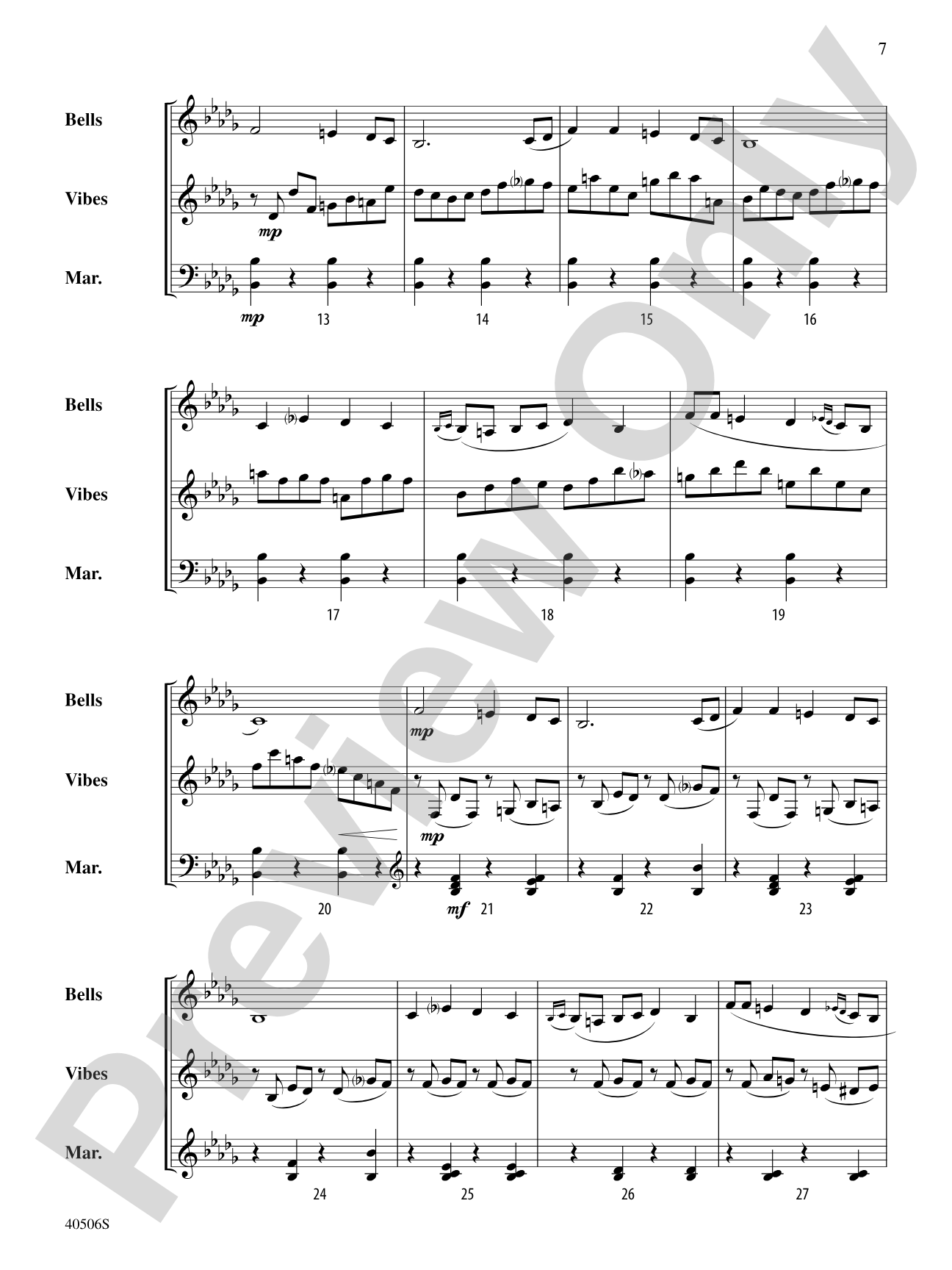
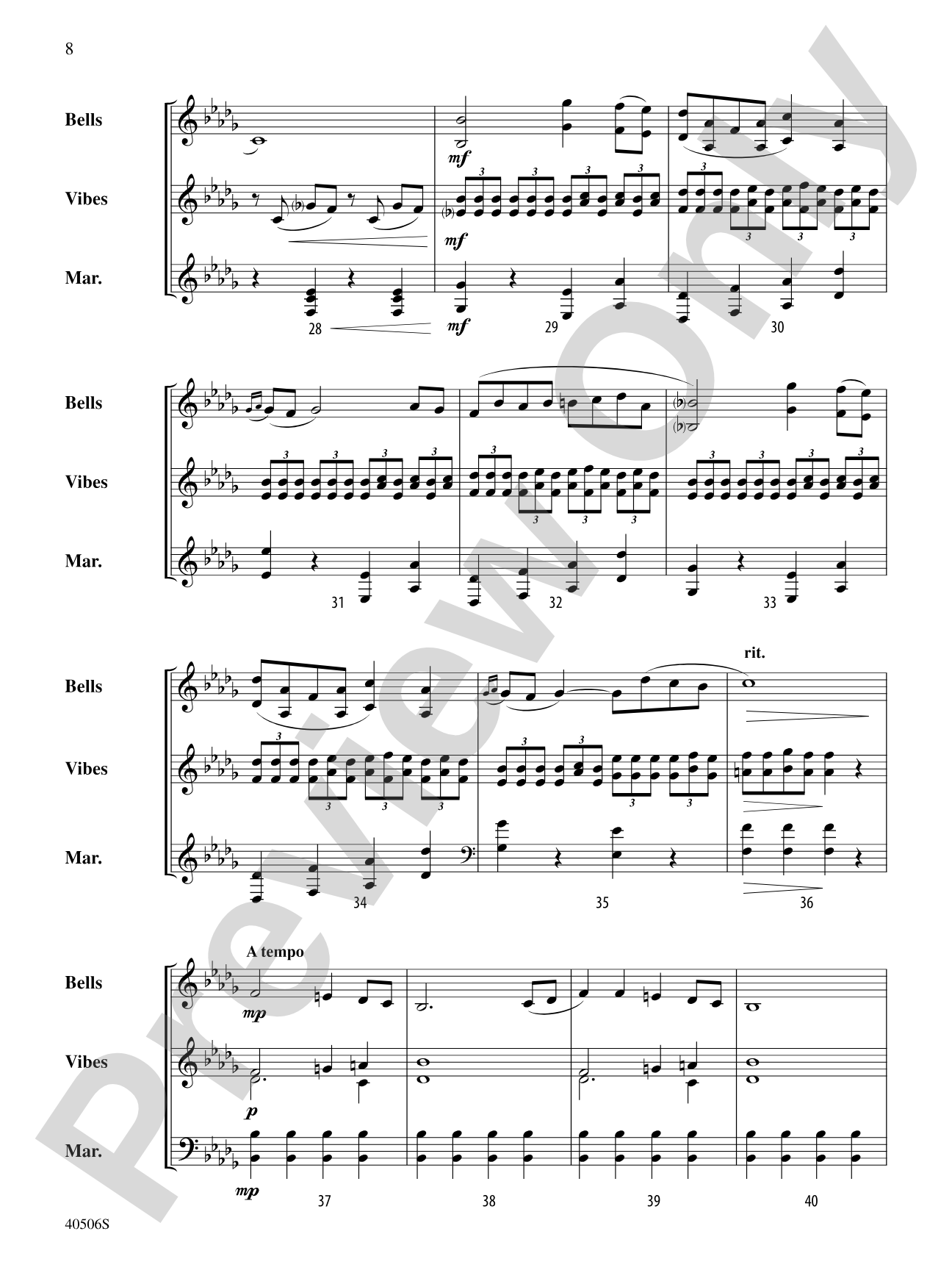
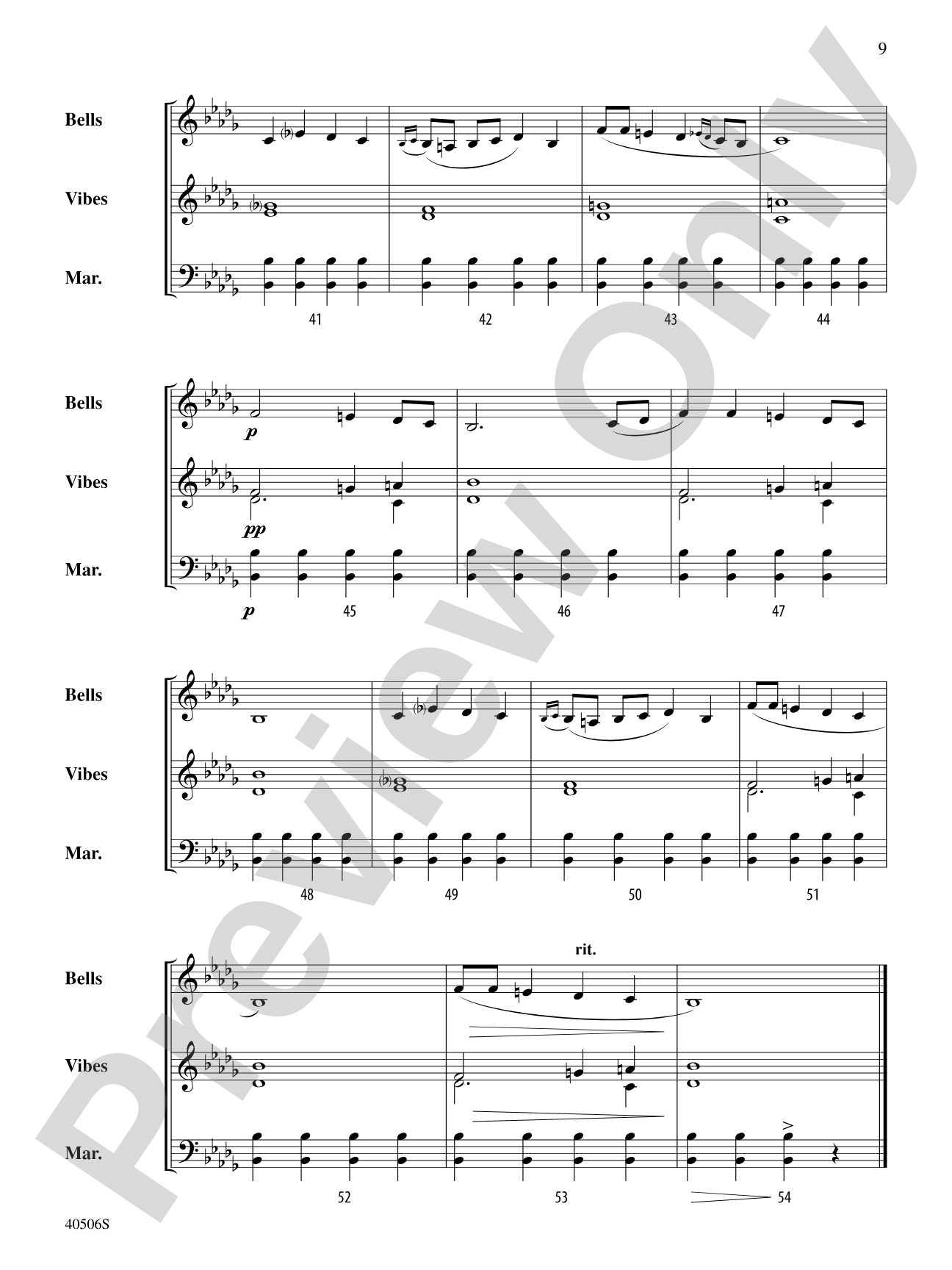
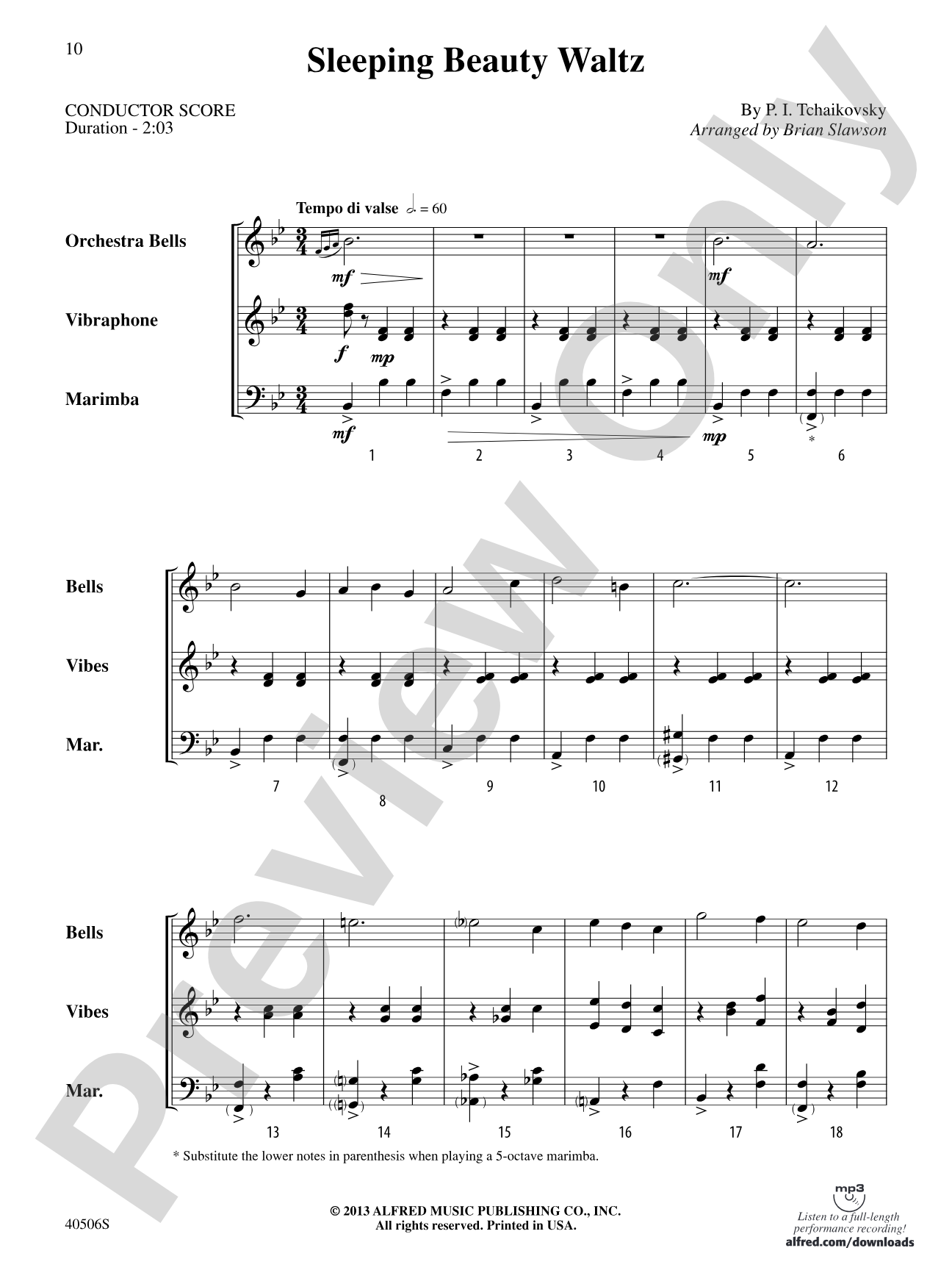
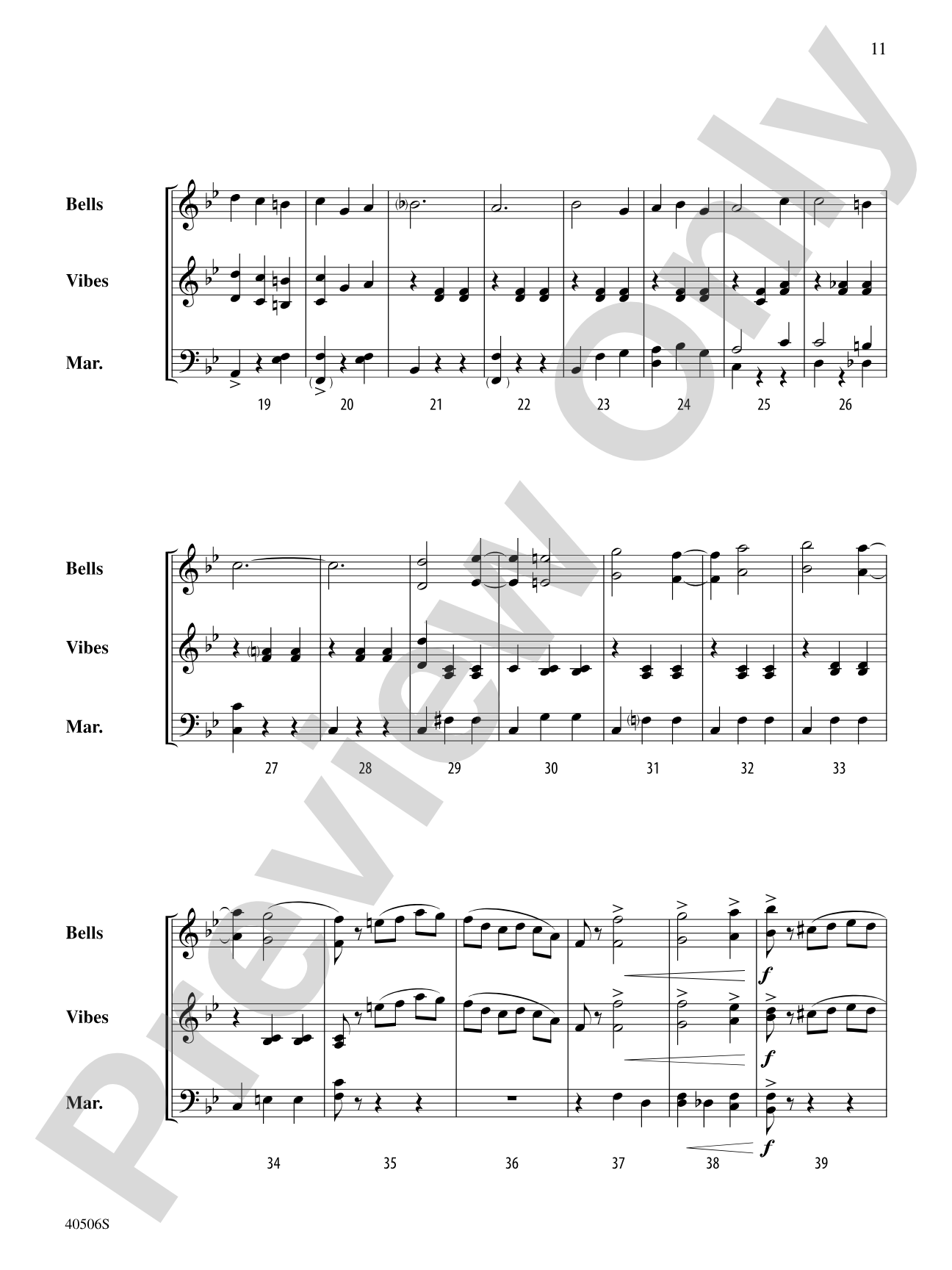
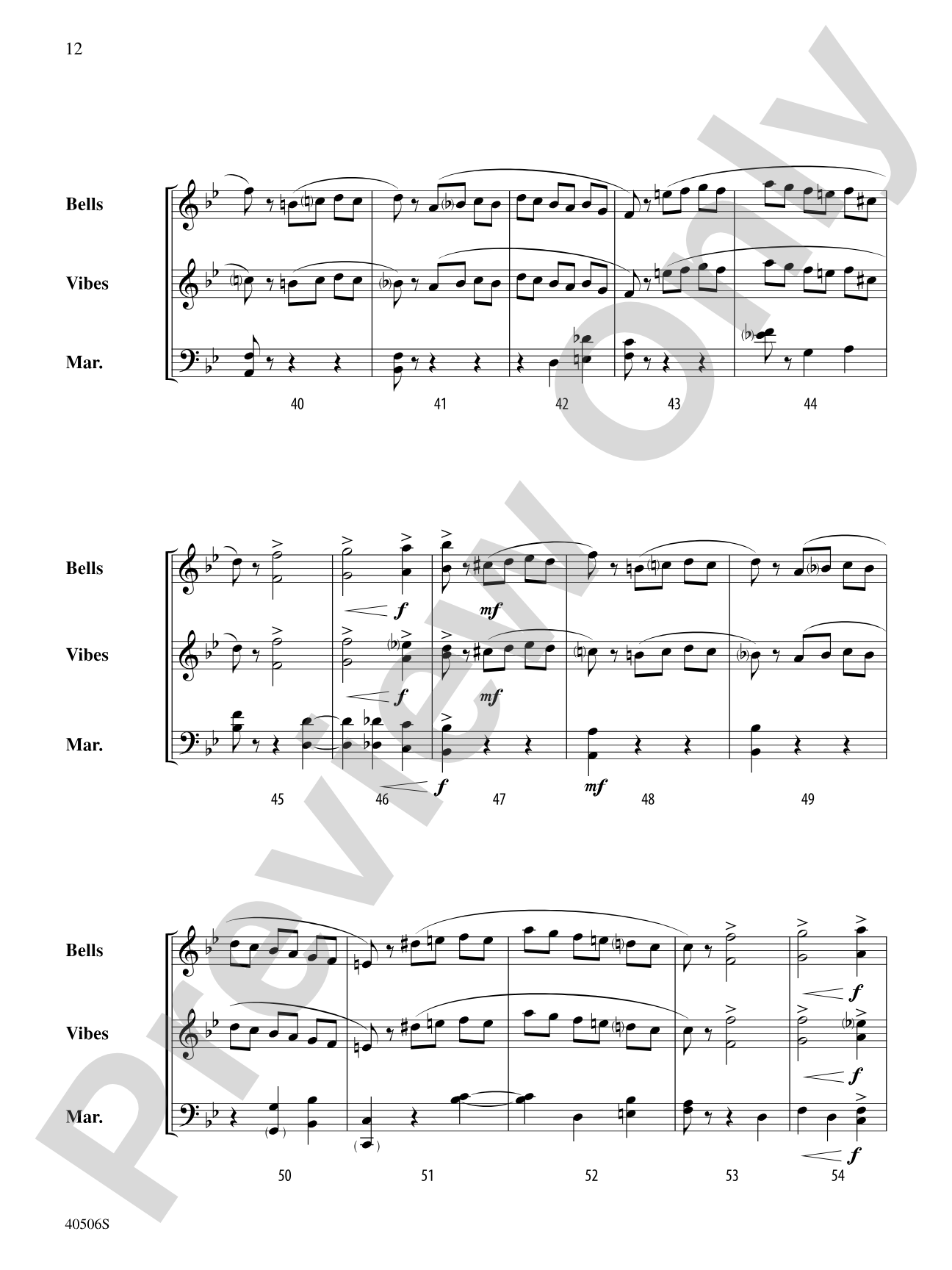
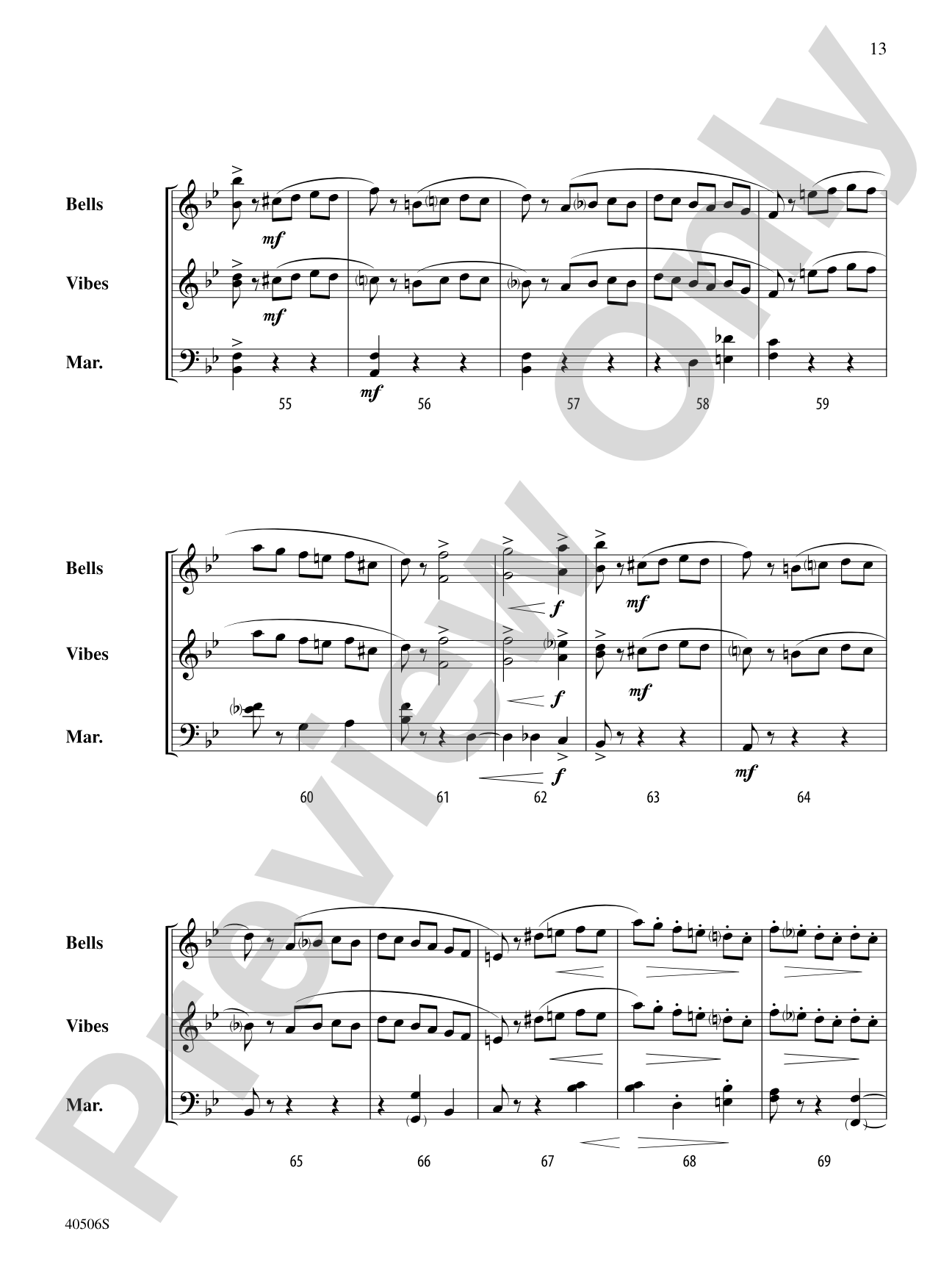
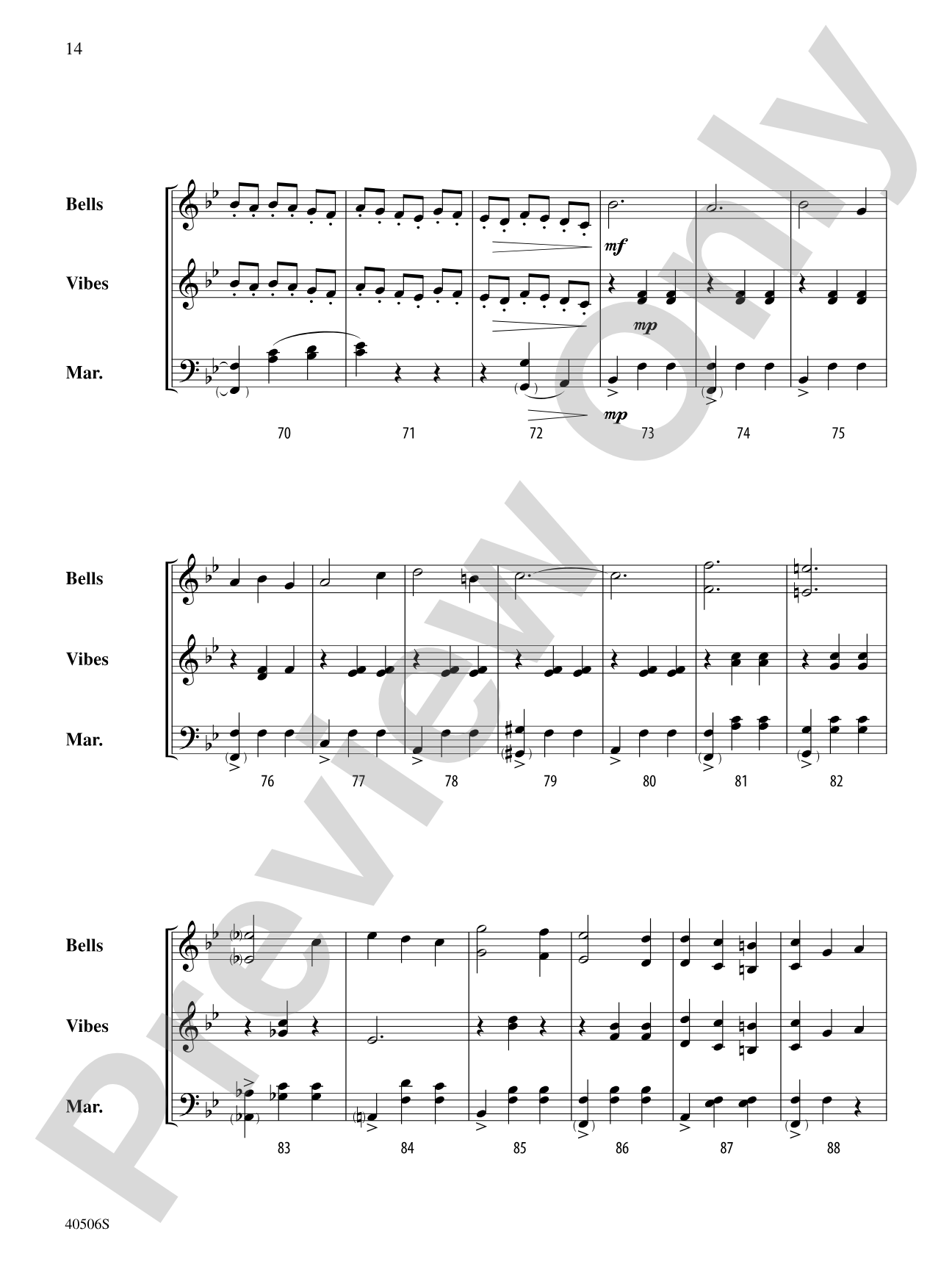
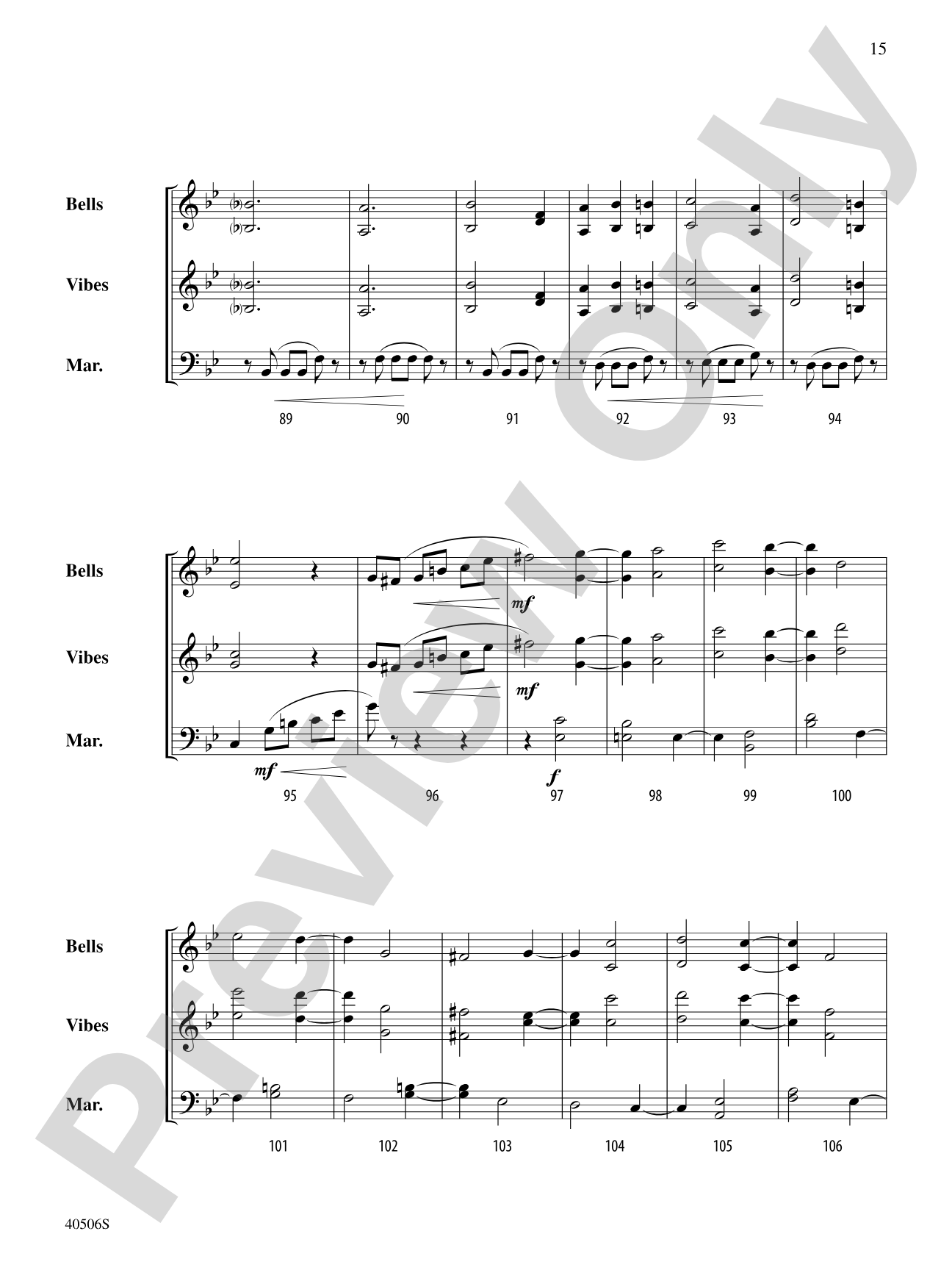
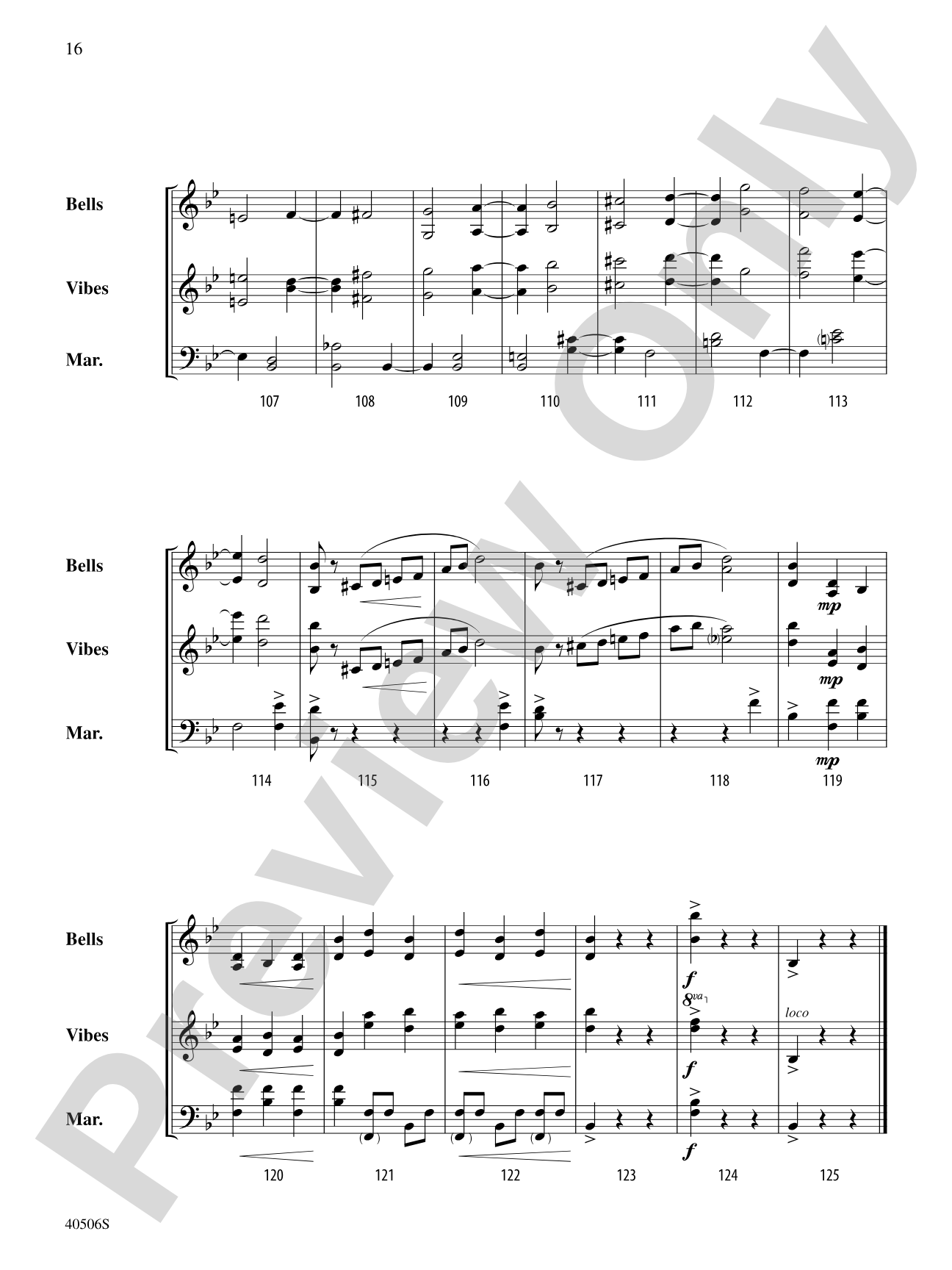
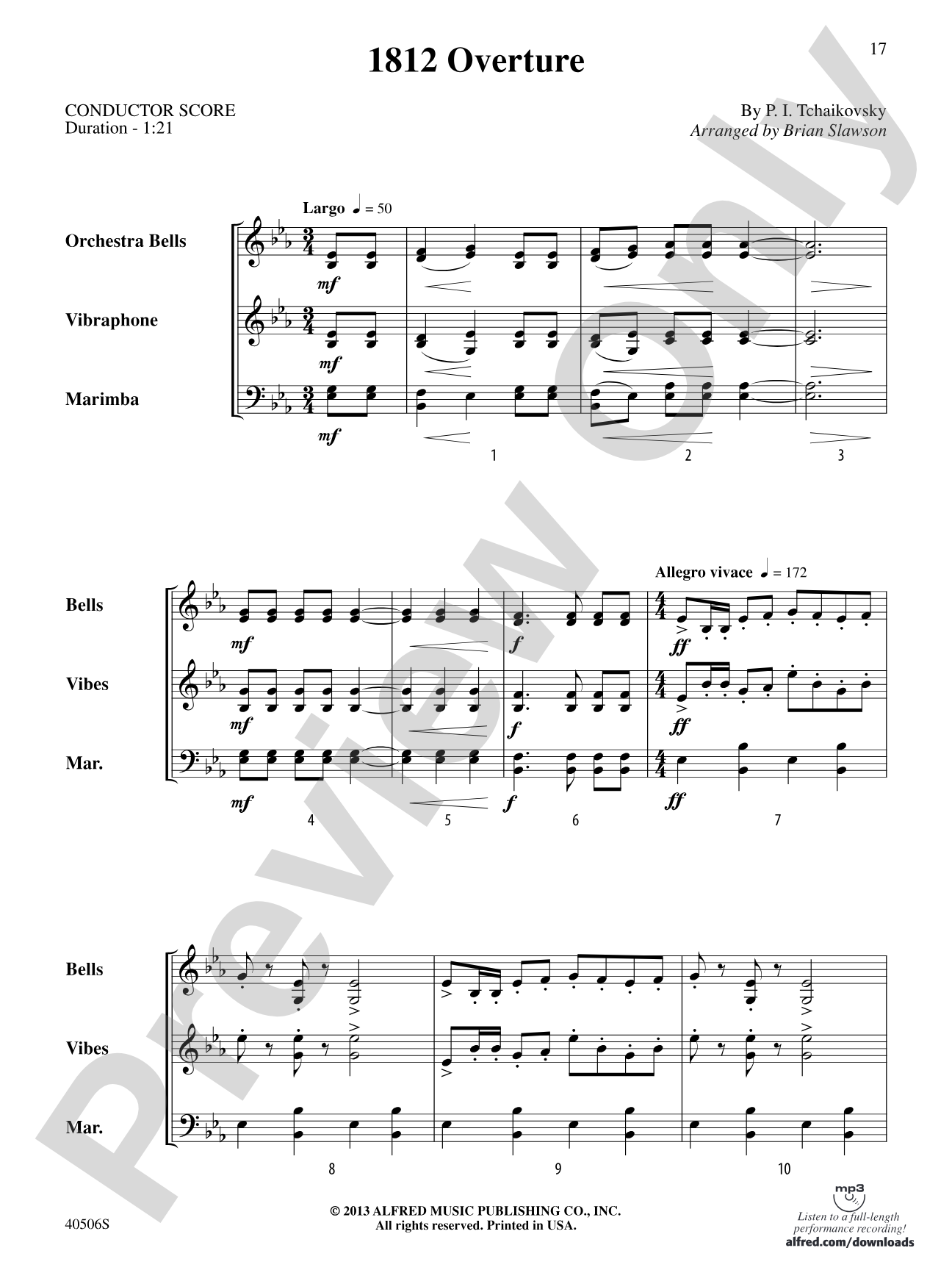
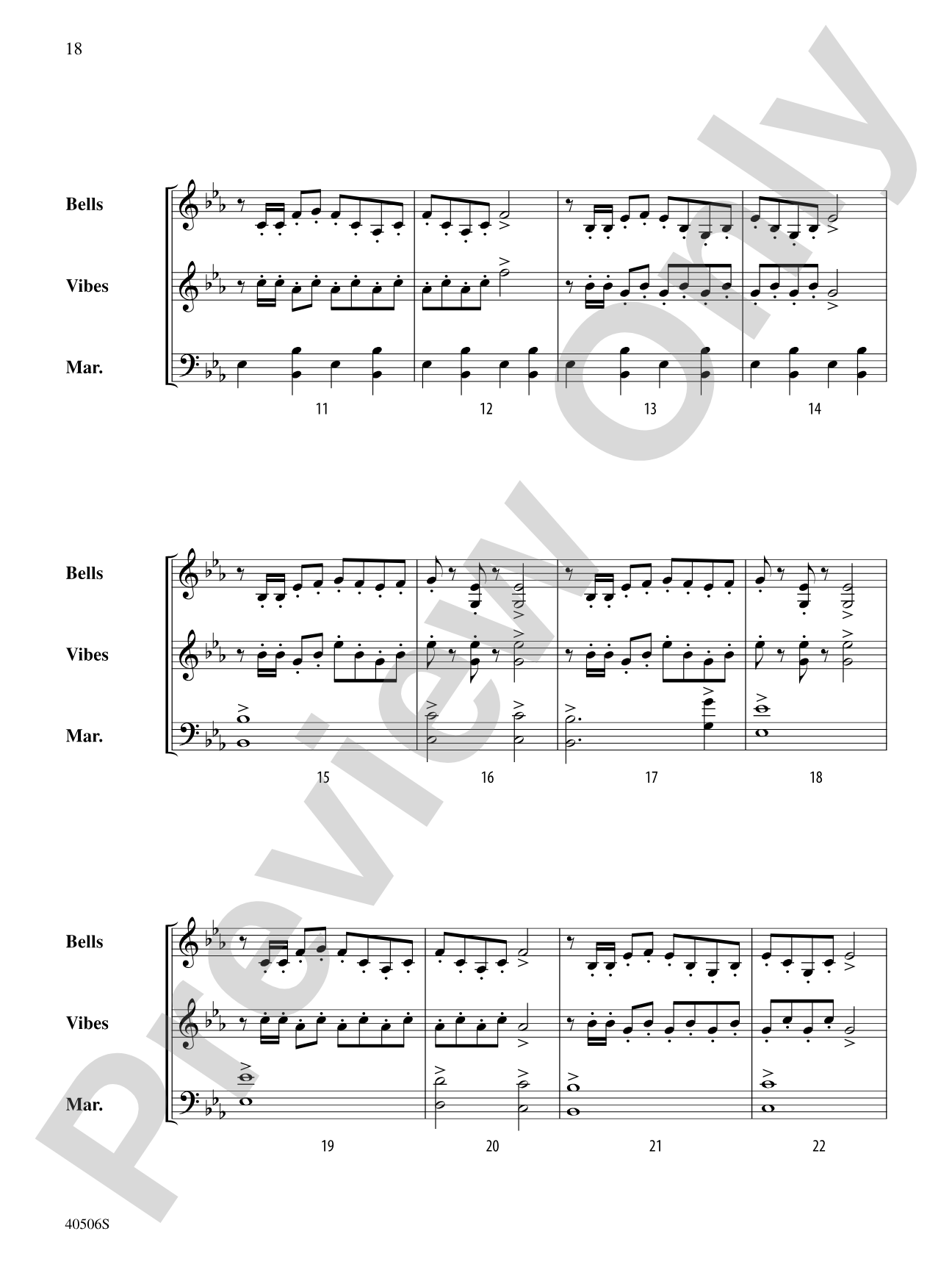
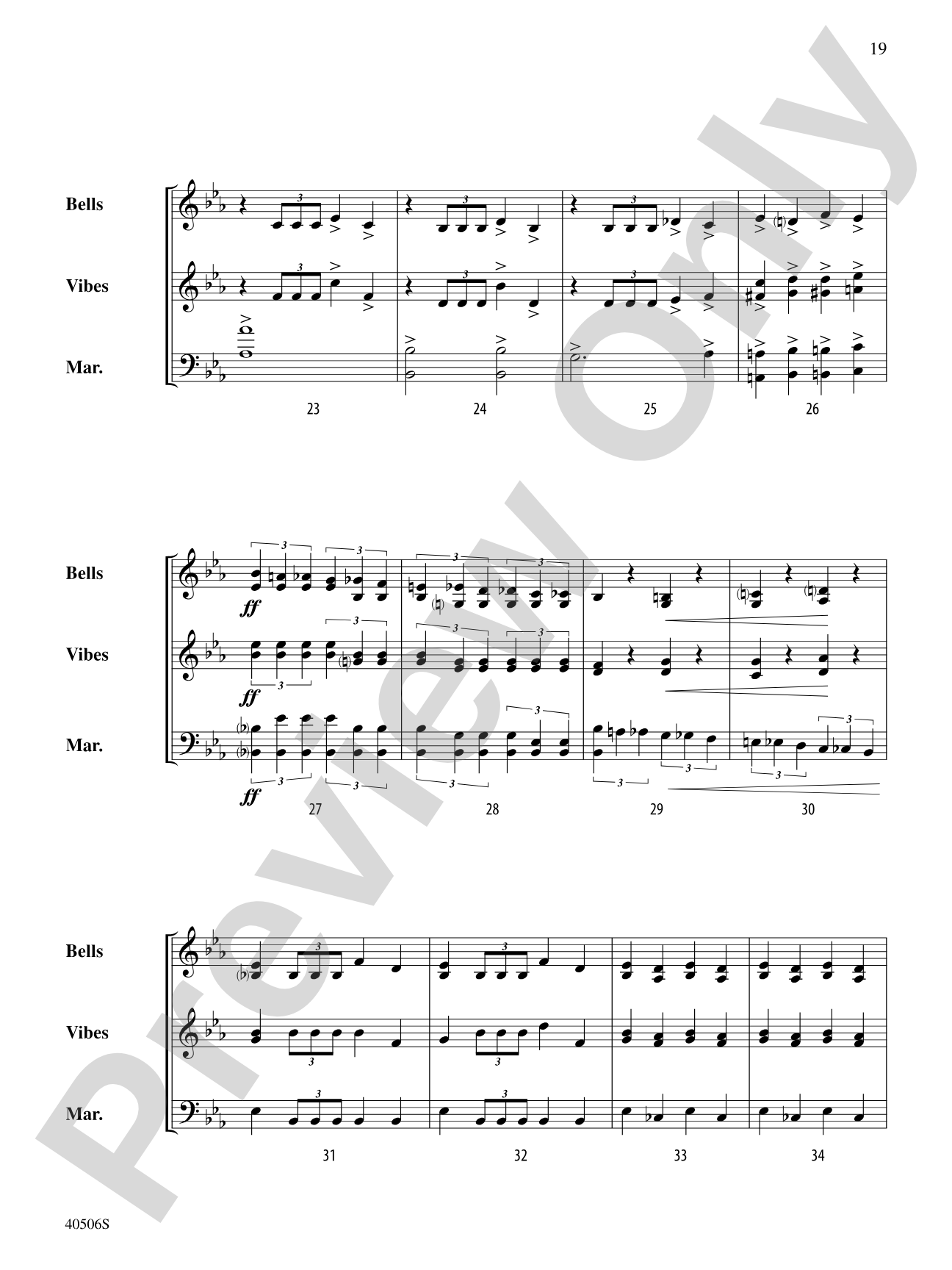
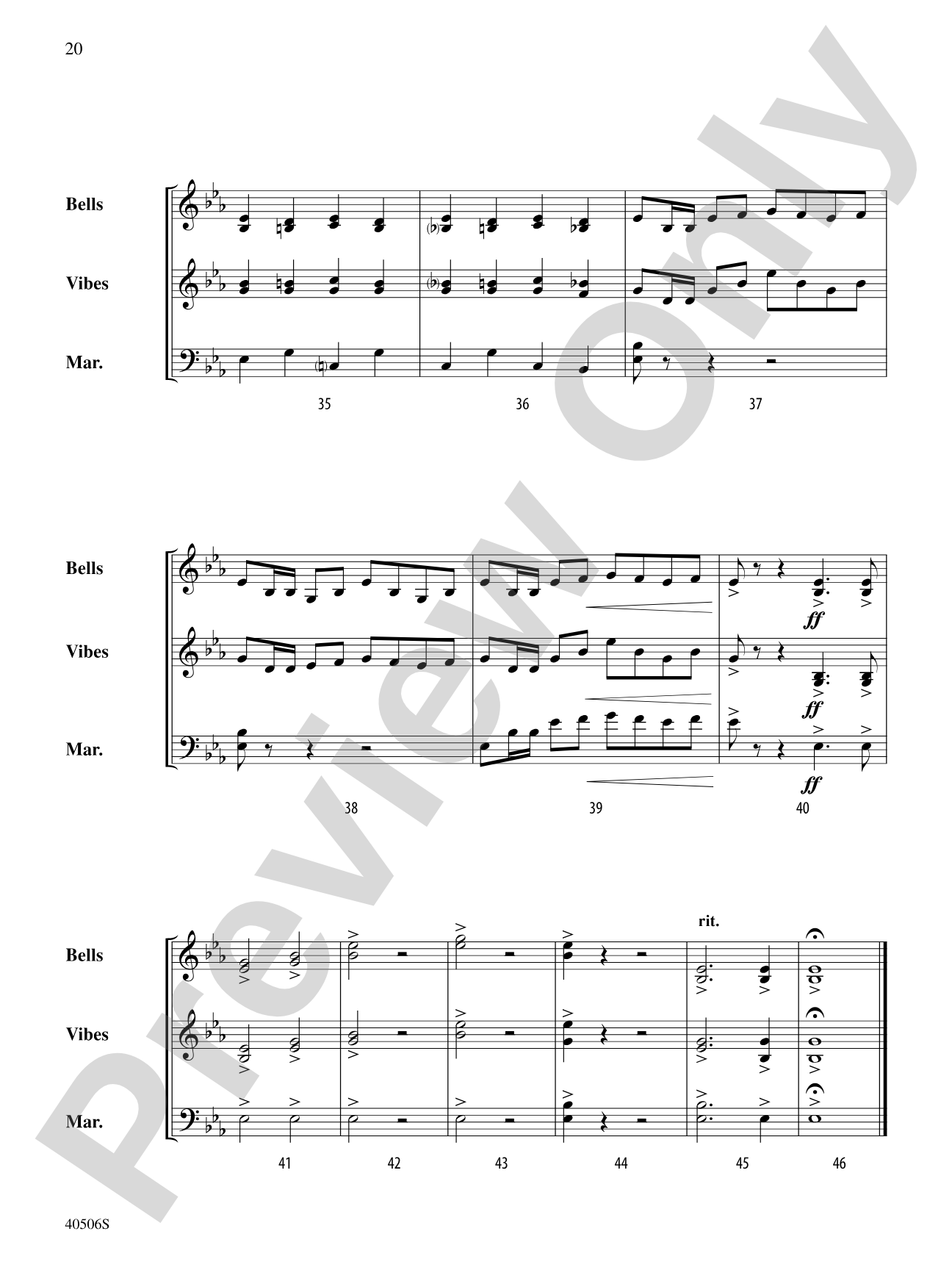
Classic Mallet Trios---Tchaikovsky features four classics arranged for orchestra bells, vibraphone, and marimba. These selections work splendidly as individual pieces or in a four-movement capacity, reflecting the popular sonata form commonly used in symphonic works of the 18th and 19th centuries. In addition to providing inside access to valuable repertoire from one of the great master composers, this "mini-symphony" reveals the importance of key relationships, tempo relationships, and contrasting dynamics. "Dance of the Sugarplum Fairy," "March Slav," "Sleeping Beauty Waltz," and the irrepressible "1812 Overture" comprise this exciting Classic Mallet Trios collection, wonderfully suited for solo and ensemble applications and bound to thrill audiences in concert settings.


Don't just read it, hear it, play along with it, and watch your students grow with it. In MakeMusic Cloud, Classic Mallet Trios---Tchaikovsky: Score comes alive with professional accompaniment, adjustable tempo, and built-in practice tools that turn solo practice into real progress.
Open in the Player
Jump straight in and assign it today.
Start Your Free Trial
Open this title and explore the full library in minutes.
Sample Audio
No sample audio found.
Sample Video
No sample videos found.
Additional Details
Series:
Alfred’s Percussion Performance Series
Publisher:
Alfred Music
Page Count:
12
SKU:
00-PR-0004339
More about this title
About the Composer: Peter Ilyich Tchaikovsky
Peter Ilyich Tchaikovsky (1840-1893) stands among the most performed composers in the concert hall, renowned for melodies that lodge immediately in memory and orchestrations of extraordinary color and drama. His gift for writing themes that grip audiences made him one of the defining voices of the Romantic era, and his works span ballet, orchestral, chamber, and vocal genres with equal mastery.
Why we love this
Brian Slawson's arrangements capture the full dramatic sweep of Tchaikovsky's most recognizable works without diluting what makes them unforgettable. The progression through four pieces in sonata form arc creates a satisfying concert experience that feels complete, and the flexibility to perform them individually or as a suite lets you program with real intent.
What to expect
Immediate recognition paired with genuine musical substance. The familiarity of "Dance of the Sugarplum Fairy" and the "1812 Overture" makes this accessible, yet the arrangement demands real musicianship in balancing three distinct voices and honoring the emotional arc of each piece. Performing these works reveals why Tchaikovsky became a household name.
Who it's for
Mallet percussionists in grades 4-12 who've developed basic facility on their instruments and are ready for standard four-mallet technique on marimba and secure playing across their vibraphone and bells parts. This arrangement works equally well for intermediate to advanced players seeking a complete ensemble experience without relying on a full orchestra.
How to get the most out of it
- Balance the three mallet instruments so each voice carries its melodic responsibility clearly; the bells will cut through naturally, so shade the marimba and vibraphone accordingly.
- Attend to tempo relationships across the suite. Tchaikovsky's contrasting sections rely on proportional tempos to create dramatic momentum, so establish relationships early and maintain them through the movement.
- Shape phrasing across bar lines rather than within them. Let long melodic lines breathe as single musical ideas, especially in the waltz and the overture's famous passages.
- Use the dynamic shifts to define structure. The composer marks bold contrasts between sections; commit fully to these changes rather than softening them.
How to use it
Excellent as a standalone percussion feature that honors orchestral repertoire and gives mallet players their moment in the spotlight. Program the full suite when you want a thematic concert section, or extract individual pieces to support a broader concert theme (a winter concert calls for the sugarplum fairy and waltz; a patriotic program fits the overture and march).
Skills your students will build
- Four-mallet technique on marimba
- Transitioning between mallet instruments while maintaining consistent tone and time
- Reading and executing independent melodic lines in ensemble contexts
- Recognizing and executing sonata form structure across multiple movements
- Balancing dynamic contrast and phrasing across an extended multi-movement work
- Interpreting tempo relationships between movements